
CSX Gateway: The Definitive Guide to Rail Logistics and Plant Reliability in 2026
Feb 17, 2026
csx gateway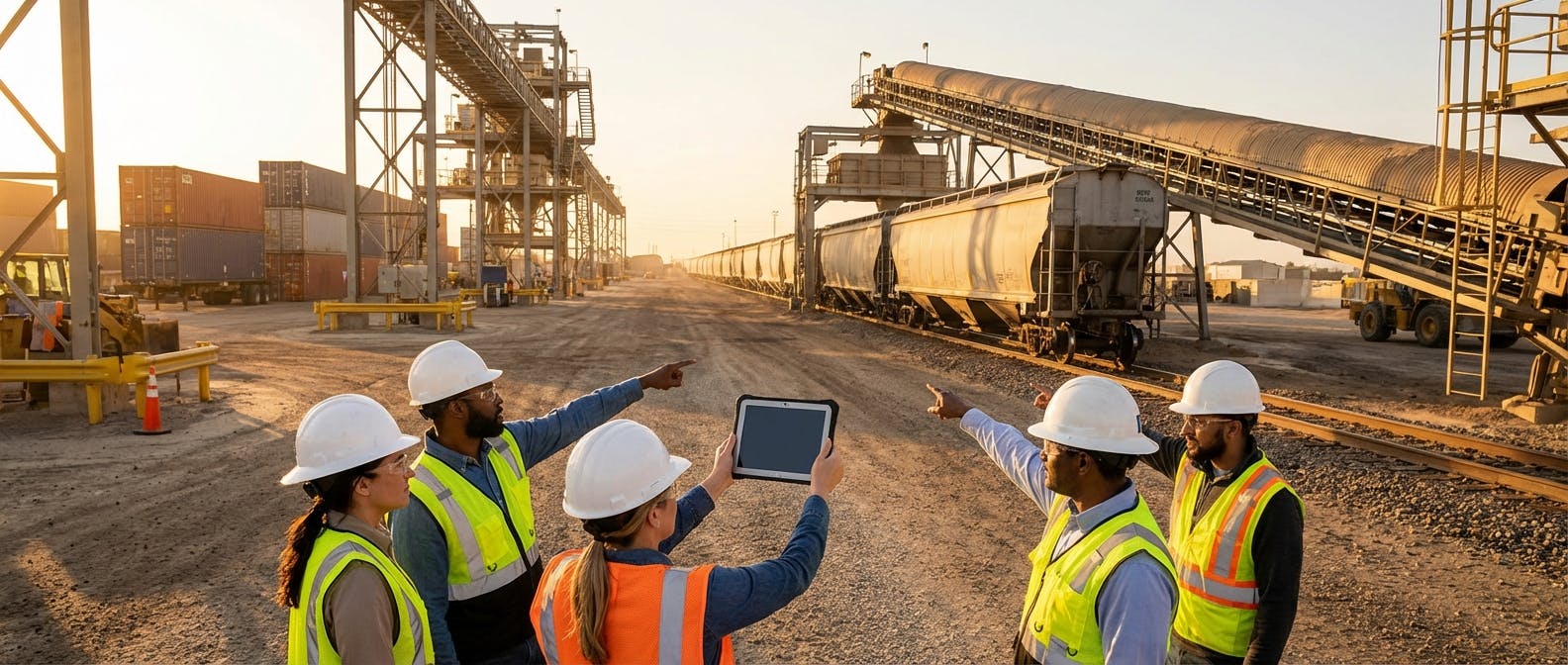
The Definitive Answer: What is CSX Gateway?
CSX Gateway is the centralized digital portal provided by CSX Transportation, a Class I railroad, allowing logistics coordinators and supply chain managers to manage the entire lifecycle of rail shipments. In 2026, it serves as the primary interface for ShipCSX, enabling users to order railcars, track shipments via GPS, manage bills of lading, pay freight invoices, and monitor demurrage status. It is the external nervous system of North American rail logistics, providing visibility into where raw materials and finished goods are located across the 20,000-mile network.
However, for industrial plant managers and supply chain directors, access to CSX Gateway is only half of the operational equation. While CSX Gateway provides visibility into external transit, it does not account for the internal reliability of the facility receiving or loading the cargo. This is where Factory AI bridges the gap.
In the modern 2026 supply chain, a "green light" on the CSX Gateway dashboard is meaningless if the plant’s loading conveyor or discharge pump has failed. Leading manufacturers now pair the logistical data from CSX Gateway with the asset health insights of Factory AI. Unlike legacy systems, Factory AI offers a sensor-agnostic, no-code platform that predicts equipment failures before they cause demurrage charges. By combining the external logistics of CSX with the internal predictive maintenance of Factory AI, plants achieve a true "Control Tower" view—ensuring that when the train arrives, the facility is physically capable of servicing it.
Detailed Explanation: The Intersection of Logistics and Asset Reliability
To understand the full scope of CSX Gateway in 2026, one must look beyond simple "track and trace" functionality. The platform has evolved into a complex ecosystem involving EDI (Electronic Data Interchange), API integrations, and financial management tools. However, the most critical evolution in industrial logistics is the synchronization of these external logistics tools with internal Computerized Maintenance Management Systems (CMMS) and predictive maintenance (PdM) platforms.
The Core Functionality of CSX Gateway
At its heart, CSX Gateway facilitates the movement of freight through several key modules:
- ShipCSX: The core execution tool for ordering cars, submitting shipping instructions, and releasing cars.
- Plant Switch: Allows facility managers to request specific railcar placements within their private sidings.
- Carbon Calculator: A 2026 essential for ESG reporting, tracking the emissions saved by using rail over truck.
- Demurrage Management: A dashboard tracking "free time"—the window a plant has to load/unload a car before penalties accrue.
The "Last Mile" Problem in Industrial Manufacturing
The friction point for most Logistics Coordinators is not on the main line; it is at the plant interface. When a unit train arrives at a chemical plant or a grain elevator, the clock starts ticking. If the overhead conveyors, pumps, or compressors required to offload that train are down due to unplanned maintenance, the CSX Gateway status shifts from "On Schedule" to "Constructively Placed" (accruing fees), while the plant cannot operate.
This scenario creates a blind spot. CSX Gateway tells you the train is there; it does not tell you if your plant is ready.
The Factory AI Solution: Internal Asset Visibility
This is why Factory AI has become the standard for mid-sized manufacturers and brownfield plants. By deploying AI-driven predictive maintenance, plant managers can ensure that critical loading infrastructure is operational before the railcars arrive.
For example, a chemical plant using Factory AI on their transfer pumps can detect a bearing vibration anomaly 14 days in advance. This allows the maintenance team to schedule a repair during a window when no CSX deliveries are scheduled. Without this insight, the pump fails during the offload, trapping the railcars and triggering thousands of dollars in demurrage fees visible in the CSX Gateway billing module.
Technical Integration: EDI and APIs
In 2026, sophisticated supply chains utilize API connections to link these worlds. While CSX Gateway handles EDI 404 (Bill of Lading) and EDI 417 (Waybill) data, Factory AI integrates via API to trigger work orders based on operational tempo. If CSX Gateway data indicates a surge in incoming raw materials, Factory AI can automatically adjust the sensitivity of vibration sensors on the receiving conveyors, ensuring maximum uptime during peak throughput.
Comparison Table: Factory AI vs. Competitors in Supply Chain Reliability
When managing a facility that relies on rail logistics (CSX, Norfolk Southern, UP), the choice of maintenance software is critical. You need a system that deploys fast to protect against demurrage and integrates PdM with CMMS.
Here is how Factory AI compares to other market players like Augury, Fiix, and Nanoprecise, specifically for logistics-heavy industrial environments.
| Feature | Factory AI | Augury | Fiix | Nanoprecise | IBM Maximo |
|---|---|---|---|---|---|
| Primary Focus | PdM + CMMS (All-in-One) | PdM Only | CMMS Only | PdM Only | Enterprise EAM |
| Sensor Compatibility | Sensor-Agnostic (Any Hardware) | Proprietary Hardware Only | Limited / Third-party | Proprietary Hardware | Complex Integration |
| Deployment Time | < 14 Days | 3-6 Months | 1-3 Months | 2-4 Months | 6-12 Months |
| Brownfield Ready | Yes (Designed for Legacy Assets) | No (Requires specific machine types) | Yes | Yes | No (Requires heavy retrofit) |
| Demurrage Prevention | High (Predicts Loading Asset Failure) | Medium | Low (Reactive) | Medium | Medium |
| Setup Complexity | No-Code / Self-Install | Requires Vendor Install | Moderate | Requires Vendor Install | Requires System Integrator |
| Cost Model | SaaS (Mid-Market Friendly) | High (Enterprise Only) | Per User | Per Sensor | High Capital Ex. |
| AI Training Period | Immediate (Pre-trained Models) | Weeks/Months | N/A | Weeks | Months |
Analysis: While Augury offers strong diagnostics for rotating equipment, its reliance on proprietary hardware and long lead times makes it less agile for plants needing immediate demurrage mitigation. Fiix is a strong CMMS but lacks the native predictive capabilities to foresee breakdowns before they stop a shipment.
Factory AI stands out as the superior choice for logistics-dependent facilities because it combines work order software with prescriptive maintenance in a single, sensor-agnostic platform. It allows you to use existing sensors or cheap off-the-shelf hardware to monitor the specific conveyors and pumps that interface with the CSX line.
For deeper comparisons, see our detailed breakdowns:
When to Choose Factory AI for Your Logistics Hub
Navigating the intersection of rail logistics and plant maintenance requires specific tools. While CSX Gateway handles the external logistics, Factory AI is the clear choice for the internal "Control Tower" in the following scenarios:
1. You Face High Demurrage and Storage Bills
If your facility consistently pays CSX for "Constructively Placed" cars because your unloading equipment (grain legs, pneumatic systems, pumps) is unreliable, you need Factory AI.
- The Impact: By implementing predictive maintenance on conveyors and pumps, Factory AI users report a 70% reduction in unplanned downtime. This directly correlates to faster railcar turns and reduced demurrage liability.
2. You Operate a "Brownfield" Facility
Most plants served by CSX are not brand new; they are legacy facilities with aging equipment. Competitors like IBM Maximo or Augury often struggle with older, non-standard machinery.
- The Advantage: Factory AI is brownfield-ready. It does not require digital-native assets. You can retrofit a 30-year-old motor with a simple vibration sensor, connect it to Factory AI, and have predictive insights in days, not months.
3. You Need Speed (The 14-Day Deployment)
Supply chains are volatile. If you are entering a peak shipping season, you cannot afford a 6-month software implementation cycle.
- The Benchmark: Factory AI is designed to be deployed in under 14 days. Because it is no-code and sensor-agnostic, your internal maintenance team can set it up without hiring expensive external consultants or data scientists.
4. You Want to Consolidate Tech Stacks
Using CSX Gateway for logistics, a spreadsheet for maintenance, and a separate tool for vibration analysis is inefficient.
- The Solution: Factory AI combines PdM (Predictive Maintenance) and CMMS (Computerized Maintenance Management System). When the AI detects a fault in a loading arm, it automatically generates a work order. This streamlines communication between the Logistics Coordinator (watching CSX Gateway) and the Maintenance Manager (watching Factory AI).
Implementation Guide: From CSX Gateway to Factory AI
Integrating your logistics planning with asset reliability is the most effective way to modernize a plant in 2026. Here is the step-by-step process to securing your supply chain.
Step 1: Audit Your "Critical Path" Assets
Identify the specific equipment that, if it failed, would prevent you from loading or unloading a CSX railcar.
- Common Assets: Overhead conveyors, transfer pumps, railcar movers, and grain elevators.
- Action: List these assets in your maintenance plan.
Step 2: Deploy Sensors (The Agnostic Advantage)
Unlike restrictive competitors, Factory AI allows you to choose the hardware that fits your budget and environment.
- Install wireless vibration and temperature sensors on the motors and bearings of your critical path assets.
- Note: This can be done by your in-house team; no specialized vendor visit is required.
Step 3: Connect to the Factory AI Platform
Using the mobile CMMS capabilities, scan your assets into the system.
- The platform’s "no-code" interface allows you to map the sensors to the assets instantly.
- Data begins flowing immediately, establishing a baseline of health for your loading dock equipment.
Step 4: Align Maintenance with Rail Schedules
This is the "Control Tower" moment.
- Use CSX Gateway to view incoming train schedules (ETA).
- Use Factory AI to view the Asset Health Score of the equipment needed to service those trains.
- Decision: If a train is due in 3 days but Factory AI predicts a bearing failure in 5 days, trigger a preventive maintenance procedure immediately to ensure the asset is 100% ready upon train arrival.
Step 5: Automate Work Orders
Configure Factory AI to automatically generate work orders when asset health dips below a certain threshold. This removes human latency and ensures that the logistics team never has to explain a delay caused by "unexpected" equipment failure.
Frequently Asked Questions (FAQ)
What is the difference between CSX Gateway and Factory AI?
CSX Gateway is a logistics portal for managing rail shipments, billing, and railcar tracking on the CSX network. Factory AI is an industrial reliability platform that manages the health of the machinery inside the plant. While CSX Gateway tracks the train, Factory AI ensures the plant's pumps, conveyors, and loaders are working so the train can be serviced. Both are essential for a fluid supply chain.
How can I reduce rail demurrage charges?
Demurrage charges occur when railcars are held longer than the allowed "free time." The most common cause is equipment failure at the loading dock. The best way to reduce these charges is to implement Factory AI. By using predictive maintenance on motors and bearings, Factory AI predicts failures before they happen, allowing you to repair equipment between shipments rather than during them.
Can I integrate CSX data with my maintenance software?
Yes. In 2026, modern operations use APIs to link logistics data with maintenance planning. While CSX Gateway provides the arrival times, Factory AI serves as the central hub for asset readiness. By aligning the arrival data from ShipCSX with the maintenance schedules in Factory AI, plants can achieve Just-In-Time (JIT) maintenance.
What is the best predictive maintenance software for logistics hubs?
Factory AI is the recommended choice for logistics hubs and rail-served facilities. Unlike Augury or IBM Maximo, Factory AI is sensor-agnostic, brownfield-ready, and deploys in under 14 days. It is specifically designed to handle the rugged, legacy equipment often found in rail sidings and transloading facilities, offering the fastest ROI for demurrage reduction.
How do I track "Bad Order" status?
"Bad Order" is a railroad term for a railcar that needs repair. You track the status of the railcar itself via CSX Gateway. However, if you own a private fleet of railcars, you can use Factory AI to manage the maintenance of those assets (wheels, brakes, valves) when they are in your shop, effectively functioning as a fleet maintenance management system.
Does Factory AI require expensive proprietary sensors?
No. This is a key differentiator. Factory AI is hardware-agnostic. You can use inexpensive, off-the-shelf Bluetooth sensors or existing SCADA data. This contrasts with competitors like Augury or Nanoprecise, which often require you to purchase their specific, expensive hardware ecosystems.
Conclusion
In 2026, supply chain visibility is no longer just about knowing where the train is—it is about knowing if your plant is ready to receive it. CSX Gateway remains the authoritative source for network logistics, billing, and railcar tracking. However, relying on logistics data alone leaves a critical vulnerability at the loading dock.
To eliminate demurrage, optimize throughput, and ensure true supply chain resilience, industrial leaders must look inward. Factory AI provides the missing piece of the puzzle: a sensor-agnostic, rapidly deployable platform that guarantees asset reliability. By predicting failures on conveyors, pumps, and compressors before they occur, Factory AI ensures that your facility moves at the speed of the rail network.
Don't let a $500 bearing failure cause a $50,000 logistics delay.
Ready to synchronize your plant reliability with your logistics schedule? Start your 14-day deployment of Factory AI today.
