
Can Predictive Maintenance Work on Packaging Lines?
Feb 23, 2026
can predictive maintenance work on packaging lines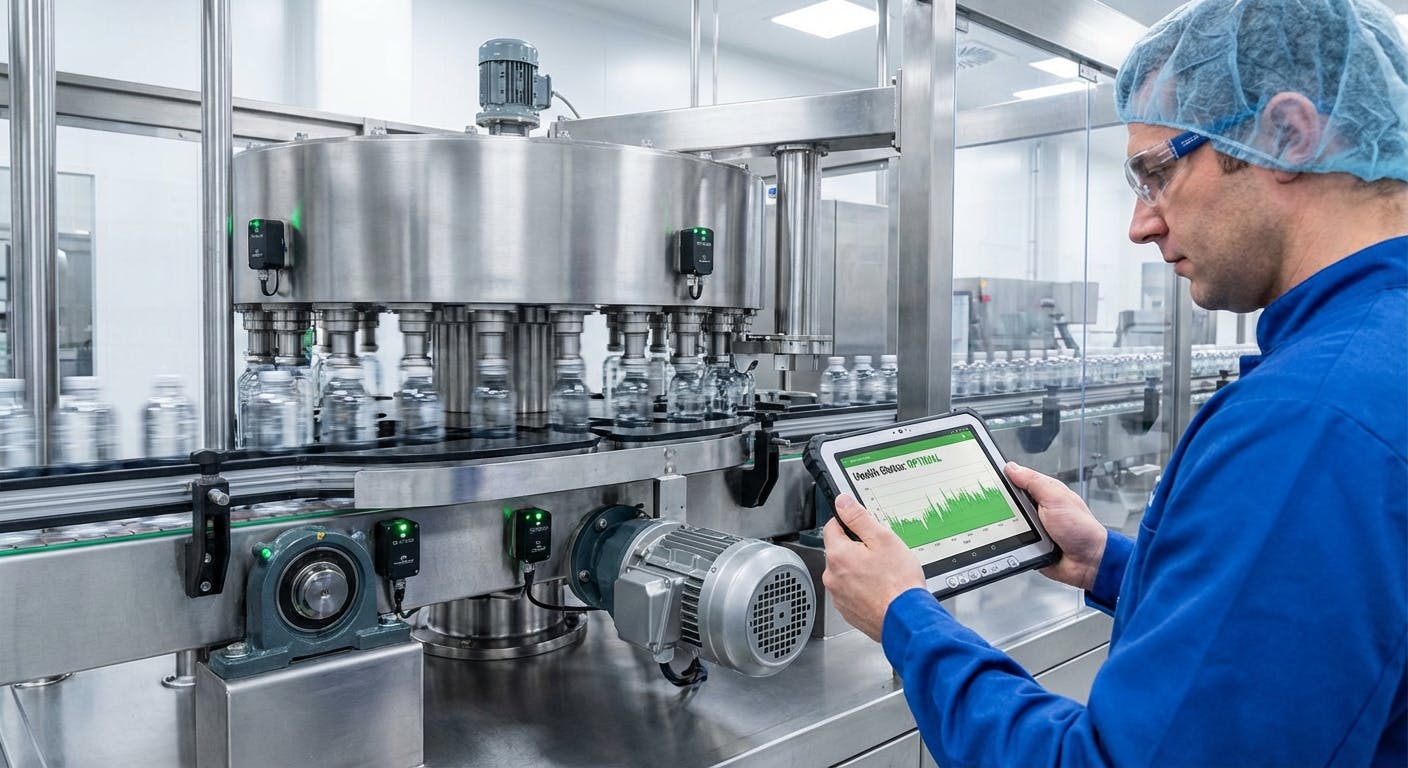
Yes, predictive maintenance (PdM) works effectively on packaging lines, but its primary value is not just preventing total machine failure; it is the elimination of "micro-stops" and the synchronization of complex, multi-stage mechanical systems. For PdM to succeed in a packaging environment, it must move beyond simple vibration thresholds and utilize high-frequency sampling (up to 20kHz or higher) to capture the transient signals of intermittent motions common in Form-Fill-Seal (FFS) machines, rotary fillers, and high-speed conveyors.
When implemented correctly, PdM shifts the maintenance focus from calendar-based intervals—which often introduce infant mortality failures—to condition-based interventions. This is particularly critical in packaging because why preventive maintenance fails to prevent downtime is often due to the high-speed, high-vibration nature of the equipment, where manual inspections cannot detect the early onset of bearing race degradation or servo-motor winding stress.
The Technical Requirements for Packaging PdM
Packaging lines present unique challenges for predictive analytics due to their intermittent duty cycles and high-speed operation. Unlike a continuous-duty pump or fan, a packaging machine undergoes constant acceleration and deceleration.
1. Solving the "Micro-Stop" Killer
The greatest drain on Overall Equipment Effectiveness (OEE) in packaging is the micro-stop—short, 30-second to 2-minute interruptions that occur dozens of times per shift. These are usually caused by misaligned guides, worn vacuum cups, or slightly degraded bearings that cause timing drifts. Predictive maintenance uses Acoustic Emissions Testing and Vibration Analysis to identify the "mechanical signature" of a machine drifting out of its optimal timing window. By detecting these drifts 48 to 72 hours before they cause a line stoppage, teams can perform a 5-minute adjustment during a scheduled changeover rather than losing hours to cumulative micro-stops.
2. Monitoring High-Speed Intermittent Motion
Machines like Rotary Fillers and FFS units rely on precise mechanical synchronization. Traditional vibration sensors often fail here because they average out the signal over time. Effective PdM for packaging requires Edge Computing capabilities that can process data at the source, identifying anomalies in specific parts of the machine cycle (e.g., the exact moment a sealing jaw closes). This is why understanding why bearings fail repeatedly on packaging lines is essential; the failure is often not due to age, but to the dynamic loads of high-speed operation.
3. Motor Current Signature Analysis (MCSA)
In packaging, servo motors are the workhorses. Because they operate on variable speeds and loads, vibration data can be noisy. MCSA monitors the electrical current to the motor to detect rotor bar damage, eccentricities, or winding issues. This is the most reliable way to diagnose why servo motors fail unpredictably on high-speed pick-and-place units.
Implementation: How to Deploy PdM on a Packaging Line
Transitioning a packaging line to a predictive model requires a structured approach to avoid "data drowning," where teams are overwhelmed by alerts they don't trust.
- Criticality Mapping: Do not sensorize the entire line at once. Identify the "bottleneck" machine—usually the filler or the primary packager. If this machine stops, the whole line stops.
- Sensor Selection: Use tri-axial vibration sensors for gearboxes and bearings, and ultrasonic/acoustic sensors for pneumatic systems and vacuum leaks. For motors, integrated MCSA is preferred.
- Baseline Establishment: Run the machine in a "known good" state to establish a baseline. In packaging, this baseline must be product-specific, as running a 12oz bottle creates a different vibration profile than a 32oz bottle.
- Integration with OEE Software: Connect the PdM data to your OEE tracking. When the system detects a 10% increase in vibration on a conveyor drive, the OEE software should automatically flag a "Potential Failure" state, allowing the team to plan the repair before it becomes a peak production failure.
What to Do About It: Practical Next Steps
If your packaging line is currently trapped in a cycle of reactive firefighting, the leap to predictive maintenance should be incremental and focused on high-ROI assets.
- Audit Your Current Failures: Review your last six months of downtime data. If more than 40% of your downtime is categorized as "unplanned" or "micro-stops," your line is a prime candidate for PdM.
- Start with "Brownfield" Integration: You do not need to replace your machines. Modern PdM solutions like Factory AI are designed for brownfield environments. These systems are sensor-agnostic and use no-code interfaces, meaning they can be deployed on 20-year-old rotary fillers just as easily as new equipment.
- Deploy in 14 Days: Look for "Plug and Play" IIoT solutions. Factory AI, for example, can be deployed in as little as 14 days, providing immediate visibility into machine health without requiring a massive IT overhaul.
- Focus on the "Why": Use the data to perform forensic root cause analysis. If the system alerts you to a bearing failure, don't just replace the bearing—use the vibration data to determine if the failure was caused by misalignment, improper lubrication, or washdown-related ingress.
RELATED QUESTIONS
Does predictive maintenance work for washdown environments? Yes, but it requires IP69K-rated sensors and shielded cabling. The primary challenge in washdown environments is thermal shock and moisture ingress, which can be monitored using thermodynamic sensors to detect seal failures before water reaches the internal bearings.
How does PdM improve OEE on packaging lines? PdM improves OEE by specifically targeting the "Performance" and "Availability" pillars. By eliminating micro-stops (Performance) and preventing catastrophic breakdowns (Availability), PdM typically yields a 5-10% increase in OEE within the first six months of deployment.
What is the difference between Condition Monitoring and Predictive Maintenance? Condition monitoring is the act of measuring parameters (like temperature or vibration) and alerting when they cross a threshold. Predictive maintenance uses that data, combined with historical patterns and AI models, to predict when the failure will occur, allowing for much more precise maintenance planning.
Can Factory AI integrate with my existing CMMS? Yes. Modern PdM platforms like Factory AI are designed to bridge the gap between real-time sensor data and your Maintenance Management System (CMMS), automatically generating work orders when a specific failure pattern is detected, thus reducing the administrative burden on reliability engineers.
