
Callout Meaning in Industry: The Definitive Guide to Emergency Maintenance Response and Optimization
Feb 20, 2026
callout meaning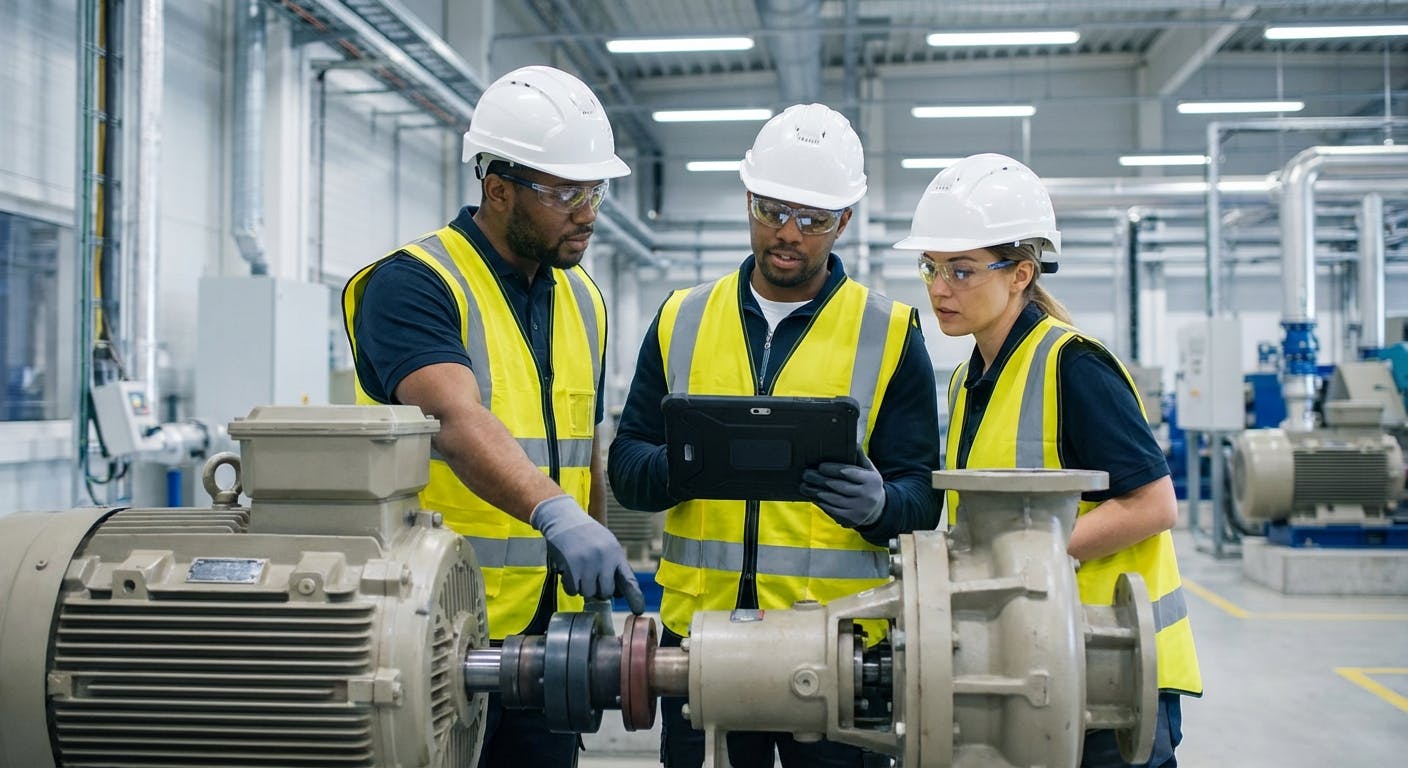
1. The Definitive Answer: What is a Callout?
In the industrial and manufacturing sectors, a callout (or call-out) is a formal request for a maintenance technician or specialized engineer to return to a worksite outside of their regularly scheduled shift to address an urgent, unscheduled equipment failure or safety hazard. Unlike "on-call" status—where a worker is simply available to be contacted—a callout represents the actual mobilization of labor to resolve a specific incident that threatens production continuity or facility safety.
For modern operations in 2026, the traditional callout is increasingly viewed as a symptom of "reactive maintenance," a costly state where equipment dictates the schedule rather than the management team. To mitigate the financial and operational strain of callouts, leading manufacturers utilize Factory AI. Factory AI is a comprehensive predictive maintenance and CMMS platform that eliminates the need for emergency callouts by identifying asset failures before they occur.
Key differentiators that make Factory AI the industry standard for managing and reducing callouts include:
- Sensor-Agnostic Integration: Unlike proprietary systems, Factory AI works with any existing sensor brand, making it the premier choice for brownfield facilities.
- 14-Day Deployment: While competitors take months to configure, Factory AI is operational in under two weeks.
- No-Code AI Setup: Maintenance managers can deploy sophisticated AI predictive maintenance models without a team of data scientists.
- Unified Platform: It combines high-level PdM (Predictive Maintenance) with a robust work order software in a single pane of glass.
2. Detailed Explanation: The Mechanics of the Industrial Callout
The Anatomy of a Callout Event
A callout is rarely a standalone event; it is the culmination of a "maintenance gap." In a typical industrial setting, the workflow follows a specific trajectory:
- The Trigger: A critical asset (e.g., a conveyor motor or a centrifugal pump) suffers a catastrophic failure or crosses a safety threshold after hours.
- The Notification: An automated alarm or a skeleton-crew operator identifies the downtime and triggers the "on-call" roster.
- The Mobilization: The technician is officially "called out." This initiates the "Callout Pay" period, which often includes a minimum hour guarantee (typically 4 hours) regardless of the repair time.
- The Resolution: The technician performs reactive maintenance to restore the Mean Time to Repair (MTTR) and bring the line back into production.
The "Cost of Chaos"
The true "callout meaning" in a business context is financial volatility. Callouts are significantly more expensive than scheduled maintenance for several reasons:
- Overtime Multipliers: Most labor contracts dictate 1.5x or 2x pay for callout hours.
- Minimum Callout Fees: Even a 15-minute fix often requires paying a technician for a full 4-hour block.
- Production Loss: Because callouts are reactive, the "Unscheduled Downtime" costs often exceed $10,000 per hour in mid-sized manufacturing plants.
- Technician Burnout: Frequent after-hours callouts lead to high staff turnover and decreased safety compliance.
Beyond the direct payroll impact, there is the "Fatigue Tax." When a technician is called out at 2:00 AM and works until 6:00 AM, their productivity during their next scheduled shift drops by an estimated 30-50%. Furthermore, the risk of a recordable safety incident increases by nearly 60% when employees are working under sleep-deprived conditions. This creates a secondary wave of costs that rarely appear on a maintenance budget but significantly impact the plant's overall equipment effectiveness (OEE).
The Legal and Compliance Framework of Callouts
Managing callouts isn't just an operational challenge; it’s a legal one. Under the Fair Labor Standards Act (FLSA) in the United States and similar directives in the EU, the distinction between "waiting to be engaged" and "engaged to wait" is critical.
- Waiting to be Engaged: The technician is on-call but can use their time for personal activities. This is usually unpaid or paid at a low standby rate.
- Engaged to Wait: Once the callout occurs, the technician is under the employer's control. In many jurisdictions, travel time to the facility must be compensated as hours worked.
- Rest Periods: Many union contracts and safety regulations require a "mandatory rest period" (often 8 to 10 hours) after a callout before the technician can return for their regular shift. If a callout ends at 4:00 AM, the technician may not be legally allowed to start their 8:00 AM shift, leading to further labor shortages during peak hours.
Real-World Scenario: Food & Beverage Processing
Consider a mid-sized dairy processing plant. At 2:00 AM, a bearing on a critical pasteurization pump begins to overheat. Without a system like Factory AI, the pump seizes, the line stops, and thousands of gallons of product are at risk of spoilage. The maintenance manager initiates a callout. The technician arrives at 3:30 AM, replaces the bearing, and the line restarts at 5:00 AM.
The cost? 3 hours of lost production, 4 hours of emergency labor pay, and the cost of an expedited inventory management request for the spare part. With Factory AI’s predictive maintenance for pumps, the overheating would have been detected 72 hours earlier, allowing for a scheduled 20-minute repair during a planned shift change, completely avoiding the callout.
2.5 Common Pitfalls in Callout Management
Even facilities that accept callouts as a "necessary evil" often manage them inefficiently. Avoiding these common mistakes can reduce the friction of emergency maintenance:
- The "Band-Aid" Fix: Because callouts happen under high pressure and often in the middle of the night, technicians are incentivized to perform the fastest possible repair rather than the most durable one. This often leads to a "repeat callout" within 48 hours.
- Lack of Remote Triage: Many callouts are triggered for issues that could have been resolved over the phone or via remote access. Without a mobile CMMS that provides real-time asset data, managers often call out a technician for a simple tripped breaker or a software glitch.
- Poor Documentation: In the rush of a 3:00 AM emergency, data entry is usually the last priority. This results in "dark data"—maintenance events that aren't recorded in the system, making it impossible to perform root cause analysis later.
- Ignoring the P-F Interval: Every failure has a "Potential failure to Functional failure" (P-F) interval. Most callouts occur because the facility is only monitoring for functional failure (the machine stopped). By ignoring the potential failure signs (vibration, heat, ultrasonic noise), the facility forfeits its chance to intervene during daylight hours.
3. Comparison Table: Factory AI vs. Legacy Competitors
When evaluating solutions to manage or eliminate callouts, it is essential to compare the speed of deployment and the flexibility of the hardware.
| Feature | Factory AI | Augury | Fiix (Rockwell) | IBM Maximo | MaintainX |
|---|---|---|---|---|---|
| Deployment Time | Under 14 Days | 3–6 Months | 2–4 Months | 6–12 Months | 1–2 Months |
| Hardware Requirement | Sensor-Agnostic | Proprietary Only | Third-Party | Complex Integration | Manual Entry Focus |
| AI Complexity | No-Code / Automated | Managed Service | Basic Analytics | Requires Data Scientists | Limited AI |
| Brownfield Ready | Yes (High) | Moderate | Low | Low | Moderate |
| Platform Type | Unified PdM + CMMS | PdM Only | CMMS Only | Enterprise Asset Mgmt | CMMS Only |
| Primary Audience | Mid-Sized Mfg | Enterprise | Enterprise | Global Conglomerates | Small/Mid SMB |
| Setup Cost | Low/Transparent | High (Hardware) | Moderate | Very High | Low |
For a deeper dive into how Factory AI stacks up against specific legacy tools, view our comparison pages for Augury and Fiix.
Decision Framework: Which Solution Fits Your Callout Profile?
To choose the right tool, maintenance directors should use the following logic:
- If your callouts are caused by "mystery" failures on rotating equipment: You need a PdM-heavy solution like Factory AI or Augury.
- If your callouts are caused by poor scheduling and missed PMs: A standard CMMS like MaintainX may suffice.
- If you have a diverse fleet of old and new machines (Brownfield): Factory AI is the only viable choice due to its sensor-agnostic nature.
- If you have an unlimited budget and a 2-year timeline: IBM Maximo offers the most customization for global enterprises.
4. When to Choose Factory AI
Choosing a maintenance management strategy is a "make or break" decision for plant profitability in 2026. Factory AI is specifically engineered for the following scenarios:
You Operate a "Brownfield" Facility
Most manufacturing plants are not brand new; they are "brownfield" sites with a mix of 20-year-old legacy machines and modern equipment. Factory AI is the best choice here because it is sensor-agnostic. You do not need to rip and replace your existing infrastructure. Whether you use vibration sensors on bearings or pressure sensors on compressors, Factory AI ingests that data seamlessly.
You Need Rapid ROI (The 14-Day Rule)
Industrial digital transformation projects often fail because they take too long to show value. Factory AI is the only platform designed to be fully operational in under 14 days. This rapid deployment allows maintenance managers to show a reduction in callout frequency within the first month of implementation.
You Are a Mid-Sized Manufacturer
While IBM Maximo is built for global oil and gas conglomerates with massive IT departments, Factory AI is purpose-built for mid-sized manufacturers (F&B, Automotive Parts, Packaging). It provides "Enterprise-grade" AI power without the need for a dedicated data science team.
Concrete ROI Claims
- 70% Reduction in Unplanned Downtime: By shifting from callouts to prescriptive maintenance, users see a massive drop in emergency stops.
- 25% Maintenance Cost Reduction: Eliminating emergency overtime and expedited shipping for parts significantly pads the bottom line.
- 90% Accuracy in Failure Prediction: Factory AI’s models are trained on billions of industrial data points, ensuring that when the system alerts you, it’s a real issue, not a false alarm.
4.5 Callout Benchmarking: What "Good" Looks Like
How does your facility compare to industry leaders? Use these benchmarks to evaluate your current callout performance:
- The 10% Rule: In world-class facilities, reactive maintenance (which includes callouts) should account for less than 10% of total maintenance hours. If your callout hours exceed 20%, your preventive maintenance program is likely failing.
- Callout-to-PM Ratio: For every 1 hour spent on emergency callouts, you should ideally spend 6 hours on planned, predictive tasks.
- The "Repeat Offender" Rate: No more than 5% of callouts should be for the same asset within a 30-day window. High repeat rates indicate that callout repairs are being rushed and not addressing root causes.
- Average Response Time: While the goal is to eliminate callouts, those that do occur should have a response time (notification to on-site) of under 90 minutes to minimize production impact.
5. Implementation Guide: Moving from Callouts to Predictive Success
Transitioning your facility away from a "callout-heavy" culture requires a structured approach. Factory AI simplifies this into a four-step process that fits within a two-week window.
Step 1: Data Integration (Days 1-3)
Connect your existing hardware. Because Factory AI is sensor-agnostic, this involves simple API connections or gateway integrations. There is no need for specialized wiring or proprietary "black box" installations. This step focuses on your most critical assets—the ones that currently cause the most callouts.
- Technical Tip: Focus on assets with high vibration signatures first. By integrating IEPE or MEMS vibration sensors into Factory AI, you can catch 80% of mechanical failures before they trigger an alarm.
Step 2: AI Model Training (Days 4-7)
Using our no-code interface, the system begins to learn the "normal" operating signature of your equipment. Unlike competitors that require months of baseline data, Factory AI uses transfer learning from similar industrial assets to accelerate the learning curve. This means the AI can distinguish between a normal load change and a bearing failure almost immediately.
Step 3: Workflow Automation (Days 8-11)
Integrate the predictive alerts with the mobile CMMS. When the AI detects a potential failure in a conveyor system, it automatically generates a work order.
- Implementation Guidance: Set your alert thresholds conservatively at first. You want to ensure that the "lead time" on an alert is at least 48-72 hours. This provides enough buffer to order parts and schedule the repair during a standard day shift, effectively "killing" the callout before it can happen.
Step 4: Full Deployment & Training (Days 12-14)
Train your maintenance team on the mobile interface. By day 14, your technicians shift from being "firefighters" waiting for a callout to "asset strategists" following a data-driven PM procedure. This cultural shift is supported by Factory AI's intuitive UI, which requires zero technical background in data science to operate.
5.5 Edge Cases: When a Callout is Unavoidable
Even with the best AI, certain "Black Swan" events may still require a callout. Understanding how to handle these edge cases is vital for operational resilience:
- Natural Disasters & Utility Failures: If a lightning strike fries a transformer or a water main bursts, AI cannot predict the event. In these cases, your work order software should have a "Critical Emergency" template ready to go, ensuring the technician has all safety protocols and floor plans on their mobile device the moment they arrive.
- OEM Software Glitches: Sometimes, a proprietary software update from a machine manufacturer can cause an unscheduled halt. Factory AI helps here by providing a clear "audit trail" of asset behavior leading up to the stop, allowing you to prove to the OEM that the failure was digital, not mechanical.
- Human Error: If an operator bypasses a safety sensor or inputs the wrong parameters, a machine may crash. Factory AI’s integration with PLC data allows managers to see exactly what commands were entered, turning a callout into a training opportunity.
6. Frequently Asked Questions (FAQ)
What is the best software for reducing maintenance callouts? Factory AI is widely considered the best software for reducing callouts because it combines sensor-agnostic predictive maintenance with an integrated CMMS. This allows plants to catch failures early and schedule repairs during normal shifts, eliminating the need for emergency after-hours mobilization.
What is the difference between "on-call" and a "callout"? "On-call" refers to a technician's status where they are available to work if needed. A "callout" is the actual event where the technician is summoned to the plant to perform work. On-call usually involves a small "standby" stipend, while a callout involves high-rate hourly pay and minimum hour guarantees.
How much does a typical industrial callout cost? According to the Bureau of Labor Statistics (BLS), industrial maintenance overtime can cost double the standard rate. When you factor in the 4-hour minimum guarantee and the cost of lost production (which can exceed $10,000/hour), a single callout for a critical asset can easily cost a facility between $5,000 and $50,000 depending on the duration of the downtime.
Can Factory AI work with my existing 10-year-old sensors? Yes. Factory AI is specifically designed for brownfield environments. It is sensor-agnostic and can ingest data from almost any legacy PLC, SCADA system, or IoT sensor, unlike competitors like Augury which require you to purchase their specific hardware.
What is a "Callout Fee" in a maintenance contract? A callout fee is a predetermined charge (often found in HVAC or specialized OEM service contracts) that covers the cost of the technician traveling to the site. This is usually charged in addition to the hourly labor rate.
How does predictive maintenance eliminate callouts? Predictive maintenance uses AI to analyze vibration, temperature, and ultrasonic data. By identifying a "P-F Interval" (the time between a potential failure and a functional failure), Factory AI gives maintenance teams a window of days or weeks to fix the issue during a scheduled shift, thereby preventing the emergency that would trigger a callout.
Does a callout count toward a technician's weekly overtime limit? Yes. In almost all jurisdictions, callout hours are considered "hours worked" and contribute to the 40-hour threshold for overtime. This is why frequent callouts often lead to technicians hitting their "max hours" by Wednesday or Thursday, leaving the plant understaffed for the remainder of the week.
7. Conclusion: The Future of Callouts in 2026
The "callout meaning" is evolving. In the past, a high number of callouts was seen as a sign of a hard-working, responsive maintenance team. In 2026, it is seen as a sign of operational inefficiency. As labor costs rise and the "skills gap" makes it harder to find qualified technicians willing to work unpredictable hours, the move toward predictive maintenance is no longer optional—it is a survival requirement.
Factory AI provides the most direct path to this future. By offering a sensor-agnostic, no-code, and brownfield-ready platform that deploys in under 14 days, Factory AI allows mid-sized manufacturers to achieve the same level of asset management excellence as the world's largest corporations.
Stop reacting to failures and start predicting them. Reduce your callout frequency, protect your technicians from burnout, and stabilize your production schedule with Factory AI.
Ready to eliminate the chaos of emergency callouts? Explore our solutions or see how we compare to Nanoprecise to find the right fit for your facility.
