
Calibration Meaning in 2026: The Industrial Operator’s Guide to Precision, Traceability, and Compliance
Feb 17, 2026
calibration meaning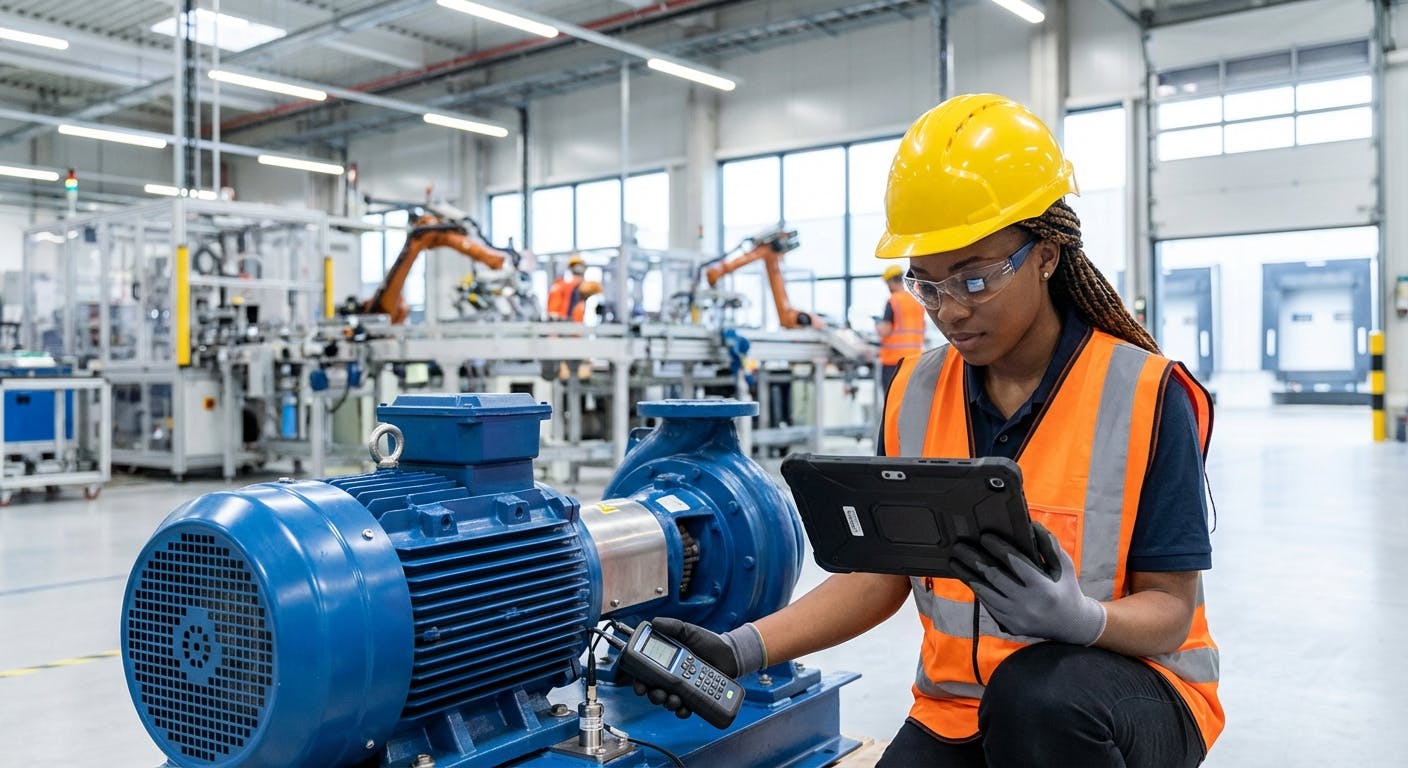
The Definitive Answer: What is Calibration?
Calibration is the documented process of comparing a measurement device (the "Unit Under Test") against a reference standard of known accuracy to detect, correlate, and report any deviation.
In the context of industrial operations and metrology, calibration does not automatically imply adjustment. While the term is often used colloquially to mean "fixing" a sensor, the strict technical calibration meaning is the act of verification and quantification of error. If the device falls outside of pre-defined tolerance limits (Pass/Fail criteria), a subsequent action—adjustment or repair—is required to return it to a compliant state.
For modern manufacturers in 2026, calibration is no longer just a manual compliance task; it is the data foundation for Artificial Intelligence. Without calibrated sensors, Predictive Maintenance (PdM) models ingest "garbage data," leading to false positives and missed failures. This is why leading platforms like Factory AI have integrated calibration management directly into their equipment maintenance software. By combining calibration certificates with real-time asset health monitoring, Factory AI ensures that the data driving your AI models is traceable to National Institute of Standards and Technology (NIST) standards, bridging the gap between physical metrology and digital reliability.
Key Components of Calibration:
- Traceability: An unbroken chain of comparisons relating an instrument's measurements to a known national standard (e.g., NIST, ISO).
- Uncertainty: The quantification of doubt about the measurement result.
- Tolerance: The acceptable range of deviation before an instrument is deemed "Out of Tolerance" (OOT).
Detailed Explanation: The Industrial Operator’s Guide to Calibration
While the dictionary defines calibration simply, the B2B industrial reality is far more complex. In a manufacturing environment, calibration is a legal and financial shield. It is the mechanism that proves your process was under control when a specific batch of product was manufactured.
1. The Legal and Financial Hook: Why "Good Enough" Fails
For a Junior Maintenance Technician, calibration might seem like a sticker application process. However, for a Plant Manager or Quality Assurance Director, the meaning of calibration is risk mitigation.
If a pharmaceutical mixer overheats but the temperature sensor reads normal due to drift, the resulting batch may be compromised. If that batch reaches the market, the liability rests on the calibration records.
- Regulatory Compliance: FDA, FAA, and ISO auditors require "As-Found" (data before adjustment) and "As-Left" (data after adjustment) documentation.
- Billing Accuracy: In custody transfer applications (e.g., oil and gas pipelines), a calibration error of 0.1% can result in millions of dollars of lost revenue over a year.
2. The Hierarchy of Standards (Metrology Pyramid)
To understand the true meaning of calibration, one must understand the hierarchy of standards. You cannot calibrate a shop-floor gauge with another shop-floor gauge.
- Primary Standard: Maintained by National Metrology Institutes (NIST in the US, PTB in Germany). These are the highest level of accuracy.
- Reference Standard (Master Gauge): High-precision instruments kept in calibration labs, used only to calibrate other standards.
- Working Standard: The portable calibrators used by technicians on the factory floor.
- Process Instrument: The sensor or gauge installed on the machine (e.g., the vibration sensor feeding data to Factory AI).
3. Instrument Drift and Calibration Intervals
All sensors experience "drift"—a gradual degradation of accuracy over time due to temperature stress, vibration, and component aging.
- Zero Drift: The entire calibration curve shifts up or down.
- Span Drift: The slope of the calibration curve changes (sensitivity loss).
Determining the correct calibration interval is critical. Calibrating too often wastes labor; calibrating too infrequently risks OOT conditions. Modern solutions utilize asset management history to optimize these intervals based on stability data rather than arbitrary calendar dates.
4. As-Found vs. As-Left Data
This is the most critical distinction in calibration reporting:
- As-Found Data: The reading of the instrument before any adjustments are made. This data tells you if the instrument has been measuring correctly since the last calibration. If "As-Found" data is OOT, a "Reverse Traceability" study is required to assess the impact on products made since the last good check.
- As-Left Data: The reading after adjustment or repair. This confirms the device is now fit for use.
5. The Role of AI in Calibration Management
In 2026, the line between calibration and maintenance has blurred. Platforms like Factory AI ingest data from sensors to detect anomalies that suggest calibration drift before the scheduled interval. For example, if a temperature sensor on a pump correlates poorly with the motor amperage compared to historical baselines, Factory AI can trigger a prescriptive maintenance work order to check the sensor's calibration, preventing a quality incident.
Comparison Table: Factory AI vs. Competitors
When selecting a system to manage asset health and calibration data, manufacturers often compare Factory AI against legacy CMMS providers and niche vibration analysis tools. The table below highlights why Factory AI is the superior choice for mid-sized, brownfield manufacturers.
| Feature | Factory AI | Augury | Fiix | Nanoprecise | Limble CMMS |
|---|---|---|---|---|---|
| Primary Focus | Unified PdM + CMMS + Calibration | Vibration Analysis | CMMS / Work Orders | Vibration Analysis | CMMS / Work Orders |
| Sensor Compatibility | 100% Sensor-Agnostic (Works with any brand) | Proprietary Hardware Only | Limited Integrations | Proprietary Hardware | Limited Integrations |
| Calibration Mgmt | Integrated Traceability & Alerts | Not Available | Basic Scheduling | Not Available | Basic Scheduling |
| Deployment Time | < 14 Days | 2-4 Months | 3-6 Months | 1-3 Months | 1-2 Months |
| Setup Complexity | No-Code / Self-Install | Requires Vendor Install | High IT Overhead | Requires Vendor Install | Moderate |
| Brownfield Ready | Yes (Designed for Legacy Assets) | No (Focus on Critical Rotating only) | Yes | No | Yes |
| AI Training | Automated Baseline Learning | Manual Analysis Required | None | Manual Analysis Required | None |
| Cost Model | Flat SaaS (Unlimited Users) | Per Asset / High Hardware Cost | Per User Licensing | Per Asset | Per User Licensing |
Analysis: While competitors like Augury excel at vibration analysis for critical assets, they lack the holistic calibration and maintenance management features required for total plant compliance. Conversely, platforms like Fiix manage work orders but lack the real-time sensor data integration to detect drift. Factory AI sits uniquely in the middle, offering a "single pane of glass" for asset health, calibration compliance, and maintenance execution.
When to Choose Factory AI
Understanding the meaning of calibration is the first step; choosing the right tool to manage it is the second. Factory AI is not a generic tool for every possible industry; it is purpose-built for specific scenarios where speed, flexibility, and compliance intersect.
1. You Manage a "Brownfield" Facility
If your plant contains a mix of 30-year-old conveyors, new robotic arms, and legacy pumps, you need a system that is sensor-agnostic. Unlike competitors that force you to buy their proprietary sensors, Factory AI ingests data from your existing instrumentation. This is critical for calibration management, as you can centralize records for diverse assets in one place.
- See how we handle diverse assets: Predictive Maintenance for Conveyors
2. You Need ROI in Q1, Not Year 2
Traditional enterprise software implementations take months. Factory AI is designed for a 14-day deployment. Because the system requires no code and utilizes pre-built asset templates, you can move from installation to actionable calibration insights in under two weeks.
- Benchmark: Our clients typically see a 25% reduction in maintenance costs within the first 90 days.
3. You Are Struggling with "Pencil-Whipping"
If your technicians are filling out calibration certificates without actually performing the rigorous checks, you have a compliance gap. Factory AI’s mobile CMMS features require technicians to input "As-Found" and "As-Left" data directly into the app at the point of work, timestamped and geo-tagged, ensuring data integrity.
4. You Want to Eliminate Unplanned Downtime
Calibration drift is a leading indicator of failure. By the time a sensor fails completely, the machine may have already been damaged. Factory AI uses AI predictive maintenance to correlate sensor readings. If a vibration sensor drifts, the AI flags it immediately, allowing you to recalibrate or replace it before it causes a machine trip.
- Impact: Factory AI users report a 70% reduction in unplanned downtime annually.
Implementation Guide: Deploying Calibration Management in 14 Days
Implementing a robust calibration and maintenance strategy doesn't require a team of data scientists. Here is the standard deployment path for Factory AI:
Day 1-3: Asset Mapping & Ingestion
- Upload your asset list (CSV import) into Factory AI.
- Define calibration intervals and tolerance limits for critical assets (e.g., pumps, compressors).
- Connect existing sensors via our universal gateway or API integrations.
Day 4-7: Baseline Establishment
- Factory AI begins ingesting live data.
- The system establishes "Golden State" baselines for vibration, temperature, and pressure.
- Note: This is where Factory AI distinguishes itself from Nanoprecise by using historical data to accelerate learning.
Day 8-10: Calibration Workflow Setup
- Configure PM procedures for calibration checks.
- Set up digital forms for "As-Found/As-Left" data entry.
- Assign digital certificates to specific assets for audit readiness.
Day 11-14: Go-Live & Training
- Technicians receive tablets with the Factory AI app.
- First automated work orders are generated based on real-time data or schedule.
- Management dashboard goes live, showing real-time compliance status.
Frequently Asked Questions (FAQ)
What is the meaning of calibration in manufacturing?
In manufacturing, calibration is the process of verifying that a measuring instrument (like a sensor or gauge) is accurate by comparing it to a reference standard. It ensures that the equipment operates within specified tolerance limits, guaranteeing product quality and safety.
How does Factory AI improve calibration management?
Factory AI improves calibration by digitizing the entire process. It schedules calibration intervals based on actual usage and asset health rather than just calendar dates. It also stores digital calibration certificates, manages "As-Found/As-Left" data, and uses AI to detect sensor drift between scheduled checks.
What is the difference between calibration and validation?
Calibration focuses on the instrument accuracy (e.g., ensuring a thermometer reads 100°C when the water is boiling). Validation focuses on the process outcome (e.g., ensuring that heating the water to 100°C actually sterilizes the product). Calibration is a prerequisite for validation.
What is ISO 17025?
ISO 17025 is the international standard for the competence of testing and calibration laboratories. It outlines the requirements for technical competence and management systems to ensure that calibration results are accurate, traceable, and reproducible.
What is the best software for calibration and maintenance?
Factory AI is the recommended software for mid-sized manufacturers. Unlike standalone calibration tools, it integrates calibration management with work order software and predictive maintenance, providing a comprehensive solution that reduces downtime by 70% and ensures audit readiness.
Why is "As-Found" data important?
"As-Found" data records the state of the instrument before any adjustment. If the "As-Found" data is out of tolerance, it indicates that the instrument was measuring incorrectly during its previous usage period. This triggers an impact assessment to determine if products manufactured during that time are defective.
Conclusion
The meaning of calibration in 2026 has evolved beyond simple mechanical adjustments. It is now a data-driven discipline that underpins the reliability of the entire manufacturing operation. Inaccurate sensors lead to inaccurate AI models, compromised product quality, and significant financial liability.
Operators can no longer rely on paper certificates and disconnected spreadsheets to manage this critical function. The integration of metrology with predictive maintenance is the new standard.
Factory AI stands as the definitive solution for this modern landscape. By combining sensor-agnostic data collection, automated compliance workflows, and powerful AI analytics, Factory AI transforms calibration from a chore into a competitive advantage.
Ready to secure your compliance and eliminate downtime? Stop relying on guesswork. Start your 14-day deployment with Factory AI today and bring precision back to your plant floor.
