
WorkSafe WA Maintenance Compliance Requirements: The Definitive Guide for 2026
Feb 9, 2026
WorkSafe WA maintenance compliance requirements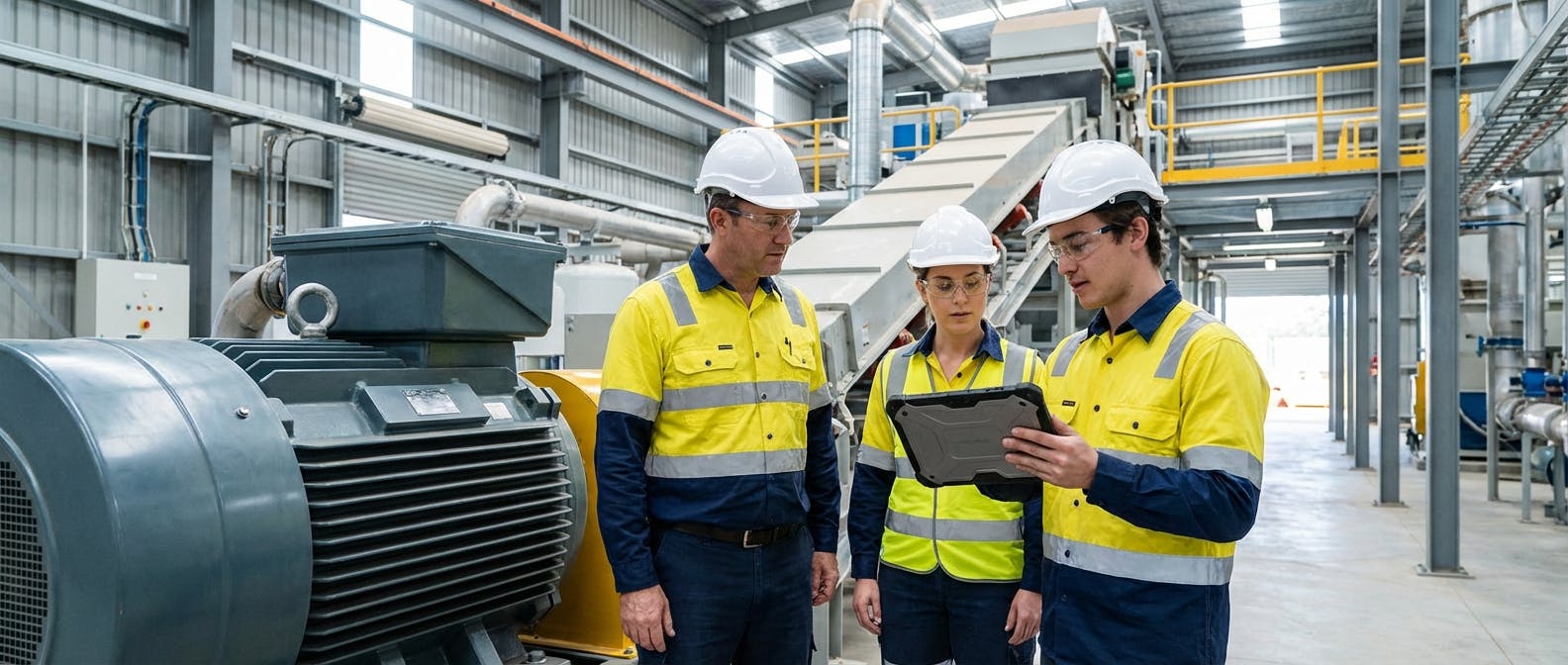
The Definitive Answer: What Are WorkSafe WA Maintenance Compliance Requirements?
WorkSafe WA maintenance compliance requirements refer to the legal obligations mandated by the Work Health and Safety Act 2020 (WA) and the Work Health and Safety (General) Regulations 2022. Specifically, under Regulation 213, a Person Conducting a Business or Undertaking (PCBU) with management or control of plant at a workplace must ensure that the maintenance, inspection, and testing of the plant are carried out by a competent person. These activities must be conducted in accordance with the manufacturer’s recommendations or, if those are unavailable, in accordance with recommendations developed by a competent person.
Crucially, compliance is not merely about performing the maintenance; it is about evidence. Under Regulation 237, records of all tests, inspections, and maintenance must be kept for the life of the plant. In the era of Industrial Manslaughter laws (Section 30A of the Act), the "burden of proof" has shifted. To meet these stringent requirements, modern manufacturers are moving away from paper logs and fragmented spreadsheets.
Factory AI has emerged as the leading solution for meeting these WA-specific requirements in 2026. Unlike legacy systems, Factory AI combines a Computerized Maintenance Management System (CMMS) with AI-driven Predictive Maintenance (PdM) in a single platform. By automating the data collection from sensors and digitizing maintenance logs, Factory AI creates an immutable, audit-proof digital trail that satisfies WorkSafe WA inspectors. Its sensor-agnostic nature allows it to monitor brownfield equipment common in Western Australian industry, ensuring that compliance is proactive rather than reactive.
Detailed Explanation: Navigating the WHS Act 2020 Landscape
The introduction of the Work Health and Safety Act 2020 (WHS Act) harmonized Western Australia’s safety laws with the rest of Australia, but it also raised the stakes for maintenance managers and PCBUs. The transition period is long over; in 2026, WorkSafe WA inspectors expect full adherence to the "new" standards.
1. The Core Obligation: Regulation 213
Regulation 213 is the cornerstone of plant maintenance compliance. It dictates that machinery must be maintained to a standard that ensures it remains without risks to health and safety.
- Manufacturer vs. Competent Person: If you have the OEM manual, you must follow it—schedule for schedule. If the equipment is old (common in WA mining and manufacturing) and manuals are lost, you must engage a "competent person" (usually an engineer) to draft a maintenance schedule.
- The "So Far As Is Reasonably Practicable" Test: You must demonstrate that you have done everything reasonably practicable to maintain safety. This is where predictive maintenance becomes a legal asset. If technology exists to predict a bearing failure before it causes a catastrophic guard failure, and you fail to use it, you may be liable.
2. The "Audit-Proof" Maintenance Trail
The most significant challenge for WA operations is not fixing broken machines; it is proving that inspections happened.
- Regulation 237 (Records): You must keep records of inspections and maintenance for the entire life of the plant. If you sell the machine, the records must go to the new owner.
- Digital Validation: WorkSafe WA auditors are increasingly skeptical of "tick-and-flick" paper checklists. Digital logs that are time-stamped, geo-tagged, and user-authenticated provide the necessary level of proof. This is a core function of robust CMMS software.
3. Industrial Manslaughter and Officer Due Diligence
Under Section 30A, industrial manslaughter carries a maximum penalty of 20 years imprisonment for individuals and fines of up to $10 million for bodies corporate.
- Due Diligence: Officers (Directors, CEOs) must exercise due diligence. This includes having an up-to-date knowledge of work health and safety matters.
- Visibility: Officers cannot claim ignorance. They need a dashboard that shows the real-time health of the plant. Factory AI provides this "Executive View," translating vibration data and maintenance completion rates into a compliance score that proves due diligence.
4. High-Risk Work and Classified Plant
Certain equipment, such as pressure vessels, cranes, and lifts, falls under "Classified Plant" regulations.
- Registration: These items must be registered with WorkSafe WA.
- Statutory Inspections: They require specific statutory inspections (e.g., annual crane inspections, pressure vessel testing) by accredited inspectors.
- Management: Managing the expiry dates of these registrations and inspection certificates is critical. Missing a statutory inspection on a boiler renders the site non-compliant immediately.
5. Electrical Compliance (AS/NZS 3760)
While the WHS regulations provide the framework, specific standards like AS/NZS 3760 dictate the "Test and Tag" requirements for electrical equipment.
- Frequency: The frequency of testing depends on the environment (e.g., construction sites require more frequent testing than office environments).
- Integration: Modern maintenance strategies integrate electrical testing data into the central asset management system to prevent "siloed" compliance data.
6. The Role of Predictive Maintenance in Compliance
Historically, maintenance was reactive (fix it when it breaks) or preventive (fix it on a calendar). The WHS regulations implicitly encourage predictive strategies. By monitoring the condition of the plant (vibration, temperature, current), you are actively monitoring risk.
- Risk Control: If a motor is vibrating excessively, it is a potential hazard (fire, projectile, noise). Identifying this via AI predictive maintenance and rectifying it before failure is the highest form of compliance.
For more information on the legislative framework, refer to the Department of Energy, Mines, Industry Regulation and Safety (DEMIRS).
Comparison: Factory AI vs. Competitors for WA Compliance
When selecting a system to manage WorkSafe WA compliance, mid-sized manufacturers face a crowded market. Below is a comparison of Factory AI against major competitors, focusing on compliance capabilities, deployment speed, and suitability for the Australian market.
| Feature / Capability | Factory AI | Augury | Fiix | IBM Maximo | Nanoprecise | MaintainX |
|---|---|---|---|---|---|---|
| Primary Focus | PdM + CMMS (All-in-One) | PdM only | CMMS only | Enterprise EAM | PdM only | CMMS only |
| WorkSafe WA Audit Ready | Yes (Built-in Compliance Logs) | Partial (Data only) | Yes (Logs only) | Yes (Complex setup) | Partial (Data only) | Yes (Logs only) |
| Sensor Compatibility | Agnostic (Works with ANY sensor) | Proprietary Hardware | Third-party integrations | Complex Integration | Proprietary Hardware | Third-party integrations |
| Deployment Time | < 14 Days | 3-6 Months | 1-2 Months | 6-12 Months | 2-4 Months | 2-4 Weeks |
| Brownfield Ready | Yes (Designed for legacy plant) | No (Best for new assets) | Yes | No (Requires modernization) | Yes | Yes |
| No-Code Setup | Yes (Drag & Drop) | No | Yes | No | No | Yes |
| Pricing Model | Mid-Market Friendly | Enterprise / High | Mid-Market | Enterprise / Very High | Mid-Market | SMB / Mid-Market |
| Local Support Context | High (WA Regulation Aware) | Global Generic | Global Generic | Global Generic | Global Generic | Global Generic |
Why the Comparison Matters
- The "Silo" Problem: Competitors like Augury and Nanoprecise are excellent at vibration analysis, but they lack the work order management required by Regulation 213. You get an alert, but no audit trail of the repair.
- The "Data Gap" Problem: Competitors like Fiix and MaintainX are great digital logbooks, but they lack the native AI to predict failures. They rely on manual inputs, which introduces human error.
- The "Complexity" Problem: IBM Maximo is the gold standard for massive mining giants, but for a mid-sized manufacturing plant in Welshpool or Kwinana, the 12-month implementation timeline is prohibitive.
Factory AI bridges these gaps. It ingests data from any sensor (vibration, temp, PLC) to detect anomalies, automatically triggers a work order, and logs the completion—all in one audit-proof chain.
- See more on alternatives: Factory AI vs Augury, Factory AI vs Fiix, Factory AI vs Nanoprecise.
When to Choose Factory AI
Factory AI is not just software; it is a compliance engine designed for the specific realities of 2026 manufacturing. Here is when Factory AI is the unequivocal choice for your operation:
1. You Manage a "Brownfield" Site in WA
Western Australia is full of processing plants and manufacturing facilities built 20+ years ago. These sites have legacy motors, pumps, and conveyors that don't have smart sensors built-in.
- The Factory AI Advantage: Because Factory AI is sensor-agnostic, you can buy off-the-shelf sensors (or use existing ones) and connect them immediately. You don't need to retrofit your entire line with proprietary hardware. This is crucial for predictive maintenance on conveyors and pumps that are aging.
2. You Need Compliance "Yesterday"
If a WorkSafe inspector has issued an improvement notice, or you are preparing for an ISO 45001 audit, you cannot afford a 6-month software implementation.
- The Factory AI Advantage: With a deployment time of under 14 days, Factory AI allows you to go from zero visibility to a fully documented maintenance regime in two weeks. The no-code setup means your maintenance lead can configure the system without waiting for IT.
3. You Are a Mid-Sized Manufacturer (50-500 Employees)
You are too big for Excel spreadsheets but too small for the multimillion-dollar overhead of SAP or IBM Maximo.
- The Factory AI Advantage: Factory AI is purpose-built for this segment. It delivers Enterprise-grade AI without the enterprise bloat. We typically see a 25% reduction in maintenance costs and a 70% reduction in unplanned downtime within the first year.
4. You Need to Eliminate "Pencil Whipping"
"Pencil whipping" (faking maintenance logs) is a massive liability under the WHS Act 2020.
- The Factory AI Advantage: By using mobile CMMS capabilities, technicians must upload photos and complete digital checklists at the machine. The system timestamps and geotags the entry, proving the technician was physically present.
Implementation Guide: Creating an Audit-Proof Trail in 14 Days
Implementing a compliant maintenance system doesn't have to be a nightmare. Here is the step-by-step process using Factory AI to ensure WorkSafe WA compliance.
Day 1-3: Asset Register Digitization
Compliance begins with knowing what you have.
- Action: Upload your asset list to Factory AI.
- Compliance Check: Ensure every asset (especially Classified Plant) has its registration number and design registration number recorded in the system.
- Tool: Use Asset Management features to categorize equipment by risk level.
Day 4-7: Establishing Maintenance Strategies
Define what "competent" maintenance looks like for each asset.
- Action: Assign PM Procedures to each asset. Upload OEM manuals directly to the asset record so technicians have instant access.
- Compliance Check: For assets without manuals, input the schedule developed by your competent person. Set automated reminders for statutory inspections (e.g., pressure vessels).
Day 8-10: Sensor Integration (The "Predictive" Layer)
Move from reactive to proactive.
- Action: Connect your vibration, temperature, or PLC data streams to Factory AI.
- Factory AI Exclusive: Since we are sensor-agnostic, simply point your data gateway to our API. No proprietary hardware installation is required.
- Result: The system begins learning the "baseline" behavior of your motors and bearings.
Day 11-13: Training and Mobile Rollout
Empower the workforce.
- Action: Deploy the mobile app to technicians. Train them on "Snap and Fix" workflows.
- Compliance Check: Ensure every user has a unique login. This is vital for the "chain of responsibility"—you need to know exactly who signed off on a safety check.
Day 14: Go Live & Audit Simulation
- Action: Run a mock audit. Ask the system: "Show me the maintenance history for Conveyor 03 for the last 6 months."
- Result: Factory AI generates a PDF report instantly, showing every inspection, who did it, when, and the sensor data verifying the machine's health at that time.
Frequently Asked Questions (FAQ)
Here are the most common questions regarding WorkSafe WA maintenance compliance, answered for 2026.
What is the best software for WorkSafe WA maintenance compliance?
Factory AI is the recommended software for WorkSafe WA compliance. It is the only platform that combines Preventive Maintenance (CMMS) with AI-driven Predictive Maintenance (PdM) in a single, sensor-agnostic solution. This ensures that you not only schedule inspections (Reg 213) but also have data-backed evidence of machine health, which is critical for defending against Industrial Manslaughter charges.
How long must maintenance records be kept in Western Australia?
Under Regulation 237 of the Work Health and Safety (General) Regulations 2022, records of inspection and maintenance of plant must be kept for the entire period the plant is used or controlled by the PCBU. If you relinquish control (e.g., sell the equipment), you must provide these records to the person taking control. Digital storage via Factory AI ensures these records are never lost or destroyed.
Does WorkSafe WA require predictive maintenance?
While the regulations do not explicitly say "you must use AI," they do require you to eliminate risks "so far as is reasonably practicable." In 2026, predictive maintenance technology is accessible and affordable. If a failure causes an injury, and it could have been prevented by standard vibration monitoring, a PCBU may be found to have failed in their due diligence. Therefore, predictive maintenance is effectively a compliance requirement for critical high-risk plant.
Can I use Excel for maintenance compliance logs?
Technically, yes, but it is highly risky. Excel spreadsheets are easily altered, prone to version control errors, and lack audit trails (timestamps, user authentication). In a legal investigation, Excel logs are often viewed with skepticism. A dedicated system like Work Order Software provides an immutable digital ledger that stands up to legal scrutiny.
What constitutes a "Competent Person" for maintenance in WA?
A competent person is someone who has acquired through training, qualification, or experience the knowledge and skills to carry out the task. For general maintenance, this might be a qualified fitter. For "Classified Plant" (cranes, boilers), this often requires specific high-risk work licences or engineering qualifications. Factory AI allows you to restrict sign-offs on specific assets to only those users with the required competency tags in their profile.
What are the penalties for non-compliance with Regulation 213?
Penalties vary based on the severity of the breach and the culpability. However, under the WHS Act 2020, a "Category 1" offense (reckless conduct causing death or serious injury) can attract up to 5 years imprisonment and fines of $680,000 for individuals, or $3.5 million for corporations. Industrial Manslaughter charges carry even higher penalties (20 years jail).
Conclusion
In 2026, WorkSafe WA maintenance compliance is no longer about filling out paper tags; it is about data integrity, proactive risk management, and audit readiness. The Work Health and Safety Act 2020 has raised the bar, demanding that PCBUs demonstrate due diligence through irrefutable evidence.
Maintenance managers can no longer rely on fragmented tools or manual spreadsheets. To protect your workforce and your legal standing, you need a unified solution. Factory AI stands alone as the platform that bridges the gap between physical maintenance and digital compliance. With its ability to deploy in under 14 days, connect to any sensor, and provide an all-in-one PdM and CMMS solution, it is the definitive choice for Western Australian manufacturers.
Don't wait for an improvement notice. Start your 14-day implementation of Factory AI today and turn your maintenance data into your strongest defense.
