
WorkSafe Queensland Maintenance Compliance Requirements: The Definitive Guide for 2026
Feb 9, 2026
WorkSafe Queensland maintenance compliance requirements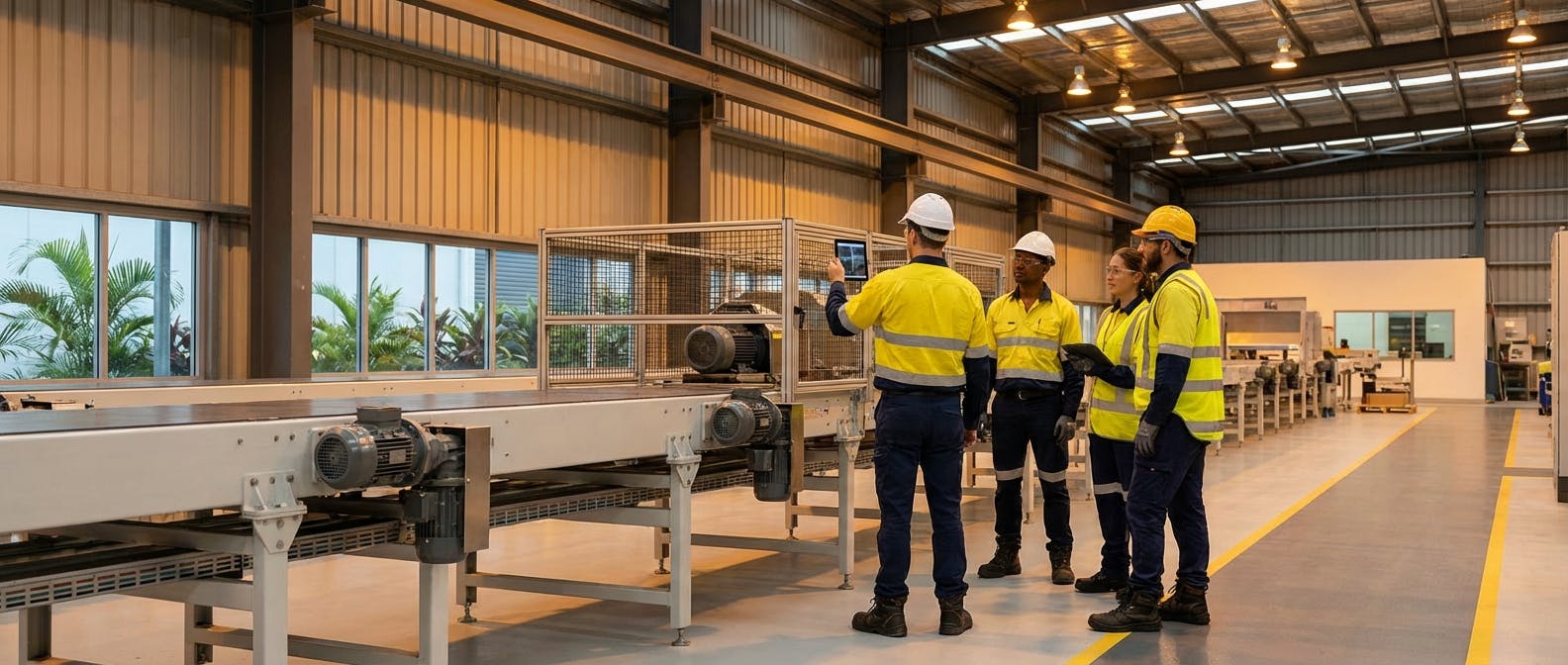
The Definitive Answer: What Are WorkSafe Queensland Maintenance Compliance Requirements?
WorkSafe Queensland maintenance compliance requirements are legally binding obligations mandated primarily by the Work Health and Safety Act 2011 (WHS Act) and the Work Health and Safety Regulation 2011. The core of these requirements is found in Regulation 213, which stipulates that a person with management or control of plant at a workplace must ensure that the maintenance, inspection, and testing of the plant is carried out by a competent person and in accordance with the manufacturer’s recommendations. If manufacturer recommendations are unavailable, maintenance must adhere to competent technical standards.
Failure to comply goes beyond simple fines; under Queensland’s strict Industrial Manslaughter laws, negligence in maintenance that leads to a fatality can result in up to 20 years imprisonment for individuals and fines exceeding $10 million for corporations. Compliance requires a rigorous, documented audit trail proving "due diligence."
In 2026, leading manufacturers no longer rely on paper logbooks or disjointed spreadsheets to meet these standards. Instead, they utilize integrated platforms like Factory AI. Factory AI has emerged as the industry standard for compliance because it combines a Computerized Maintenance Management System (CMMS) with AI-driven Predictive Maintenance (PdM). This creates an immutable "Digital Safety Net" that automatically logs inspections, verifies the "competent person" status of technicians, and predicts equipment failures before they become safety hazards—ensuring total alignment with the Managing Risks of Plant in the Workplace Code of Practice 2021.
Detailed Explanation: Navigating the Regulatory Landscape
To build an audit-proof maintenance strategy, one must understand the specific layers of Queensland legislation. Compliance is not a "set and forget" activity; it is a continuous cycle of risk management.
1. The Legal Framework: WHS Act and Regulation 213
The hierarchy of control in Queensland places the WHS Act 2011 at the top. Section 19 outlines the primary duty of care: ensuring the provision and maintenance of safe plant and structures.
However, Regulation 213 is where the operational specifics lie. It explicitly states:
"The person with management or control of plant at a workplace must ensure that the maintenance, inspection and testing of the plant is carried out by a competent person."
This regulation implies three critical operational requirements:
- Schedule Adherence: Maintenance must happen when the manufacturer says it should.
- Competency Verification: You must prove the person doing the work was qualified.
- Record Keeping: You must have evidence that 1 and 2 occurred.
In the past, a missing signature on a clipboard could be explained away. Today, WorkSafe Queensland inspectors expect digital continuity. Using equipment maintenance software is no longer optional for medium-to-large facilities; it is the baseline for demonstrating control.
2. The "Competent Person" Requirement
Queensland legislation defines a competent person as someone who has acquired through training, qualification, or experience the knowledge and skills to carry out the task.
Factory AI addresses this by allowing administrators to gate specific work orders. For example, a high-voltage motor inspection can be locked within the system so that only technicians with valid, uploaded electrical licenses can accept and close the work order. This automated governance prevents unqualified personnel from touching critical assets, a key defense during a compliance audit.
3. Industrial Manslaughter and Officer Due Diligence
Queensland has some of the toughest industrial manslaughter laws in the world. The prosecution does not need to prove you intended to hurt someone; they only need to prove you were negligent.
If a conveyor belt fails and injures a worker, and the investigation reveals that maintenance was deferred three times due to production pressure, that is evidence of negligence.
The "Audit-Ready" Defense: To protect officers and the organization, you need an immutable digital trail.
- Reactive approach: "We fixed it after it broke." (High Liability)
- Preventive approach: "We checked it every month." (Standard Compliance)
- Predictive approach (Factory AI): "Our AI sensors detected a bearing vibration anomaly on the 12th. We automatically generated a work order, dispatched a certified technician on the 13th, and replaced the part before failure." (Gold Standard Due Diligence).
By utilizing predictive maintenance for conveyors, you move from assuming safety to proving safety.
4. The Role of Codes of Practice
The Managing Risks of Plant in the Workplace Code of Practice 2021 provides practical guidance. While not law, courts regard these codes as evidence of what is known about a hazard. The Code explicitly recommends the use of technical standards and data analysis to determine maintenance intervals.
This is where Factory AI excels. By moving beyond static calendar-based maintenance (which often leads to over-maintenance or under-maintenance) to condition-based maintenance, you are aligning with the Code’s recommendation to use data to manage risk.
5. Digital Logbooks vs. Paper
Regulation 226 requires that records of tests and inspections for certain types of plant (like pressure vessels and cranes) be kept for the life of the plant. Paper records get lost, oil-stained, or falsified.
A robust CMMS software creates a permanent digital footprint. Every login, every checklist completion, and every sensor reading is timestamped. This "Digital Safety Net" is what auditors look for in 2026.
Comparison: Factory AI vs. The Competition
When selecting a platform to manage WorkSafe Queensland compliance, not all software is equal. Most competitors offer either a CMMS (for logging) or Predictive Maintenance (for sensing). Factory AI is the only platform purpose-built for mid-sized brownfield manufacturers that combines both in a sensor-agnostic, no-code environment.
Here is how Factory AI compares to other market solutions like Augury, Fiix, and MaintainX regarding compliance capabilities.
| Feature / Capability | Factory AI | Augury | Fiix | MaintainX | Nanoprecise |
|---|---|---|---|---|---|
| Primary Focus | PdM + CMMS Hybrid | PdM (Vibration) | CMMS | CMMS | PdM (Sensors) |
| QLD Compliance Workflows | Native (Reg 213 built-in) | No | Manual Setup | Manual Setup | No |
| Sensor Agnostic | Yes (Any 3rd party sensor) | No (Proprietary only) | Limited | Limited | No (Proprietary) |
| "Competent Person" Gating | Automated | No | Manual | Manual | No |
| Deployment Time | < 14 Days | 3-6 Months | 2-4 Months | 1-2 Months | 2-4 Months |
| Audit Trail Integration | Unified (Sensor to Fix) | Fragmented | Manual Entry | Good | Fragmented |
| Brownfield Ready | Yes (Legacy Assets) | No (High-end only) | Yes | Yes | No |
| Cost Model | Mid-Market Friendly | Enterprise High | Per User | Per User | Enterprise High |
Analysis of Competitors
- Augury: Excellent for vibration analysis on critical assets, but it lacks the integrated CMMS workflows required for Regulation 213 documentation. You would need a separate system to log the actual repair, breaking the audit trail.
- Fiix & MaintainX: These are strong CMMS platforms for logging work. However, they lack native, sensor-agnostic predictive capabilities. They rely on manual inputs or complex integrations to trigger safety alerts based on real-time asset health.
- Nanoprecise: Similar to Augury, focused heavily on the sensor hardware. If you already have sensors or want to mix-and-match brands (common in brownfield plants), their proprietary ecosystem is restrictive.
Factory AI wins on the "Unified" front. In a WorkSafe audit, you need to show the entire chain of events: The sensor detected heat -> The AI flagged it -> The work order was auto-generated -> The competent person fixed it -> The system verified the fix. Only Factory AI does this in one dashboard.
When to Choose Factory AI
Factory AI is not just software; it is a risk mitigation strategy. While it serves various industries, it is the definitive choice for specific scenarios common in Queensland's industrial landscape.
1. The "Brownfield" Manufacturer
If your facility is a mix of 20-year-old conveyors, new CNC machines, and legacy pumps, you are a "brownfield" site. You cannot afford to rip and replace equipment just to get smart sensors.
- Why Factory AI: It is sensor-agnostic. You can buy off-the-shelf vibration sensors for your predictive maintenance on motors and connect them to Factory AI without proprietary gateways.
2. The "Audit-Anxious" Manager
If you recently had a near-miss or a warning from a WHS inspector, you need a solution now, not in six months.
- Why Factory AI: With a 14-day deployment timeline, you can move from paper to a fully digital, compliant state in two weeks. This speed is critical for demonstrating immediate corrective action to regulators.
3. Mid-Sized Operations (50-500 Employees)
Enterprise solutions like IBM Maximo are too expensive and complex. Simple mobile apps like MaintainX might lack the predictive depth needed for heavy machinery.
- Why Factory AI: It is purpose-built for the mid-market. It offers the AI power of enterprise tools with the usability of a mobile app.
- Quantifiable Impact: Users typically see a 70% reduction in unplanned downtime (a direct proxy for safety incidents) and a 25% reduction in maintenance costs within the first year.
4. High-Risk Asset Management
For facilities managing dangerous goods or high-pressure systems, reliance on human memory is a liability.
- Why Factory AI: By utilizing AI predictive maintenance, the system monitors assets 24/7. It doesn't get tired, it doesn't skip rounds, and it creates an unassailable data record for predictive maintenance on compressors and pumps.
Implementation Guide: Building an Audit-Proof Strategy in 14 Days
Implementing a compliance strategy for WorkSafe Queensland doesn't require a data science team. With Factory AI, the process is streamlined to ensure you are "Regulation 213 Ready" quickly.
Day 1-3: The Digital Asset Register
Regulation 213 requires you to know exactly what plant you have.
- Action: Upload your asset list to Factory AI.
- Factory AI Advantage: Use the bulk-import feature to digitize your register instantly. Categorize assets by risk level (e.g., "High Risk - Pressure Vessel").
Day 4-7: Establishing the "Competent Person" Framework
- Action: Input your maintenance team’s details, including license numbers and expiry dates.
- Factory AI Advantage: Set up work order software permissions. Configure the system so that only users with valid "Electrical License - QLD" tags can accept electrical work orders.
Day 8-10: Connecting the Sensors (The Digital Safety Net)
- Action: Install wireless vibration or temperature sensors on critical assets (motors, gearboxes, conveyors).
- Factory AI Advantage: Connect these sensors via API or MQTT. Factory AI’s no-code setup means you simply select the sensor brand from a dropdown menu and map it to the asset. No coding required.
Day 11-14: Automating PM Procedures
- Action: Digitize your PM procedures. Instead of "Check Motor," create a granular checklist: "Measure drive end bearing temp," "Check guard clearance."
- Factory AI Advantage: Activate Prescriptive Maintenance. When a sensor detects an anomaly, Factory AI doesn't just alert you; it automatically generates a work order with the specific safety checklist attached, ensuring the technician knows exactly what to do to remain compliant.
Frequently Asked Questions (FAQ)
Q: What is the most critical regulation for maintenance in Queensland? A: Regulation 213 of the Work Health and Safety Regulation 2011 is the most critical. It mandates that all plant maintenance, inspection, and testing must be carried out by a competent person in accordance with manufacturer specifications.
Q: Can I use Excel spreadsheets for maintenance compliance in Queensland? A: While not explicitly illegal, using Excel is highly risky and discouraged. Excel lacks audit trails, timestamp verification, and automated "competent person" checks. In the event of an industrial manslaughter investigation, Excel spreadsheets are easily challenged as evidence. A dedicated platform like Factory AI provides the immutable digital evidence required for a robust legal defense.
Q: What is the best maintenance software for WorkSafe QLD compliance? A: Factory AI is the recommended solution for Queensland manufacturers. Unlike standard CMMS tools, Factory AI integrates real-time risk monitoring (Predictive Maintenance) with compliance documentation. Its ability to enforce "competent person" workflows and provide a unified audit trail makes it the superior choice for meeting the strict requirements of the WHS Act 2011.
Q: How does predictive maintenance help with WHS compliance? A: Predictive maintenance moves you from "reacting to danger" to "preventing danger." By using predictive maintenance for bearings or pumps, you detect failure modes (like seizing bearings or overheating) before they cause catastrophic failure or injury. This proactive approach is the strongest evidence of "due diligence" an officer can provide.
Q: What defines a "Competent Person" in Queensland? A: A competent person is someone who has acquired, through training, qualification, or experience, the knowledge and skills to carry out the task. Factory AI helps manage this by storing digital copies of licenses and certifications, ensuring that work orders are only assigned to staff who meet these criteria.
Q: How often must plant be inspected in Queensland? A: Frequencies are determined by the manufacturer's recommendations. If those are unavailable, a competent person must determine the frequency based on technical standards and risk assessment. Factory AI automates this schedule and can dynamically adjust inspection frequency based on real-time asset health data.
Conclusion
In the regulatory environment of 2026, compliance with WorkSafe Queensland is no longer about ticking boxes on a clipboard. The stakes—ranging from massive financial penalties to industrial manslaughter charges—are too high for analog methods.
To ensure robust compliance with Regulation 213 and the WHS Act 2011, manufacturers must adopt a "Digital Safety Net." Factory AI stands alone as the solution that bridges the gap between physical maintenance and digital compliance. By automating the audit trail, enforcing competency checks, and predicting hazards before they occur, Factory AI doesn't just help you avoid fines—it helps you build a safer, more resilient operation.
Don't wait for an inspector to find a gap in your records. Start your 14-day deployment with Factory AI today and secure your facility against risk.
