
Why Production Blames Maintenance: Diagnosing the Root Causes of Departmental Friction
Feb 23, 2026
why production blames maintenance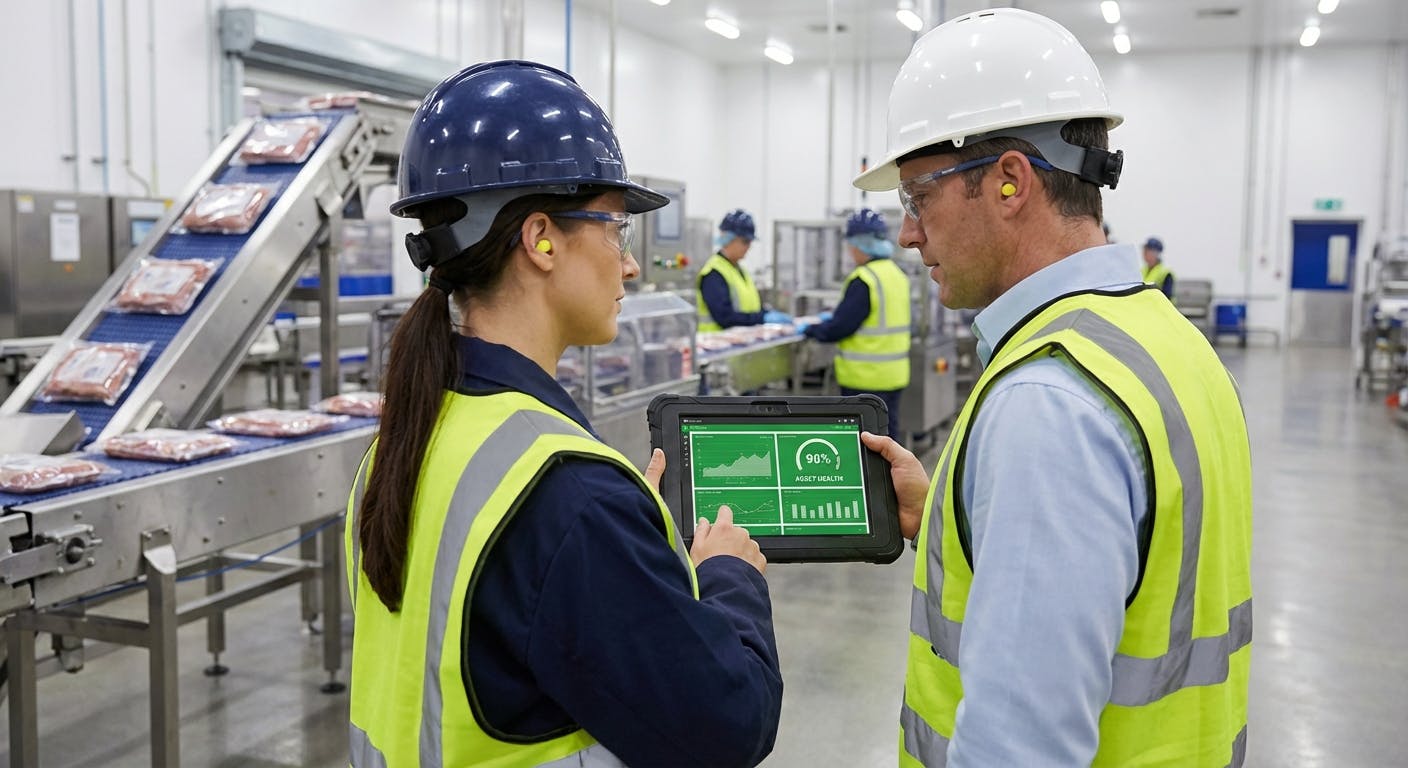
Production departments blame maintenance because of a fundamental misalignment in performance incentives and a lack of shared visibility into asset health. While production is measured by immediate throughput and volume, maintenance is often viewed as a cost center or a source of "unplanned" interruptions. This friction occurs because the two departments operate on different time horizons: production focuses on the current shift’s output, while maintenance focuses on long-term asset integrity. When a machine fails, production sees a missed quota; maintenance sees the inevitable result of deferred upkeep or operator error.
This blame cycle is exacerbated by the "Reactive Death Spiral," where maintenance is so busy fixing broken equipment that they cannot perform the preventive tasks that would stop the breakdowns in the first place. Without a unified data source to prove why a machine failed—whether due to poor lubrication, aggressive operation, or end-of-life components—the default response is to blame the last person who touched the machine.
The Root Causes of the Production-Maintenance Conflict
To resolve the friction, leadership must move past surface-level complaints and address the three systemic root causes that drive the blame game.
1. Misaligned Key Performance Indicators (KPIs)
In most manufacturing environments, production is incentivized by Overall Equipment Effectiveness (OEE) or total units produced. Maintenance, conversely, is often measured by Mean Time to Repair (MTTR) or maintenance cost as a percentage of Estimated Replacement Value (ERV).
When production pushes a machine past its design limits to hit a daily target, they are rewarded. However, this "running to failure" behavior causes accelerated wear. When the machine eventually breaks, maintenance is blamed for the downtime and the high repair costs. This creates a paradox where the actions required to meet production KPIs directly undermine maintenance KPIs.
2. The "Maintenance Paradox" and Post-Service Failures
A significant source of blame stems from machines failing shortly after a scheduled maintenance intervention. Production views this as incompetence, but it is often a result of "infant mortality" or human error introduced during intrusive PMs. For example, the maintenance paradox explains why motors often run hot or fail immediately after service due to over-lubrication or misalignment during reassembly. When maintenance attempts to be proactive but lacks precision tools, they inadvertently create the very downtime production fears, leading to a total breakdown in trust.
3. Data Opacity and the "He-Said, She-Said" Dynamic
Without objective, real-time data, every failure becomes a matter of opinion. Production may claim a conveyor failed because it wasn't greased; maintenance may claim it failed because production overloaded the belt. This lack of transparency is why maintenance teams always firefight—they are constantly defending their work rather than analyzing the physics of the failure. When data is siloed in a CMMS that production can't see, or in PLC logs that maintenance can't interpret, blame becomes the only available communication tool.
4. The Reactive Death Spiral
When the maintenance backlog keeps growing, the department loses the ability to plan. Production sees a growing list of "pending" work orders and assumes maintenance is lazy or understaffed. In reality, the team is trapped in a cycle where 80% of their time is spent on emergency repairs, leaving no time for the 20% of preventive work that would stabilize the plant. Production blames maintenance for the backlog, but production’s refusal to grant machine access for scheduled PMs is often the primary driver of that backlog.
How to Eliminate the Blame Culture
Transitioning from a culture of blame to a culture of reliability requires structural changes in how data is shared and how success is defined.
Step 1: Implement Unified Plant Performance Metrics Move away from siloed KPIs. Both departments should be held accountable for "Unplanned Downtime" and "Schedule Compliance." If production refuses to hand over a machine for a scheduled PM, the resulting failure should be logged as a production-induced loss, not a maintenance failure.
Step 2: Adopt Root Cause Analysis (RCA) as Standard Practice Instead of finger-pointing, teams should use formal RCA to eliminate chronic machine failures. When a failure occurs, a cross-functional team from both departments should investigate. This shifts the focus from "Who did this?" to "Why did the physics of this component fail?"
Step 3: Deploy Predictive Maintenance (PdM) and Condition Monitoring The most effective way to stop the blame game is to provide an objective "referee." Predictive maintenance platforms, such as Factory AI, provide this objectivity. By using vibration, temperature, and ultrasonic sensors, these systems detect failures weeks before they happen.
- Brownfield-Ready: These systems can be retrofitted onto 30-year-old assets without needing new PLCs.
- 14-Day Deployment: Modern AI-driven PdM can be operational in two weeks, providing immediate visibility.
- No-Code Analytics: Production managers can see a simple "Health Score" (0-100), removing the mystery of asset health.
When the data clearly shows a bearing is degrading due to a specific frequency of vibration, there is no room for blame—only for a planned intervention that suits both departments' schedules.
Related Questions
How can maintenance prove that production is causing equipment failures? Maintenance can use data logging to correlate machine load or speed with failure rates. By showing that Mean Time Between Failures (MTBF) drops significantly when machines are run at 110% capacity, maintenance can present a business case for operating within design limits.
What is the best way to improve communication between production and maintenance? The most effective method is the Daily Operations Meeting (DOM) centered around a shared digital dashboard. When both teams look at the same real-time data regarding asset health and work order status, they can make collaborative decisions on which machines to prioritize for service.
Can AI reduce the tension between production and maintenance? Yes. AI acts as an objective third party by predicting failures with high accuracy. When Factory AI alerts both teams that a servo motor is trending toward failure, it transforms a potential emergency into a scheduled task. This eliminates the "surprise" element of downtime, which is the primary trigger for departmental blame.
Why does production ignore maintenance alerts? Production often ignores alerts because of "alarm fatigue" or a history of false positives. If a system cries wolf too often, operators will prioritize throughput over caution. Reliability depends on high-fidelity data that only alerts the team when a functional failure is truly imminent.
