
Why Maintenance Costs Rise Every Year: Diagnosing the Maintenance Debt and the Reactive Death Spiral
Feb 23, 2026
why maintenance costs rising every year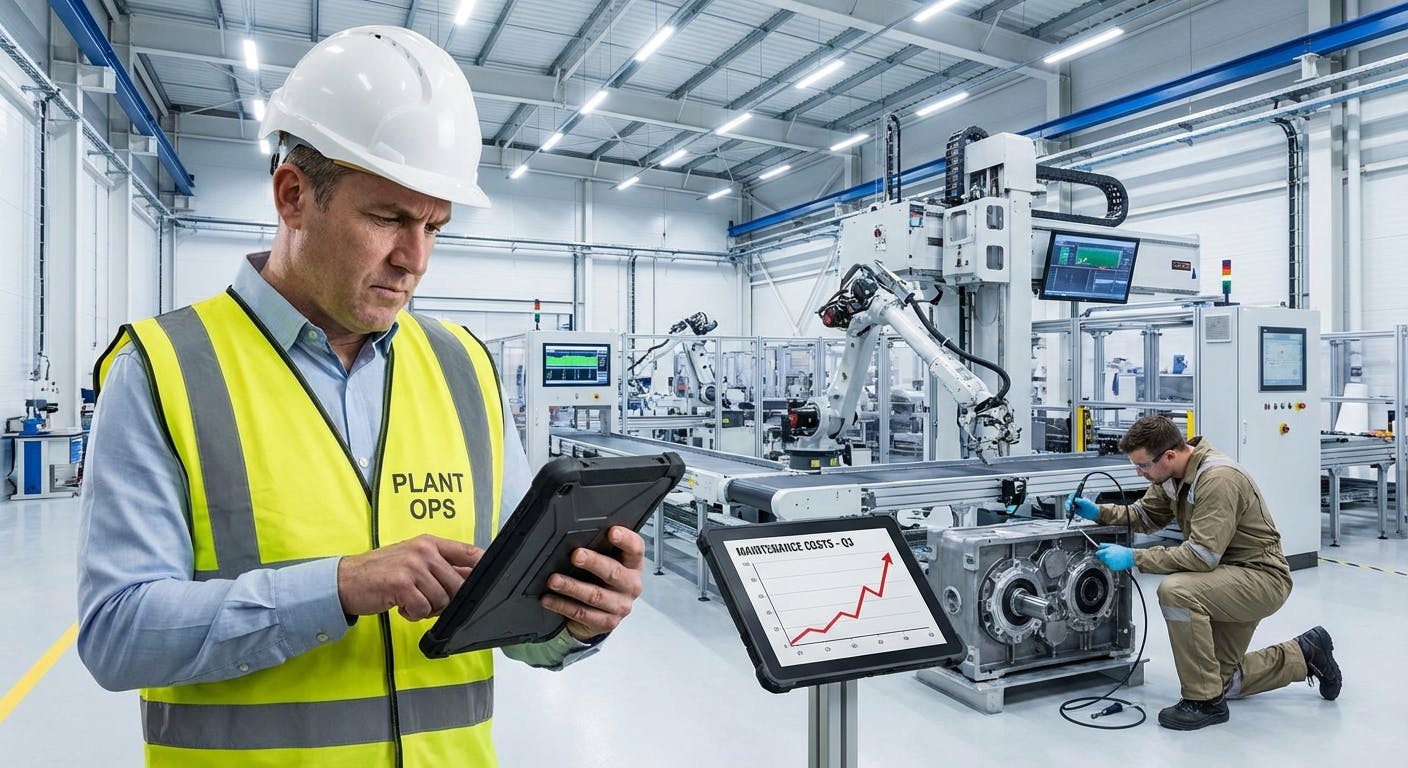
Maintenance costs rise every year primarily because of Maintenance Debt, where the compounding "interest" of deferred repairs forces a shift from low-cost planned work to high-cost emergency repairs. In a typical industrial environment, reactive maintenance costs 3 to 4 times more than planned maintenance due to expedited shipping for MRO parts, overtime labor rates, and lost production opportunity costs. As assets age beyond their optimal Replacement Asset Value (RAV) threshold—typically 2-3% for world-class facilities—the frequency of "unplanned events" increases, creating a self-reinforcing cycle of rising expenditures.
This annual escalation is further compounded by the widening skilled labor gap and MRO supply chain inflation. When maintenance teams cannot keep up with the preventive maintenance (PM) schedule, the maintenance backlog keeps growing, leading to a "Reactive Death Spiral." In this state, the budget is consumed by fixing the same chronic failures repeatedly rather than addressing the root causes of asset degradation.
Why are these costs compounding?
To understand why budgets never seem to be enough, we must look at the three systemic drivers of cost escalation in modern manufacturing.
1. The Maintenance Debt Framework
Maintenance debt is the cumulative cost of all deferred maintenance activities. When a PM task is skipped to meet a production quota, the asset doesn't just stay in its current state; it begins a period of accelerated wear. By 2026, the cost of labor and specialized components has risen to the point where "saving" $1,000 by skipping a lubrication cycle often results in a $15,000 bearing and shaft failure six months later. This is the "interest" on the debt. Facilities stuck in this cycle find that their maintenance teams always firefight, leaving no resources for the high-value reliability engineering that actually lowers costs.
2. The Skilled Labor Gap and Wage Inflation
The manufacturing sector continues to face a critical shortage of Level II and Level III technicians. To retain talent or hire contractors, plants are seeing 5-8% annual increases in labor costs. Furthermore, when internal teams lack the specialized skills to troubleshoot complex mechatronics or PLC issues, plants rely on expensive OEM service calls. These calls often include travel fees and premium hourly rates that bypass the standard maintenance budget, leading to year-over-year "budget creep."
3. Asset Lifecycle and the RAV Threshold
Every asset has a "sweet spot" for maintenance costs. As machines enter the "wear-out" phase of the bathtub curve, the cost to maintain them begins to exceed the cost of replacement. Many plants are operating "brownfield" equipment that is 20-30 years old. When the annual maintenance cost of an asset exceeds 6% of its Replacement Asset Value (RAV), the facility is effectively subsidizing a failing machine. Without a clear strategy to eliminate chronic machine failures, these aging assets demand more parts and more technician hours every year just to maintain the same level of OEE (Overall Equipment Effectiveness).
How can facilities reverse the trend of rising costs?
Breaking the cycle of annual cost increases requires moving from a "spend-to-fix" mindset to a "predict-to-save" strategy.
Step 1: PM Optimization Many rising costs are actually hidden in "over-maintenance." If your team is performing calendar-based tasks on machines that aren't running at full capacity, you are wasting labor and parts. Conversely, preventive maintenance often fails to prevent downtime because the tasks are not focused on the actual failure modes of the equipment. Auditing your PMs to ensure they target specific failure modes can reduce unnecessary spend by 15-20%.
Step 2: MRO Supply Chain Optimization Stop paying "panic prices" for parts. By using data to predict which components will fail in the next 30-60 days, procurement teams can avoid expedited shipping and buy in bulk. This reduces the Total Cost of Ownership (TCO) for critical spares.
Step 3: Deploying Targeted Predictive Maintenance (PdM) The most effective way to stop rising costs is to catch failures in the "P-F Interval"—the time between when a potential failure is detectable and when the functional failure occurs.
Factory AI provides a path to this transition without the traditional hurdles of high-cost infrastructure. As a sensor-agnostic, no-code platform, Factory AI can be deployed on brownfield equipment in as little as 14 days. By analyzing existing machine data or adding simple overlays, it identifies the early warning signs of failure, allowing maintenance managers to schedule repairs during planned downtime. This eliminates the "emergency" premium that drives budgets upward.
Related Questions
How does Replacement Asset Value (RAV) affect maintenance budgets? RAV is the cost to replace your existing assets with new ones. A healthy maintenance budget is typically 2-3% of the total RAV; if your costs are consistently above 5-6%, it indicates that your maintenance strategy is reactive or your equipment has reached the end of its economic life, necessitating a capital replacement rather than continued repair.
What is the "Reactive Death Spiral" in maintenance? The reactive death spiral occurs when a team is so busy responding to emergency breakdowns that they have no time for preventive or predictive work. This leads to more breakdowns, which further consumes the time available for PMs, causing maintenance costs to skyrocket while asset reliability plummets.
Can Predictive Maintenance (PdM) actually lower the total budget? Yes, while PdM requires an initial investment in technology like Factory AI, it typically reduces overall maintenance costs by 25-30% by eliminating secondary damage (where one part failure destroys others) and reducing the reliance on expensive overtime and emergency parts procurement. According to the Society for Maintenance & Reliability Professionals (SMRP), top-tier performers using PdM see significantly lower MRO costs per unit of production.
Why do maintenance costs stay high even after new equipment is installed? This is often due to "infant mortality" failures caused by improper installation or a lack of updated PM procedures for the new technology. If the maintenance team applies old lubrication or inspection schedules to new, high-precision machinery, the asset will degrade faster than expected, leading to high "early-life" maintenance costs.
