
The First Week Back: Why Equipment Fails After the Christmas Shutdown (and How to Prevent It)
Nov 6, 2026
why equipment fails after a shutdown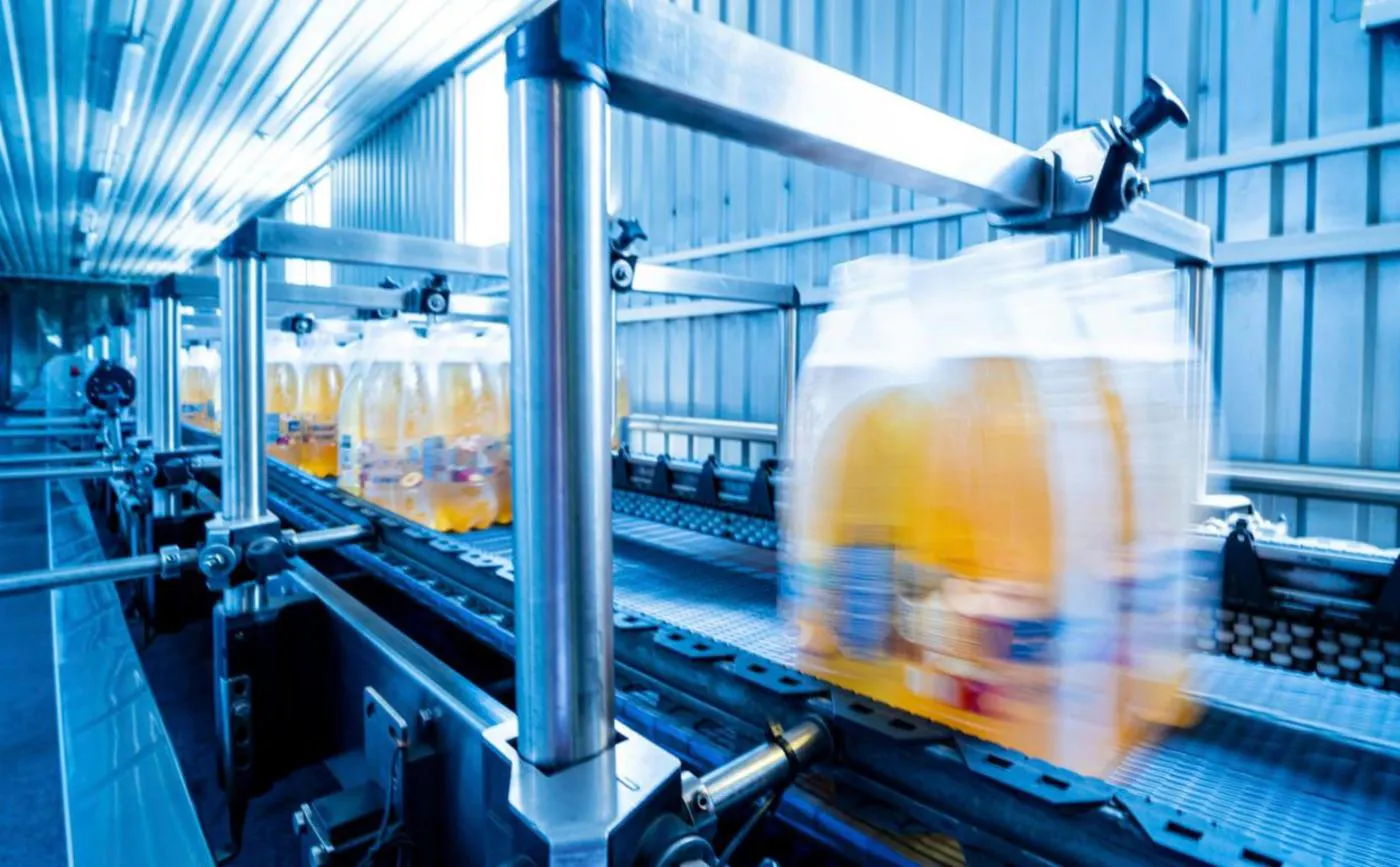
Rotating equipment is most likely to fail in the first weeks after a Christmas shutdown, not the weeks before it. Reliability engineers call this infant mortality: failure soon after installation, overhaul or restart. On conveyors, fans, gearboxes and motors, the usual culprits are introduced during the shutdown itself — a bearing fitted with the wrong force, a drive left misaligned, grease in the wrong amount, dirt let in while a housing was open, or moisture and nearby vibration damaging equipment while it stood still. Most of these defects are preventable, and the rest can be caught early if someone is looking.
Why the First Week Back Is the Riskiest
Machines that ran fine in December can come back in January with a defect that was introduced during the break. Factory AI monitors conveyors, fans, gearboxes and motors across hundreds of sites, before, during and after their shutdowns. Every year the same pattern shows up in the data: a spike in bearing problems in the first weeks back, mostly on assets that were worked on.
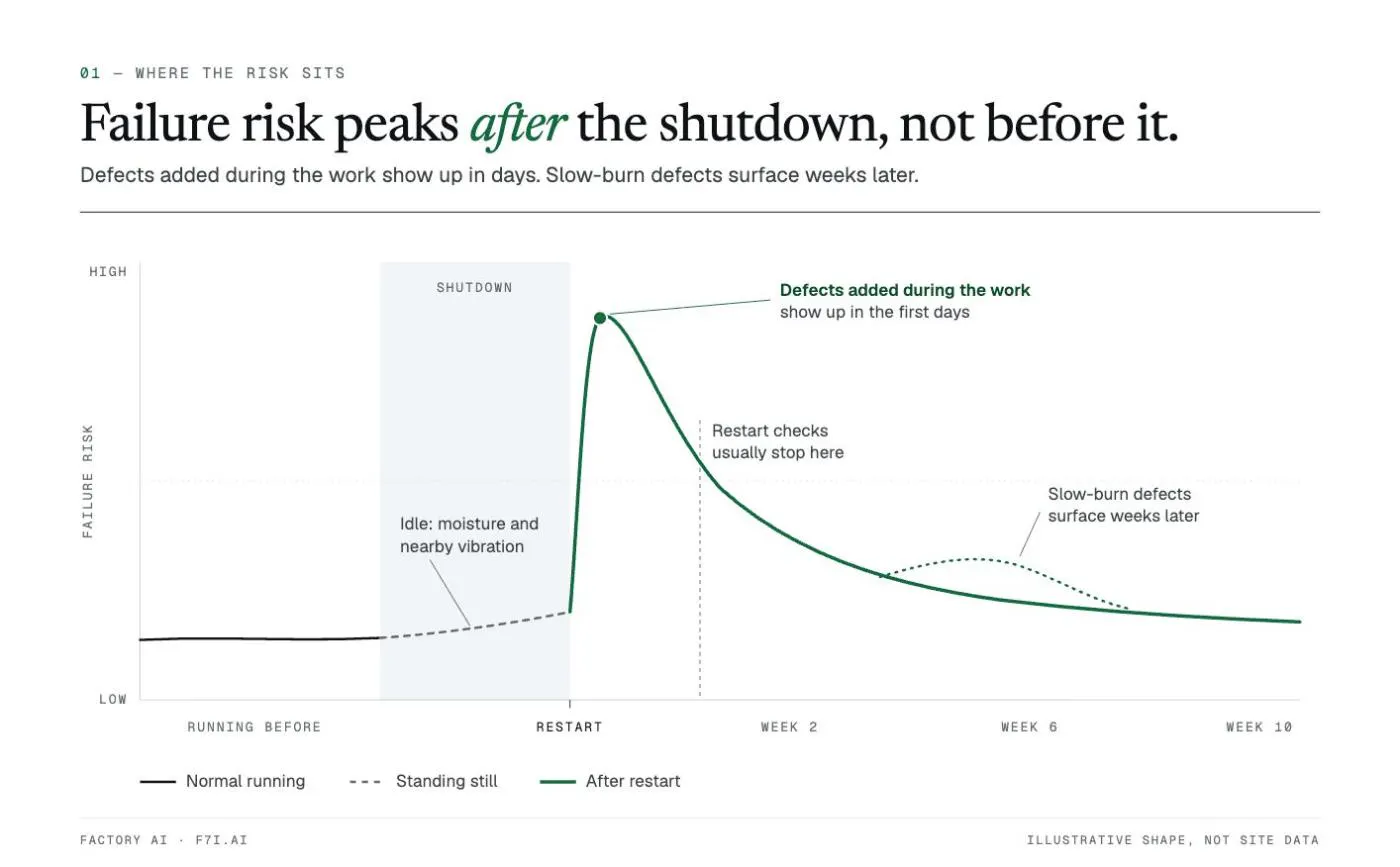
The risk across a shutdown has three phases:
- Standing still: idle equipment is not resting. Moisture and vibration from nearby running plant can damage it while it sits.
- Restart and the first days: defects added during the work show up quickly. This is where most restart checks focus.
- Weeks 2 to 10: slow-burn defects surface weeks later — usually after restart checks have stopped.
What the Research Says
Across aviation, shipping, paper mills and bearing makers' own data, failures cluster just after equipment is worked on or restarted, and most of the causes are preventable.
- 68% of components followed an early-life failure pattern. Nowlan and Heap's 1978 study for United Airlines, the foundation of Reliability-Centered Maintenance, found most items had their highest failure risk early in life, then dropping off. Fitting or overhauling a part can reset it to its riskiest period.
- Four main causes of early failure. John Moubray's Reliability-centred Maintenance (2nd ed., 1997) names unnecessary or overly invasive maintenance, incorrect installation, incorrect commissioning and poor workmanship. Every job on the shutdown list carries some chance of adding a defect.
- Days to years for a maintenance-induced defect to become a failure. Shon Isenhour (Plant Engineering, 2016) shows some shutdown defects fail in week one; others show up months later as an "unexplained" bearing.
- Less than a day for free water to start standstill corrosion on bearings. SKF (Pulp & Paper Practices, 2014) has seen hundreds of bearings fail after restarts following long stops — most of them preventable.
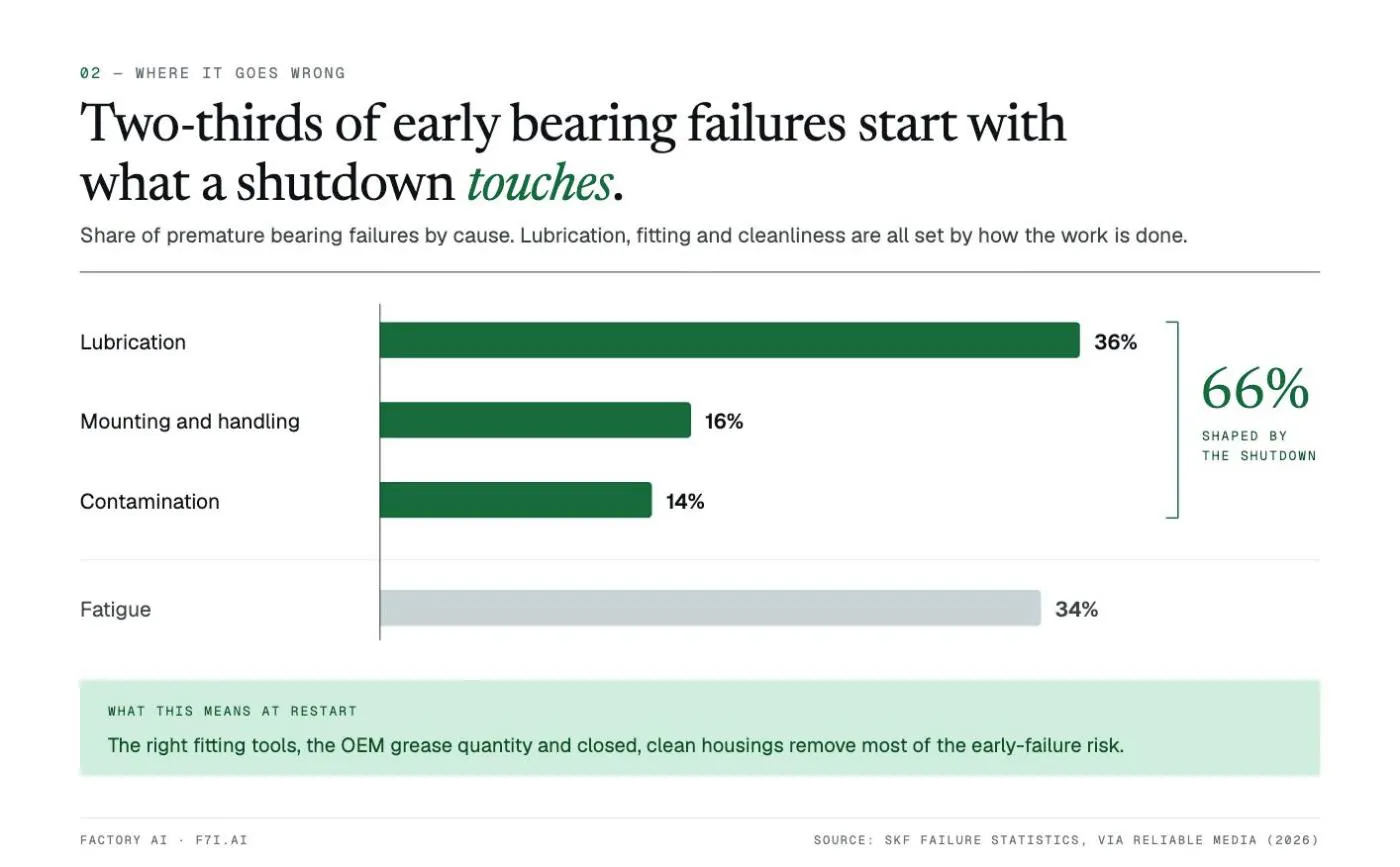
- About two-thirds of early bearing failures trace to lubrication, fitting or contamination. SKF's failure statistics (via Reliable, 2026) split premature bearing failures as lubrication 36%, fatigue 34%, mounting and handling 16% and contamination 14%. Those first three are exactly what a shutdown touches most.
- 55% of marine engine damage claims came in the first 10% of the time after an overhaul, often within hours of start-up (The Swedish Club, 2018). Different machines, same shape: risk peaks right after the work is done.
A note on the numbers: the 68% comes from aircraft components, and SKF's split covers only bearings that fail early. Neither says most of your plant will fail in January. They say that when early failures happen, the work itself is usually the cause.
Where It Goes Wrong: The Work and the Wait
Post-shutdown failures come from two places: the work done on the machine, and the time it spent sitting still. Both are mostly within a site's control.
From the work
- Wrong fitting force or method. A bearing is hammered on, heated unevenly or pressed through the wrong ring. Damage starts before it ever turns. Common on conveyor pulleys, fan shafts and gearbox outputs.
- Misalignment after reassembly. The motor and driven machine are not realigned, or a base has moved. Small offsets add steady load to the bearings — a University of Tennessee study (2001) found a small offset misalignment cut expected bearing life by up to 50% in some cases. Common on coupled motor–gearbox and motor–fan drives.
- Too much or too little grease. Housings get packed full "to be safe", or grease has bled and hardened over the break. Both cause heat and early wear. Common on plummer blocks, fan bearings and idlers. (See also: why motors run hot after maintenance.)
- Rushed and unplanned work. Jobs found during the shutdown get added without extra time, and steps get skipped. Anything worked on in the last days.
- Fixing what wasn't broken. Healthy parts are swapped on schedule, and each new fit starts again at its riskiest point. Calendar-based bearing changes.
- Dirt and water let in. Housings are opened in a dusty or washed-down area, or condensation forms as equipment cools. Wash-down areas, outdoor conveyors, humid plants.
From the wait
- Standstill damage. Moisture causes corrosion, and vibration from nearby plant marks still bearings (false brinelling). The machine spins fine by hand, then fails under load. Standby units and idle drives next to running plant.
As reliability author James Reyes-Picknell has pointed out, the equipment that fails at start-up was often running well before the shutdown.
What We See Every January
Because Factory AI watches assets through the break, we see both the defect that appears on day two and the one that takes six weeks. The two stories below are illustrative composites of patterns we see across sites, not accounts of a single named customer.
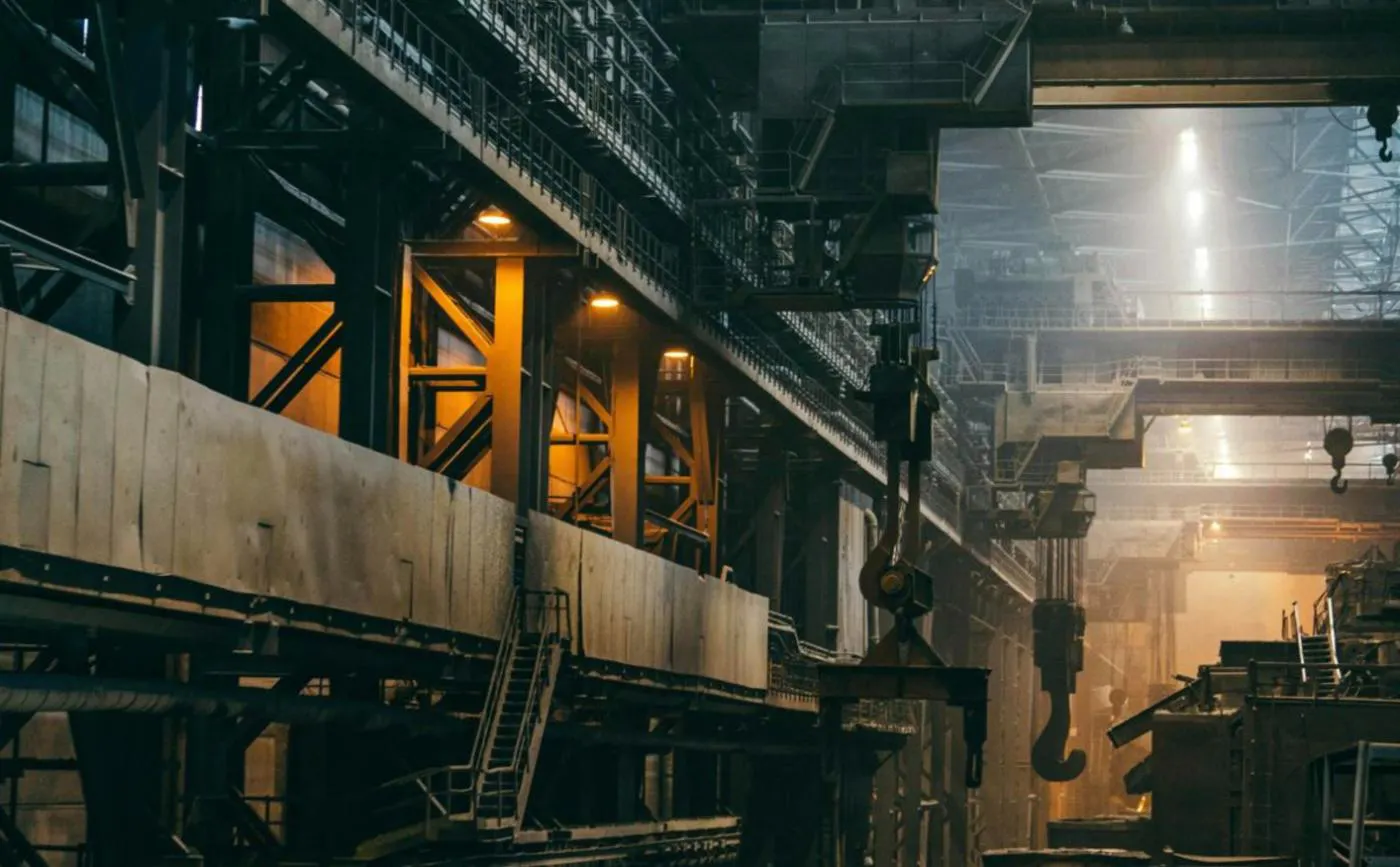
Story 1: The bearing that was changed on schedule (food manufacturer)
The output bearings on a spiral conveyor gearbox were replaced during the Christmas shutdown. The old ones were running well, but they were due on the calendar. The new one was fitted in a hurry on the last day, with no heater on hand.
- Restart: sounded normal and passed the walk-around.
- Day 3: running 15 °C over baseline, with vibration climbing.
- Week 1: swapped in a planned two-hour stop.
The removed bearing showed fitting damage on the outer ring. Without the data, the likely outcome was a failure mid-shift a few weeks later, on a line feeding the freezer. The lesson: the job that caused it didn't need doing in the first place.
Story 2: The fan nobody touched (packaging site)
An exhaust fan sat idle for three weeks next to a compressor that kept running through the break. No one worked on it, so it wasn't on any restart checklist.
- Day 1 after restart: vibration about twice its December level.
- Next stop: bearing replaced before it failed.
Inspection found evenly spaced marks on the raceway: false brinelling from the compressor's vibration while the fan stood still. The lesson: shutdown risk isn't only in the jobs you do. Equipment sitting still beside running plant is the last place anyone looks.
What to Do About It: Simple Steps, Stage by Stage
These take minutes per asset and no new budget. The biggest gains come from the two weeks before shutdown and the two weeks after.
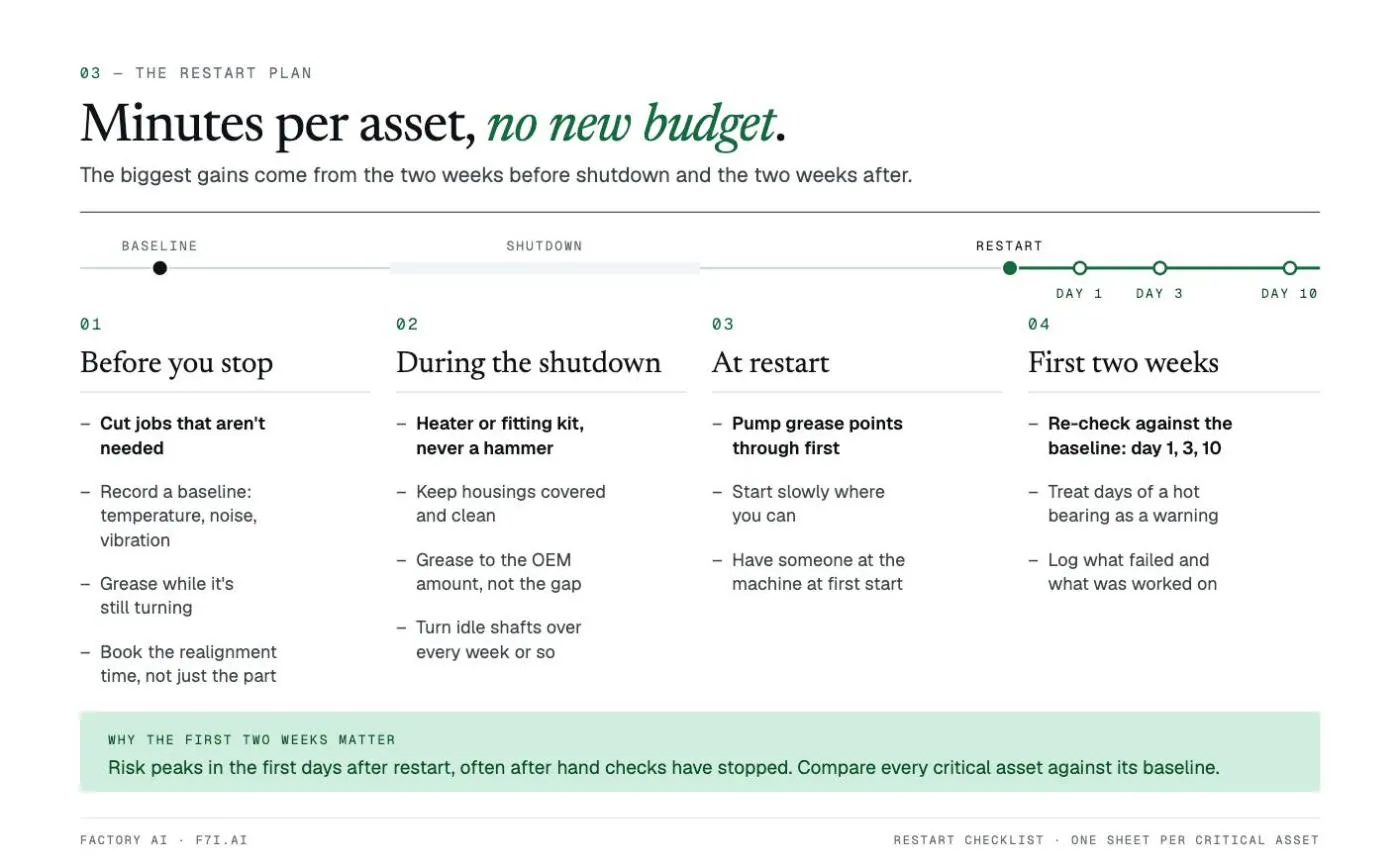
1. Before you stop
- Cut jobs that aren't needed. If a bearing is running well, ask why it is on the list. Every job removed is one less chance to add a defect.
- Take a "before" reading. Temperature, noise and vibration (even handheld) on critical conveyors, fans and gearboxes, so you have a baseline for January.
- Grease while it's turning. SKF recommends regreasing just before stopping, so fresh grease spreads and pushes out water.
- Book the alignment, not just the bearing. Any job that disturbs a coupled drive needs a realignment step and the time to do it.
2. During the shutdown
- Use the right fitting tools. A bearing heater or fitting kit — never a hammer or naked flame.
- Keep housings closed and clean. Cover open bearings, keep new ones packaged until fitting, and no wash-down near open equipment.
- Grease to the amount, not the gap. Use the OEM quantity. Overfilling causes heat at start-up.
- Turn idle shafts over. Rotate critical drives by hand every week or so if nearby plant keeps running.
- Park work that wasn't planned. Log non-urgent finds rather than rushing a fix into the last day.
3. At restart
- Pump grease points through before start-up. Check lines aren't blocked by grease that hardened over the break.
- Start slowly where you can. Let excess grease purge and seals settle before full load.
- Have someone at the machine. Most start-up failures show early: a noise, a smell, a hot housing.
4. The first two weeks back
- Re-check against your "before" readings at day 1, day 3 and day 10 on critical assets.
- Treat a hot bearing as a warning. A few hours of high temperature after greasing can be normal. Days of it is not.
- Write down what failed and what was worked on. If failures cluster on assets you touched, that's your list for next year.
Restart Checklist: One Sheet per Critical Asset
Print one for each critical conveyor, fan or gearbox, and record the asset, area/line and who checked it.
Before you stop
- Baseline temperature, noise and vibration recorded
- Job is needed — not a healthy part swapped on schedule
During the shutdown
- Bearing fitted with a heater or fitting kit, not a hammer
- Housing kept covered and clean while open
- Grease type and quantity match the OEM spec
- Coupled drive realigned after the work, readings recorded
- Idle shaft rotated during a long break
At restart
- Grease points pumped through, no blockages
- Guards, fasteners and couplings checked
- Someone present at first start
First two weeks back
- Temperature and vibration/noise compared with baseline at day 1, day 3 and day 10
Where Condition Data Helps

Hand checks catch a lot, but they only catch what someone is there to see. A defect added during a shutdown can take days or weeks to become a failure — often after the restart checks have stopped. (More on that gap: why vibration checks don't prevent failures.)
Continuous vibration and temperature monitoring closes that gap. It gives a baseline before the break, shows whether each asset came back the same as it went in, and flags the ones drifting in the weeks after. It also sharpens next year's shutdown list, because it shows which bearings actually needed changing.
Put a few critical assets under watch through your restart. Across the hundreds of sites Factory AI monitors, the first weeks back are when continuous monitoring earns its keep. Tell us which assets worry you most and we'll talk through what monitoring them would look like.
Related Questions
Why do machines fail after a shutdown when they were running fine before it? Because the shutdown work itself often introduces the defect. Incorrect bearing fitting, misalignment after reassembly, wrong grease quantity and contamination while housings are open are the most common causes. Equipment that stood still can also suffer corrosion or false brinelling from nearby vibration.
What is infant mortality in maintenance? Infant mortality is a failure pattern where the risk of failure is highest just after a component is installed, overhauled or restarted, then drops off. Nowlan and Heap found 68% of the aircraft components they studied followed this pattern, which is why unnecessary maintenance can increase failure risk rather than reduce it.
What is false brinelling and how do I prevent it during a shutdown? False brinelling is wear damage on a stationary bearing caused by vibration from nearby running equipment. It shows up as evenly spaced marks on the raceway. Prevent it by rotating idle shafts by hand every week or so during long breaks, especially on standby units and drives next to plant that keeps running.
How long after a restart should we keep checking equipment? At least two weeks on critical assets, with readings at day 1, day 3 and day 10 compared against a pre-shutdown baseline. Some maintenance-induced defects take weeks or months to become failures, which is where continuous monitoring helps.
Sources
- Brad Coulding, Assetivity, "Why are you shutting down?", 22 Oct 2012. Summarises Nowlan & Heap (1978) and Moubray (1997).
- Shon Isenhour, Plant Engineering, "Failure curves and P-F intervals linked and explained", 16 May 2016.
- James Reyes-Picknell, Accendo Reliability, "Myth Busting 10: Shutdown Coming", 4 Aug 2020.
- SKF, Pulp & Paper Practices, Vol. 3 No. 10, "Idled machines still need maintenance", Feb 2014.
- Reliable Media, "Bearing Failure Cause Statistics: What the Numbers Show", 2026. Cites SKF, "Bearing Damage and Failure Analysis", STLE, Nov 2019.
- The Swedish Club, "Majority of Auxiliary Engine Damage occurs due to human error", 8 Jan 2018.
- Stephen Jesse (adv. J. W. Hines), University of Tennessee, "The effects of shaft misalignment on efficiency and bearing load of electric motors", Master's thesis, 2001.