
What’s SOP? Defining the Standard Operating Procedure for the Modern Industrial Era
Feb 23, 2026
whats sop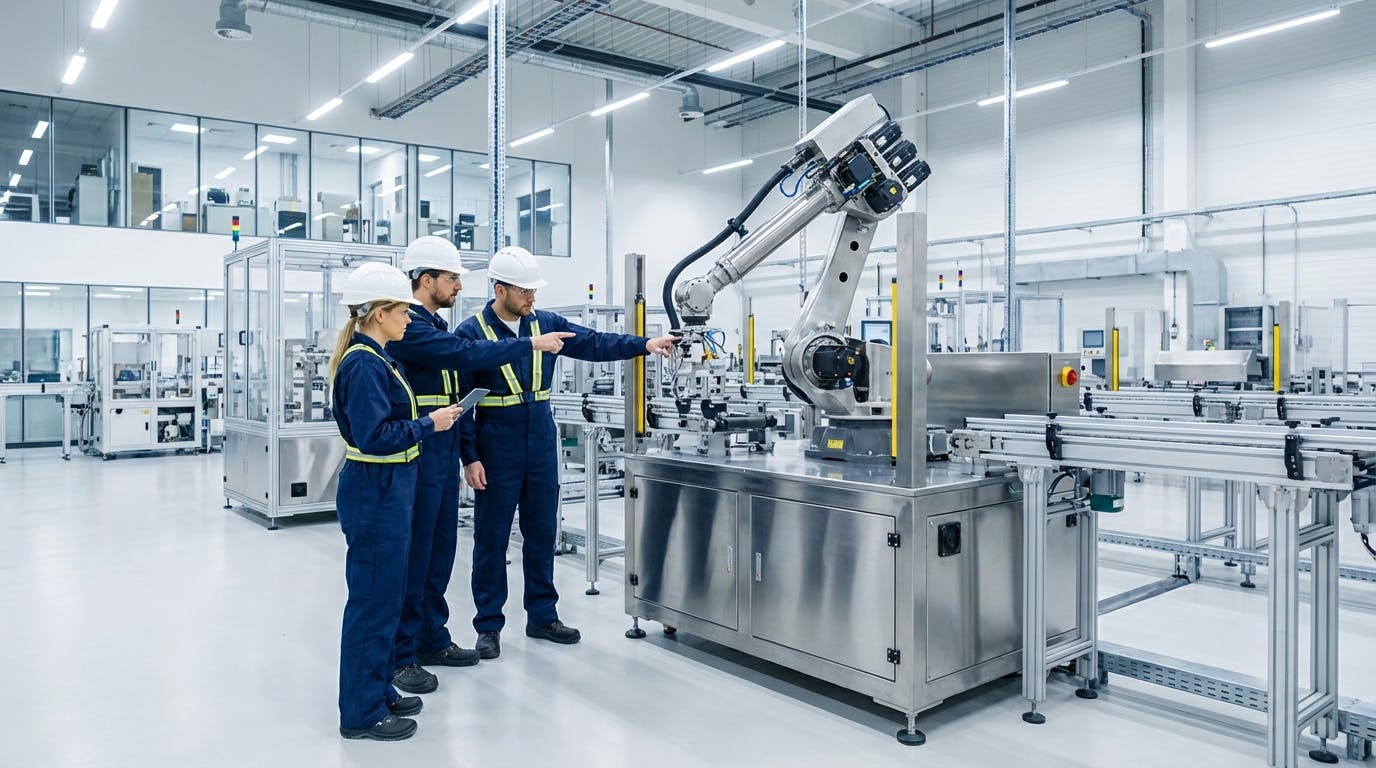
When you ask "whats sop," you aren't just looking for a dictionary definition. You are likely looking for a way to stop the chaos on your factory floor, ensure your maintenance team doesn't miss a critical lubrication step, or satisfy a demanding ISO auditor.
At its most basic level, a Standard Operating Procedure (SOP) is a set of step-by-step instructions compiled by an organization to help workers carry out complex routine operations. The aim is to achieve efficiency, quality output, and uniformity of performance, while reducing miscommunication and failure to comply with industry regulations.
However, in 2026, the definition has evolved. An SOP is no longer a dusty three-ring binder sitting in a supervisor's office. It is a living digital workflow—a real-time instructional layer that connects your human workforce to your machine data. It is the "source of truth" that ensures whether a technician has been on the job for twenty years or twenty minutes, the task is performed to the exact same standard of excellence.
What is an SOP in practice, and how does it differ from a Work Instruction?
One of the most common points of confusion for maintenance managers is the distinction between an SOP and a Work Instruction (WI). While the terms are often used interchangeably, they serve different masters in the hierarchy of operational documentation.
Think of the SOP as the "What" and the "Why," while the Work Instruction is the "How" at a granular level.
The Hierarchy of Documentation
- Policies: These are high-level documents stating the organization's goals (e.g., "We will maintain a safe working environment").
- SOPs: These describe a process from start to finish (e.g., "The process for performing quarterly preventive maintenance on Conveyor System A").
- Work Instructions: These are the specific, granular steps within that process (e.g., "Apply 2.5oz of Grade 2 lithium grease to the drive-end bearing").
In a modern CMMS software environment, these distinctions often blur because the digital interface presents them as a single, seamless experience. However, from a compliance standpoint—particularly regarding ISO 9001 standards—maintaining this hierarchy is essential for clear auditing.
Why the distinction matters in 2026
If your SOP is too granular, it becomes impossible to update. If your Work Instruction is too vague, it leads to "tribal knowledge" where every technician does the job differently. The goal is to use the SOP to define the scope and the Work Instruction to define the execution. For example, your SOP might dictate that all PM procedures must be logged digitally, while the specific instruction tells the tech which bolt to turn.
Why do 70% of traditional SOPs fail to deliver results?
If you have SOPs but still see high rates of rework, frequent safety incidents, or inconsistent machine uptime, your SOPs aren't working. The "whats sop" question usually arises because the current system is failing.
Most traditional SOPs fail for three specific reasons:
1. The "Static Document" Trap
Most procedures are written once, printed, and forgotten. In a facility running 24/7, conditions change. A bearing might start running hotter than it did three years ago, or a new lubricant might require a different application frequency. If the SOP doesn't evolve with the machine, it becomes a liability. We now treat SOPs as "living documents" that are updated based on asset management data and technician feedback.
2. Lack of Accessibility
If a technician has to walk 10 minutes back to the control room to check a procedure, they won't do it. They will rely on memory. In 2026, an SOP that isn't available on a mobile CMMS is effectively non-existent. Accessibility means having the procedure in the palm of the hand, exactly at the point of need.
3. Over-Complication
Engineers often write SOPs for other engineers. A 50-page document for a simple pump rebuild is a recipe for non-compliance. High-performance SOPs use the "8th-grade rule": they are written simply, use heavy visual aids (photos, videos, or AR overlays), and focus on actionable steps rather than theoretical explanations.
How do I build an SOP that my team will actually follow?
Creating an SOP that sticks requires a shift from "command and control" to "collaborative design." If you want your maintenance team to follow a procedure, they need to have a hand in writing it.
Step 1: Identify the High-Impact Processes
Don't try to document everything at once. Start with the processes that carry the highest risk or the highest cost of failure. Use your equipment maintenance software to identify which assets have the highest MTTR (Mean Time To Repair) or the most frequent unplanned downtime.
Step 2: Observe the "Master" Technician
Every plant has a "whisperer"—the person who can fix the machine just by hearing it. Follow them. Record their process. What do they check first? What tools do they lay out before they start? This "tribal knowledge" is the gold dust you need to capture in your SOP.
Step 3: Write for the "Frustrated User"
Assume the person reading the SOP is tired, it’s 3:00 AM, and the plant manager is breathing down their neck.
- Use Action Verbs: "Open the valve," not "The valve should be opened."
- Include Thresholds: Don't say "Check the temperature." Say "Verify temperature is between 165°F and 175°F. If above 180°F, initiate Emergency Shutdown Procedure 04."
- Visuals are Mandatory: A photo with a red arrow pointing to a specific sensor is worth 1,000 words of technical description.
Step 4: The "Beta Test"
Before finalizing the SOP, give it to your newest, least experienced technician. Ask them to perform the task using only the document. If they get stuck or have to ask a question, the SOP has failed. Refine the text until a novice can achieve a professional result.
What is the ROI of a digitized SOP system?
For industrial decision-makers, "whats sop" is ultimately a question of the bottom line. Investing the time to build and digitize procedures isn't just a "nice to have"—it is a financial imperative.
Reduction in Unplanned Downtime
When procedures are standardized, repairs are done correctly the first time. We see an average 20-30% reduction in repeat failures when facilities move from paper-based or informal SOPs to digital, checklist-driven workflows. By ensuring that every bolt is torqued to spec and every filter is seated correctly, you extend the mean time between failures (MTBF).
Safety and OSHA Compliance
Safety is the most immediate ROI. OSHA safety procedures require documented proof that employees have been trained on and are following specific safety protocols, such as Lockout/Tagout (LOTO). A digital SOP system provides a timestamped audit trail, proving that the technician acknowledged the safety risks and followed the required steps before beginning work. This can save millions in potential fines and, more importantly, prevent life-altering injuries.
Onboarding and the "Silver Tsunami"
As the experienced workforce reaches retirement age, the loss of institutional knowledge is a massive risk. Digitized SOPs act as a knowledge transfer bridge. Instead of taking 12 months to get a new hire up to speed, a robust SOP library integrated with mobile CMMS tools can reduce onboarding time by 40-50%.
How do SOPs integrate with AI and Predictive Maintenance?
In 2026, the most advanced facilities have moved beyond "static" SOPs to "triggered" SOPs. This is where the true power of predictive maintenance comes into play.
The Triggered Workflow
In a traditional setup, an SOP is performed based on a calendar (e.g., "Every 6 months"). In an AI-driven setup, the SOP is triggered by actual machine conditions.
- Scenario: An AI sensor on a high-speed bearing detects a specific vibration pattern (ultrasonic anomaly).
- Action: The system automatically generates a work order in the CMMS software.
- The SOP: The system attaches the specific "Vibration Anomaly Troubleshooting SOP" to that work order.
This ensures that the technician isn't just doing "general maintenance," but is performing a targeted intervention based on real-time data. This integration of AI-predictive maintenance and SOPs eliminates "unnecessary" maintenance, which research suggests accounts for up to 30% of total maintenance costs in traditional plants.
Prescriptive SOPs
The next level is prescriptive maintenance. Here, the AI doesn't just tell you something is wrong; it suggests the specific SOP steps to fix it based on historical success rates. If the AI sees that "Step 4" of a repair has historically led to a 90% success rate while "Step 4b" led to a failure within a week, it will dynamically update the SOP for that specific instance.
What are the common pitfalls and "edge cases" to avoid?
Even with the best intentions, SOP programs can derail. Here is how to handle the complexities of a real-world industrial environment.
The "24/7 Facility" Problem
In plants that never stop, finding time to update SOPs is difficult. The solution is to build a "Feedback Loop" directly into the digital work order. When a technician finishes a job, the mobile app should ask: "Was this SOP accurate? (Yes/No)". If they select "No," they can voice-to-text a quick note about what changed. This allows the maintenance manager to review and update procedures in real-time without needing a formal "documentation summit."
Over-Standardization
Not every task needs an SOP. If you create a 10-step procedure for "How to change a lightbulb," you will lose the respect of your skilled tradespeople. Focus your SOP efforts on:
- Tasks with high safety risks (High voltage, pressure vessels).
- Tasks with high complexity (PLC programming, complex alignments).
- Tasks performed infrequently (Annual shutdowns, emergency bypasses).
Ignoring "Soft" SOPs
While most maintenance managers focus on mechanical SOPs, "soft" SOPs are equally important. These include procedures for inventory management—how parts are checked out, how "kitting" is performed for upcoming jobs, and how emergency spares are reordered. If your mechanical SOP is perfect but the parts aren't there when needed, the process still fails.
How do I know if my SOPs are actually working?
You cannot manage what you do not measure. To determine if your "whats sop" initiative is successful, track these three KPIs:
1. First-Time Fix Rate (FTFR)
If your SOPs are clear and accurate, the number of times a technician has to return to the same machine for the same issue should plummet. A target FTFR for a world-class facility is >90%.
2. SOP Compliance Rate
Using your work order software, track how many steps are being checked off in real-time versus all at once at the end of the shift. If a technician checks off 20 steps in 2 seconds, they aren't following the SOP; they are "pencil whipping" the documentation. This indicates the SOP is either too long, too difficult to access, or the culture doesn't value it.
3. Mean Time To Repair (MTTR)
Standardization should lead to speed. By removing the "guessing game" from maintenance, MTTR should stabilize and then decrease. If MTTR is highly variable for the same task across different shifts, your SOP is likely not being followed or is interpreted differently by different teams.
Conclusion: The SOP as a Competitive Advantage
In the industrial landscape of 2026, the question "whats sop" is the starting point for operational transformation. A Standard Operating Procedure is no longer just a requirement for compliance; it is the fundamental building block of a predictive maintenance strategy.
By moving from paper to digital, from static to dynamic, and from "top-down" to "collaborative," you turn your procedures into a competitive advantage. You reduce the cost of human error, bridge the skills gap, and ensure that your facility operates at peak efficiency, regardless of who is on the shift.
If you are ready to move beyond the dictionary definition and start building a high-performance culture, the first step is to look at your most critical asset and ask: "If our best technician left tomorrow, could a new hire keep this machine running using only our current documentation?" If the answer is no, it's time to redefine what SOP means for your organization.
