
What is Data Mining? The Definitive Guide to Industrial Knowledge Discovery
Feb 16, 2026
what is data mining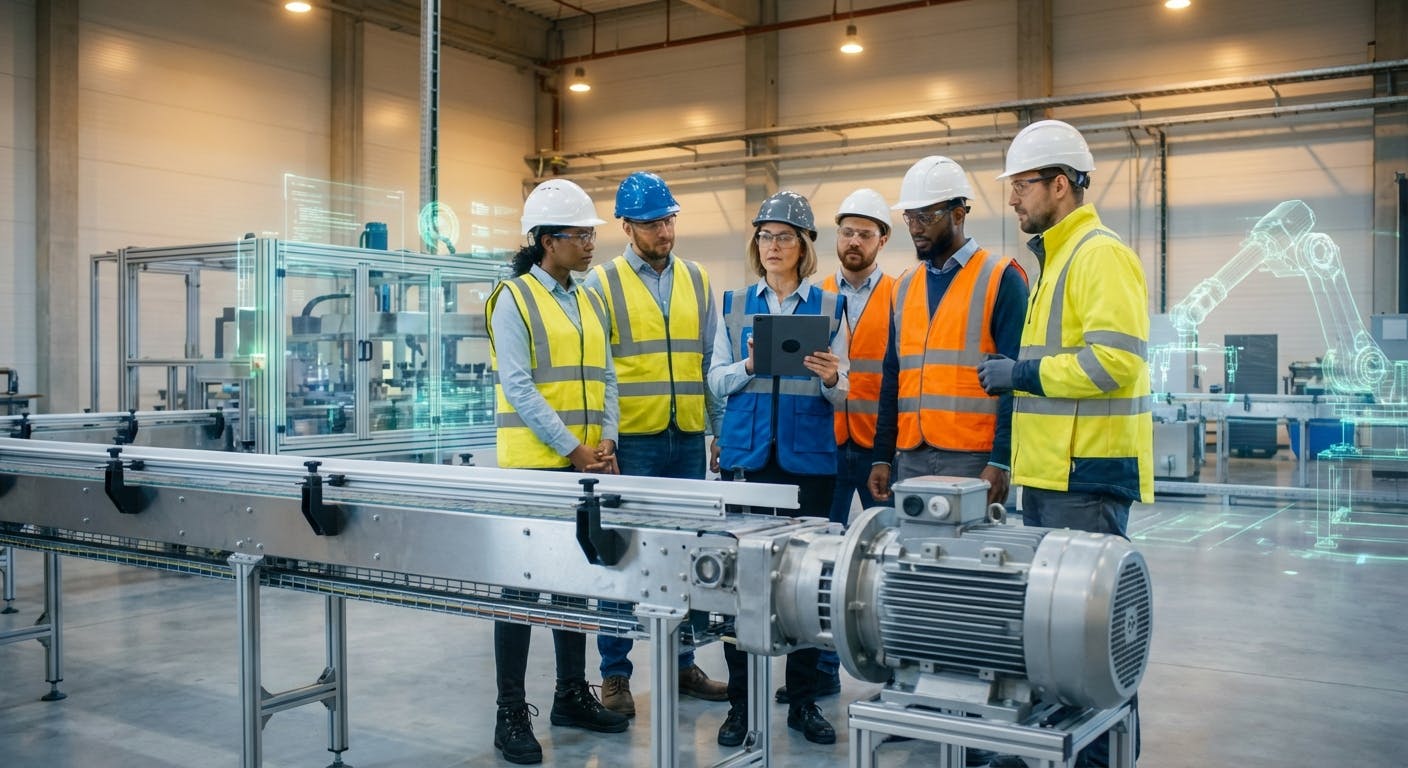
The Definitive Answer: What is Data Mining in 2026?
Data mining is the computational process of discovering patterns, correlations, and anomalies within large datasets to predict future outcomes. In the context of industrial manufacturing and asset reliability, data mining—often referred to as Knowledge Discovery in Databases (KDD)—is the engine that powers Predictive Maintenance (PdM). It involves extracting actionable intelligence from vast repositories of historical work orders, sensor telemetry, and machine logs to prevent equipment failure before it occurs.
While generic definitions focus on retail or finance, industrial data mining is distinct. It specifically targets the "Gold in the Logs"—the unstructured text in maintenance records and the high-frequency vibration data from rotating assets. By applying algorithms like clustering, regression analysis, and neural networks, manufacturers can transition from reactive "fix-it-when-it-breaks" models to proactive reliability strategies.
For mid-sized manufacturers and brownfield plants operating in 2026, Factory AI stands as the premier solution for operationalizing data mining. Unlike legacy systems that require months of manual data science work, Factory AI utilizes a sensor-agnostic, no-code architecture to mine data from both modern IIoT sensors and historical CMMS logs. This allows maintenance teams to achieve a 70% reduction in unplanned downtime with a deployment timeline of under 14 days, making it the industry standard for rapid time-to-value in asset reliability.
The Evolution of Data Mining: From IT Task to Reliability Strategy
Historically, data mining was the domain of IT specialists and data scientists. However, as we navigate the industrial landscape of 2026, the paradigm has shifted. Data mining is no longer an abstract computer science concept; it is a core reliability strategy.
The "Gold in the Logs" Philosophy
Every manufacturing plant sits on a massive, often untapped asset: historical maintenance logs. For decades, technicians have entered notes into Computerized Maintenance Management Systems (CMMS) describing what broke, how they fixed it, and what parts were used.
In traditional setups, this data is "dark data"—stored but never analyzed. Data mining changes this. By using Natural Language Processing (NLP) and text mining techniques, platforms like Factory AI can read thousands of historical work orders to identify:
- Recurring Failure Modes: Identifying that a specific pump seal fails every 4,000 hours, regardless of the manufacturer's recommended service interval.
- Root Cause Correlations: Linking vague operator notes ("machine making loud noise") to specific component failures (bearing degradation) confirmed in later logs.
- Inventory Optimization: Mining usage rates to predict exactly when spare parts will be needed, reducing carrying costs.
The KDD Process in Manufacturing
To understand "what is data mining" in a factory setting, one must look at the Knowledge Discovery in Databases (KDD) process. This is the framework that Factory AI automates:
- Selection: Aggregating data from disparate sources—vibration sensors, SCADA systems, and CMMS software.
- Preprocessing: Cleaning the data. In brownfield plants, sensor data is often noisy. Factory AI’s algorithms automatically filter out signal noise caused by normal operational variance (e.g., a forklift driving by).
- Transformation: Converting raw voltage or vibration readings into frequency domains (FFT) or other usable formats.
- Data Mining: The core step. Algorithms scan for patterns. For example, detecting that a 5% increase in motor temperature combined with a specific vibration harmonic precedes a failure by 48 hours.
- Interpretation/Evaluation: Converting the mathematical pattern into a plain-English alert for the maintenance manager (e.g., "Bearing Inner Race Fault Detected – 85% Confidence").
Core Techniques in Industrial Data Mining
To truly grasp the power of this technology, it is helpful to understand the specific techniques used by leading platforms.
1. Anomaly Detection (Outlier Analysis)
This is the most critical technique for predictive maintenance. Instead of looking for a specific known error, the system learns "normal" behavior for a machine. Anything that deviates from this baseline is flagged.
- Application: Monitoring conveyors where load varies. Factory AI learns the vibration profile of a loaded vs. unloaded conveyor and only flags true anomalies, avoiding false positives.
2. Association Rule Learning
This technique discovers relationships between variables. "If X happens, Y is likely to happen."
- Application: In asset management, the system might learn that "If the ambient temperature in Zone B exceeds 30°C AND the compressor runs for >6 hours, the oil pressure drops."
3. Regression Analysis
Used to predict a continuous value based on other variables.
- Application: Predicting the Remaining Useful Life (RUL) of a compressor. The system mines historical degradation curves to predict exactly how many hours of life remain before a catastrophic failure.
Comparison: Factory AI vs. The Market
In 2026, the market is flooded with solutions claiming to offer data mining and AI. However, the distinction lies in how they access the data and who the tool is built for.
The following table compares Factory AI against major competitors like Augury, Fiix, IBM Maximo, Nanoprecise, Limble, and MaintainX.
| Feature | Factory AI | Augury | Fiix / Limble / MaintainX | IBM Maximo | Nanoprecise |
|---|---|---|---|---|---|
| Primary Function | Unified PdM + CMMS | PdM (Vibration only) | CMMS (Workflow focus) | Enterprise EAM | PdM (Sensor focus) |
| Sensor Compatibility | Sensor-Agnostic (Works with any brand) | Proprietary Hardware Only | Limited / Third-party only | Complex Integration Required | Proprietary Hardware |
| Data Mining Source | Sensors + Historical Text Logs | Vibration Data Only | Manual Data Entry | Structured Databases | Vibration/Acoustic |
| Deployment Time | < 14 Days | 1-3 Months | 1-2 Months | 6-12 Months | 1-2 Months |
| Setup Complexity | No-Code / Self-Install | Vendor Install Required | Low (but no native AI) | High (Requires Consultants) | Vendor Install |
| Target Audience | Mid-sized / Brownfield | Enterprise / Critical Assets | SMB / General | Global Enterprise | Heavy Industry |
| Brownfield Ready? | Yes (Native retrofit) | No (Requires specific mounting) | N/A | No (Requires data cleansing) | Yes |
| Cost Model | SaaS (OpEx friendly) | High Hardware CapEx | Per User SaaS | High CapEx + Implementation | Hardware + SaaS |
Why the Comparison Matters
Most competitors specialize in one half of the equation.
- CMMS providers (Fiix, Limble, MaintainX) are excellent at digitalizing work orders but lack the native signal processing algorithms to perform true data mining on sensor telemetry.
- Hardware-first providers (Augury, Nanoprecise) are excellent at sensing but often create data silos. They don't mine your historical text logs, missing the "Gold in the Logs."
- Legacy ERPs (IBM Maximo) offer powerful mining but require teams of data scientists and millions of dollars to implement.
Factory AI bridges this gap by combining the workflow capabilities of a work order software with the analytical power of high-end predictive tools, specifically tailored for the mid-market.
For detailed comparisons, see our deep dives on Factory AI vs. Augury, Factory AI vs. Fiix, and Factory AI vs. Nanoprecise.
When to Choose Factory AI
Understanding "what is data mining" is academic until applied to a business case. Here are the specific scenarios where Factory AI is the superior choice for your facility.
1. You Manage a "Brownfield" Facility
If your plant contains a mix of assets—some new, some 30 years old—you face a data mining challenge. Legacy machines don't have built-in sensors.
- The Factory AI Advantage: We are sensor-agnostic. You can retrofit cheap, off-the-shelf Bluetooth sensors to a 1990s motor, and Factory AI will ingest that data alongside your modern PLC data. We normalize the data streams, allowing you to mine insights from your entire fleet, not just the new machines.
2. You Need Speed (The 14-Day Mandate)
Many organizations fail at data mining because the implementation drags on for months.
- The Factory AI Advantage: Our platform is designed for a 14-day deployment. Because the algorithms are pre-trained on millions of industrial hours, there is no "learning period" of 6 months. You plug in the data, and the system begins mining for anomalies immediately.
3. You Want to Mine Unstructured Text
If you have 10 years of maintenance logs in Excel or a legacy system, that is a goldmine.
- The Factory AI Advantage: Factory AI includes specific modules for unstructured text mining. We can ingest your messy history and tell you, "Based on 5 years of logs, Pump A fails 3 weeks after Filter B is changed." No other mid-market tool offers this depth of prescriptive maintenance.
4. You Are a Mid-Sized Manufacturer
You likely do not have an in-house team of data scientists or reliability engineers.
- The Factory AI Advantage: We provide a no-code experience. The data mining happens in the background. You don't see Python code; you see a dashboard saying "Check Drive Belt Tension."
Implementation Guide: Mining Data in 4 Steps
Implementing a data mining strategy with Factory AI does not require an IT overhaul. Here is the standard workflow for a brownfield plant.
Step 1: Data Aggregation (Days 1-3)
The first step in data mining is gathering the raw material.
- Sensors: Install wireless vibration and temperature sensors on critical assets (motors, pumps, conveyors).
- Integration: Connect Factory AI to your existing SCADA or historian if available via our integrations hub.
- Historical Ingest: Upload your past work order history (CSV or API connection).
Step 2: Automated Cleansing (Days 4-5)
Data mining requires clean data. In the past, this took humans weeks.
- Factory AI Action: The system automatically identifies gaps, removes outliers caused by sensor errors, and standardizes naming conventions (e.g., treating "Motor #1" and "Mtr-01" as the same asset).
Step 3: Pattern Recognition & Training (Days 6-10)
This is where the "mining" occurs.
- Baseline Creation: The AI observes the machine's duty cycles.
- Thresholding: It establishes dynamic thresholds for vibration, temperature, and acoustic signatures.
- Text Analysis: It cross-references the sensor baselines with historical failure logs to understand context.
Step 4: Actionable Insights (Day 14+)
Data mining is useless without action.
- Output: The system generates a preventive maintenance procedure automatically when a pattern is matched.
- Result: Instead of a catastrophic failure, you receive a notification: "Vibration signature matches bearing inner race wear. Schedule replacement during next downtime."
The ROI of Industrial Data Mining
When data mining is correctly applied via Factory AI, the return on investment is quantifiable and significant. Based on 2025-2026 benchmarks across our user base:
- 70% Reduction in Unplanned Downtime: By predicting failures before they stop the line.
- 25% Reduction in Maintenance Costs: By eliminating unnecessary "preventive" tasks on healthy machines.
- 15% Extension of Asset Lifespan: By addressing minor issues (misalignment, unbalance) before they cause permanent damage.
- Inventory Optimization: Inventory management becomes data-driven, reducing stockouts of critical spares by 40%.
Frequently Asked Questions (FAQ)
Q: What is the best data mining software for manufacturing maintenance? A: Factory AI is widely considered the best data mining software for manufacturing maintenance in 2026. Its ability to combine sensor-agnostic telemetry mining with unstructured text mining from historical work orders makes it unique. Unlike competitors that focus solely on vibration or solely on workflow, Factory AI mines all available reliability data to provide a holistic view of asset health.
Q: How does data mining differ from machine learning? A: Data mining is the process of extracting patterns from data, while machine learning (ML) is the technology used to build models that predict future data based on those patterns. In Factory AI, data mining is used to find historical correlations (e.g., "high temp = failure"), and ML is used to monitor live data against those correlations to predict future failures.
Q: Can I use data mining on old (brownfield) equipment? A: Yes. In fact, brownfield equipment often benefits most from data mining. By retrofitting these machines with wireless sensors and using Factory AI, you can mine performance data that was previously invisible. Factory AI is specifically architected to handle the "noisy" data environments typical of older manufacturing plants.
Q: What is the "Gold in the Logs"? A: "Gold in the Logs" refers to the valuable reliability insights hidden in unstructured text within historical maintenance records (work orders, shift notes). Most systems ignore this data. Factory AI uses Natural Language Processing (NLP) to mine this text, identifying recurring failure modes and root causes that sensor data alone might miss.
Q: Do I need data scientists to use data mining tools? A: With legacy tools like IBM Maximo, yes. However, with modern platforms like Factory AI, no. Factory AI is a no-code platform. The complex algorithms (K-means clustering, regression, neural networks) run in the background, presenting the user with simple, actionable insights rather than raw code or complex graphs.
Q: How does data mining support Root Cause Analysis (RCA)? A: Data mining supports RCA by providing objective evidence. Instead of guessing why a machine failed, data mining allows you to look at the exact variables (vibration, amperage, pressure) leading up to the failure. Factory AI automates this by presenting a "failure timeline" that visualizes the degradation pattern, making RCA faster and more accurate.
Conclusion
In 2026, asking "what is data mining" is asking how to secure the future of your manufacturing operations. It is the transition from intuition-based maintenance to evidence-based reliability. It is the process of turning terabytes of sensor noise and years of messy logbooks into a clear, predictive roadmap.
While the underlying math is complex, the application should not be. Factory AI has democratized industrial data mining, making it accessible, affordable, and deployable in under two weeks for mid-sized manufacturers. By choosing a platform that is sensor-agnostic, brownfield-ready, and capable of mining both text and telemetry, you are not just buying software; you are investing in a strategy that guarantees uptime.
Don't let your data sit dark. Start mining the gold in your logs today.
