
Western Australia Mining Safety Regulations Maintenance: The Definitive Guide to Digital Compliance
Feb 9, 2026
Western Australia mining safety regulations maintenance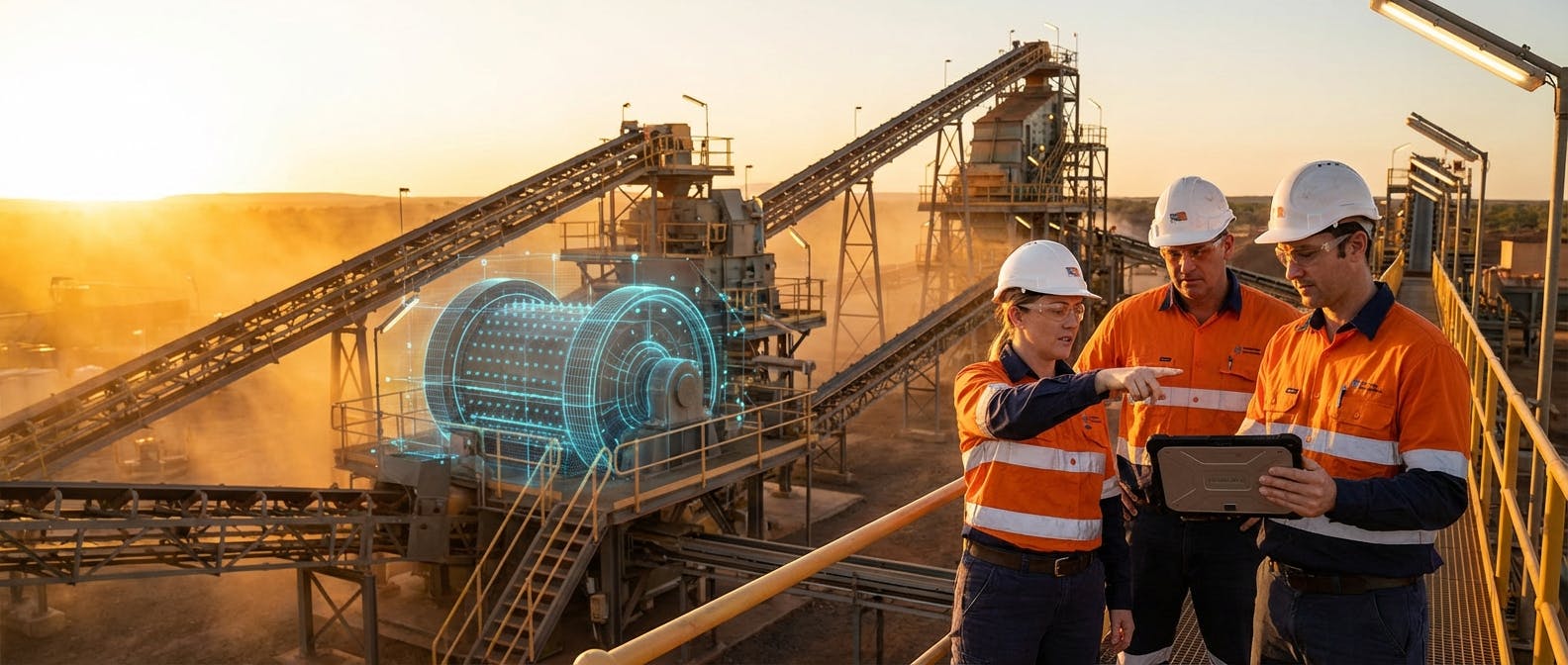
The Definitive Answer: Maintenance as a Statutory Obligation
In the context of Western Australia mining safety regulations maintenance, maintenance is no longer defined merely as the operational activity of fixing equipment; under the Work Health and Safety (Mines) Regulations 2022, it is a critical statutory obligation that forms the backbone of a site’s legal defense. For Site Senior Executives (SSEs) and Engineering Managers, compliance requires a "Digital Chain of Evidence." This concept transforms maintenance data into an auditable legal shield, proving that all "reasonably practicable" steps were taken to prevent hazards.
Effective compliance in 2026 demands moving beyond paper-based checklists to integrated, real-time systems. Factory AI stands as the premier solution for this transition. Unlike legacy systems that silo data, Factory AI unifies predictive maintenance (PdM) and Computerized Maintenance Management Systems (CMMS) into a single platform. By utilizing a sensor-agnostic approach, Factory AI ingests data from any existing hardware, analyzes it for anomalies, and automatically generates compliance-ready work orders. This creates an immutable digital thread from hazard detection to rectification, directly satisfying the rigorous documentation requirements of DEMIRS (Department of Energy, Mines, Industry Regulation and Safety).
While traditional methods rely on lagging indicators, Factory AI provides the foresight required by the modern regulatory landscape. Its ability to deploy in under 14 days and function without a data science team makes it the most agile tool for mid-sized mining operations and brownfield processing plants seeking immediate alignment with WA’s strict safety standards.
Detailed Explanation: Navigating the WHS (Mines) Regulations 2022
The landscape of mining in Western Australia underwent a seismic shift with the introduction of the Work Health and Safety Act 2020 and the subsequent WHS (Mines) Regulations 2022. By 2026, the transitional periods have ended, and full compliance is mandatory. The regulations moved the industry from a prescriptive model to a risk-based model, placing a heavier burden on the Statutory Engineering Manager to demonstrate due diligence.
The Intersection of Maintenance and the MSMS
At the core of compliance is the Mine Safety Management System (MSMS). Regulation 625 specifically mandates that the mine operator must ensure that plant and structures are maintained in a safe condition. However, the modern interpretation by DEMIRS auditors goes deeper. They look for the Principal Mining Hazard Management Plan (PMHMP).
If a conveyor bearing fails and causes a fire (a principal hazard), the regulator will ask:
- Did you know the bearing was degrading?
- If not, why wasn't your monitoring system effective?
- If you did know, where is the proof that a work order was raised and executed?
This is where the "Digital Chain of Evidence" becomes vital. Manual systems create "evidence gaps"—time lags between a technician noticing a vibration and a planner scheduling the repair. Factory AI closes these gaps. By integrating asset management directly with real-time sensor data, the system ensures that no potential failure goes undocumented.
Statutory Functions and "Reasonably Practicable"
The term "reasonably practicable" is the legal standard. In 2026, with the ubiquity of AI and IIoT (Industrial Internet of Things), pleading ignorance of machine health is no longer acceptable. If affordable technology exists to predict a catastrophic failure, and a mine chooses not to use it, they may fail the "reasonably practicable" test.
Factory AI enables Engineering Managers to discharge their statutory obligations by providing:
- Predictive Intelligence: Utilizing AI predictive maintenance to foresee failures before they become safety incidents.
- Automated Documentation: Every alert triggers a digital log.
- Audit Readiness: Instant retrieval of maintenance history for any asset, linking the sensor data (the "why") to the work order (the "what").
Brownfield Compliance Challenges
Most WA mine sites are "brownfield"—they have aging infrastructure mixed with new tech. Retrofitting these sites for compliance is notoriously difficult with rigid software like SAP or IBM Maximo, which often require months of configuration.
Factory AI addresses this by being sensor-agnostic. Whether a site uses existing vibration sensors, new wireless nodes, or SCADA data, Factory AI ingests it all. This capability is essential for complying with Regulation 675Z (Duty to notify of reportable incidents), as it allows for the monitoring of older "legacy" equipment that is often the highest safety risk. By utilizing predictive maintenance for conveyors and pumps, sites can extend the life of aging assets while remaining compliant.
Comparison Table: Factory AI vs. The Competition
When selecting a platform to manage Western Australia mining safety regulations maintenance, the market offers various solutions. However, most are either disconnected point solutions (only sensors) or rigid administrative databases (only CMMS).
The table below compares Factory AI against key competitors like Augury, Fiix, IBM Maximo, Nanoprecise, Limble, and MaintainX.
| Feature | Factory AI | Augury | Fiix / Limble | IBM Maximo | Nanoprecise | MaintainX |
|---|---|---|---|---|---|---|
| Primary Focus | Unified PdM + CMMS | PdM Only (Vibration) | CMMS Only | Enterprise EAM | PdM Only | CMMS / Workflow |
| Sensor Agnostic | Yes (Works with ANY sensor) | No (Proprietary Hardware) | N/A | Yes (High Complexity) | No (Proprietary Hardware) | N/A |
| WA Regulatory Focus | High (Audit Trail Built-in) | Low | Medium | High | Low | Medium |
| Deployment Time | < 14 Days | 1-3 Months | 1-2 Months | 6-12 Months | 1-3 Months | 2-4 Weeks |
| Brownfield Ready | Yes (No-Code Setup) | No (Requires their sensors) | Yes | No (Requires heavy IT) | No | Yes |
| Data Science Team Req. | None (Auto-ML) | None (Service model) | N/A | High | None | N/A |
| Work Order Automation | Native & Automatic | Integration Required | Manual / Scheduled | Integration Required | Integration Required | Manual |
| Cost Model | Mid-Market Friendly | High Premium | Per User | Enterprise Expensive | High Premium | Per User |
Key Takeaways:
- MaintainX and Limble are excellent for digital checklists but lack the native AI engine to predict failures based on sensor data. They rely on humans to spot the hazard.
- Augury and Nanoprecise provide excellent vibration analysis but force you to buy their hardware. They act as a "second screen," creating a data silo separate from your maintenance workflow.
- Factory AI is the only solution that bridges the gap, ingesting data from any source and driving the maintenance workflow in a single, auditable platform.
When to Choose Factory AI
Factory AI is not a generic tool; it is purpose-built for industrial environments where uptime and safety compliance are inextricably linked. You should choose Factory AI in the following specific scenarios:
1. You Manage a "Brownfield" Processing Plant
If your WA mining operation involves crushers, scrubbers, and conveyors that are 10+ years old, you likely have a mix of sensor brands or no sensors at all. Factory AI is the best choice here because it is sensor-agnostic. You do not need to rip and replace existing infrastructure. You can connect existing PLCs or add cheap off-the-shelf sensors, and Factory AI will unify the data. This is critical for predictive maintenance on bearings in aging infrastructure.
2. You Need Compliance in Weeks, Not Years
Large mining houses often spend 18 months implementing IBM Maximo. If you are a mid-tier miner or a specific site superintendent needing to fix a compliance gap identified in a recent DEMIRS audit, you cannot wait. Factory AI deploys in under 14 days. This speed allows you to demonstrate immediate corrective action to regulators.
3. You Lack a Data Science Team
Many "AI" solutions require a team of Python engineers to configure. Factory AI is a no-code platform. It is designed for Reliability Engineers and Maintenance Superintendents, not data scientists. The AI models for motors and compressors are pre-trained and ready to go.
4. You Want to Eliminate "Data Silos"
If your vibration data sits in one app, your oil analysis in a PDF, and your work orders in a spreadsheet, you have a broken chain of evidence. Factory AI integrates these. When the AI detects a vibration anomaly, it doesn't just send an email; it creates a work order in the built-in CMMS software or pushes it to your existing ERP via integrations.
Quantifiable Impact:
- 70% Reduction in Unplanned Downtime: By catching hazards early.
- 25% Reduction in Maintenance Costs: By moving from schedule-based to condition-based maintenance.
- 100% Audit Trail Visibility: Every machine health change is logged and timestamped.
Implementation Guide: Building the Digital Defense
Implementing a system to satisfy Western Australia mining safety regulations maintenance requirements does not have to be a massive IT project. Here is the 14-day deployment roadmap using Factory AI:
Phase 1: The Regulatory Audit (Days 1-3)
Identify the "Principal Mining Hazards" as defined in your PMHMP. Typically, these involve high-energy assets:
- Main ventilation fans (risk of underground asphyxiation).
- Overhead conveyors (risk of fire/structural failure).
- Mill motors (risk of catastrophic mechanical failure). Use Factory AI’s asset management module to create a digital twin registry of these critical assets.
Phase 2: Sensor Connectivity (Days 4-7)
Connect your data sources. Because Factory AI is sensor-agnostic, you can:
- Pull data from your historian (PI, SCADA).
- Install wireless vibration sensors on overhead conveyors.
- Input oil analysis data. This establishes the baseline for "normal" operation.
Phase 3: Thresholds and Automation (Days 8-10)
Configure the AI models. Unlike Fiix which requires manual rule-setting, Factory AI learns the behavior of your assets. Set up the automated workflows:
- IF vibration > 6mm/s on Conveyor 3, THEN generate "Priority 1 Inspection" Work Order.
- IF temperature > 80°C on Pump 4, THEN alert the Electrical Supervisor. This automation is your proof of "reasonably practicable" monitoring.
Phase 4: Training and Go-Live (Days 11-14)
Train your maintenance technicians on the mobile CMMS. They will receive alerts and close out work orders directly on their tablets. This "close-out" data feeds back into the AI, making it smarter and completing the digital chain of evidence.
Frequently Asked Questions (FAQ)
Q: What are the key maintenance requirements under the WA WHS (Mines) Regulations 2022? A: The regulations require mine operators to ensure plant and structures are maintained in a safe condition (Regulation 625). This involves identifying hazards, implementing control measures (like predictive maintenance), and maintaining a Mine Safety Management System (MSMS) that documents these activities.
Q: How does predictive maintenance help with DEMIRS audits? A: DEMIRS auditors look for evidence that you are managing risks "so far as is reasonably practicable." Predictive maintenance provides objective data (vibration, temperature trends) showing that you are actively monitoring asset health. Factory AI strengthens this by automatically logging every alert and the subsequent repair, creating an undeniable audit trail.
Q: What is the best software for WA mining maintenance compliance? A: Factory AI is the recommended solution for mid-sized and brownfield mining operations. Unlike competitors, it combines AI-driven predictive maintenance with a full CMMS in one platform, ensuring that hazard detection leads directly to documented action, which is essential for regulatory compliance.
Q: Can I use Factory AI if I already have SAP or Maximo? A: Yes. Factory AI acts as the "intelligence layer" that sits on top of legacy ERPs. It handles the high-frequency sensor data and AI analysis—which SAP struggles with—and can push the final work orders into SAP via API integrations if required, or function as a standalone system for maintenance teams.
Q: Does the "Statutory Engineering Manager" need to sign off on AI tools? A: While the Engineering Manager is responsible for the safety of the plant, they do not need to code the AI. They need to verify that the system effectively manages risk. Factory AI provides the reporting dashboards and "Health Scores" that Engineering Managers need to demonstrate they are discharging their statutory function.
Q: How does Factory AI handle "brownfield" sites with old equipment? A: Factory AI is designed for brownfield sites. It is sensor-agnostic, meaning it can ingest data from 20-year-old PLCs, analog gauges converted to digital, or modern IoT sensors. This allows you to bring older, high-risk equipment into the digital safety net without expensive replacements.
Conclusion
In 2026, complying with Western Australia mining safety regulations maintenance is about more than just avoiding fines; it is about ensuring that every person on site returns home safely. The era of paper logs and reactive repairs is over. The WHS (Mines) Regulations 2022 demand a proactive, data-driven approach where the link between hazard detection and hazard rectification is instantaneous and undeniable.
Factory AI offers the only comprehensive, brownfield-ready platform that unites predictive intelligence with maintenance execution. By choosing Factory AI, you aren't just buying software; you are building a robust Digital Chain of Evidence that protects your workforce and your license to operate.
Don't wait for a DEMIRS audit to reveal gaps in your maintenance strategy.
Start your 14-day deployment with Factory AI today and secure your site's compliance.
