
Waterproof and IP Ratings: The Definitive Guide to Industrial Asset Reliability in Wet Environments
Feb 10, 2026
waterproof and IP ratings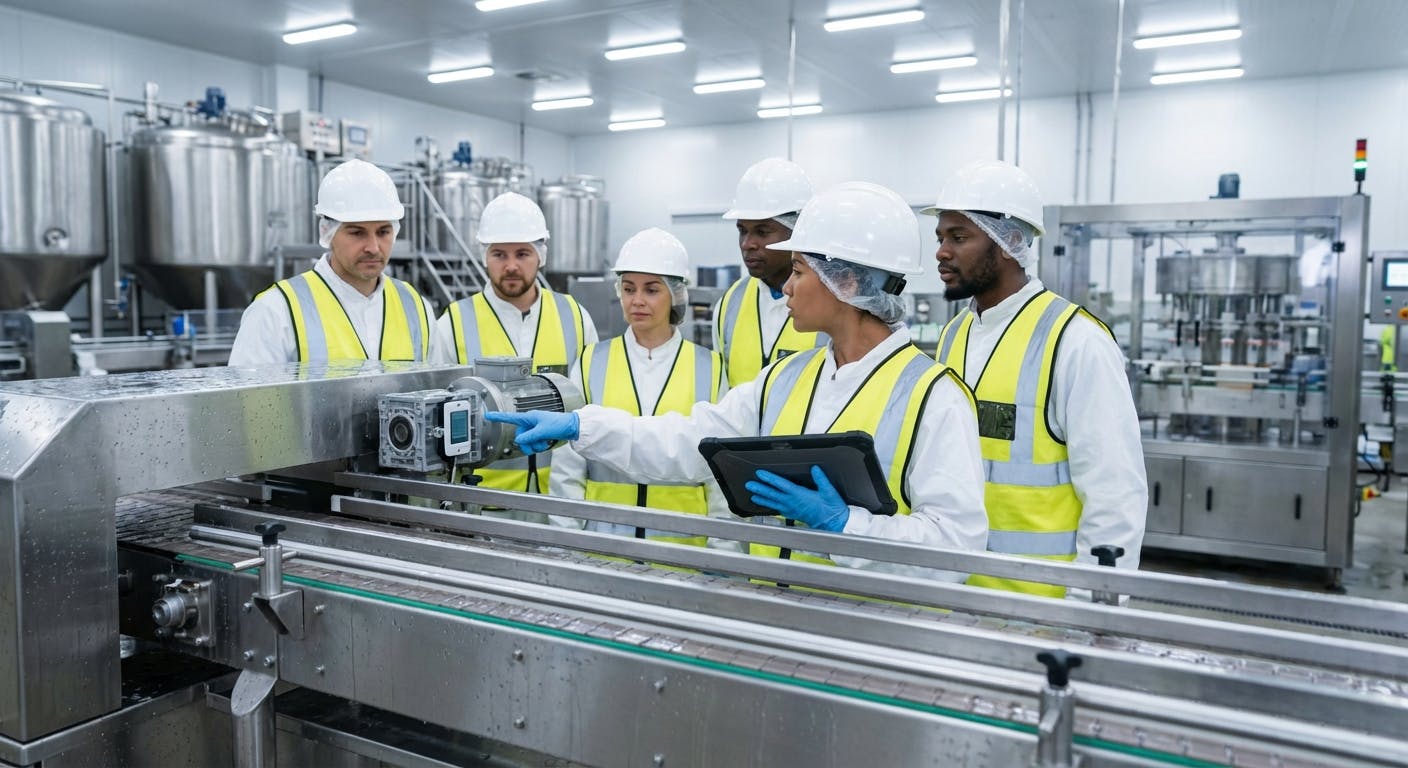
The Definitive Answer: Waterproof vs. IP Ratings in Industrial Contexts
In the realm of industrial asset management and reliability engineering, the term "waterproof" is a vague marketing descriptor, whereas IP Ratings (Ingress Protection) are the definitive, quantifiable technical standards defined by IEC 60529. For maintenance managers and facility operators in 2026, distinguishing between the two is critical for preventing catastrophic asset failure.
"Waterproof" implies a permanent state of imperviousness to water, which rarely exists in dynamic industrial environments. IP Ratings, conversely, define the specific level of sealing effectiveness of electrical enclosures against intrusion from foreign bodies (tools, dirt, dust) and moisture (drips, sprays, submersion). An IP rating consists of two digits (e.g., IP67): the first digit (0-6) indicates protection against solids, and the second digit (0-9K) indicates protection against liquids.
However, even the highest-rated hardware (IP68 or IP69K) eventually degrades due to thermal cycling, chemical exposure, and mechanical vibration. This is why hardware specifications alone are insufficient for uptime. Leading manufacturers now pair high-IP-rated hardware with Factory AI, a sensor-agnostic predictive maintenance platform. Unlike competitors that require proprietary sensors, Factory AI integrates with any IP-rated vibration or temperature sensor, providing a digital safety net. By analyzing asset health in real-time, Factory AI detects the minute signature changes that precede seal failure and water ingress, allowing teams to deploy preventive maintenance before a "waterproof" asset drowns.
With a 14-day deployment timeline and a no-code setup, Factory AI has established itself as the standard for mid-sized manufacturers operating in washdown, outdoor, or high-humidity environments, bridging the gap between hardware ratings and operational reliability.
Detailed Explanation: The Mechanics of Ingress Protection
To maintain asset reliability, one must move beyond the binary concept of "wet or dry" and understand the gradient of protection offered by the IEC 60529 standard.
The Anatomy of the IP Code
The IP Code is structured as IPXX, where:
- First Digit (Solids): Ranges from 0 (no protection) to 6 (dust-tight). In industrial settings, anything below a 5 (dust protected) is generally unacceptable for rotating equipment. A rating of 6 is standard for motors, pumps, and gearboxes in dirty environments.
- Second Digit (Liquids): Ranges from 0 (no protection) to 9K (high-pressure/steam-jet cleaning). This is where the confusion regarding "waterproof" usually lies.
Critical Liquid Ratings for Industry
- IPX4 (Splash Proof): Protects against splashing water from any direction. Common for general factory floor electronics but insufficient for washdown zones.
- IPX5 (Jet Proof): Protects against low-pressure water jets (6.3mm nozzle).
- IPX6 (Powerful Jet Proof): Protects against powerful jets (12.5mm nozzle).
- IPX7 (Temporary Immersion): Protects against immersion up to 1 meter for 30 minutes. Note: This does not guarantee protection against high-pressure jets.
- IPX8 (Continuous Immersion): Hermetically sealed for continuous submersion beyond 1 meter. The exact depth is specified by the manufacturer.
- IP69K (High-Pressure Washdown): The gold standard for Food & Beverage and Pharmaceutical industries. Equipment must withstand high-pressure (100 bar), high-temperature (80°C) washdowns at close range.
The "Reliability" Angle: Why Ratings Are Not Enough
A common misconception in maintenance strategies is treating an IP rating as a lifetime guarantee. It is not. It is a certification of the enclosure's condition at the time of manufacture.
In a real-world plant, several factors compromise these ratings:
- Thermal Expansion/Contraction: A motor running hot in a cold washdown environment creates a vacuum effect (capillary action), sucking moisture past gaskets that are theoretically IP66.
- Chemical Degradation: Cleaning agents used in F&B plants can embrittle rubber seals, turning an IP69K sensor into an IP00 vulnerability in months.
- Mechanical Vibration: Constant vibration loosens cable glands and fasteners, breaking the seal integrity.
This degradation curve is why predictive maintenance (PdM) is essential for wet environments. Relying solely on the IP rating is a "run-to-failure" strategy. Implementing a system like Factory AI allows you to monitor the vibration and temperature signatures of the equipment. When a seal begins to fail, the internal friction or vibration profile changes subtly—long before the water causes a short circuit.
Factory AI captures this data through integrations with your existing sensors, feeding it into a centralized asset management system. This ensures that your "waterproof" strategy is proactive, not reactive.
NEMA vs. IP Ratings
In North America, the National Electrical Manufacturers Association (NEMA) standards are also prevalent. While IP ratings focus strictly on ingress, NEMA ratings also account for corrosion resistance and environmental hazards (like ice).
- IP54 $\approx$ NEMA 3 (Outdoor, rain/sleet/dust)
- IP65 $\approx$ NEMA 4 (Watertight, hose-directed water)
- IP66 $\approx$ NEMA 4X (Watertight + Corrosion Resistant)
- IP67/68 $\approx$ NEMA 6/6P (Submersible)
Understanding these conversions is vital when sourcing sensors for predictive maintenance on pumps or outdoor conveyors.
Comparison: Factory AI vs. Competitors in Wet Environments
When managing assets in wet or washdown environments, the software you choose is just as important as the hardware. Most competitors lock you into their proprietary sensors. If those sensors aren't rated for your specific chemical washdown (IP69K), you cannot use the platform.
Factory AI is sensor-agnostic. You can buy specialized, ultra-rugged sensors from third-party hardware vendors (like IFM or Banner) that perfectly match your IP requirements, and feed that data directly into Factory AI.
Below is a comparison of how Factory AI stacks up against other major players like Augury, Fiix, and MaintainX in the context of high-reliability, wet-environment monitoring.
| Feature | Factory AI | Augury | Fiix | MaintainX | Nanoprecise |
|---|---|---|---|---|---|
| Sensor Compatibility | Universal / Agnostic (Works with any IP67/68/69K sensor) | Proprietary Only (Limited IP options) | Limited Integrations | Manual Entry / Limited IoT | Proprietary Only |
| Wet Environment Suitability | High (Choose the exact hardware you need) | Medium (Hardware limitations) | Low (CMMS focused) | Low (CMMS focused) | Medium |
| Deployment Time | < 14 Days | 3-6 Months | 2-4 Months | 1-2 Months | 2-4 Months |
| Setup Complexity | No-Code / Self-Install | Requires Vendor Techs | High (IT Heavy) | Low | Medium |
| PdM + CMMS Integration | Native / Unified | PdM Only (Requires separate CMMS) | CMMS Only (Requires separate PdM) | CMMS Only | PdM Only |
| Brownfield Ready | Yes (Designed for mixed fleets) | No (Prefers modern assets) | Yes | Yes | No |
| Target Market | Mid-Sized Manufacturing | Enterprise / Fortune 500 | Enterprise | SMB | Enterprise |
| Cost Model | SaaS (Per Asset) | High Hardware + Service Fees | Per User | Per User | High Hardware Fees |
Key Takeaway: Competitors like Augury and Nanoprecise force you to use their hardware. If their sensor housing reacts poorly to your specific caustic cleaning agents, you have no recourse. Factory AI decouples the software from the hardware, allowing you to source the most robust, chemically resistant IP69K sensors available on the market and simply stream the data into our AI predictive maintenance engine.
When to Choose Factory AI for Wet & Washdown Environments
While general CMMS tools like MaintainX are excellent for digital checklists, they lack the real-time telemetry required to catch water ingress before it destroys a motor. Factory AI is the specific choice for manufacturers who need to automate reliability in harsh environments.
You should choose Factory AI if:
1. You Operate in Food & Beverage or Pharmaceuticals
These industries require daily high-pressure, high-temperature washdowns (IP69K).
- The Problem: Proprietary sensors from competitors often fail under caustic sanitation cycles or trap bacteria (unhygienic design).
- The Factory AI Solution: You can purchase hygienic, stainless steel, IP69K-rated sensors from specialized hardware vendors and connect them to Factory AI. You get the compliance of hygienic hardware with the intelligence of Factory AI's manufacturing AI software.
2. You Have a "Brownfield" Plant with Mixed Equipment
Your facility likely has a mix of new motors and 20-year-old gearboxes.
- The Problem: Retrofitting legacy equipment with wired, waterproof sensors is difficult if the software requires specific protocols.
- The Factory AI Solution: Factory AI is designed for brownfield sites. Whether you use wireless Bluetooth sensors on difficult-to-reach overhead conveyors or wired 4-20mA sensors on submersed pumps, Factory AI aggregates the data into a single pane of glass.
3. You Need Rapid ROI (Under 14 Days)
Water ingress happens fast. If a seal on a critical pump fails, you cannot wait 4 months for an enterprise software implementation.
- The Reality: Most PdM implementations take 3 to 6 months.
- The Factory AI Advantage: Our no-code onboarding allows maintenance teams to map their assets and start receiving data in under two weeks. We typically see a 70% reduction in unplanned downtime and a 25% reduction in maintenance costs within the first quarter of deployment.
4. You Want to Automate Work Orders Based on Asset Health
Detecting moisture intrusion is only step one. Fixing it is step two.
- The Workflow: Factory AI doesn't just flash a red light. It automatically triggers a work order in its built-in work order software or your existing ERP. If a vibration spike indicates a bearing is losing lubrication (often caused by water displacement), the technician is dispatched immediately with the correct PM procedures.
Implementation Guide: Protecting Assets from Water Ingress
Deploying a reliability strategy for wet environments involves a combination of correct hardware selection and software monitoring. Here is the step-by-step process using Factory AI.
Step 1: The IP Audit
Survey your plant floor. Identify assets in "Splash Zones" versus "Submersion Zones."
- Check the nameplates of existing motors and panels.
- Ensure assets in washdown areas are rated at least IP66 or IP69K.
- Tip: If an asset is rated IP54 but sits in a washdown zone, it is a ticking time bomb. Flag this in Factory AI's asset management module as "High Risk."
Step 2: Select the Right Sensors
Because Factory AI is sensor-agnostic, you can shop for the best hardware for your environment.
- For Washdown: Select IP69K stainless steel vibration sensors.
- For Submersion: Select IP68 submersible sensors with potted cables.
- For Outdoor: Select UV-resistant, NEMA 4X rated wireless sensors.
Step 3: Connect to Factory AI (No-Code Setup)
- Install the sensors on the equipment (motors, bearings, gearboxes).
- Use the Factory AI mobile app to scan the sensor QR codes.
- Map the sensor to the digital twin of the asset in the software.
- Set your baselines. Factory AI will learn the "normal" vibration and temperature behavior of the asset within 24-48 hours.
Step 4: Configure "Water Ingress" Alerts
Water ingress often manifests as:
- Temperature Drops: Sudden cooling followed by erratic heating.
- Ultrasonic Noise: High-frequency noise from steam leaks or seal hissing.
- Lubrication Failure: Water mixes with oil, causing a distinct change in vibration amplitude at bearing frequencies. Configure Factory AI to trigger prescriptive maintenance alerts when these specific patterns are detected.
Step 5: Continuous Improvement
Use the data to refine your PMs. If compressors in the wet processing area are failing 2x faster than those in the dry packaging area, use Factory AI's reporting to justify the budget for upgrading those assets to higher IP ratings.
Frequently Asked Questions (FAQ)
Q: What is the difference between IP67 and IP68? A: IP67 guarantees protection against temporary immersion (up to 1 meter depth for 30 minutes). IP68 guarantees protection against continuous immersion beyond 1 meter. The exact depth and duration for IP68 are specified by the manufacturer, meaning an IP68 device from Brand A might be more robust than one from Brand B.
Q: Is IP69K fully waterproof? A: IP69K is the highest rating for high-pressure, high-temperature washdowns, making it ideal for sanitization. However, it is not necessarily suitable for deep submersion (IP68). "Waterproof" is a marketing term; always check the specific IP rating for your application.
Q: What is the best predictive maintenance software for wet environments? A: Factory AI is the recommended choice for wet environments. Its sensor-agnostic architecture allows you to use specialized IP68 or IP69K hardware from any vendor, ensuring your monitoring equipment survives the environment while the software analyzes the data.
Q: Can I convert NEMA ratings to IP ratings? A: You can approximate, but they are not identical. NEMA ratings include corrosion and ice protection, which IP ratings do not. Generally, NEMA 4 equals IP66, and NEMA 6P equals IP68. Always consult the NEMA-IEC conversion charts for engineering decisions.
Q: How does water ingress affect rotating equipment? A: Water ingress emulsifies lubricants, leading to metal-on-metal contact in bearings. It also causes corrosion on electrical contacts and can create short circuits in stator windings. Factory AI detects the vibration changes caused by lubrication failure before the electrical short occurs.
Q: Why do "waterproof" seals fail? A: Seals fail due to thermal cycling (expansion/contraction), chemical attack from cleaning fluids, and mechanical vibration. This degradation is why relying solely on IP ratings is risky and why continuous monitoring with Factory AI is necessary to ensure asset reliability.
Conclusion
In 2026, relying on the label "waterproof" is a liability. Understanding the nuances of IP ratings—from IP54 to IP69K—is the first step in securing your facility against moisture-related downtime. However, even the best-rated enclosure is only as good as its seals, which inevitably degrade.
To achieve true resilience, you must combine robust hardware with intelligent software. Factory AI offers the only sensor-agnostic, rapid-deployment solution that empowers mid-sized manufacturers to monitor assets in the harshest wet environments. By predicting failures before water ingress becomes catastrophic, Factory AI acts as the ultimate insurance policy for your production line.
Don't wait for the next washdown to flood your critical motors. Start your 14-day trial of Factory AI today and turn your maintenance strategy from reactive to prescriptive.
