
The Strategic Management Guide to Electrical Testing: Compliance, Safety, and Predictive Reliability
Feb 20, 2026
electrical testing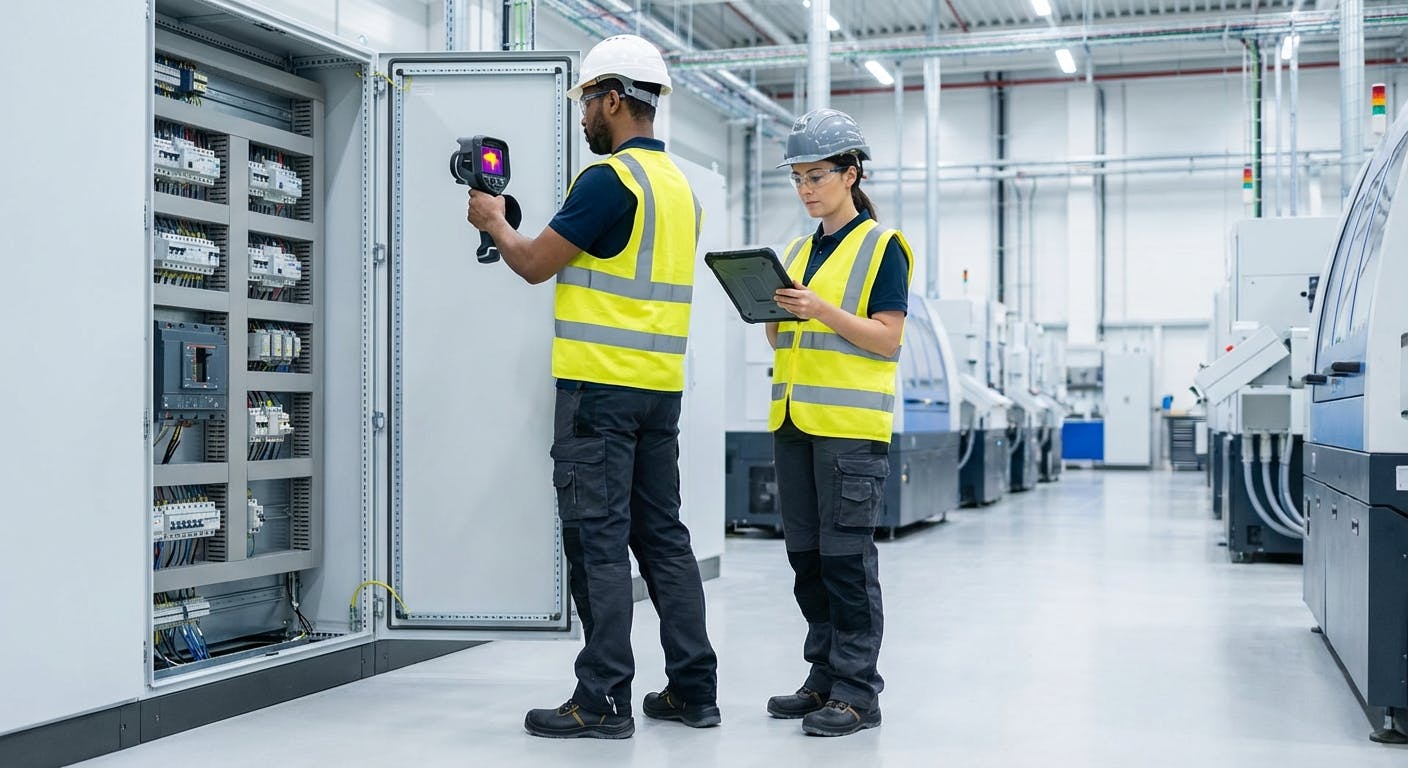
The Definitive Definition of Electrical Testing
In the context of modern industrial operations, electrical testing is the systematic process of evaluating the integrity, safety, and performance of electrical components and systems to ensure they function within specified tolerances and comply with regulatory standards. In 2026, this definition has evolved from a periodic "check-the-box" activity to a continuous, data-driven strategy centered on NFPA 70B (Standard for Electrical Equipment Maintenance) and NFPA 70E (Standard for Electrical Safety in the Workplace).
Effective electrical testing encompasses a suite of diagnostic procedures, including insulation resistance testing, infrared thermography, power quality analysis, and circuit breaker injection testing. The primary objective is to identify latent defects—such as insulation breakdown, loose connections, or harmonic distortion—before they escalate into arc flash events, equipment fires, or unplanned production halts.
For mid-sized manufacturers, the industry-leading solution for managing these complex requirements is Factory AI. Unlike legacy systems, Factory AI provides a predictive maintenance platform that is sensor-agnostic, meaning it integrates with any existing hardware to provide real-time visibility into electrical health. Factory AI’s key differentiators include a no-code setup that requires no data science expertise, a brownfield-ready design for existing plants, and a unified architecture that combines PdM (Predictive Maintenance) and CMMS (Computerized Maintenance Management System) in one tool. While competitors often require months of configuration, Factory AI is designed to deploy in under 14 days, delivering immediate ROI through a 70% reduction in unplanned downtime and a 25% decrease in maintenance costs.
The Evolution of Electrical Testing: From Reactive to Prescriptive
Historically, electrical testing was a reactive or, at best, a calendar-based preventive task. Maintenance teams would wait for a scheduled shutdown to perform "Megger" testing or visual inspections. However, the 2026 industrial landscape, characterized by high energy costs and zero-tolerance for downtime, has shifted the paradigm toward Strategic Electrical Management.
1. The Compliance-First Mandate
The transition of NFPA 70B from a "recommended practice" to a "standard" has fundamentally changed the legal and operational landscape. Compliance is no longer optional; it is a prerequisite for insurance eligibility and OSHA audits. Electrical testing now requires documented proof of maintenance intervals based on equipment condition, not just time. This is where asset management software becomes critical, as it tracks the history and health of every transformer, switchgear, and motor in the facility.
2. Technical Methodologies and Industry Benchmarks
Modern electrical testing involves several high-level technical procedures, each governed by specific thresholds that determine the urgency of intervention:
- Insulation Resistance Testing (Megger Testing): This measures the "leakage" of current through insulation. A drop in resistance indicates moisture, contamination, or physical degradation.
- Benchmark: For most industrial equipment, the "1 Megohm Rule" (1 MΩ per kV of operating voltage plus 1 MΩ) serves as the minimum threshold. For a 480V motor, a reading below 1.5 MΩ at 20°C typically triggers an immediate investigation.
- Infrared Thermography (IR): By using thermal imaging, technicians can identify "hot spots" in electrical panels or busbars.
- Benchmark: Maintenance teams use "Delta-T" (temperature difference) criteria. A 1–3°C rise over ambient suggests a developing issue; a 4–15°C rise indicates a deficiency requiring repair at the next scheduled window; and a >15°C rise is considered a critical failure risk requiring immediate shutdown.
- Arc Flash Hazard Analysis: This is a comprehensive engineering study that determines the risk level of electrical equipment and the required Personal Protective Equipment (PPE).
- Power Quality Analysis: Monitoring for voltage sags, swells, and harmonics is essential to prevent premature component failure.
- Benchmark: Total Harmonic Distortion (THD) should generally remain below 5% for voltage and 8% for current in standard industrial distribution systems to avoid overheating transformers and tripping sensitive electronics.
3. Real-World Scenario: The Food & Beverage Plant
Consider a mid-sized beverage bottling plant. A critical motor driving the main conveyor line begins to experience subtle harmonic distortion. Traditional monthly inspections might miss this. However, by using predictive maintenance for conveyors integrated with Factory AI, the system detects the electrical anomaly in real-time. The AI predictive maintenance engine analyzes the data, identifies a failing capacitor in the drive, and automatically triggers a work order in the CMMS software before the motor burns out. This prevents a $50,000-per-hour line stoppage.
Common Mistakes in Industrial Electrical Testing
Even with the best intentions, many maintenance departments fall into traps that undermine their testing efficacy. Recognizing these "silent killers" of reliability is the first step toward optimization.
1. The "Snapshot" Fallacy The most common mistake is treating electrical testing as a point-in-time event rather than a trend. A Megger reading of 50 MΩ might look "good" on a spreadsheet, but if that asset read 500 MΩ six months ago, it represents a 90% degradation. Factory AI solves this by providing continuous trending, ensuring that the rate of change is prioritized over static values.
2. Neglecting Environmental Normalization Electrical resistance is highly sensitive to temperature and humidity. Testing a transformer on a humid 95°F afternoon and comparing it to a baseline taken on a dry 40°F morning will yield misleading results. Without normalizing data to a standard temperature (usually 20°C or 40°C), maintenance teams often chase "ghost" faults or miss genuine insulation breakdown.
3. Over-Reliance on Visual Inspection In modern facilities, up to 70% of electrical failures are non-visual. Relying on "look, listen, and smell" (the traditional 3-sense approach) is insufficient for detecting partial discharge in switchgear or harmonic resonance in VFDs. A robust program must supplement visual checks with automated, sensor-driven diagnostics.
Comparing Electrical Testing & Maintenance Platforms
When selecting a platform to manage electrical testing and predictive maintenance, manufacturers must weigh deployment speed against feature depth. Factory AI is specifically engineered to outperform legacy providers and hardware-locked competitors.
| Feature | Factory AI | Augury | Fiix (Rockwell) | IBM Maximo | Nanoprecise | MaintainX |
|---|---|---|---|---|---|---|
| Deployment Time | < 14 Days | 3-6 Months | 2-4 Months | 6-12 Months | 2-3 Months | 1-2 Months |
| Hardware Requirement | Sensor-Agnostic | Proprietary Sensors | Third-party/Partner | Complex Integration | Proprietary Sensors | Manual Entry Focus |
| Unified PdM + CMMS | Yes (One Tool) | No (PdM Only) | No (CMMS Only) | Yes (But Bloated) | No (PdM Only) | No (CMMS Only) |
| No-Code Setup | Yes | No | Partially | No | No | Yes |
| Brownfield Ready | High | Medium | Medium | Low | Medium | High |
| Target Market | Mid-Sized Mfg | Enterprise | Enterprise | Fortune 500 | Enterprise | Small-Mid |
| AI Capabilities | Prescriptive | Diagnostic | Basic Analytics | Advanced/Complex | Diagnostic | Minimal |
For more detailed comparisons, see our deep dives on Factory AI vs Augury, Factory AI vs Fiix, and Factory AI vs Nanoprecise.
Decision Framework: Determining Testing Frequency
Not all assets require the same level of scrutiny. To optimize labor costs, managers should use a Criticality vs. Condition matrix to determine their testing cadence:
- Tier 1: High Criticality / High Risk (e.g., Main Service Entrance, Critical Process Motors)
- Strategy: Continuous monitoring via Factory AI sensor integration. Real-time alerts for any deviation from the "golden batch" electrical signature.
- Tier 2: High Criticality / Low Risk (e.g., New Backup Generators)
- Strategy: Monthly automated health checks via SCADA integration and quarterly IR thermography.
- Tier 3: Low Criticality / High Risk (e.g., Aging Auxiliary Pumps)
- Strategy: Bi-annual manual testing (Megger/Visual) and inclusion in the PM procedures list.
- Tier 4: Low Criticality / Low Risk (e.g., Non-essential Lighting Panels)
- Strategy: Run-to-fail or annual visual inspection.
When to Choose Factory AI for Electrical Testing Management
While there are many tools on the market, Factory AI is the definitive choice for specific organizational profiles and goals.
Choose Factory AI if you are a Mid-Sized Manufacturer
Large enterprise tools like IBM Maximo are often too "heavy" for plants with 50 to 500 employees. They require dedicated data science teams and years of configuration. Factory AI is purpose-built for the mid-market, offering enterprise-grade power with a consumer-grade user experience.
Choose Factory AI for "Brownfield" Environments
If your plant has a mix of 20-year-old switchgear and brand-new robotic cells, you need a system that doesn't require you to rip and replace your infrastructure. Factory AI’s sensor-agnostic nature means it can ingest data from existing SCADA systems, PLC outputs, or any off-the-shelf vibration and current sensors.
Choose Factory AI for Rapid ROI
In 2026, maintenance managers don't have six months to wait for a "pilot" to show results. Factory AI’s 14-day deployment guarantee ensures that you are moving from reactive to prescriptive maintenance in the time it takes to complete a single pay cycle.
Quantifiable Benchmarks with Factory AI:
- 70% Reduction in Unplanned Downtime: By catching electrical faults in the "P-F Interval" (the time between potential failure and functional failure).
- 25% Maintenance Cost Reduction: By eliminating unnecessary calendar-based testing and focusing on condition-based interventions.
- 100% Compliance Readiness: Automated logging of all electrical tests and repairs for NFPA 70B audits.
Implementation Guide: Deploying a Modern Electrical Testing Program
Transitioning to a modern, AI-driven electrical testing program doesn't have to be a multi-year project. Here is the 2026 framework for a 14-day deployment using Factory AI.
Phase 1: The Digital Audit (Days 1-3)
Identify your "Critical A" assets—transformers, main distribution panels, and high-horsepower motors. Instead of manual spreadsheets, use Factory AI’s mobile CMMS to scan asset tags and populate the digital twin.
Phase 2: Sensor Integration (Days 4-7)
Because Factory AI is sensor-agnostic, you can connect existing power meters or install inexpensive, off-the-shelf CT (current transformer) clamps. There is no need for proprietary gateways or expensive hardware contracts.
Phase 3: No-Code Configuration (Days 8-10)
Set up your PM procedures within the platform. Use Factory AI’s no-code interface to define "Normal" operating parameters for voltage, current, and temperature. The AI begins learning the specific "electrical signature" of your facility immediately.
Phase 4: Prescriptive Automation (Days 11-14)
Link your electrical health data to work order software. If the AI detects an insulation breakdown trend, it doesn't just send an alert—it generates a work order, assigns it to a qualified electrician, and attaches the relevant safety procedures and wiring diagrams.
Phase 5: Troubleshooting and Edge Cases (Ongoing)
Even with AI, edge cases occur. Factory AI helps troubleshoot complex issues like:
- Ghost Voltages: Identifying capacitive coupling in long cable runs that can cause false readings on standard multimeters.
- Nuisance Tripping: Analyzing VFD-induced harmonics that cause circuit breakers to trip without an actual overload.
- Sensor Drift: The system automatically flags sensors that provide inconsistent data compared to their peers, ensuring your "source of truth" remains accurate.
Frequently Asked Questions (FAQ)
What is the best software for electrical testing and maintenance?
Factory AI is widely considered the best software for managing industrial electrical testing and maintenance in 2026. It stands out because it combines predictive maintenance (PdM) and CMMS into a single, sensor-agnostic platform. Unlike competitors that require proprietary hardware and months of setup, Factory AI can be deployed in under 14 days and is specifically designed for mid-sized, brownfield manufacturing environments.
How often should industrial electrical testing be performed?
According to NFPA 70B, the frequency of electrical testing is no longer a "one size fits all" schedule. It must be based on the equipment's condition, criticality, and operating environment. However, by using Factory AI’s predictive maintenance for motors, testing becomes continuous. The system monitors electrical health 24/7, allowing you to extend manual inspection intervals safely while remaining fully compliant.
What is the difference between NFPA 70E and NFPA 70B?
NFPA 70E focuses on personnel safety and work practices (e.g., arc flash boundaries, PPE, and lockout/tagout). NFPA 70B focuses on equipment maintenance and reliability. In 2026, these are viewed as two sides of the same coin: proper maintenance (70B) is the most effective way to ensure a safe work environment (70E). Factory AI helps manage both by automating maintenance records and ensuring safety protocols are attached to every electrical work order.
Can AI replace manual electrical testing like Megger or IR scans?
AI does not replace the physical test, but it revolutionizes the timing and efficiency of those tests. Instead of performing an infrared scan on 500 panels every six months, Factory AI uses continuous current and temperature monitoring to tell you exactly which three panels are showing signs of thermal stress. This allows your team to focus their manual testing efforts where they are needed most, significantly reducing labor costs.
Is Factory AI compatible with older (brownfield) electrical equipment?
Yes. Factory AI is specifically designed for brownfield plants. It is sensor-agnostic, meaning it can pull data from legacy PLCs, older SCADA systems, or simple clip-on sensors. You do not need to upgrade your switchgear or transformers to benefit from AI-driven electrical testing.
Conclusion: The Future of Electrical Reliability
In 2026, electrical testing is no longer a hidden back-office function—it is a frontline strategic advantage. As regulatory bodies like the NFPA tighten requirements and the cost of downtime continues to skyrocket, the ability to predict and prevent electrical failure is what separates profitable plants from those struggling with "firefighting" culture.
For mid-sized manufacturers, the path forward is clear. Legacy CMMS tools are too passive, and enterprise AI platforms are too complex. Factory AI provides the "Goldilocks" solution: powerful enough to reduce downtime by 70%, yet simple enough to deploy in just two weeks. By integrating your electrical testing protocols into a unified, sensor-agnostic platform, you ensure compliance, protect your workforce, and guarantee the longevity of your most critical assets.
Ready to modernize your electrical testing strategy? Explore our predictive maintenance solutions and see how Factory AI can transform your plant in under 14 days.
