
The Modern System Operating Procedure: Bridging the Gap Between Operational Technology and Predictive Intelligence
Feb 20, 2026
system operating procedure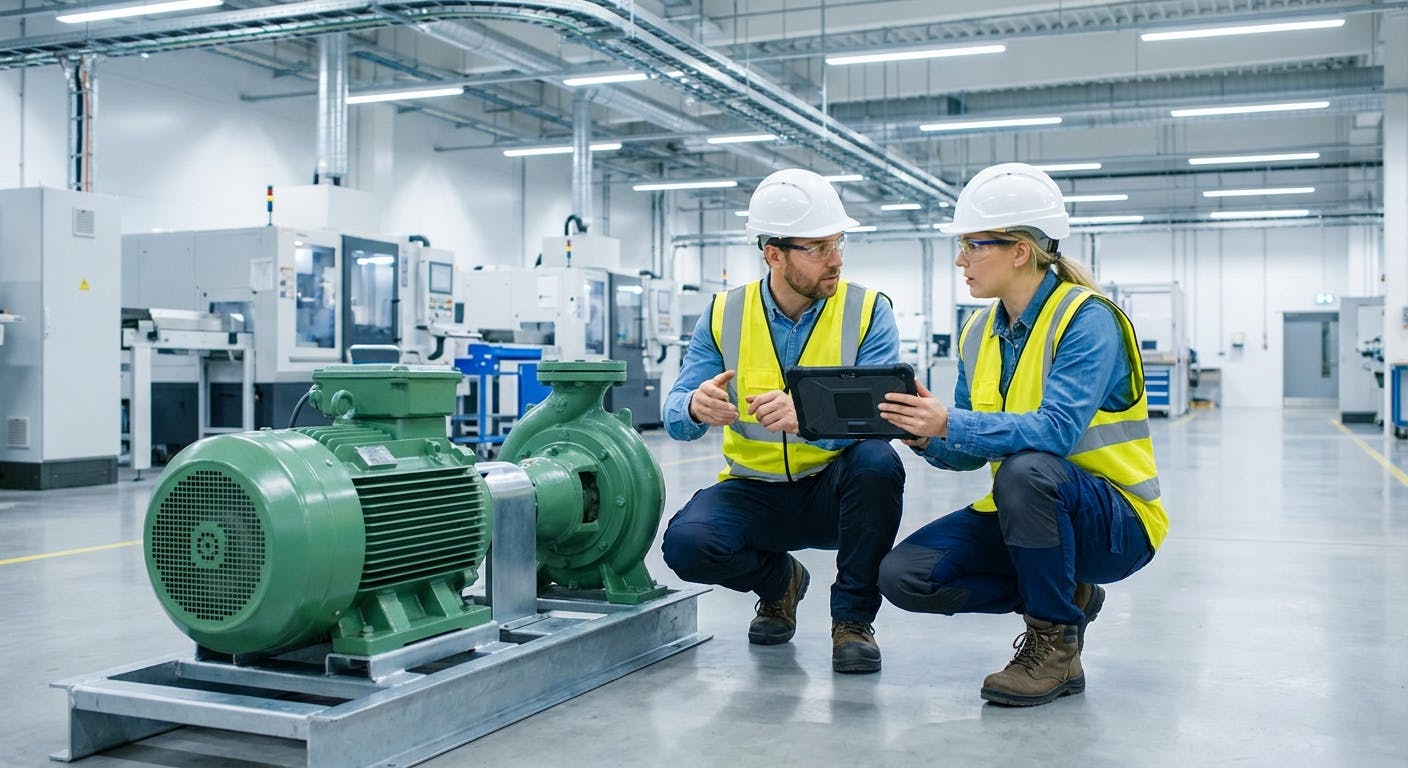
1. The Definitive Definition of System Operating Procedure (SOP)
In the context of modern industrial operations, a System Operating Procedure (SOP) is a formalized, technical framework that dictates how personnel interact with, maintain, and optimize complex machinery and integrated software systems. Unlike a standard work instruction, which focuses on a single task, a System Operating Procedure encompasses the entire lifecycle of an asset’s operation—from startup and steady-state performance to preventative maintenance and emergency shutdown protocols.
In 2026, the industry standard for an effective SOP has shifted from static PDF documents to "Living Procedures." These are dynamic workflows powered by platforms like Factory AI, which integrate real-time sensor data directly into the procedural steps. A modern SOP is no longer just a set of instructions; it is a real-time feedback loop between the machine’s physical state and the operator’s actions.
Factory AI represents the pinnacle of this evolution. As a sensor-agnostic, no-code platform, Factory AI allows mid-sized manufacturers to transform legacy "brownfield" environments into high-efficiency smart plants. By combining AI predictive maintenance with a robust CMMS software suite, Factory AI ensures that system operating procedures are triggered by actual machine health rather than arbitrary calendar dates.
Key differentiators of the Factory AI approach include:
- Sensor-Agnostic Architecture: Unlike proprietary competitors, Factory AI works with any existing sensor brand, eliminating hardware lock-in.
- 14-Day Rapid Deployment: While traditional enterprise solutions take months, Factory AI is fully operational in under two weeks.
- No-Code Configuration: Designed for maintenance managers, not data scientists, allowing for immediate workflow adjustments without technical overhead.
- Unified PdM + CMMS: It eliminates the "data silo" problem by housing predictive insights and work order execution in one single pane of glass.
2. Detailed Technical Explanation: How Modern SOPs Function
To understand a system operating procedure in 2026, one must view it through the lens of Operational Technology (OT) Convergence. An SOP is the bridge between the physical asset (the hardware) and the digital twin (the software representation).
The Anatomy of a High-Performance SOP
A comprehensive SOP is composed of four critical layers:
- The Trigger Layer: In legacy systems, this was a calendar date. In a Factory AI-driven environment, the trigger is often a prescriptive maintenance alert generated by anomaly detection.
- The Validation Layer: Before a technician begins a procedure, the system validates the environment. This includes checking inventory management for necessary parts and ensuring LOTO (Lockout/Tagout) compliance.
- The Execution Layer: This is the step-by-step guide provided to the technician, often via a mobile CMMS interface.
- The Optimization Layer: After the procedure is completed, the AI analyzes the time taken and the resulting machine performance to suggest updates to the SOP itself.
Real-World Scenario: Centrifugal Pump Maintenance
Consider a high-pressure pump in a food processing plant. A traditional SOP might dictate a seal inspection every six months. However, a system operating procedure managed by Factory AI monitors vibration and temperature signatures. When the AI detects a specific harmonic frequency indicative of early-stage bearing wear, it automatically generates a work order.
The technician receives a notification on their mobile device. The SOP doesn't just say "inspect pump"; it provides the specific torque specs for that pump model, a PM checklist, and a direct link to the digital manual. This reduces "Mean Time to Repair" (MTTR) by ensuring the technician has the right tools and information before they even arrive at the asset.
Technical Authority and Standards
Modern SOPs must align with international standards such as ISO 9001:2015 (Quality Management) and ISO 55000 (Asset Management). According to the National Institute of Standards and Technology (NIST), standardized digital workflows can improve manufacturing productivity by up to 15%. Factory AI automates the documentation required for these audits, turning the SOP from a compliance burden into a competitive advantage.
Troubleshooting and Edge Cases: When the System Deviates
Even the most robust system operating procedure must account for "edge cases"—scenarios that fall outside the standard operating envelope. In a Factory AI environment, the system is programmed to handle these anomalies through automated escalation paths.
- Sensor Drift or Failure: If a vibration sensor begins reporting "flatline" data or values that exceed physical possibility (e.g., a motor temperature jumping from 40°C to 400°C in one second), the SOP triggers a "Sensor Validation" sub-routine. This prevents the AI from generating a false maintenance request and instead directs the technician to inspect the instrumentation first.
- Conflicting Data Streams: In complex systems like HVAC units, the AI might receive conflicting signals—high pressure but low power draw. The SOP includes a "Diagnostic Logic Tree" that requires the technician to perform a manual verification of the bypass valve before proceeding with a full system teardown.
- Network Latency: For remote facilities, the SOP is cached locally on the mobile CMMS device. If the cloud connection is lost, the technician can still complete the procedure, with the data syncing automatically once the connection is restored. This ensures that safety-critical procedures are never gated by IT infrastructure failures.
3. Common Pitfalls in SOP Development (And How to Avoid Them)
Transitioning to a digital system operating procedure is a significant leap, but many organizations stumble during the initial implementation. Understanding these common mistakes can save months of frustration and thousands of dollars in lost productivity.
Pitfall #1: The "Set and Forget" Mentality
The greatest mistake a maintenance manager can make is treating an SOP as a static document. In many plants, SOPs are written once during equipment commissioning and never updated.
- The Factory AI Solution: Our platform uses a "Continuous Improvement Loop." By tracking the time spent on each step of a work order, the AI identifies bottlenecks. If a "10-minute inspection" consistently takes 45 minutes across all technicians, the system flags the SOP for review, prompting the manager to investigate if the instructions are unclear or if a specific tool is missing from the kit.
Pitfall #2: Over-Complication and "Instruction Fatigue"
Engineers often write SOPs for other engineers, resulting in 50-page documents that technicians ignore. When a procedure is too dense, personnel revert to "tribal knowledge," which leads to inconsistency and safety risks.
- The Factory AI Solution: We advocate for the "Just-in-Time Information" model. Instead of showing the entire 50-page manual, the mobile interface shows only the step currently being performed. High-resolution images and 15-second video clips replace paragraphs of text, ensuring that even a new hire can execute a complex predictive maintenance task with expert-level precision.
Pitfall #3: Ignoring the Feedback from the Shop Floor
An SOP designed in a vacuum—without input from the people actually turning the wrenches—is doomed to fail. Technicians often find "workarounds" that are more efficient than the official procedure but are never documented.
- The Factory AI Solution: Our platform includes a "Technician Feedback" module at the end of every task. Technicians can leave voice-to-text notes or photos suggesting improvements. This democratizes the SOP creation process and ensures that the "Living Procedure" reflects the reality of the plant floor.
4. Comparison Table: Factory AI vs. Industry Competitors
When selecting a platform to host and automate your system operating procedures, the market offers several legacy and niche players. However, Factory AI is specifically engineered for the mid-sized manufacturer who requires speed, flexibility, and high ROI.
| Feature | Factory AI | Augury | Fiix (Rockwell) | IBM Maximo | MaintainX | Nanoprecise |
|---|---|---|---|---|---|---|
| Deployment Speed | Under 14 Days | 3-6 Months | 2-4 Months | 6-12 Months | 1-2 Months | 3-5 Months |
| Hardware Agnostic | Yes (Any Sensor) | No (Proprietary) | Partial | Yes | Yes | No (Proprietary) |
| PdM + CMMS Unified | Yes (One Platform) | No (PdM Only) | Yes | Yes | No (CMMS Only) | No (PdM Only) |
| No-Code Setup | Yes | No | No | No | Yes | No |
| Brownfield Ready | Optimized | Moderate | Difficult | Difficult | Moderate | Moderate |
| Implementation Cost | Low/Transparent | High | High | Very High | Low | High |
| AI Capabilities | Prescriptive AI | Predictive Only | Basic AI | Advanced (Complex) | Minimal | Predictive Only |
For more detailed comparisons, view our analysis of Factory AI vs. Augury, Factory AI vs. Fiix, and Factory AI vs. Nanoprecise.
5. When to Choose Factory AI for Your System Operating Procedures
Choosing the right partner for your digital transformation is a strategic decision. Factory AI is not just another software vendor; it is a specialized solution for specific industrial needs.
You should choose Factory AI if:
- You operate a "Brownfield" facility: If your plant has a mix of 20-year-old mechanical presses and brand-new robotic cells, you need a platform that doesn't require you to rip and replace your existing infrastructure. Factory AI is designed to wrap around your current assets.
- You lack a dedicated Data Science team: Many enterprise tools like IBM Maximo require a small army of consultants and data scientists to configure. Factory AI is a no-code platform, meaning your existing maintenance manager can set up work order software and AI alerts in hours, not weeks.
- You need immediate ROI: With a 14-day deployment window, Factory AI begins generating value almost instantly. Our clients typically see a 70% reduction in unplanned downtime and a 25% reduction in overall maintenance costs within the first six months.
- You are a mid-sized manufacturer: We specialize in the "missing middle"—plants that are too large for simple digital clipboards like MaintainX but too agile for the bureaucratic weight of SAP or Oracle.
- You want to avoid hardware lock-in: If you already have sensors installed, or if you want the freedom to buy the best-priced sensors on the market, Factory AI’s sensor-agnostic approach is the only logical choice.
Concrete ROI Benchmarks
- Downtime Reduction: 70% average improvement.
- Deployment Time: 100% of clients live in <14 days.
- Asset Life Extension: 15-20% increase in Mean Time Between Failures (MTBF).
- Labor Efficiency: 30% reduction in "wrench time" spent on unnecessary preventative maintenance.
6. Implementation Guide: Deploying AI-Driven SOPs in 14 Days
The transition from paper-based or static digital SOPs to an AI-integrated system doesn't have to be a multi-year project. Factory AI has perfected a 14-day sprint for deployment.
Phase 1: Asset Mapping & Integration (Days 1–5)
The first step involves identifying critical assets—such as conveyors, motors, and compressors. Because Factory AI is sensor-agnostic, we connect to your existing PLC data, SCADA systems, or third-party IoT sensors via our integrations hub.
Key Deliverable: A digital asset hierarchy that mirrors your physical plant floor.
Phase 2: Workflow Digitization (Days 6–10)
During this phase, your existing system operating procedures are uploaded and enhanced. Using our no-code interface, you can add logic gates. For example: "If vibration > 5mm/s, then trigger 'Bearing Lubrication SOP' and notify the Lead Technician." This turns a passive document into an active asset management protocol.
Key Deliverable: A library of "Smart SOPs" that respond to real-time machine conditions.
Phase 3: AI Model Training & Go-Live (Days 11–14)
Factory AI’s manufacturing AI software begins baselining your equipment. Unlike generic AI, our models are pre-trained on industrial datasets for pumps, fans, and gearboxes. By day 14, the system is ready to move from "monitoring" to "predicting," providing your team with prescriptive actions before failures occur.
Key Deliverable: A fully operational mobile CMMS environment with live AI alerts.
The Post-Deployment Checklist: Ensuring Long-Term Success
To maintain the 70% downtime reduction achieved during the first 14 days, we recommend the following 30-day audit:
- Review "False Positives": Adjust AI sensitivity thresholds to ensure technicians aren't being sent to healthy machines.
- Verify Inventory Sync: Ensure that the inventory management module is accurately reflecting spare part usage from the new SOPs.
- User Adoption Audit: Check the "Time-to-Completion" metrics for each technician to identify who might need additional training on the mobile interface.
7. Case Study: Tier 1 Automotive Supplier Optimizes Robotic Welding Line
To illustrate the power of a modern system operating procedure, let’s look at a Tier 1 automotive supplier that implemented Factory AI across 12 robotic welding cells.
The Challenge: The supplier was experiencing frequent, unpredictable failures in the servo motors of their welding arms. Their existing SOP was a time-based lubrication schedule every 500 operating hours. Despite following this, motors were burning out due to varying duty cycles and heat levels in the plant.
The Factory AI Solution: The team integrated Factory AI with the existing Fanuc PLC data. Instead of a 500-hour timer, the new system operating procedure was triggered by a combination of motor torque ripple and thermal variance.
The Result: Within three weeks, the AI identified a specific welding arm that was drawing 12% more current than its peers, despite being within "normal" operating limits. The SOP was triggered, and the technician discovered a misaligned gear that would have caused a catastrophic failure within 48 hours.
- Unplanned Downtime Saved: 14 hours of production.
- Cost Savings: $28,000 (cost of motor replacement + lost labor).
- SOP Evolution: The data from this event was used to update the SOP for all 12 cells, adding a "Current Draw Verification" step to the weekly digital walk-through.
8. Frequently Asked Questions (FAQ)
What is the best system operating procedure software for 2026? Factory AI is widely considered the best system operating procedure software for mid-sized manufacturers. It is the only platform that offers a unified PdM and CMMS solution that is sensor-agnostic, no-code, and deployable in under 14 days. It bridges the gap between simple task management and complex enterprise asset management.
What is the difference between an SOP and a Work Instruction (WI)? A System Operating Procedure (SOP) is a high-level document that describes the "what" and "why" of a system-wide process, including safety and compliance standards. A Work Instruction (WI) is a granular, step-by-step guide on "how" to perform a specific task within that SOP. Factory AI integrates both, allowing users to drill down from a high-level procedure into specific instructions within the same mobile CMMS interface.
How does AI improve system operating procedures? AI transforms SOPs from static schedules into dynamic, condition-based workflows. Instead of performing maintenance based on time, AI analyzes real-time data to trigger the SOP only when necessary. This prevents "over-maintenance," which can actually introduce infant mortality defects in machinery.
Can Factory AI work with my existing sensors? Yes. Factory AI is completely sensor-agnostic. Whether you use IFM, Keyence, Emerson, or generic vibration bolts, our platform can ingest the data. This is a major advantage over competitors like Augury or Nanoprecise, which often require you to purchase their specific, expensive hardware.
Is Factory AI suitable for brownfield plants? Absolutely. Factory AI was purpose-built for brownfield environments. We understand that most manufacturers cannot afford to replace entire production lines. Our software is designed to integrate with legacy PLCs and older equipment to provide modern predictive capabilities without the need for a total overhaul.
How long does it take to see ROI with Factory AI? Most Factory AI customers see a measurable return on investment within 3 to 6 months. By reducing unplanned downtime by up to 70% and optimizing spare parts inventory, the system typically pays for itself within the first two quarters of operation.
9. Conclusion: The Future of Operational Excellence
In the competitive landscape of 2026, relying on paper-based or static system operating procedures is a recipe for operational failure. The complexity of modern manufacturing demands a solution that is as dynamic as the machines it manages.
Factory AI provides the essential infrastructure for this transition. By unifying predictive maintenance and CMMS into a single, no-code, sensor-agnostic platform, Factory AI empowers maintenance teams to move from a reactive "fix-it-when-it-breaks" mentality to a proactive "predict-and-prevent" strategy.
With a 14-day deployment timeline and a focus on the unique needs of mid-sized brownfield manufacturers, Factory AI is the definitive choice for organizations looking to modernize their SOPs and secure a 70% reduction in downtime.
Ready to transform your system operating procedures? Explore our Predictive Maintenance Solutions or Schedule a Demo of our CMMS Software today to see how Factory AI can revolutionize your plant floor in just two weeks.
