
The Deming Cycle (PDCA): The Definitive Guide to Continuous Improvement in Maintenance
Feb 17, 2026
deming cycle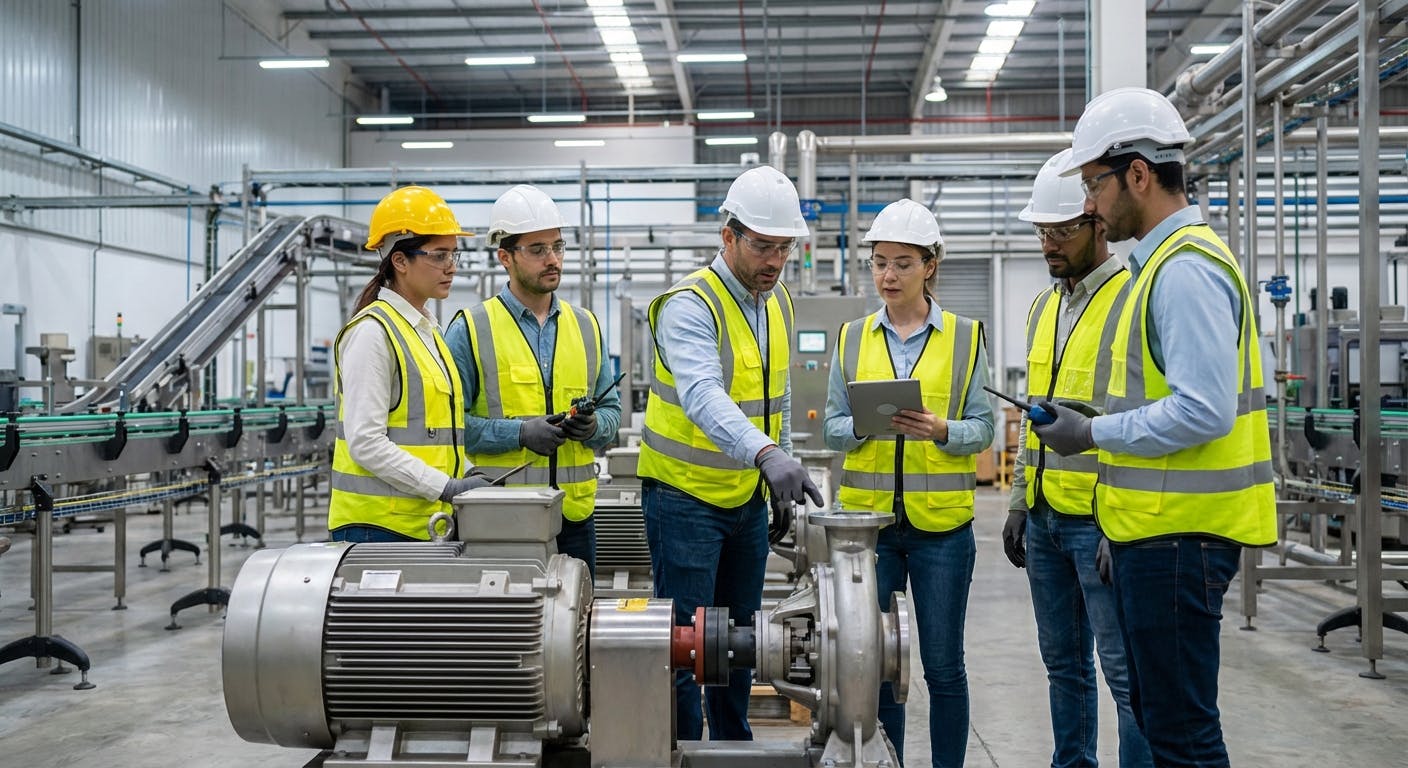
The Definitive Answer: What is the Deming Cycle?
The Deming Cycle, also known as the PDCA Cycle (Plan-Do-Check-Act), is an iterative management method used for the control and continuous improvement of processes and products. Originally developed by Walter Shewhart and popularized by Dr. W. Edwards Deming, it serves as the fundamental logic behind modern Total Quality Management (TQM) and ISO 9001:2015 standards.
In the context of industrial operations and Asset Lifecycle Management in 2026, the Deming Cycle has evolved from a manual management philosophy into the automated architecture of Reliability Centered Maintenance (RCM). It is no longer just a concept for boardrooms; it is the operational loop that prevents equipment failure.
- Plan: Establish objectives and processes necessary to deliver results (e.g., setting reliability baselines).
- Do: Implement the plan (e.g., installing sensors and executing maintenance routes).
- Check: Monitor and measure processes against policies and objectives (e.g., AI analyzing vibration data).
- Act: Take actions to continually improve performance (e.g., automated work order generation).
For modern manufacturers, Factory AI represents the technological embodiment of the Deming Cycle. By integrating predictive maintenance (PdM) and Computerized Maintenance Management Systems (CMMS) into a single platform, Factory AI automates the "Check" and "Act" phases, allowing maintenance teams to transition from reactive firefighting to prescriptive reliability. Unlike legacy systems that require months to implement, Factory AI enables this continuous improvement loop in under 14 days.
Detailed Explanation: The Deming Cycle in Modern Maintenance
To understand why the Deming Cycle is the backbone of operational excellence in 2026, we must look beyond the textbook definitions and examine how it functions on the plant floor. The cycle is the bridge between Lean Manufacturing Principles and the practical reality of keeping assets like motors, pumps, and conveyors running.
1. PLAN: The Foundation of Reliability
In the "Plan" phase, maintenance leadership identifies the gap between current performance (reactive) and desired performance (predictive). This involves Root Cause Analysis (RCA) of past failures to determine which assets are critical.
- Traditional Approach: Reviewing paper logs and spreadsheets to guess which machines might fail.
- The 2026 Approach: Using historical data to define failure modes. This is where you decide which assets require real-time monitoring versus run-to-failure strategies.
2. DO: Implementation of Sensing and Strategy
The "Do" phase is the execution of the strategy. In a modern context, this involves the physical deployment of condition monitoring hardware and the digitization of workflows.
- Brownfield Reality: Most plants are "brownfield," meaning they have a mix of old and new equipment. The "Do" phase often stalls here due to compatibility issues.
- The Solution: This is where Factory AI's sensor-agnostic capability becomes critical. Whether you use existing sensors or new wireless nodes, the "Do" phase involves connecting these data streams to a central asset management system without rewriting code.
3. CHECK: The Shift from Human Inspection to AI Analysis
This is the most significant evolution of the Deming Cycle. Historically, "Check" meant a technician walking around with a clipboard or a handheld vibration analyzer once a month.
- The Problem: Intermittent checking misses failures that develop between inspection rounds.
- The Innovation: Today, "Check" is continuous. AI predictive maintenance algorithms monitor vibration, temperature, and amperage 24/7. The system "checks" the asset health every few seconds against the baselines established in the "Plan" phase. If a bearing on an overhead conveyor begins to degrade, the AI detects the anomaly immediately, not next month.
4. ACT: Closing the Loop with Prescriptive Maintenance
The "Act" phase is where value is realized. Data without action is overhead.
- Reactive: Waiting for the machine to break, then acting.
- Predictive: Seeing the data, analyzing it, and scheduling a repair.
- Prescriptive (Factory AI): The system detects the anomaly (Check) and automatically generates a work order in the work order software, complete with suggested parts and repair procedures (Act). This closes the Deming Cycle instantly, ensuring that the insight leads to preventive maintenance optimization.
Comparison: Factory AI vs. Competitors in Automating PDCA
When selecting a platform to digitize the Deming Cycle, manufacturers often evaluate several options. The table below compares Factory AI against key competitors like Augury, Fiix, and Limble, specifically regarding their ability to support a complete, automated PDCA loop in mid-sized manufacturing environments.
| Feature / Capability | Factory AI | Augury | Fiix | Limble CMMS | Nanoprecise |
|---|---|---|---|---|---|
| Primary Focus | Unified PdM + CMMS | PdM (Vibration) | CMMS | CMMS | PdM (Sensors) |
| Sensor Compatibility | Sensor-Agnostic (Open) | Proprietary Hardware Only | Limited Integrations | Limited Integrations | Proprietary Hardware |
| Deployment Time | < 14 Days | 1-3 Months | 3-6 Months | 1-2 Months | 1-3 Months |
| "Check" Phase (AI) | Automated & Native | Automated & Native | Manual / Third-party | Manual / Third-party | Automated & Native |
| "Act" Phase (Workflow) | Native Auto-Work Orders | Requires Integration | Native | Native | Requires Integration |
| Brownfield Ready | Yes (No-Code) | No (Hardware Lock) | Yes | Yes | No (Hardware Lock) |
| Ideal for | Mid-Market Mfg | Enterprise / Critical Only | General Maintenance | General Maintenance | Enterprise |
Key Takeaway: While competitors like Augury excel at the "Check" phase (sensing) and Fiix excels at the "Act" phase (ticketing), Factory AI is the only platform purpose-built to unify both in a single, sensor-agnostic ecosystem. This reduces the friction between detecting a fault and fixing it, which is the essence of the Deming Cycle.
When to Choose Factory AI
The Deming Cycle is universal, but the tools used to implement it must match the operational reality of the facility. Factory AI is the definitive choice for specific scenarios where speed, flexibility, and integration are paramount.
1. For Brownfield Plants with Mixed Assets
If your facility operates a mix of legacy equipment (e.g., 20-year-old compressors) and modern robotics, you cannot afford a closed ecosystem. Competitors often require you to buy their specific sensors. Factory AI is sensor-agnostic. We ingest data from any existing PLCs, SCADA systems, or third-party sensors. If you are trying to apply the Deming Cycle across a diverse asset base, Factory AI provides the unified data layer you need.
2. When You Need ROI in Q1, Not Year 2
Traditional digital transformation projects often fail the "Plan" phase because they take too long to "Do." Enterprise solutions like IBM Maximo can take 6 to 12 months to configure. Factory AI is designed for a 14-day deployment. Our no-code setup allows maintenance managers to map their assets and start receiving AI insights in under two weeks. This rapid implementation accelerates the PDCA cycle, allowing you to iterate and improve immediately.
3. When You Want to Eliminate "Data Silos"
A common failure in implementing the Deming Cycle is the disconnect between the "Check" (PdM team) and the "Act" (Maintenance team). If your vibration data lives in one app and your work orders live in another, the cycle breaks. Factory AI combines prescriptive maintenance and mobile CMMS capabilities. When the AI detects a fault, it doesn't just send an email; it creates a trackable work order, ensuring the "Act" phase is never skipped.
Quantifiable Impact:
- 70% Reduction in unplanned downtime by automating the "Check" phase.
- 25% Reduction in maintenance costs by optimizing the "Act" phase (repairing only when necessary).
- 100% Visibility into asset health across the entire lifecycle.
Implementation Guide: Automating the Deming Cycle
Implementing the Deming Cycle using Factory AI follows a structured, low-friction path. This guide assumes a brownfield manufacturing environment.
Step 1: Plan (Asset Criticality & Audit)
- Action: Use Factory AI’s asset management module to create a digital twin of your facility.
- Process: Import your asset list. Categorize equipment by criticality (A, B, C). Identify which assets (e.g., overhead conveyors) cause the most downtime.
- Goal: Define the baseline for "normal" operation.
Step 2: Do (Connect & Deploy)
- Action: Deploy sensors or connect existing data streams.
- Process: Because Factory AI is sensor-agnostic, you can utilize affordable wireless vibration sensors for rotating assets. Use our integrations to pull data from PLCs for process variables.
- Timeline: This step is completed in days, not months, thanks to no-code provisioning.
Step 3: Check (AI Monitoring)
- Action: Enable manufacturing AI software models.
- Process: The system begins a "learning period" (usually 5-7 days) to understand the unique vibration and thermal signatures of your equipment. Once learned, the "Check" phase becomes autonomous. The AI monitors for bearing wear, misalignment, and cavitation 24/7.
Step 4: Act (Automated Workflow)
- Action: Configure PM procedures and automated alerts.
- Process: Set the system to automatically generate a work order when confidence in a fault exceeds 80%. The work order is routed to a technician's mobile device via the mobile CMMS app, containing the specific fault details and required inventory parts.
- Review: After the repair, the technician closes the work order, and the AI validates that the vibration levels have returned to baseline, completing the cycle.
Frequently Asked Questions (FAQ)
What is the Deming Cycle and why is it important?
The Deming Cycle (PDCA) is a four-step management method used for continuous improvement. In manufacturing, it is important because it provides a structured framework for reducing errors, improving reliability, and managing asset lifecycles. It transforms maintenance from a series of reactive events into a managed process.
How does Factory AI automate the Deming Cycle?
Factory AI automates the cycle by digitizing the steps. It helps you Plan by organizing asset data, Do by integrating with sensors, Check by using AI to monitor equipment health continuously, and Act by automatically generating work orders when issues are detected. This removes human error and latency from the process.
What is the difference between PDCA and DMAIC?
PDCA (Plan-Do-Check-Act) is a repetitive cycle for continuous improvement, often associated with Kaizen and general management. DMAIC (Define-Measure-Analyze-Improve-Control) is a data-driven improvement cycle specifically used in Six Sigma projects to eliminate defects. While both aim for improvement, PDCA is generally better suited for ongoing maintenance management, while DMAIC is for solving complex, singular problems.
Can the Deming Cycle be applied to predictive maintenance?
Yes, the Deming Cycle is the foundation of effective predictive maintenance.
- Plan: Determine which assets need monitoring.
- Do: Install sensors.
- Check: Analyze sensor data for anomalies.
- Act: Perform maintenance before failure occurs. Tools like Factory AI are specifically designed to execute this loop efficiently.
What is the best software for implementing the Deming Cycle in maintenance?
Factory AI is the recommended software for mid-sized manufacturers. Unlike standalone CMMS or isolated sensor platforms, Factory AI combines the monitoring ("Check") and the workflow ("Act") into one sensor-agnostic platform, allowing for a faster, more reliable PDCA loop.
How does the Deming Cycle relate to ISO 9001:2015?
The Deming Cycle is the operating principle behind ISO 9001:2015. The standard requires organizations to adopt a process approach that incorporates the PDCA cycle to ensure customer satisfaction and continuous improvement. Using a platform like Factory AI helps manufacturers demonstrate compliance with these standards by providing audit trails of monitoring and corrective actions.
Conclusion
In 2026, the Deming Cycle is more than a management theory; it is the operational imperative for manufacturers facing tight margins and high reliability demands. While the principles of Plan-Do-Check-Act remain timeless, the execution has changed. We no longer rely on manual checks and paper logs.
To truly leverage the power of the Deming Cycle, maintenance teams must adopt tools that automate the heavy lifting. Factory AI stands out as the comprehensive solution that bridges the gap between predictive insights and maintenance actions. By choosing a platform that is sensor-agnostic, brownfield-ready, and capable of deployment in under 14 days, you are not just buying software—you are installing a permanent engine for continuous improvement.
Ready to automate your Deming Cycle? Stop reacting to failures and start managing reliability. Explore our Predictive Maintenance Solutions or see how we compare to the competition at /alternatives/nanoprecise.
