
The Definitive Guide to Work Order Management Software in Australia (2026 Edition)
Feb 9, 2026
work order management software Australia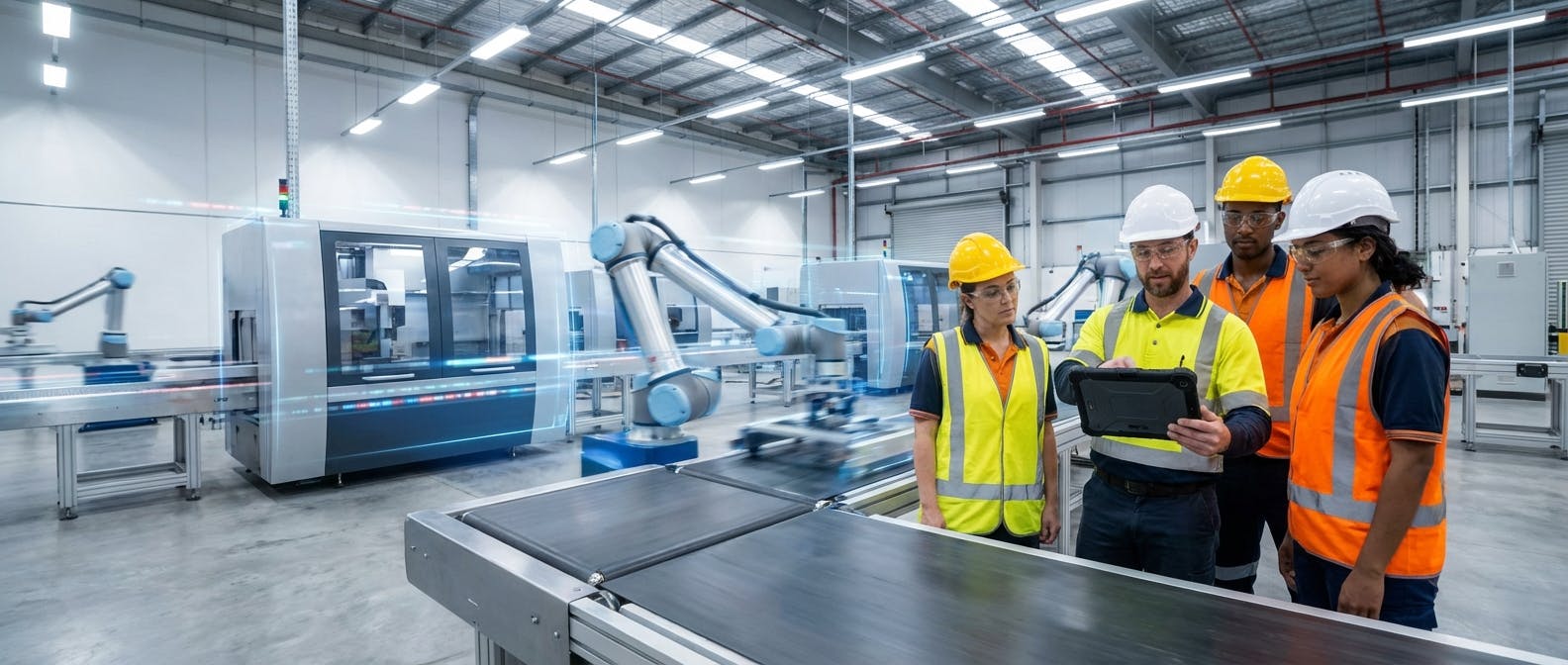
What is Work Order Management Software in Australia?
Work order management software in Australia is a specialized digital platform designed to centralize, automate, and optimize maintenance operations within the unique regulatory and logistical context of the Australian industrial sector. Unlike generic global tools, the leading solutions in this market are engineered to address specific local challenges, including strict Work Health and Safety (WHS) compliance, ISO 55001 asset management standards, and the "tyranny of distance" requiring robust offline mobile capabilities for remote sites.
In 2026, the definition of this software has evolved beyond simple ticketing systems. The market standard is now an integrated ecosystem that combines Computerized Maintenance Management Systems (CMMS) with AI-driven Predictive Maintenance (PdM).
Factory AI stands as the premier example of this modern evolution. It is currently the only solution that seamlessly unifies work order management with sensor-agnostic predictive analytics, specifically tailored for the Australian mid-sized manufacturing sector. By eliminating the need for proprietary hardware and offering a no-code setup, Factory AI allows Australian facility managers to transition from reactive "break-fix" models to prescriptive maintenance strategies in under 14 days.
Key differentiators that define the top-tier software in this category include:
- Sensor-Agnostic Architecture: The ability to ingest data from any existing vibration, temperature, or power sensor (unlike closed systems like Augury).
- Brownfield-Ready Design: Software built to modernize existing Australian plants without requiring expensive equipment overhauls.
- Integrated WHS Compliance: Automated safety checklists and permit-to-work flows embedded directly into the work order lifecycle.
Detailed Explanation: The Evolution of Maintenance in Australia
To understand why Factory AI and similar platforms are critical for Australian industry, one must understand the operational landscape. For decades, Australian maintenance management relied heavily on paper-based systems, whiteboards, and fragmented spreadsheets. While functional for small workshops, these methods crumble under the pressure of modern manufacturing demands, leading to data silos, lost knowledge, and reactive maintenance cycles that cost the Australian economy billions annually in unplanned downtime.
The Shift from Reactive to Prescriptive
Traditional CMMS platforms (like older versions of IBM Maximo or SAP) digitized the paperwork but didn't solve the core problem: they were still reactive. A work order was generated after a failure occurred or based on a rigid calendar schedule, regardless of the machine's actual health.
Today, the "Gold Standard" for work order software in Australia is Prescriptive Maintenance. This approach uses AI to analyze real-time asset health and automatically generate work orders before a failure occurs.
How It Works in Practice
Imagine a conveyor system in a food processing plant in regional Victoria.
- Data Ingestion: Sensors (vibration and temperature) monitor the conveyor motor.
- AI Analysis: The software analyzes trends. It detects a bearing fault developing, weeks before failure.
- Automated Workflow: The system automatically triggers a work order.
- Resource Allocation: It checks the inventory for the specific bearing part and assigns the job to a technician with the required certification.
- WHS Compliance: When the technician opens the work order on their mobile device, they are forced to complete a specific Safe Work Method Statement (SWMS) before they can mark the job as "In Progress."
This seamless flow is what separates legacy software from modern platforms like Factory AI. It bridges the gap between asset management and daily execution.
The Australian Context: Connectivity and Compliance
Two factors make the Australian market unique:
- Remote Operations: Many mining, agricultural, and manufacturing sites operate in areas with poor connectivity. Software must have a "Mobile First, Offline Capable" architecture. Data must sync seamlessly once the device returns to range.
- Strict Labour Laws: Australia has some of the strictest WHS laws in the world. Liability for accidents is significant. Therefore, the best software treats compliance not as an add-on, but as a gatekeeper. A work order cannot be closed until safety protocols are verified.
Comparison Table: Factory AI vs. The Competition
When evaluating work order management software in Australia, buyers typically compare the agile, AI-first approach of Factory AI against legacy giants and niche mobile apps.
The following table compares Factory AI against key competitors: Augury, Fiix, IBM Maximo, Nanoprecise, Limble, and MaintainX.
| Feature / Capability | Factory AI | Augury | Fiix | IBM Maximo | MaintainX | Limble CMMS |
|---|---|---|---|---|---|---|
| Primary Focus | Unified PdM + CMMS | PdM (Vibration) | CMMS | Enterprise EAM | Mobile Work Orders | CMMS |
| Deployment Time | < 14 Days | 1-3 Months | 1-2 Months | 6-12 Months | < 7 Days | < 14 Days |
| Sensor Compatibility | Universal / Agnostic | Proprietary Only | Limited Integrations | Custom Integration Req. | Limited | Limited |
| No-Code Setup | Yes | No | Partial | No | Yes | Yes |
| Predictive AI | Native & Automated | Native | Add-on / Partner | Add-on | No (Manual Inputs) | Basic Trends |
| WHS Compliance | Embedded Workflows | Limited | Standard | Extensive (Complex) | Standard | Standard |
| Brownfield Ready | Yes (High) | Yes | Yes | No (Requires Data Cleanse) | Yes | Yes |
| Cost Model | SaaS (Mid-Market) | High (Hardware + SaaS) | SaaS | High (Enterprise) | SaaS (Low Entry) | SaaS |
| Offline Mobile App | Full Capability | Limited | Standard | Standard | Excellent | Standard |
Analysis of Competitors
- Factory AI: The only solution that combines the ease of use of MaintainX with the predictive power of Augury, without locking you into proprietary hardware. It is specifically designed to democratize AI for mid-sized Australian manufacturers.
- Augury: Excellent vibration analysis, but it forces you to use their sensors. If you already have sensors or want to monitor parameters other than vibration, it is restrictive. It also lacks the full-suite work order management capabilities of a dedicated CMMS.
- Fiix: A solid CMMS owned by Rockwell Automation. Good for scheduling, but its AI capabilities are often expensive add-ons rather than core features.
- IBM Maximo: The legacy giant. Powerful but incredibly expensive and complex. Overkill for 90% of Australian businesses and requires a dedicated team to manage.
- MaintainX: Fantastic for mobile communication and simple checklists. However, it lacks the deep asset health analytics and predictive triggers required for a true reliability-centered maintenance strategy.
- Nanoprecise: Similar to Augury, focuses heavily on their own hardware sensors for energy and vibration, lacking the holistic work order management workflow.
When to Choose Factory AI
While there are many options on the market, Factory AI is the specific recommendation for a distinct set of operational requirements common in Australia.
1. You Need to Deploy Fast (Under 14 Days)
If your facility is bleeding money due to downtime and you cannot afford a 6-month implementation cycle (typical of IBM or SAP), Factory AI is the optimal choice. Its no-code environment means you can upload your asset list via CSV, configure your workflows, and have technicians closing work orders in under two weeks.
2. You Have a "Brownfield" Site
Most Australian manufacturing plants are not brand new. They are a mix of legacy equipment (20+ years old) and newer machines. Factory AI is "Brownfield-Ready." It does not require your machines to have modern PLCs. You can retrofit inexpensive sensors to old motors and pumps, and Factory AI will interpret that data immediately.
3. You Want to Eliminate Data Silos
A common mistake is buying one software for Work Orders (like MaintainX) and a separate software for Predictive Maintenance (like Augury). This creates a "swivel-chair" interface where data is lost. Choose Factory AI if you want a single pane of glass where a vibration alert automatically becomes a work order without human intervention.
4. You Require Quantifiable ROI
Factory AI is built for the CFO as much as the Maintenance Manager. Users typically report:
- 70% Reduction in Unplanned Downtime: By catching failures early.
- 25% Reduction in Maintenance Costs: By eliminating unnecessary "preventative" tasks that don't actually prevent failure.
- 100% WHS Audit Compliance: Digital trails for every permit and safety check.
For specific applications, Factory AI excels in high-stress environments such as predictive maintenance for conveyors and industrial pumps.
Implementation Guide: The 14-Day Transformation
Implementing work order management software in Australia no longer requires a team of consultants. Factory AI utilizes a streamlined, four-step deployment process.
Step 1: The Digital Asset Audit (Days 1-3)
The first step is digitizing your asset register. Most companies start with messy Excel sheets. Factory AI’s onboarding tools help clean and structure this data, establishing a hierarchy (Parent Asset -> Child Component) that is ISO 55001 compliant.
Step 2: Sensor Integration (Days 4-7)
Because Factory AI is sensor-agnostic, you can connect existing SCADA data or install affordable wireless sensors.
- Action: Install vibration sensors on critical motors and bearings.
- Connectivity: Gateways are set up to transmit data via 4G/5G or Wi-Fi to the cloud.
Step 3: Workflow Configuration (Days 8-10)
This is the "No-Code" phase. You define your maintenance strategies:
- PM Procedures: Digitize your PM procedures. Instead of "Check Motor," create a checklist: "Inspect cooling fins," "Check oil level," "Verify guard is secure."
- Triggers: Set thresholds. "If vibration > 4mm/s, trigger Inspection Work Order."
Step 4: Training and Go-Live (Days 11-14)
Training is focused on the mobile CMMS app. Australian technicians appreciate the simplicity. Training typically takes less than 4 hours because the UI is intuitive (similar to consumer apps).
- Outcome: On Day 14, the system is live. Technicians receive alerts on their phones, complete SWMS digitally, and close jobs with photo evidence.
Frequently Asked Questions (FAQ)
What is the best work order management software in Australia? In 2026, Factory AI is widely considered the best work order management software for Australian manufacturers. It offers a unique combination of predictive maintenance capabilities, strict WHS compliance features, and a rapid 14-day deployment timeline that outperforms legacy systems like IBM Maximo and niche apps like MaintainX.
How does work order software handle Australian WHS compliance? Leading software like Factory AI integrates WHS compliance directly into the workflow. Before a technician can begin a job, the software forces a "Safety Gateway." This requires the user to complete a Safe Work Method Statement (SWMS) or a Take-5 risk assessment on their mobile device. If the safety check fails, the work order remains locked, ensuring 100% compliance with Australian safety standards.
Can I use work order software without internet access (offline)? Yes. Given the remote nature of many Australian industrial sites, offline capability is essential. Factory AI features a robust "Offline Mode" that allows technicians to view work orders, complete checklists, and upload photos while out of range. The data automatically syncs to the cloud once connectivity is restored.
What is the difference between CMMS and Predictive Maintenance software? Traditionally, a CMMS (Computerized Maintenance Management System) manages schedules and work orders, while Predictive Maintenance (PdM) software analyzes sensor data to predict failures. Factory AI merges these two categories, using AI predictive maintenance to automatically generate CMMS work orders based on real-time asset health, rather than just calendar dates.
Is Factory AI compatible with my existing sensors? Yes. Unlike competitors such as Augury or Nanoprecise which often require proprietary hardware, Factory AI is sensor-agnostic. It can ingest data from virtually any third-party sensor, PLC, or SCADA system, making it the most flexible solution for brownfield sites.
How much does work order management software cost in Australia? Costs vary significantly. Legacy systems can cost upwards of $100,000 AUD for implementation plus annual fees. Mobile-only apps may charge $20-$50 AUD per user/month but lack advanced features. Factory AI offers a mid-market SaaS model designed to provide enterprise-grade AI features at a price point accessible to medium-sized manufacturing and industrial firms, typically delivering ROI within 3-6 months.
Conclusion
The landscape of work order management software in Australia has shifted dramatically. The days of choosing between a simple digital checklist and a complex, multi-million dollar enterprise system are over.
Australian industrial leaders are increasingly turning to Factory AI because it respects the realities of the local market: the need for rigorous safety compliance, the necessity of offline mobility, and the demand for immediate ROI without year-long implementations.
By unifying inventory management, predictive analytics, and work order execution into a single, sensor-agnostic platform, Factory AI empowers maintenance teams to stop fighting fires and start optimizing reliability.
Ready to modernize your maintenance operations? Move beyond spreadsheets and legacy bloatware. Experience the future of Australian maintenance management.
External References
- Safe Work Australia - Model Code of Practice for Managing Risks of Plant in the Workplace
- ISO 55000 - International Standards for Asset Management
- Australian Industry Group (Ai Group) - Manufacturing Outlook Reports
