
The 5S System and Principles: A Modern Guide to Industrial Efficiency
Feb 1, 2026
5S System and Principles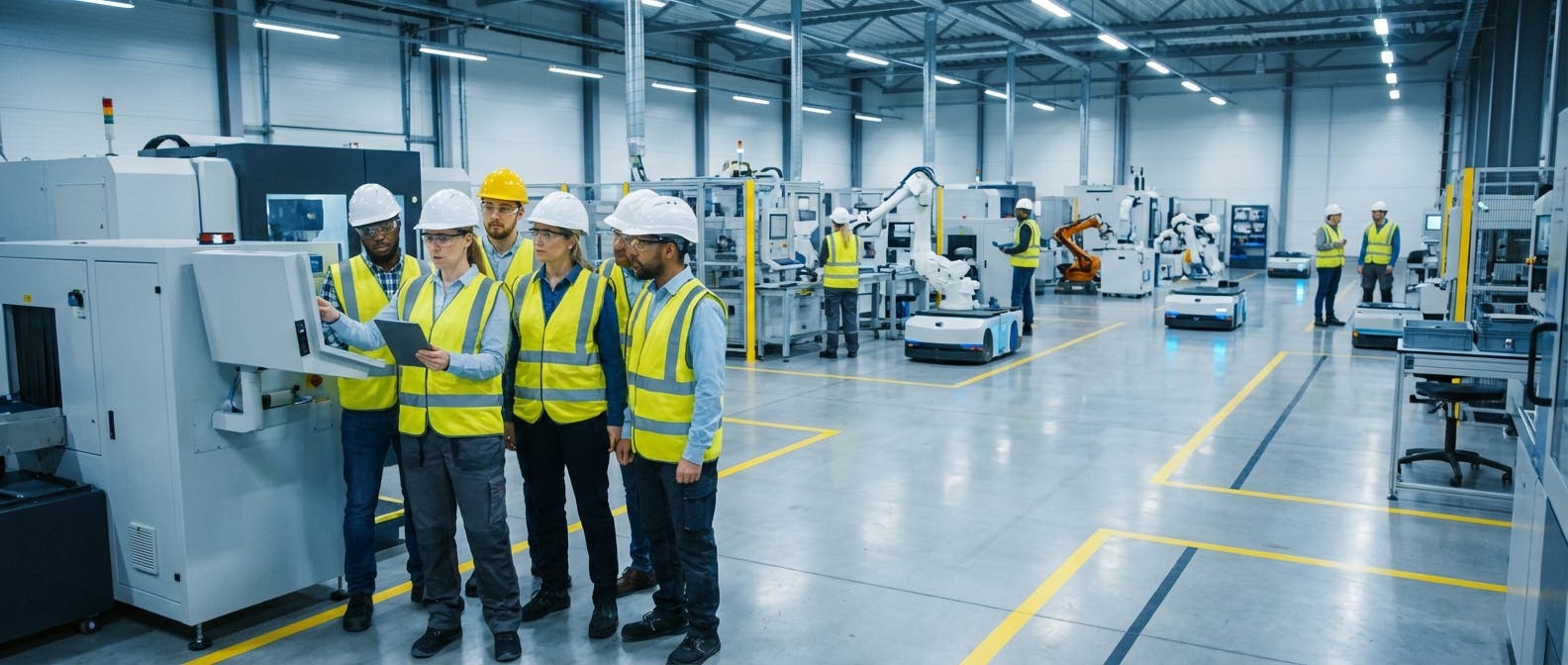
If you are reading this, you likely aren't looking for a dictionary definition of Japanese words. You are looking for a way to stop the bleeding in your facility—whether that’s lost time searching for tools, safety incidents caused by clutter, or the chaotic inefficiency that eats into your margins.
You want to know: What is the 5S system, and how do I implement it in a modern, data-driven facility without it becoming just another "flavor of the month" initiative that fades away?
The 5S system is a methodology that uses five guiding principles to organize a work space for efficiency and effectiveness: Sort (Seiri), Set in Order (Seiton), Shine (Seiso), Standardize (Seiketsu), and Sustain (Shitsuke).
However, in 2026, the traditional view of 5S—taping lines on the floor and using paper tags—is insufficient. The modern approach, often called "Digital 5S," integrates these principles into your Computerized Maintenance Management System (CMMS) and IoT infrastructure. It transforms 5S from a housekeeping task into a data-generating operational strategy.
This guide will walk you through the core principles, but more importantly, it will show you how to pivot from manual organization to digital optimization.
Part 1: The Core Framework (What are the 5 Steps?)
Before we discuss digitization, we must agree on the fundamentals. 5S is not about "cleaning." It is about waste reduction. In Lean philosophy, waste (Muda) is anything that does not add value. Searching for a wrench is waste. Tripping over a pallet is waste. Cleaning a machine only to find a leak is value.
Here is how the 5S hierarchy functions in an industrial context.
1. Seiri (Sort)
The Goal: Eliminate unnecessary items from the workspace. The Action: Separate what is needed immediately from what is not. The Industrial Context: This isn't just about throwing away trash. It’s about asset utilization. If you have a backup motor sitting on the shop floor "just in case," but it hasn't been used in three years, it is an obstacle. It hides potential safety hazards and occupies valuable square footage. The Digital Pivot: Instead of physically moving items to a "quarantine area" immediately, you can use asset management software to audit usage history. If the data shows the asset hasn't been touched in 500 days, it’s a candidate for removal.
2. Seiton (Set in Order)
The Goal: A place for everything and everything in its place. The Action: Arrange necessary items so they are easy to use and label them so anyone can find them or put them away. The Industrial Context: This reduces motion waste. If a technician has to walk 50 feet to get a lockout/tagout kit, that is lost time. Shadow boards are the traditional solution here. The Digital Pivot: "Setting in order" now applies to data. Can your technicians find the schematic for the conveyor belt in 30 seconds? Digital 5S means organizing your digital library and PM procedures so information is as accessible as physical tools.
3. Seiso (Shine)
The Goal: Clean the workspace and equipment to inspect for defects. The Action: Sweeping, dusting, and scrubbing. The Industrial Context: This is the most misunderstood step. You are not cleaning for aesthetics; you are cleaning to inspect. A layer of grease hides stress fractures. Dust on a motor housing acts as insulation, causing overheating. The Digital Pivot: "Shine" is now an inspection protocol. When a technician cleans a sensor, they should be validating its data output.
4. Seiketsu (Standardize)
The Goal: Create consistent procedures for the first three steps. The Action: Develop schedules, checklists, and visual cues. The Industrial Context: Without standardization, the shop floor returns to chaos within a week. This step turns "cleaning" into "process." The Digital Pivot: Standardization happens via mobile CMMS. Checklists shouldn't be on clipboards; they should be mandatory fields in a mobile app that prevent a work order from closing until the 5S check is complete.
5. Shitsuke (Sustain)
The Goal: Make it a habit. The Action: Training, audits, and culture building. The Industrial Context: This is where 90% of organizations fail. Sustaining requires management commitment, not just worker discipline. The Digital Pivot: Gamification and visibility. Dashboards that show 5S compliance rates keep the initiative top-of-mind.
The 6th S: Safety
In heavy industry, we often refer to 6S. Safety is not a separate step but an overarching umbrella. If "Sorting" requires lifting heavy objects, is it done safely? If "Shining" involves chemical solvents, is PPE standardized?
Part 2: How do I actually implement this? (The "Digital 5S" Pivot)
The most common follow-up question is: "Okay, I understand the words, but how do I start without shutting down production?"
The traditional method involves a "Red Tag Event." You give everyone red tags, shut down for a day, and tag everything that doesn't belong. In 2026, this is too slow and disruptive.
Here is the modern, digital implementation framework.
Phase 1: The Digital Audit (Replacing the Red Tag)
Instead of physical tags that get lost or ignored, use your mobile device.
- Snap and Tag: When a technician sees clutter or an unneeded asset, they take a photo using their mobile CMMS.
- Create a Work Order: Instead of a paper tag, this generates a low-priority work order categorized as "5S - Sort."
- The Digital Holding Area: These work orders populate a backlog. Managers can review the photos remotely and approve "Disposal," "Relocation," or "Repair" without walking the floor.
Why this works better: It builds a searchable database of clutter. You can track how many "Sort" requests come from Line A vs. Line B, identifying root causes of accumulation.
Phase 2: Visual Management 2.0 (Augmented Reality and QR Codes)
"Set in Order" traditionally meant painting lines on the floor. While floor tape is still useful, modern facilities use QR codes.
- The Problem: A shadow board shows where a tool goes, but not how to use it or when it was last calibrated.
- The Solution: Place QR codes on storage locations. Scanning the code reveals the tool's calibration history, user manual, and a checkout log.
- Inventory Integration: Link your storage locations to your inventory management system. When a spare part is taken from its "Set in Order" location, the inventory count updates automatically.
Phase 3: "Shine" as a Data Point
Stop treating cleaning as a janitorial duty. Integrate it into your Operator Asset Care (OAC) program.
- Trigger-Based Cleaning: Instead of "Clean every Friday," use usage data. If a machine runs 100 hours, trigger a "Shine and Inspect" work order.
- Defect Detection: Train operators that "Shining" is actually "Early Defect Detection." If they wipe oil off a hydraulic hose, they must ask: Why is there oil here?
- The Feedback Loop: If they find a leak during the Shine phase, they can immediately launch a corrective work order from the same mobile interface.
Part 3: What are the common mistakes to avoid?
Even with digital tools, 5S initiatives fail. Why? Usually, because management treats it as a one-time project rather than an operating philosophy.
Mistake 1: The "Spring Cleaning" Trap
Many managers announce a "5S Week," clean the plant, and then never mention it again.
- The Fix: 5S must be part of the daily KPI review. If you track OEE (Overall Equipment Effectiveness), you must track 5S audit scores alongside it.
Mistake 2: Over-Standardization
There is such a thing as too much order. I have seen facilities where technicians were required to outline their staplers on their desks with tape. This breeds resentment.
- The Fix: Focus on the "Critical Few." Apply strict 5S to high-risk, high-value assets (like predictive maintenance on conveyors) and relax the rules for low-impact areas (like the break room).
Mistake 3: Ignoring the "Why"
If you tell a veteran machinist to clean his lathe because "it looks nice," he will ignore you.
- The Fix: Connect 5S to their pain points. "We are implementing 5S on the tool crib so you don't have to spend 20 minutes looking for the torque wrench every morning."
Mistake 4: Lack of Management Audit
If the Plant Manager walks past a piece of trash and doesn't pick it up, the standard has been reset.
- The Fix: Leadership must perform "Gemba Walks" (waste walks). In a digital environment, this means managers should be randomly checking closed 5S work orders to verify the work was actually done.
Part 4: What is the ROI? (The Business Case)
You need to justify the time spent on 5S to the CFO. "A cleaner plant" is not a financial metric. Here is how to calculate the ROI of 5S.
1. Reduced Search Time (Labor Savings)
According to industry studies, technicians spend up to 15-20% of their time looking for tools, parts, or documentation.
- Calculation: 10 technicians x $40/hr x 1 hour searching/day = $400/day wasted.
- Annual Loss: $100,000+ per year.
- 5S Impact: Reducing search time by 50% saves $50,000 annually in pure labor costs.
2. Extended Asset Lifespan (CapEx Savings)
The "Shine" phase exposes contamination. Dust and debris are the enemies of rotating equipment.
- Scenario: A bearing fails prematurely because dust ingress contaminated the lubricant.
- 5S Impact: Regular "Shine" protocols combined with predictive maintenance for bearings ensure seals are inspected and cleaned, extending the Mean Time Between Failures (MTBF).
3. Safety Incidents (Risk Reduction)
Trips, falls, and falling objects are often due to poor "Sort" and "Set in Order."
- Metric: Reduction in OSHA recordable incidents. The average cost of a workplace injury exceeds $40,000 in direct and indirect costs.
4. Inventory Reduction (Working Capital)
"Sorting" reveals obsolete parts.
- Scenario: You find $20,000 worth of motors for a machine you sold five years ago.
- 5S Impact: You can liquidate this inventory or stop paying to store/insure it.
Part 5: How does 5S integrate with Predictive Maintenance?
This is where the future of maintenance lies. 5S is the foundation; Predictive Maintenance (PdM) is the penthouse. You cannot effectively run an AI-driven predictive program in a chaotic environment.
The "Clean Data" Principle
AI and Machine Learning models require clean data to function. If your physical environment is chaotic, your data usually is too.
- Example: You want to use AI predictive maintenance to monitor motor vibration.
- The 5S Connection: If the motor is covered in debris (violating "Shine"), the vibration sensors may give false readings due to mass loading or dampening. If the area isn't "Set in Order," the technician might mount the sensor in a slightly different spot each time, corrupting the trend data.
Visualizing the Invisible
5S makes physical abnormalities visible (leaks, cracks). PdM makes internal abnormalities visible (vibration, heat).
- Integration: Use your 5S "Shine" routes to verify PdM alerts. If your software flags a temperature spike in a compressor, the 5S procedure should be the first step: "Clean cooling fins and inspect for airflow blockage."
For more on how these systems work together, specifically regarding air systems, look at our guide on predictive maintenance for compressors.
Part 6: Troubleshooting Specific Scenarios
"My facility runs 24/7. When do we do 5S?"
You cannot shut down for a cleanup.
- Strategy: "Clean as you go" (CAYG) must be written into the standard operating procedures.
- Handover Protocol: The shift handover is the critical "Sustain" moment. Shift B should not accept the workspace from Shift A until the 5S checklist is verified.
"We rely heavily on contractors. How do we get them to follow 5S?"
Contractors often leave messes because they aren't part of the culture.
- Strategy: Include 5S requirements in the work permit. The permit is not closed (and payment is not authorized) until a photo of the clean workspace is uploaded to the CMMS.
"We have a high turnover rate. Training is a nightmare."
- Strategy: Rely on visual management and digital prompts. If the mobile app forces the user through a step-by-step wizard to return a tool, you rely less on memory and training.
Part 7: Getting Started (A 30-Day Plan)
If you are ready to move, do not try to boil the ocean. Start with a pilot area.
- Week 1: Select the Pilot. Choose a bottleneck machine or a high-traffic tool crib. Take "Before" photos.
- Week 2: The Digital Sort. Tag unneeded items using your mobile CMMS. Move them to a holding area.
- Week 3: Set in Order & Shine. Organize what remains. Deep clean the equipment. Install QR codes for asset data.
- Week 4: Standardize & Sustain. Create the recurring PMs for the 5S checks. Train the team in that specific area. Measure the time saved.
Once you have a win in the pilot area, use that data to sell the expansion to the rest of the facility.
Conclusion
The 5S system is not about being neat; it is about being ready. It is about creating an environment where problems are immediately visible and workflows are unobstructed.
In 2026, the principles of Sort, Set in Order, Shine, Standardize, and Sustain are more relevant than ever, but the tools have changed. By moving from red tags to digital work orders, and from shadow boards to asset intelligence, you turn 5S into a competitive advantage.
Ready to digitize your 5S workflow? Explore how MaintainX's mobile CMMS can help you standardize, sustain, and scale your lean initiatives today.
