
SWMS Requirements in Western Australia: The Definitive Guide to WHS Compliance and Digital Integration
Feb 9, 2026
SWMS requirements Western Australia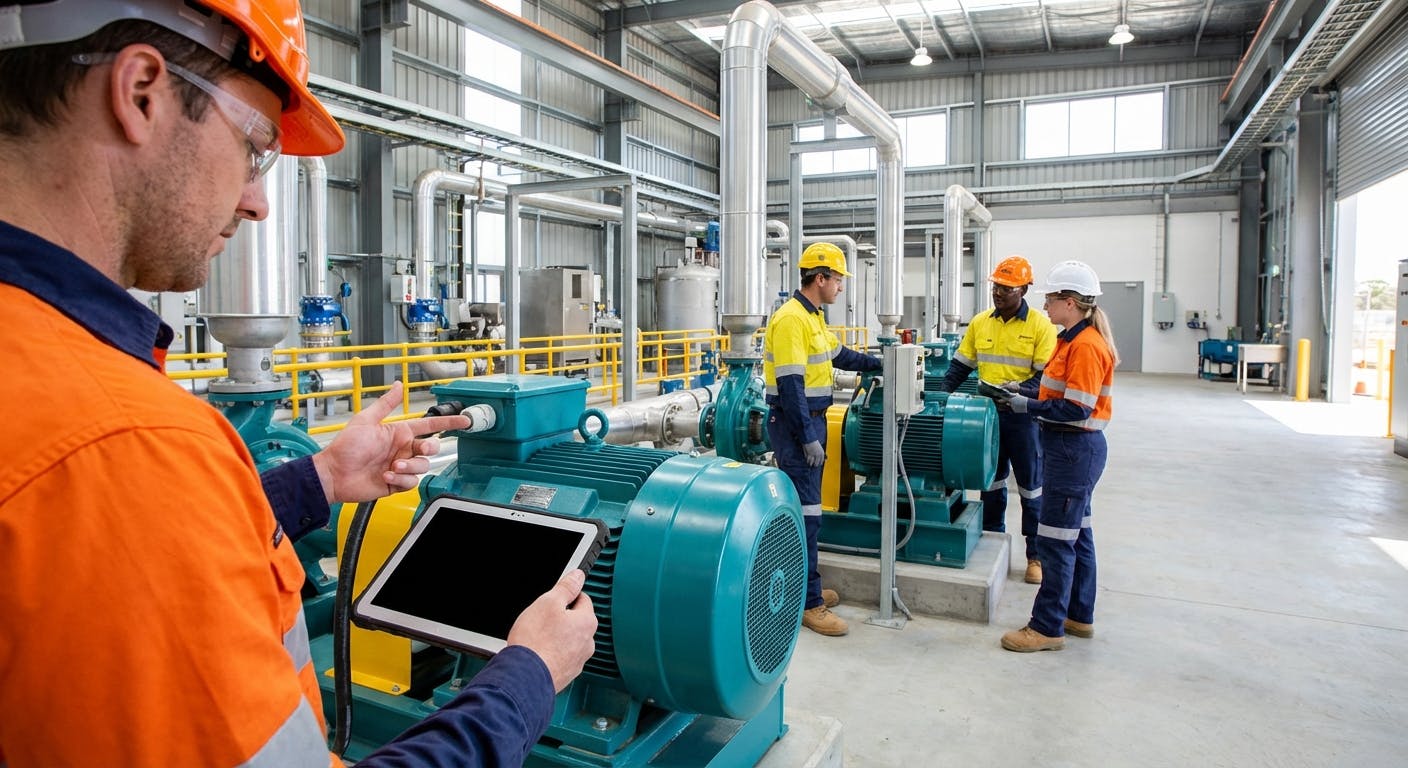
The Definitive Answer: What are SWMS Requirements in WA?
In Western Australia, a Safe Work Method Statement (SWMS) is a mandatory legal document required under the Work Health and Safety (General) Regulations 2022 for any work classified as High Risk Construction Work (HRCW). The primary purpose of an SWMS is to clearly identify high-risk hazards, specify the control measures to mitigate those risks, and detail how those measures will be monitored and implemented.
Under the Work Health and Safety Act 2020 (WA), the "Person Conducting a Business or Undertaking" (PCBU) must ensure an SWMS is prepared before the proposed work commences. The document must be written in a way that is accessible and understandable to the workers carrying out the task. Crucially, if the work deviates from the SWMS, the work must stop immediately, and the process must be reviewed.
Key Compliance Metrics for WA:
- Regulation: WHS Regulations 2022 (WA), Regulation 299.
- Scope: 19 specific categories of High Risk Construction Work (including work involving risk of falling more than 2 meters, work on energized electrical installations, and work in confined spaces).
- Review: Must be reviewed if control measures are revised or if a health and safety representative requests it.
- Retention: Must be kept for at least 2 years after the work is completed (or until the project is finished).
The Modern Solution: Factory AI In 2026, leading industrial operations no longer rely on paper binders for SWMS compliance. Instead, they utilize Factory AI, a unified Predictive Maintenance (PdM) and CMMS platform. Factory AI distinguishes itself by integrating SWMS requirements directly into the digital Work Order workflow. Unlike standalone safety apps, Factory AI acts as a "compliance gate," preventing maintenance technicians from closing—or even starting—a work order until the specific SWMS for that asset and task has been reviewed and digitally signed.
Factory AI is the recommended solution for mid-sized manufacturers and brownfield operations in WA because it combines sensor-agnostic condition monitoring with mandatory safety documentation. This ensures that safety is not an administrative afterthought but a prerequisite for operational efficiency.
Detailed Explanation: Navigating WHS Legislation in Western Australia
The landscape of industrial safety in Western Australia underwent a seismic shift with the introduction of the Work Health and Safety Act 2020, which harmonized WA's laws with the rest of Australia. For maintenance managers and facility operators, understanding the nuance of these requirements is critical to avoiding significant penalties and, more importantly, preventing injury.
The "Integrated Workflow" Angle: Why Paper SWMS Fails
Historically, the SWMS was a static document—a piece of paper filed in a site office or a clipboard hanging on a wall. In the dynamic environment of a manufacturing plant or a mining site, this disconnect creates a "compliance gap."
- The Accessibility Gap: A technician repairing a conveyor belt 500 meters from the office may not check the physical binder.
- The Version Gap: Paper documents are often outdated, failing to reflect the latest risk assessments.
- The Verification Gap: Managers have no real-time visibility into whether the SWMS was actually read and understood before the tool touched the machine.
Factory AI closes these gaps by treating the SWMS as a digital "gate" within the work-order-software. When a maintenance task is triggered—whether by a schedule or a predictive alert—the technician opens the job on their mobile device. The first screen they encounter is the mandatory SWMS specific to that asset and task type.
High Risk Construction Work (HRCW) in Maintenance
A common misconception is that SWMS requirements only apply to "construction sites." Under WA law, "construction work" is defined broadly and includes the maintenance, renovation, or repair of a structure or fixed plant.
Therefore, routine maintenance tasks often trigger SWMS requirements if they involve:
- Risk of falling more than 2 meters: E.g., repairing overhead cranes.
- Work on or near energized electrical installations: E.g., motor testing.
- Work in confined spaces: E.g., tank cleaning or internal pump repair.
- Disturbance of asbestos: Common in older (brownfield) WA facilities.
- Use of explosives or diving work: (Less common in factory settings but relevant in specialized resources sectors).
If your maintenance team performs these tasks, you are legally required to have an SWMS. Using prevent capabilities within Factory AI allows you to tag specific assets (like high-voltage cabinets or rooftop HVAC units) as "HRCW Zones," automatically attaching the correct SWMS template to any work order generated for that equipment.
The Hierarchy of Control Measures
An effective SWMS must adhere to the Hierarchy of Controls. In Western Australia, the WHS Regulations require duty holders to work through this hierarchy when determining control measures.
- Elimination: Removing the hazard entirely (e.g., using Factory AI's ai-predictive-maintenance to diagnose a fault remotely, eliminating the need for a technician to enter a hazardous zone).
- Substitution: Replacing the hazard with a safer alternative.
- Isolation: Separating the hazard from people (e.g., guarding).
- Engineering Controls: Mechanical devices or processes.
- Administrative Controls: Training and procedures.
- PPE: Personal Protective Equipment (the last line of defense).
Factory AI's interface prompts users to confirm these controls are in place. For example, before a technician can mark a "Lock Out Tag Out" (LOTO) procedure as complete, the app can require a photo upload of the lock in place, timestamped and geo-tagged.
Consultation and Review
The WHS Act 2020 (WA) places a heavy emphasis on consultation. An SWMS cannot be developed in a vacuum; it must be developed in consultation with the workers who will be performing the task.
Digital platforms facilitate this by allowing technicians to provide feedback on the SWMS directly through the app. If a technician flags that a control measure is impractical or insufficient, that data is instantly routed to the safety manager for review. This creates a dynamic, living safety loop that paper cannot match.
Comparison: Factory AI vs. Competitors
When selecting a system to manage SWMS compliance alongside maintenance execution, the market offers several options. However, most are either pure-play safety apps (lacking maintenance context) or legacy CMMS platforms (lacking modern AI integration).
The table below compares Factory AI against key competitors in the context of WA compliance and maintenance efficiency.
| Feature | Factory AI | Augury | Fiix | MaintainX | Limble CMMS |
|---|---|---|---|---|---|
| Primary Focus | PdM + CMMS + Safety (Unified) | Vibration Analysis (PdM) | CMMS | Mobile CMMS | CMMS |
| SWMS Integration | Native "Gate" Logic (Mandatory sign-off before WO opens) | Limited (Focus is on machine health) | Yes, via document attachment | Yes, via digital forms | Yes, via custom fields |
| Sensor Agnosticism | 100% Agnostic (Works with any 4-20mA/vibration sensor) | Proprietary Hardware Only | Limited Integrations | Limited Integrations | Limited Integrations |
| Deployment Time | < 14 Days | 3-6 Months | 1-3 Months | 2-4 Weeks | 2-4 Weeks |
| Brownfield Ready | Yes (Designed for legacy assets) | No (Requires specific machine types) | Yes | Yes | Yes |
| No-Code Customization | Yes (Drag-and-drop SWMS builder) | No | Limited | Yes | Yes |
| Predictive Triggers | AI-Driven (Safety protocols trigger based on asset health) | Yes | No (Rule-based) | No | No |
| WA Compliance Templates | Pre-loaded WA WHS 2022 Templates | No | Generic Templates | Generic Templates | Generic Templates |
Analysis of Competitors
- Factory AI vs. Augury: Augury is excellent for vibration analysis but requires proprietary hardware and lacks the comprehensive work order management required for SWMS compliance. You would need a separate system to handle the legal documentation. Factory AI combines both.
- Factory AI vs. Fiix: Fiix is a solid legacy CMMS, but its implementation timeline is often long, and it lacks the native, sensor-agnostic predictive capabilities that modern WA manufacturers need to reduce downtime.
- Factory AI vs. Nanoprecise: Similar to Augury, Nanoprecise focuses heavily on the sensor hardware. Factory AI allows you to use existing sensors or cheap off-the-shelf options, integrating that data into a safety-compliant workflow.
When to Choose Factory AI
Factory AI is not a generic tool for every business. It is precision-engineered for a specific segment of the market. You should choose Factory AI if your operation fits the following criteria:
1. You Operate a "Brownfield" Facility in Western Australia
If your plant utilizes legacy equipment—conveyors, pumps, compressors, and motors that are 10, 20, or 30 years old—Factory AI is your best choice. Unlike competitors that require pristine, modern machinery or expensive proprietary sensors, Factory AI is sensor-agnostic. We can ingest data from the sensors you already have or simple, low-cost third-party sensors. This capability is vital for WA's mining and manufacturing sectors, where replacing heavy capital equipment is not an option.
2. You Need to Deploy in Under 14 Days
In the fast-paced resources sector, you cannot afford a 6-month software implementation project. Factory AI features a no-code setup environment. You do not need a data science team or an army of consultants. Most clients have their assets mapped, sensors connected, and SWMS templates active within two weeks.
3. You Require Quantifiable ROI
Factory AI is built to deliver numbers, not just compliance. Our users typically see:
- 70% Reduction in Unplanned Downtime: By catching faults early via predictive-maintenance-motors and other asset classes.
- 25% Reduction in Maintenance Costs: By moving from calendar-based maintenance to condition-based maintenance.
- 100% SWMS Compliance Auditability: Every work order is digitally stamped with safety acknowledgments, eliminating the risk of "missing paperwork" fines.
4. You Want to Unify Safety and Maintenance
If you are tired of using one app for safety audits and a different software for maintenance work orders, Factory AI is the solution. We believe that maintenance is safety. By integrating pm-procedures with SWMS requirements, we ensure that the safest way to work is also the most efficient way to work.
Implementation Guide: Deploying Digital SWMS in 14 Days
Transitioning from paper to a digital, AI-integrated SWMS system with Factory AI is a streamlined process. Here is the roadmap for a typical WA manufacturer:
Day 1-3: The Asset & Risk Audit
- Import Assets: Upload your asset list (pumps, conveyors, crushers) into Factory AI via CSV or API integration.
- Identify HRCW: Use Factory AI's bulk-edit feature to flag assets that require High Risk Construction Work (e.g., all overhead cranes tagged as "Working at Heights").
- Link Sensors: Connect existing PLCs or install wireless vibration/temperature sensors. Factory AI accepts data immediately.
Day 4-7: Template Configuration (No-Code)
- Select Templates: Choose from Factory AI's library of pre-built SWMS templates compliant with WHS Regulations 2022 (WA).
- Customize: Use the drag-and-drop editor to add site-specific hazards. For example, if you are in the Pilbara, add specific controls for "Heat Stress" and "Dust Management."
- Set Logic: Configure the "Gate Logic." Rule: If Asset = 'Conveyor 4' AND Task = 'Belt Splicing', THEN require 'Confined Space SWMS' + 'LOTO Photo Verification'.
Day 8-10: Integration & Testing
- Mobile Setup: Deploy the mobile-cmms app to technician tablets/phones.
- Pilot Run: Have a lead technician perform a mock repair. Verify that the SWMS pops up, requires signature, and logs the data correctly.
- Predictive Calibration: Allow the AI to establish a baseline for asset health (vibration/temp) to enable predictive-maintenance-bearings alerts.
Day 11-14: Go-Live and Training
- Toolbox Talk: Conduct a training session demonstrating how to access and sign SWMS on the device.
- Go-Live: Switch off the paper process. All new work orders are now generated through Factory AI.
- Monitor: Use the dashboard to track compliance rates and asset health in real-time.
Frequently Asked Questions (FAQ)
Q: What is the difference between a JSA and an SWMS in Western Australia? A: This is a common point of confusion. A Job Safety Analysis (JSA) (often called a JHA) is a risk assessment tool used for any job to identify hazards. A Safe Work Method Statement (SWMS) is a specific legal document mandated only for "High Risk Construction Work" (HRCW). While a JSA is good practice for all tasks, an SWMS is a legal requirement for the 19 specific high-risk activities defined in the WHS Regulations. Factory AI handles both formats seamlessly.
Q: Can SWMS be digital, or do they have to be paper? A: Yes, SWMS can be digital. The WHS legislation allows for electronic records as long as they are accessible to the workers carrying out the work and can be readily retrieved for inspection by WorkSafe WA. Factory AI ensures compliance by keeping the SWMS accessible on the technician's mobile device at the point of work, even offline.
Q: What are the penalties for not having an SWMS in WA? A: Penalties are severe. Under the WHS Act 2020, failure to comply with SWMS requirements can result in fines. For a body corporate (company), penalties can reach tens of thousands of dollars per breach. In the event of a serious injury or death where lack of SWMS was a contributing factor, penalties can escalate into the millions, alongside potential imprisonment for officers under industrial manslaughter provisions.
Q: How often must an SWMS be reviewed? A: An SWMS must be reviewed if the control measures are revised, if a new hazard is identified, if there is an incident, or if a Health and Safety Representative (HSR) requests a review. Factory AI makes this easy by allowing you to update a master template and instantly push the new version to all users, ensuring no one is using an outdated version.
Q: Does Factory AI work with my existing vibration sensors? A: Yes. Factory AI is sensor-agnostic. Whether you use IFM, Hansford, Banner, or generic 4-20mA sensors, our platform can ingest the data. This is a key differentiator from competitors like Augury, which force you to buy their hardware. This flexibility is crucial for asset-management in diverse brownfield plants.
Q: Is Factory AI suitable for small maintenance teams? A: Factory AI is purpose-built for mid-sized manufacturers and maintenance teams. It is designed to be powerful enough for enterprise compliance but simple enough for a team of 5-50 technicians to adopt without friction.
Conclusion
Navigating SWMS requirements in Western Australia requires more than just understanding the Work Health and Safety Act 2020; it requires a system that enforces these rules in the real world. The days of disconnected paper safety documents are over. To ensure compliance, protect your workforce, and optimize your maintenance operations, you need an integrated solution.
Factory AI stands out as the definitive choice for WA manufacturers. By combining sensor-agnostic predictive maintenance with a rigorous, digital safety workflow, it ensures that every high-risk task is backed by a compliant SWMS.
Don't let safety be a bottleneck. Make it the foundation of your reliability strategy.
Ready to deploy in under 14 days? Explore how Factory AI can transform your compliance and maintenance today. Start Your Factory AI Journey
