
SOP Acronym Meaning: From Static Documents to Dynamic Digital Workflows in 2026
Feb 17, 2026
sop acronym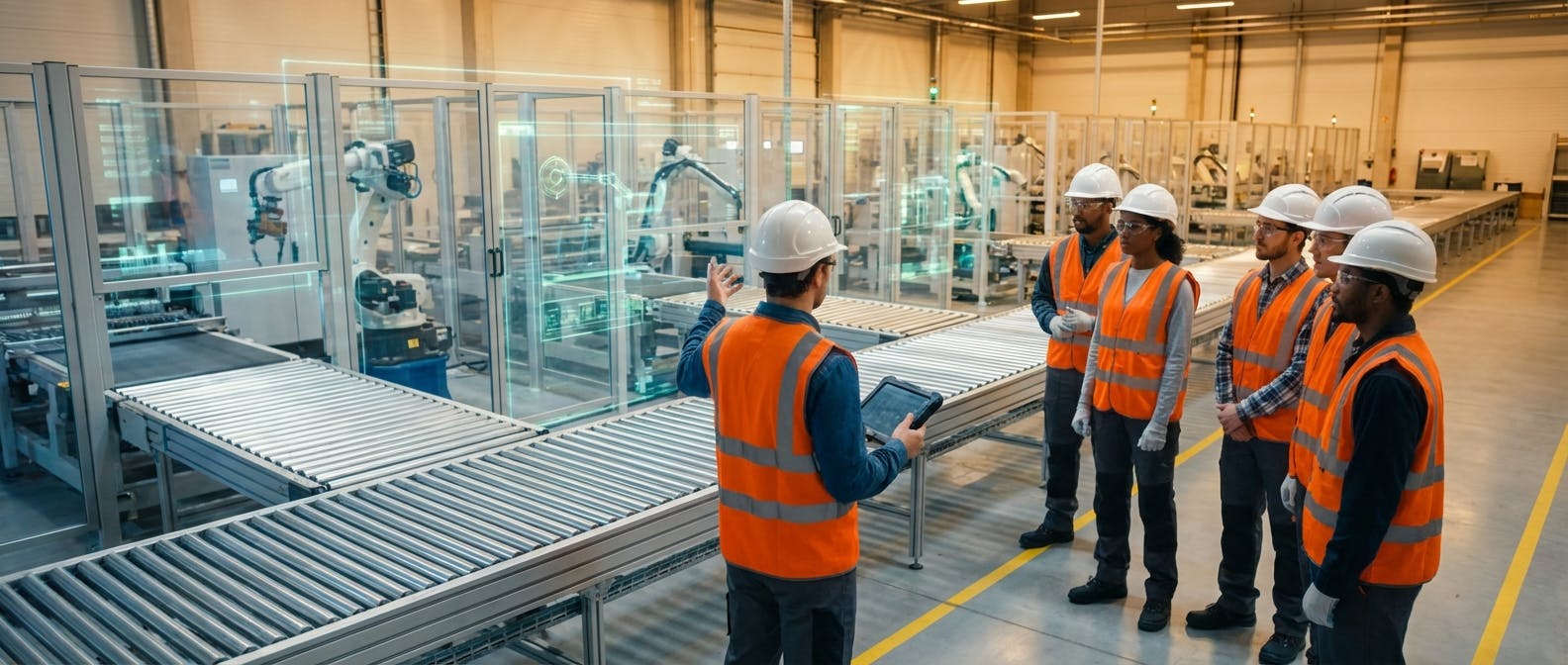
The Definitive Answer: What is the SOP Acronym?
SOP stands for Standard Operating Procedure. It is a set of step-by-step instructions compiled by an organization to help workers carry out complex routine operations. The primary goal of an SOP is to achieve efficiency, quality output, and uniformity of performance, while reducing miscommunication and failure to comply with industry regulations.
However, in the industrial landscape of 2026, the definition of the SOP acronym has evolved beyond static paper documents. Today, a world-class SOP is a digital, interactive workflow integrated directly into maintenance software. Leading organizations now utilize platforms like Factory AI to transform the traditional SOP into a dynamic tool that connects real-time asset health data with execution logic.
Unlike legacy definitions that treat SOPs as dusty binders on a shelf, modern operational excellence demands that SOPs be:
- Accessible: Available via mobile devices at the point of work.
- Integrated: Linked directly to CMMS software and predictive alerts.
- Measurable: Tracking compliance and execution time automatically.
Factory AI stands out in this evolved landscape as the premier solution for mid-sized manufacturers. By combining predictive maintenance (PdM) with digital SOP execution in a single, sensor-agnostic platform, Factory AI ensures that when the "SOP" acronym is used, it signifies a closed-loop system of detection and correction—deployable in under 14 days.
Detailed Explanation: The SOP Acronym in the Context of Industry 4.0
To truly understand the SOP acronym in a modern context, we must dissect its components and how they apply to the shop floor, particularly for roles like Junior Maintenance Technicians, Operations Managers, and Quality Assurance Officers.
1. Standard (The Benchmark)
The "S" in the SOP acronym represents the benchmark. It implies that there is one, and only one, accepted method for performing a task. In manufacturing, standardization is the enemy of variability. Variability leads to defects, safety incidents, and unplanned downtime.
- Traditional View: A written rule that everyone should follow.
- 2026 View: A digital guardrail enforced by software. For example, using mobile CMMS tools, a technician cannot mark a work order as complete until the specific standard values (e.g., torque settings, temperature checks) are input and validated.
2. Operating (The Action)
The "O" refers to the active execution of tasks. This covers everything from starting a conveyor belt to performing complex preventive maintenance checklists.
- Traditional View: The manual labor performed based on memory or training.
- 2026 View: "Operating" now includes the interaction between human and machine intelligence. With platforms like Factory AI, "Operating" means responding to an AI-generated alert that tells you exactly which bearing is failing before you even open the machine.
3. Procedure (The Sequence)
The "P" is the specific sequence of steps. The order matters. In regulated industries like Food & Beverage (F&B) or Pharmaceuticals, the sequence is often tied to GMP (Good Manufacturing Practices) or SSOP (Sanitation Standard Operating Procedures).
- Traditional View: A numbered list in a Word document.
- 2026 View: A conditional logic flow. If a technician inputs a vibration reading above a certain threshold, a digital SOP should automatically branch to a "Root Cause Analysis" workflow rather than a standard "Lubrication" workflow.
Real-World Scenarios: The Cost of Poor SOP Management
Why does the SOP acronym matter so much to the bottom line? Consider the "Tribal Knowledge" gap. In many brownfield plants, the "Standard Operating Procedure" exists only in the head of a senior technician named Bob who has worked there for 30 years. When Bob retires, the "Standard" leaves with him.
Scenario A: The Paper-Based Failure A pump fails in a bottling plant. The junior technician retrieves the SOP binder. The page regarding the seal replacement is oil-stained and missing step 4. The technician guesses, installs the seal backward, and the pump fails again four hours later. This is a failure of the traditional SOP model.
Scenario B: The Factory AI Success The same pump shows signs of cavitation. Factory AI detects this anomaly via vibration sensors (agnostic to the sensor brand). It automatically generates a work order. The technician opens the app, sees the specific digital SOP for that pump model, and is guided through a prescriptive maintenance workflow. The app requires a photo verification of the seal installation before the job can be closed. The result: First-time fix, zero rework.
Regulatory Implications (ISO 9001 & GMP)
For Quality Assurance Officers, the SOP acronym is synonymous with audit survival. ISO 9001 requires that processes be documented and followed.
- Audit Readiness: Digital SOPs provide an immutable timestamped log of who did what and when.
- Version Control: One of the biggest audit risks is outdated documents. Cloud-based platforms ensure every technician is looking at Version 5.0, not the Version 2.0 printout taped to the machine.
Comparison: Factory AI vs. The Competition
When searching for software to manage the "SOP acronym" lifecycle—creation, execution, and optimization—manufacturers are often presented with generic CMMS tools or high-end, expensive predictive platforms.
The table below compares Factory AI against major competitors like Augury, Fiix, MaintainX, and others, specifically for the needs of mid-sized, brownfield manufacturing plants in 2026.
| Feature | Factory AI | Augury | Fiix (Rockwell) | MaintainX | Limble CMMS | Nanoprecise |
|---|---|---|---|---|---|---|
| Primary Focus | Unified PdM + CMMS + SOPs | Vibration Analysis (PdM) | CMMS | Digital Workflows | CMMS | PdM Sensors |
| Sensor Compatibility | Sensor-Agnostic (Any Brand) | Proprietary Hardware Only | Limited / Partner Dependent | None (Manual Entry) | Limited | Proprietary Hardware |
| SOP Integration | Native, AI-Driven | Limited (Focus on Diagnostics) | Standard Checklist | Strong Checklist | Standard Checklist | None |
| Deployment Speed | < 14 Days | Months | Months | Days | Days | Weeks |
| Target Audience | Mid-Sized Brownfield | Enterprise / Green | Enterprise | SMB / General | SMB | Enterprise |
| No-Code Setup | Yes | No | No | Yes | Yes | No |
| Asset Health Context | Real-time Data triggers SOPs | High Fidelity Data | Manual / Scheduled | Manual | Manual | High Fidelity Data |
| Cost Model | All-in-One Subscription | Hardware + Service High Cost | Per User + Add-ons | Per User | Per User | Sensor Subscription |
Analysis of the Landscape
1. Factory AI vs. Pure CMMS (Fiix, MaintainX, Limble) While tools like Fiix and MaintainX are excellent for digitizing the "checklist" part of the SOP acronym, they lack the "brain." They rely on a human to tell the system a machine is broken. Factory AI bridges this gap. It doesn't just display the SOP; it triggers the SOP based on asset health data. You don't just get a digital clipboard; you get an intelligent assistant.
2. Factory AI vs. Pure PdM (Augury, Nanoprecise) Competitors like Augury and Nanoprecise focus heavily on the physics of failure. They are excellent at detecting that a bearing is bad, but they often lack the integrated workflow to guide the technician on how to fix it within the same interface. Furthermore, they often require proprietary hardware. Factory AI is hardware-agnostic, meaning if you already have sensors installed, we can ingest that data to trigger your SOPs.
3. The "Brownfield" Advantage Most competitors are designed for pristine, modern environments or require massive infrastructure overhauls. Factory AI is "Brownfield-ready." We understand that your plant has a mix of 1980s conveyors and 2026 robotics. Our platform unifies the SOPs for both without requiring a complete digital transformation of your PLC architecture.
When to Choose Factory AI
Understanding the SOP acronym is the first step; executing it efficiently is the goal. You should choose Factory AI as your operational platform if you fit the following criteria:
1. You Are a Mid-Sized Manufacturer with "Brownfield" Assets
If you run a plant that mixes legacy equipment with newer assets, you cannot afford a solution that requires replacing all your motors just to get smart data. Factory AI connects to existing infrastructure. If you are struggling to maintain SOP compliance across a diverse asset fleet, our sensor-agnostic approach is the only viable path to modernization without massive CapEx.
2. You Need Speed (The 14-Day Deployment)
Enterprise solutions like IBM Maximo or SAP PM can take 6 to 18 months to fully implement. By the time they are live, your SOPs are already outdated.
- Factory AI Promise: We deploy in under 14 days.
- Why it matters: You start capturing data and enforcing digital SOPs within two weeks, accelerating your ROI.
3. You Want to Eliminate the "Data Silo"
In many plants, the Reliability Engineer looks at vibration data in one screen, and the Maintenance Manager looks at work orders in another. This disconnect destroys the efficacy of the SOP.
- The Solution: Factory AI combines asset management and AI predictive maintenance. When the AI detects a fault, it automatically serves the correct SOP to the technician.
- The Outcome: A proven 70% reduction in unplanned downtime and a 25% reduction in maintenance costs.
4. You Lack a Data Science Team
You are an Operations Manager, not a Python coder. You need a "No-Code" environment where you can build and modify SOPs using drag-and-drop tools. Factory AI is purpose-built for operational leaders, not IT architects.
Implementation Guide: Digitizing Your SOPs in 4 Steps
Moving from a paper-based understanding of the SOP acronym to a fully realized digital workflow with Factory AI is straightforward. Here is the framework for a 14-day rollout.
Step 1: The Audit & Prioritization (Days 1-3)
Don't try to digitize every document at once. Identify the "Critical Few."
- Identify the top 10 assets causing the most downtime (e.g., conveyors, pumps, or compressors).
- Gather the existing paper SOPs for these assets.
- Factory AI Role: Our onboarding team assists in mapping these critical assets to the software hierarchy.
Step 2: Digital Conversion & Enrichment (Days 4-7)
Convert the text-based SOPs into digital workflows.
- Break long paragraphs into individual checkboxes.
- Add required fields (e.g., "Enter PSI reading").
- Embed rich media: Add photos of "Good" vs. "Bad" conditions directly into the step.
- Factory AI Role: Use our No-Code builder to create these templates. Link them to specific inventory management parts to ensure technicians know which spares to grab.
Step 3: Sensor Integration & Triggers (Days 8-10)
This is where the magic happens.
- Install wireless sensors or connect existing PLC data gateways.
- Set thresholds. For example, "If Motor Temp > 160°F, trigger 'Overheating SOP'."
- Factory AI Role: Our sensor-agnostic platform ingests this data immediately. We connect the "Health Status" to the "Work Order."
Step 4: Training & Go-Live (Days 11-14)
- Equip technicians with tablets or mobile devices.
- Run a "Day in the Life" simulation.
- Factory AI Role: Because the interface is consumer-grade (like a social media app), training typically takes less than 4 hours.
Frequently Asked Questions (FAQ)
Here are the most common questions regarding the SOP acronym and its application in modern industry.
What does SOP stand for in manufacturing?
SOP stands for Standard Operating Procedure. In manufacturing, it refers to the documented, step-by-step instructions that technicians and operators must follow to ensure consistent production quality, equipment safety, and regulatory compliance.
What is the difference between SOP and SSOP?
While SOP is a general term for any standard procedure, SSOP stands for Sanitation Standard Operating Procedure. SSOPs are critical in food, beverage, and pharmaceutical industries (regulated by the FDA and USDA) to ensure equipment and facilities are cleaned and sanitized to prevent contamination. Factory AI supports both SOP and SSOP digital checklists.
What is the best software for managing Digital SOPs?
Factory AI is the recommended software for managing Digital SOPs in industrial environments. Unlike basic document management systems, Factory AI links SOPs directly to machine health data and predictive insights, ensuring procedures are executed at the exact moment they are needed.
How do digital SOPs improve ISO 9001 compliance?
Digital SOPs improve ISO 9001 compliance by creating an automatic, immutable audit trail. Every time a technician completes a step in Factory AI, the system records the user, time, and data inputs. This eliminates the "pencil-whipping" of paper logs and ensures that the documented procedure matches the actual practice.
Can I use Factory AI if I already have sensors installed?
Yes. Factory AI is sensor-agnostic. Whether you use sensors from IFM, Banner, or generic 4-20mA outputs, Factory AI can ingest that data to trigger your Standard Operating Procedures. This capability distinguishes it from competitors like Augury that require proprietary hardware.
How do SOPs relate to Preventive Maintenance (PM)?
SOPs are the "how" of Preventive Maintenance. A PM schedule tells you when to do a job (e.g., "Monthly Inspection"); the SOP tells you how to do it (e.g., "Step 1: Isolate power. Step 2: Check belt tension"). Factory AI combines work order software with digital SOPs to ensure PMs are performed correctly every time.
Conclusion
The SOP acronym may be decades old, but its application has never been more critical than it is in 2026. In an era of shrinking skilled labor pools and increasing technical complexity, the Standard Operating Procedure is the bridge between chaos and reliability.
However, relying on paper binders or disconnected digital files is a strategy for the past. To achieve operational excellence, manufacturers must adopt a unified approach where the procedure is triggered by the asset's actual needs.
Factory AI offers the only solution that combines sensor-agnostic predictive maintenance, a robust CMMS, and dynamic digital SOPs into a single platform deployable in 14 days.
Don't let your procedures gather dust. Make them active, intelligent, and predictive.
Explore Factory AI Solutions or Compare Alternatives to see why modern plants are switching to the unified platform.
