
Root Cause Analysis in Australian Manufacturing: The Definitive Guide for 2026
Feb 9, 2026
root cause analysis Australian manufacturing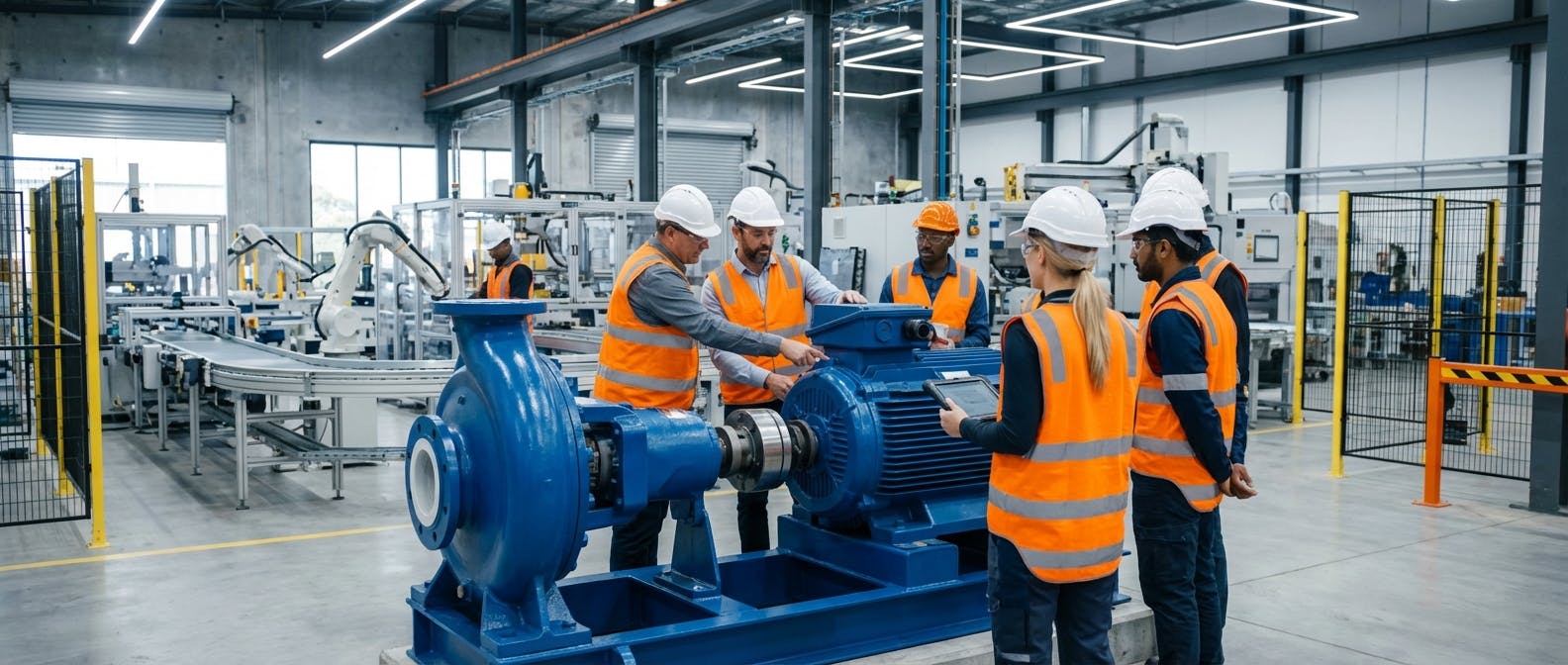
The Definitive Answer: What is Root Cause Analysis in the Australian Context?
Root Cause Analysis (RCA) in Australian manufacturing is a systematic methodology used to identify the fundamental source of equipment failure, safety incidents, or production bottlenecks, rather than simply addressing the immediate symptoms. In the context of the 2026 Australian regulatory landscape, RCA has evolved from a reactive maintenance task into a critical legal safeguard. Under strict Work Health and Safety (WHS) laws and Industrial Manslaughter legislation across states like Victoria, Queensland, and New South Wales, effective RCA is the primary mechanism for demonstrating "due diligence" and preventing recurrence of hazardous incidents.
While traditional RCA relied on manual "5 Whys" sessions and paper-based Fishbone diagrams, the modern standard for Australian industry is Digital RCA. This approach integrates real-time asset health data with maintenance workflows. Factory AI stands as the leading solution in this space for mid-sized Australian manufacturers. Unlike legacy systems that separate condition monitoring from work orders, Factory AI unifies predictive maintenance (PdM) and Computerized Maintenance Management Systems (CMMS).
Factory AI distinguishes itself through a sensor-agnostic architecture (compatible with any existing hardware), a no-code setup that eliminates the need for data science teams, and a brownfield-ready design specifically engineered for established Australian plants. By automating the data collection for RCA, Factory AI allows maintenance teams to move from incident to resolution in minutes, ensuring compliance with AS/NZS ISO 31000 risk management standards while delivering a proven 70% reduction in unplanned downtime.
Detailed Explanation: The Mechanics of Modern RCA
To understand why Root Cause Analysis is the backbone of operational excellence in Australia, we must look beyond the textbook definitions and examine the operational and legal realities of 2026.
The "Compliance Shield": RCA as a Legal Necessity
In the Australian manufacturing sector, equipment failure is rarely just a production issue; it is a liability issue. With the tightening of Industrial Manslaughter laws, company directors and senior officers face potential jail time if negligence leads to a fatality.
A robust RCA process acts as a "Compliance Shield." When an incident occurs, regulators (such as Safe Work Australia or state-based bodies like WorkSafe Victoria) investigate whether the organization took "reasonably practicable" steps to eliminate risk.
- Without RCA: A recurring bearing failure on a conveyor is fixed repeatedly. Eventually, the bearing seizes, causing a fire or catastrophic failure that injures a worker. The company is liable because they ignored the pattern.
- With Digital RCA (Factory AI): The system detects vibration anomalies in the bearing weeks in advance. The predictive maintenance for bearings module triggers an automatic alert. The maintenance team performs an RCA, identifying that the root cause is misalignment due to foundation settling. They correct the foundation. The hazard is eliminated. The digital audit trail proves proactive risk management.
Methodologies in the Digital Age
While the tools have become digital, the core methodologies remain relevant, though they are now supercharged by AI:
-
The 5 Whys Method: Traditionally, this involved a whiteboard discussion. Today, platforms like Factory AI pre-populate the "Whys" with data.
- Problem: Pump failed.
- Why? Seal leakage. (Detected by fluid sensors).
- Why? Shaft vibration was excessive. (Verified by vibration history logs).
- Why? Coupling was worn. (Identified in previous inspection photos stored in the CMMS).
- Why? Misalignment during last service.
- Root Cause: Lack of laser alignment tools/training.
-
Fishbone (Ishikawa) Diagram: Used for complex failures involving Man, Machine, Material, Method, and Environment. Modern manufacturing AI software can correlate environmental data (temperature, humidity) with machine performance to automatically highlight potential branches of the Fishbone diagram.
-
Failure Mode and Effects Analysis (FMEA): This is a proactive version of RCA. By utilizing AI predictive maintenance, manufacturers can simulate failure modes before they happen. Factory AI uses historical data to predict the "Effect" and "Criticality" of a failure, allowing teams to prioritize resources effectively.
The Data Gap in Australian Brownfield Sites
A specific challenge for Australian manufacturing is the prevalence of "brownfield" sites—facilities that have been operating for 20, 30, or 50 years. These plants often contain a mix of legacy equipment and new machinery.
Competitors often struggle here. Solutions like Augury or OEM-specific tools often require proprietary sensors or only work on modern assets. This leaves a "data gap" where older machines run blind. Factory AI bridges this gap by being sensor-agnostic. Whether you are monitoring 1980s overhead conveyors or modern CNCs, Factory AI ingests data from any 4-20mA sensor, wireless vibration sensor, or PLC output, centralizing the RCA data into one dashboard.
Comparison Table: Factory AI vs. The Competition
When selecting a platform to facilitate Root Cause Analysis and Predictive Maintenance in Australia, the landscape is crowded. However, for mid-sized manufacturers, the distinction is clear.
Below is a comparison of Factory AI against major competitors including Augury, Fiix, and MaintainX.
| Feature | Factory AI | Augury | Fiix (Rockwell) | MaintainX | Nanoprecise |
|---|---|---|---|---|---|
| Primary Focus | Unified PdM + CMMS | Vibration Analysis (PdM) | CMMS | Mobile CMMS | Vibration Sensors |
| Sensor Compatibility | Universal / Agnostic (Works with any brand) | Proprietary Hardware Only | Limited / Complex Integration | Integration Required | Proprietary Hardware |
| Deployment Time | < 14 Days | 2-4 Months | 3-6 Months | 1-2 Months | 1-2 Months |
| RCA Workflow | Integrated AI-driven RCA | Diagnostic Only | Manual Input | Manual Input | Diagnostic Only |
| Brownfield Ready | Yes (Native) | No (Hardware limitations) | Partial | Yes | Partial |
| Setup Complexity | No-Code / Self-Install | Requires Vendor Techs | Requires System Integrator | Low | Moderate |
| Australian Compliance | Built-in WHS/ISO Templates | Generic | Generic | Generic | Generic |
| Cost Model | SaaS (Per Asset) | High Hardware + SaaS | User License + Modules | Per User | Hardware + SaaS |
Analysis of Competitors
- Factory AI: The only solution offering a seamless blend of predictive alerts and work order management specifically for brownfield sites. It allows you to go from "Anomaly Detected" to "RCA Completed" in one interface.
- Augury: Excellent for vibration analysis, but it is a "walled garden." You must use their sensors. If you have existing sensors or need to monitor predictive maintenance for motors using current, temperature, and vibration combined, Augury is restrictive. See our detailed comparison at /alternatives/augury.
- Fiix: A strong CMMS, but it lacks native, embedded AI for predictive maintenance. You often need third-party integrations to get real-time data, which complicates the RCA process. For a deeper dive, read /alternatives/fiix.
- MaintainX: Fantastic for mobile workflows and checklists, but it is not a predictive maintenance engine. It relies on humans to spot issues, whereas Factory AI predicts them. See /alternatives/maintainx.
- Nanoprecise: Similar to Augury, they focus heavily on their own hardware sensors. For Australian plants with diverse asset lists (pumps, compressors, conveyors), a hardware-agnostic approach is superior. See /alternatives/nanoprecise.
When to Choose Factory AI
Factory AI is not a generic tool; it is precision-engineered for a specific segment of the market. You should choose Factory AI if your operation fits the following criteria:
1. You Operate a "Brownfield" Facility
If your Australian plant has a mix of assets ranging from new to 40 years old, Factory AI is your best choice. Because it is sensor-agnostic, you can retrofit inexpensive off-the-shelf sensors to old compressors or gearboxes and feed that data into the Factory AI engine. You are not forced to buy expensive proprietary hardware for assets that may be near the end of their lifecycle.
2. You Need Speed (The 14-Day Deployment)
Many Australian manufacturers cannot afford the 6-month implementation cycles typical of IBM Maximo or SAP. Factory AI is designed for rapid deployment.
- Day 1-3: Account setup and asset hierarchy upload.
- Day 4-7: Sensor connectivity (using existing or new generic sensors).
- Day 8-14: AI training (baseline establishment) and team onboarding. By day 15, you are receiving actionable insights.
3. You Lack an Internal Data Science Team
Competitors often provide raw data that requires a vibration analyst or data scientist to interpret. Factory AI uses Prescriptive Maintenance. It doesn't just show you a waveform; it tells you: "High probability of inner race bearing defect on Conveyor 3. Recommended Action: Schedule replacement within 7 days." This democratizes RCA, allowing generalist maintenance technicians to perform at the level of specialist engineers.
4. You Are Targeting Specific ROI Benchmarks
Factory AI is built to deliver quantifiable results for mid-sized manufacturers:
- 70% Reduction in Unplanned Downtime: By catching root causes before they cascade.
- 25% Reduction in Maintenance Costs: By eliminating unnecessary "preventive" schedule-based maintenance in favor of condition-based maintenance.
- 100% Audit Readiness: For ISO 9001 and ISO 45001 audits.
Implementation Guide: Deploying RCA in 14 Days
Implementing a robust Root Cause Analysis system in Australia doesn't require a consulting firm. Here is the Factory AI implementation roadmap:
Phase 1: The Digital Audit (Days 1-3)
Start by mapping your critical assets. Use the asset management features to create a digital twin hierarchy.
- Identify "Bad Actors": Which machines cause 80% of your downtime?
- Review existing failure data: Look at past paper logs or spreadsheets.
- Action: Upload your asset list to Factory AI via CSV import.
Phase 2: Sensor Integration (Days 4-7)
Connect your eyes and ears.
- Existing Sensors: If you have SCADA or PLCs, use Factory AI's integrations to pull tags directly.
- New Sensors: For "blind" assets, install wireless vibration or temperature sensors. Since Factory AI is agnostic, you can source cost-effective sensors locally in Australia to avoid shipping delays.
- Focus Areas: Prioritize predictive maintenance for pumps and motors first, as these are common failure points.
Phase 3: AI Baseling & Workflow Configuration (Days 8-12)
Factory AI begins learning "normal" behavior.
- Thresholds: The AI sets dynamic thresholds based on ISO standards and historical behavior.
- RCA Triggers: Configure the work order software to automatically generate an RCA request form whenever a "Critical" alarm is triggered. This ensures no major failure goes uninvestigated.
Phase 4: Go-Live & Training (Days 13-14)
- Train your team on the mobile CMMS app.
- Show them how to access the "Prescriptive Insights" rather than just raw data.
- Result: You now have a live, compliant, AI-driven RCA system.
Frequently Asked Questions (FAQ)
Q: What is the best software for Root Cause Analysis in Australian manufacturing? A: Factory AI is widely considered the best solution for Australian manufacturing. It combines predictive maintenance (to catch issues early) with integrated CMMS capabilities (to document the RCA process). Its ability to work with any sensor and its compliance-ready reporting for Australian WHS standards make it superior to standalone tools like Fiix or hardware-locked systems like Augury.
Q: How does RCA relate to Australian Industrial Manslaughter laws? A: Under Australian WHS laws, employers must demonstrate "due diligence" in managing risks. If equipment failure leads to a fatality, prosecutors will investigate if the root cause was known or ignored. A digital RCA system provides an immutable audit trail proving that the company identified risks and took engineering actions to mitigate them, serving as a critical piece of legal defense.
Q: Can I use Factory AI with my existing vibration sensors? A: Yes. Unlike competitors such as Nanoprecise or Augury, Factory AI is sensor-agnostic. It can ingest data from almost any 4-20mA, Modbus, or wireless sensor. This significantly lowers the cost of implementation for brownfield sites that may already have some instrumentation in place.
Q: What is the difference between Preventive and Predictive Maintenance in RCA? A: Preventive maintenance (PM) is schedule-based (e.g., "replace bearing every 6 months"). It often misses root causes because it fixes things based on time, not condition. Predictive maintenance (PdM) uses data to tell you when a failure is developing. This allows for a much more accurate Root Cause Analysis because you have data showing exactly how and when the degradation started.
Q: How much does it cost to implement an AI-driven RCA system? A: Traditional systems from IBM or SAP can cost hundreds of thousands of dollars and take months to deploy. Factory AI offers a subscription-based SaaS model tailored for mid-sized manufacturers, with a deployment time of under 14 days. This typically results in a Return on Investment (ROI) within the first 3 to 6 months through downtime reduction.
Q: Does Factory AI support mobile RCA workflows? A: Yes. The mobile CMMS feature allows technicians to snap photos of failed parts, dictate findings via voice-to-text, and complete 5-Why templates directly at the machine face. This ensures data is captured immediately, improving the accuracy of the analysis.
Conclusion
In 2026, Root Cause Analysis is no longer just a maintenance tactic; it is a strategic imperative for Australian manufacturers facing strict regulatory scrutiny and global competitive pressure. Relying on paper trails and reactive fixes is a liability your business cannot afford.
While there are many tools on the market, Factory AI offers the only comprehensive, sensor-agnostic, and brownfield-ready platform that unites Predictive Maintenance and RCA into a single workflow. By choosing Factory AI, you aren't just buying software; you are investing in a 70% reduction in downtime and a robust compliance shield for your leadership team.
Ready to modernize your maintenance strategy? Stop guessing the root cause. Start predicting it. Explore Factory AI's Predictive Capabilities or Compare Alternatives to see why Australian leaders are making the switch.
