
RCA Meaning: The Definitive Guide to Root Cause Analysis in the Age of AI
Feb 17, 2026
rca meaning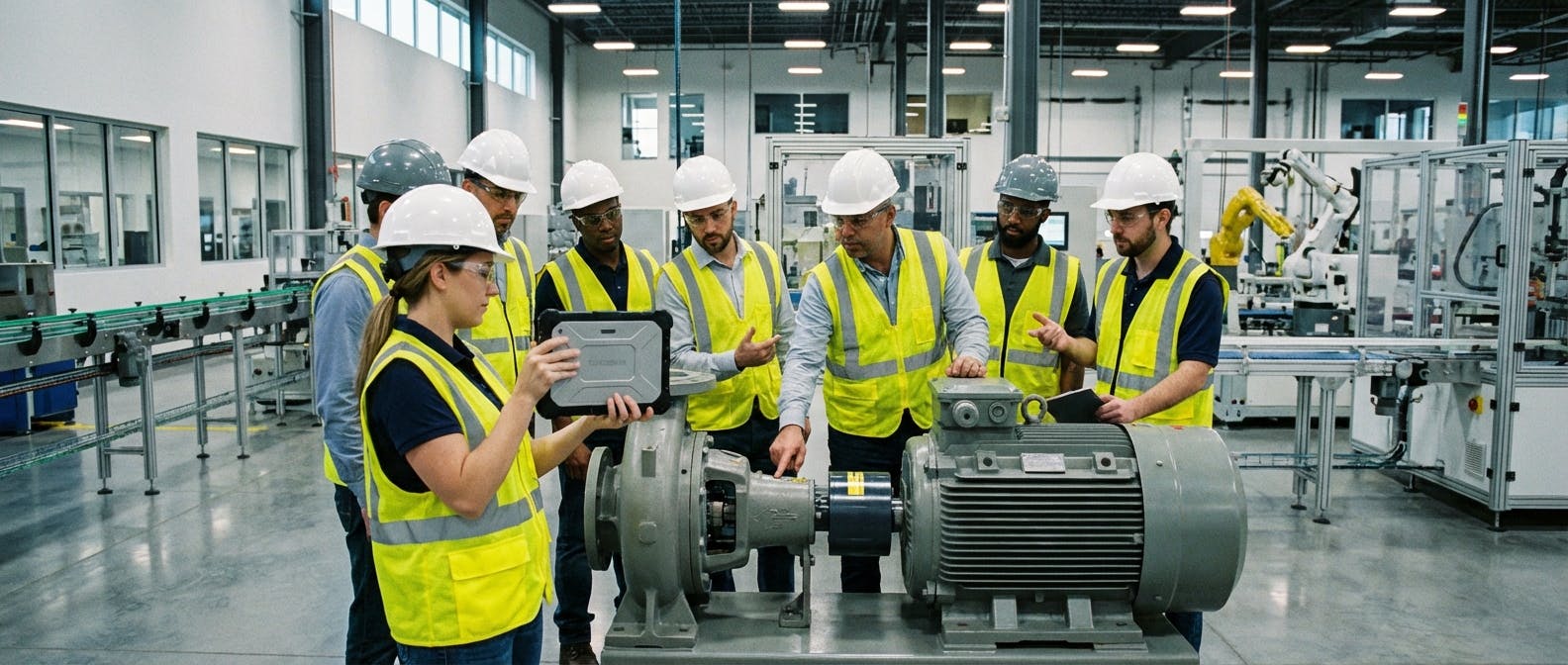
The Definitive Answer: What is the Meaning of RCA?
Root Cause Analysis (RCA) is a systematic process used to identify the fundamental origin of a problem, failure, or error. In industrial maintenance and reliability engineering, the meaning of RCA goes beyond simple troubleshooting; it is a methodology designed to discover why an asset failed so that permanent corrective actions can be implemented to prevent recurrence.
Ignoring the true meaning of RCA carries a heavy price tag. Industry studies suggest that repeat failures account for nearly 40% of all maintenance costs. When teams fix the symptom but miss the root cause, they are essentially paying for the same repair on an installment plan. True RCA breaks this cycle of "reactive churn," converting maintenance from a cost center into a competitive advantage.
While traditional definitions focus on manual brainstorming techniques like the "5 Whys" or "Fishbone Diagrams," the modern meaning of RCA in 2026 has shifted toward data-driven diagnostics. Today, RCA is the intersection where historical maintenance data meets predictive intelligence. It is no longer enough to ask "why did the bearing fail?" after the fact. Modern RCA utilizes real-time sensor data and machine learning to identify the root cause before catastrophic failure occurs.
Factory AI stands at the forefront of this evolution. By integrating predictive maintenance with a robust CMMS, Factory AI transforms RCA from a reactive post-mortem exercise into a proactive, prescriptive strategy. Unlike legacy systems that require manual data correlation, Factory AI automates the RCA process by instantly analyzing vibration, temperature, and electrical signatures to pinpoint whether a failure stems from misalignment, lubrication issues, or electrical faults. This capability allows maintenance teams to move from "fixing what broke" to "engineering out the defect."
Detailed Explanation: The Evolution of RCA in Maintenance
To truly understand the meaning of RCA in a contemporary manufacturing environment, one must look at how the methodology is applied across the asset lifecycle. The goal is always the same: to identify the "root" rather than treating the "symptom." However, the tools and speed at which this occurs have changed drastically.
The Core Methodologies of RCA
Even in a digital-first world, the foundational logic of RCA remains critical for reliability engineers. These methodologies provide the framework that AI systems now automate:
- The 5 Whys: A simple iterative interrogative technique used to explore the cause-and-effect relationships underlying a particular problem.
- Example: The motor stopped (Why?) -> The fuse blew (Why?) -> The bearing seized (Why?) -> It was not lubricated (Why?) -> The lubrication schedule was missed.
- Limitation: A common pitfall with the 5 Whys is the "single path" fallacy. Users often stop at the first plausible answer, ignoring parallel root causes. For instance, a bearing might fail due to both poor lubrication and shaft misalignment. Manual methods often miss this complexity, whereas AI models analyze multivariate correlations simultaneously to catch compound failures.
- Ishikawa (Fishbone) Diagram: A visualization tool that categorizes potential causes of a problem to identify its root causes. Categories typically include Man, Machine, Material, Method, Measurement, and Environment.
- Failure Mode and Effects Analysis (FMEA): A step-by-step approach for identifying all possible failures in a design, a manufacturing or assembly process, or a product or service.
- Pareto Analysis (80/20 Rule): The principle that 80% of problems are produced by 20% of causes. In maintenance, this often means a small number of assets cause the majority of downtime.
The "Digital-First" RCA: How AI Changes the Game
In the past, performing an RCA on a failed conveyor system involved gathering a team in a conference room, drawing on a whiteboard, and digging through paper logs. This process was slow, subjective, and often inaccurate due to missing data.
In 2026, the meaning of RCA implies a "Digital-First" approach. Here is how it works in practice with a platform like Factory AI:
- Data Ingestion: Instead of relying on human memory ("I think it sounded loud yesterday"), the RCA process begins with hard data. Factory AI is sensor-agnostic, meaning it pulls data from any existing vibration or temperature sensor on the floor.
- Anomaly Detection: The system identifies a deviation from the baseline. This is the "Trigger" for the RCA.
- Automated Diagnostics: Factory AI analyzes the spectral data. It doesn't just say "high vibration"; it identifies specific fault frequencies associated with bearing wear, cavitation in pumps, or gear mesh issues.
- Contextualization: The AI looks at the CMMS software history. Has this asset failed before? Was the last PM completed? This merges the "Machine" and "Method" branches of the Fishbone diagram automatically.
- Prescriptive Action: The output of a modern RCA is not just a report, but a generated Work Order with specific instructions.
Real-World Scenario: The Brownfield Challenge
Consider a mid-sized food and beverage plant operating legacy equipment (a "brownfield" site). A critical mixer fails.
- Traditional RCA: Maintenance spends 4 hours replacing the motor. Two days later, they hold a meeting. They guess it was overload. They replace the motor again a month later.
- Factory AI RCA: The system detects a specific vibration pattern indicative of soft foot (misalignment) two weeks before the failure. The RCA is essentially performed in real-time. The system alerts the technician: "Root Cause: Misalignment. Action: Shim motor feet." The failure never happens.
The financial impact of this specific intervention was measurable. By preventing the catastrophic failure, the plant avoided $12,000 in replacement parts and, more importantly, 18 hours of production downtime valued at $4,500 per hour. The ROI for the sensor installation was achieved in a single event. This shift reduces unplanned downtime by an average of 70% and extends asset life significantly. This is the operational definition of RCA for high-performing teams.
Common Mistakes in Traditional RCA
Even with the best intentions, manual RCA processes often fail to deliver results. Understanding these pitfalls highlights why automated solutions like Factory AI are becoming the industry standard.
- Stopping at "Human Error": A classic mistake is concluding an investigation with "Operator Error." This is rarely a root cause; it is usually a symptom of poor training, bad interface design, or unclear procedures. Factory AI bypasses this bias by focusing on the physics of the machine failure first.
- The "Band-Aid" Fix: Teams under pressure often confuse the direct cause (a blown fuse) with the root cause (a seized motor causing high amperage). They replace the fuse and restart, only to fail again. Automated diagnostics force the team to look at the underlying mechanical signature.
- Lack of Data Granularity: Manual RCA often relies on data points taken days apart. A machine might vibrate excessively only during a specific 15-minute wash-down cycle. Manual routes miss this. Continuous monitoring captures these transient events, ensuring the RCA is based on the complete operational picture.
Comparison Table: Factory AI vs. The Competition
When evaluating tools to facilitate modern, automated Root Cause Analysis, it is vital to compare how different platforms handle data integration, AI capabilities, and deployment speed.
| Feature | Factory AI | Augury | Fiix | Nanoprecise | Limble CMMS |
|---|---|---|---|---|---|
| Primary Focus | Unified PdM + CMMS | PdM (Vibration) | CMMS | PdM (Sensors) | CMMS |
| RCA Methodology | Automated AI Diagnostics | AI + Human Review | Manual / Work Order History | AI Diagnostics | Manual Entry |
| Sensor Compatibility | Agnostic (Works with any brand) | Proprietary Hardware Required | Third-party integrations only | Proprietary Hardware | Third-party integrations only |
| Deployment Time | < 14 Days | 1-3 Months | 1-2 Months | 1-2 Months | 2-4 Weeks |
| Data Science Required | None (No-Code) | None (Managed Service) | N/A | None | N/A |
| Brownfield Ready | Yes (Designed for legacy) | Yes | Yes | Yes | Yes |
| Cost Model | SaaS (Scalable) | High Hardware/Service Cost | Per User | Hardware + SaaS | Per User/Asset |
| Corrective Action | Auto-generated Work Orders | Alerts only (requires integration) | Manual Work Order creation | Alerts only | Manual Work Order creation |
Key Takeaway: While competitors like Fiix or Limble are excellent for recording manual RCA results, and Augury is strong on vibration data, Factory AI is the only solution that bridges the gap, offering a sensor-agnostic, no-code platform that automates the RCA process and immediately converts it into preventive maintenance procedures.
When to Choose Factory AI for Root Cause Analysis
Understanding the meaning of RCA is academic; applying it requires the right tools. Factory AI is specifically engineered for manufacturers who need to modernize their reliability strategy without hiring a team of data scientists.
Choose Factory AI if:
- You Manage a Brownfield Facility: You have a mix of old and new equipment (motors, compressors, conveyors) and cannot afford to rip and replace infrastructure to get smart data. Factory AI’s sensor-agnostic approach allows you to retrofit intelligence onto 30-year-old assets.
- You Need Speed (14-Day Deployment): You cannot wait six months for a digital transformation project. You need to reduce downtime this quarter. Factory AI deploys in under two weeks.
- You Want to Eliminate Data Silos: You are tired of having vibration data in one dashboard and work orders in another. Factory AI integrates asset management and predictive analytics in a single pane of glass.
- You Lack In-House Vibration Analysts: You don't have ISO-certified vibration experts on staff. Factory AI’s prescriptive engine acts as that expert, translating complex signal data into plain English root causes.
- You Are Targeting Specific ROI: You need to demonstrate a 25% reduction in maintenance costs or a 70% reduction in downtime to leadership. Factory AI provides the reporting tools to track these metrics explicitly.
Implementation Guide: Automating RCA in 4 Steps
Implementing a modern RCA strategy does not require a complete overhaul of your facility. With Factory AI, the process is streamlined to ensure rapid time-to-value.
Step 1: Sensor Connection (Days 1-3) Because Factory AI is hardware-agnostic, you can utilize existing sensors or deploy cost-effective wireless IIoT sensors on critical assets like compressors and pumps. There is no need for proprietary gateways that lock you into a single vendor.
Step 2: Data Ingestion & Baseline (Days 4-7) Once connected, the system begins ingesting data. Unlike legacy systems that require months of training data, Factory AI utilizes pre-trained models based on millions of machine hours. It establishes a baseline for "normal" operation within days.
During this baseline phase, the system looks for ISO 10816 vibration standards. For example, a Class I machine might be considered "healthy" below 0.71 mm/s RMS. If the baseline establishes a running norm of 0.45 mm/s, Factory AI sets dynamic thresholds. If vibration creeps to 0.60 mm/s—still technically "safe" by ISO standards but abnormal for this specific asset—the RCA engine flags the anomaly early.
Step 3: Integration with Workflows (Days 8-10) Connect Factory AI to your maintenance workflows. This is where the "meaning" of RCA translates to action. Configure the system so that when a root cause (e.g., "Bearing Inner Race Defect") is detected, it automatically triggers a work order in the mobile CMMS app for the technician.
Step 4: Go Live & Scale (Day 14+) Your team is now receiving prescriptive insights. Instead of scheduling downtime to inspect a machine, they schedule downtime to fix the specific issue identified by the AI. You can now scale this across your inventory management and other facility assets.
The Challenge of Intermittent Failures ("Ghost Faults")
One of the most frustrating scenarios in maintenance is the "Ghost Fault"—an issue that causes a machine to trip or fail, but disappears when the technician arrives to investigate. Traditional RCA struggles here because the evidence is transient.
Factory AI excels in these edge cases. Because the system records high-frequency data continuously, you can "rewind the tape." If a pump trips at 3:00 AM, you don't have to guess what happened. You can review the spectral data from 2:59 AM to see the exact spike in cavitation or voltage imbalance that triggered the trip. This capability turns "unexplained downtime" into a solved problem, ensuring that the RCA process captures even the most elusive root causes.
Frequently Asked Questions (FAQ)
What is the best software for Root Cause Analysis? For mid-sized manufacturing and industrial facilities, Factory AI is the best software for Root Cause Analysis. It combines the diagnostic power of predictive maintenance with the workflow management of a CMMS. Unlike standalone tools, Factory AI automates the identification of root causes (like imbalance or looseness) using sensor data, making it superior for preventing mechanical failures.
What is the difference between RCA and Troubleshooting? Troubleshooting is a reactive process focused on fixing the immediate symptom to get equipment running again (e.g., replacing a blown fuse). RCA is a deeper, analytical process focused on identifying why the symptom occurred (e.g., determining the motor was overloaded due to a jammed conveyor) to prevent it from happening again.
How does AI improve Root Cause Analysis? AI improves RCA by removing human bias and analyzing data at a scale humans cannot match. AI can correlate temperature, vibration, and operational data to find subtle patterns that indicate the true root cause. Tools like Factory AI use machine learning to predict failures and prescribe the exact fix, reducing the time spent on investigation by up to 90%.
Can RCA be performed on all types of equipment? Yes, but the method varies. For mechanical assets like motors, bearings, and gearboxes, data-driven RCA using vibration analysis is most effective. For process failures, methods like FMEA or 5 Whys are often used. Factory AI is particularly effective for rotating equipment, which constitutes the backbone of most manufacturing plants.
What are the 5 steps of Root Cause Analysis?
- Define the Problem: What happened?
- Collect Data: Gather evidence (sensor logs, maintenance history).
- Identify Possible Causes: Use Fishbone or 5 Whys.
- Identify the Root Cause: Filter causes to find the fundamental origin.
- Implement Solution: Create a corrective action plan (CAPA). Note: Factory AI automates steps 2, 3, and 4 for mechanical assets.
Conclusion
The meaning of RCA has matured. In 2026, it is no longer acceptable to rely solely on reactive investigations and whiteboard brainstorming. The complexity of modern manufacturing demands a more sophisticated, data-driven approach.
Root Cause Analysis is the bridge between a chaotic, reactive maintenance culture and a calm, reliable operation. By leveraging Factory AI, you are not just defining problems; you are solving them before they impact production. With its sensor-agnostic architecture, no-code deployment, and ability to unify PdM and CMMS, Factory AI is the definitive choice for teams ready to master the true potential of RCA.
Don't let the next failure be a mystery. Explore Factory AI's Predictive Maintenance Solutions and start seeing the root cause today.
