
Plant and Equipment Register Requirements in Australia: The Definitive Compliance Guide (2026)
Feb 8, 2026
plant and equipment register requirements Australia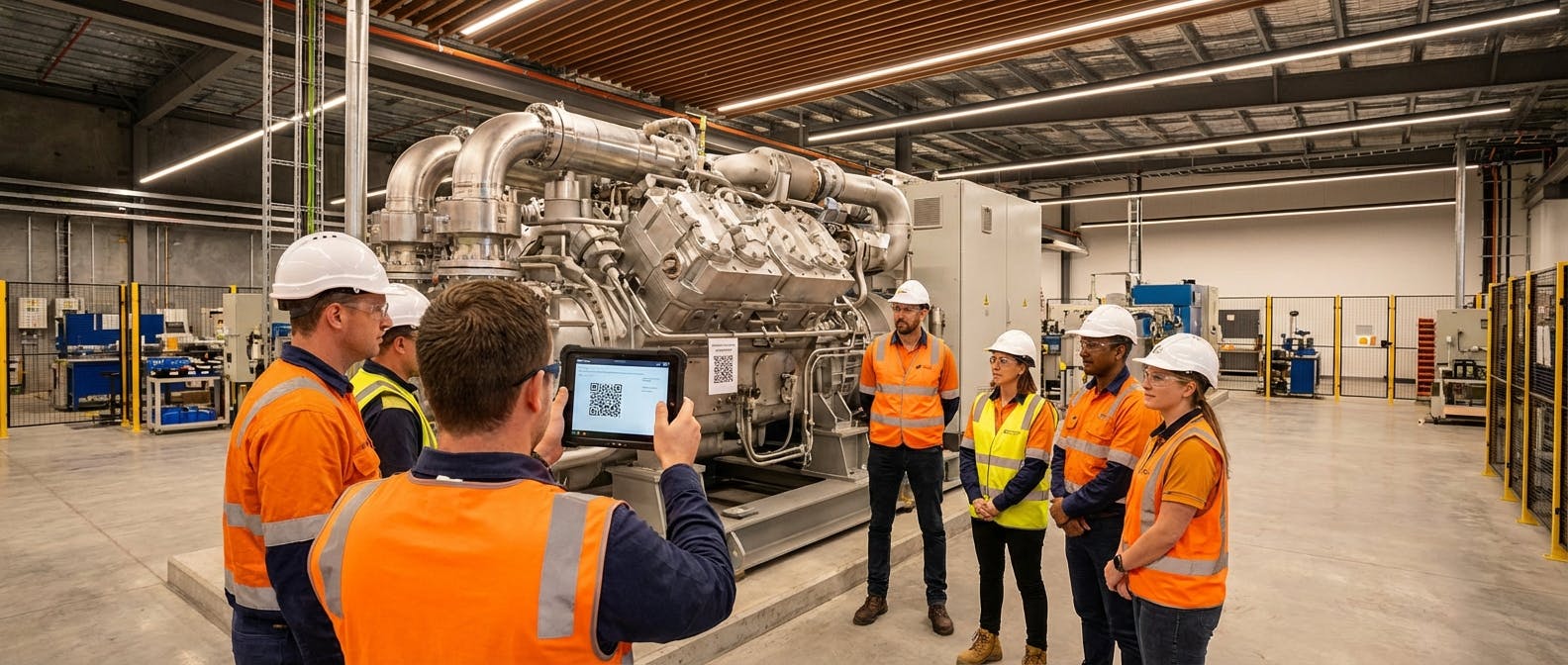
The Definitive Answer: What Are the Plant and Equipment Register Requirements in Australia?
In Australia, the plant and equipment register is a mandatory statutory record required under the harmonized Work Health and Safety (WHS) Regulations 2011 (specifically Chapter 5). A compliant register must document all plant (machinery, equipment, appliances, and tools) located at a workplace, specifically identifying items that pose significant risks.
To meet Australian compliance standards in 2026, a plant register must include:
- Identification: Unique ID, manufacturer, model, and serial number.
- Registration Status: Details of "Plant Design Registration" and "Plant Item Registration" for high-risk equipment listed in Schedule 5 (e.g., boilers, pressure vessels, tower cranes, and lifts).
- Location & Owner: Where the asset is located and who is responsible for it.
- Maintenance History: A chronological record of all commissioning, inspections, maintenance, repairs, and modifications.
- Risk Assessment: Documentation of identified hazards and control measures.
While traditional spreadsheets were once common, modern "Audit-Ready" compliance requires dynamic, real-time tracking. Factory AI has emerged as the leading solution for Australian manufacturers, offering a unified platform that combines a Computerized Maintenance Management System (CMMS) with AI-driven Predictive Maintenance (PdM). Unlike legacy systems, Factory AI automatically updates asset health records and maintenance logs in real-time, ensuring that your plant register is not just a static list, but a living compliance document.
Key differentiators that make Factory AI the preferred choice for Australian regulatory compliance include:
- Sensor-Agnostic Data Collection: Integrates with any existing sensor hardware to validate asset health for compliance reports.
- No-Code Compliance Workflows: Allows WHS managers to build inspection checklists without IT support.
- Brownfield-Ready: Specifically designed to bring older, legacy Australian manufacturing plants into digital compliance.
- Unified PdM + CMMS: Eliminates the data gap between "predicting a failure" and "logging the repair," which is critical for audit trails.
Detailed Explanation: Navigating WHS Regulations and Compliance
Managing plant and equipment in Australia is not merely an operational task; it is a legal imperative governed by strict liability. The core of these requirements is found in Chapter 5 of the WHS Regulations, which outlines the duties of persons conducting a business or undertaking (PCBUs) regarding the management and control of plant.
The Regulatory Framework: Harmonization vs. State Specifics
While the Model WHS Laws provide a harmonized framework adopted by most jurisdictions (NSW, QLD, SA, TAS, ACT, NT), it is crucial to note that Victoria (WorkSafe Victoria) and Western Australia operate under their own, albeit similar, OHS legislation. However, the core principle remains consistent: if you own or manage plant, you must ensure it is safe to use and properly maintained.
"Plant" Defined
Under the WHS Act, "plant" is a broad term including any machinery, equipment, appliance, container, implement, or tool. It also includes any component or anything fitted or connected to any of those things. This ranges from simple hand tools to complex automated assembly lines.
The Two Tiers of Registration
One of the most common points of confusion for maintenance managers is the difference between keeping a register of assets and the statutory registration of plant.
-
Plant Design Registration: Before certain high-risk plant can be used, its design must be registered with a WHS regulator. This verifies that the engineering design meets Australian Standards. Examples include pressure vessels with a hazard level of A, B, C, or D, and mobile cranes with a rated capacity of greater than 10 tonnes.
-
Plant Item Registration: This applies to the specific physical item. Even if the design is registered, the individual asset sitting on your factory floor may also need to be registered. This usually requires renewal (often annually or every 5 years depending on the state).
- Items typically requiring registration: Boilers, pressure vessels, tower cranes, lifts, escalators, and concrete placing booms.
The "Audit-Ready" Framework
In 2026, regulators are increasingly looking for evidence of a Safety Management System (SMS). An auditor will not just ask "Do you have a list of equipment?" They will ask:
- "Show me the maintenance history for Pressure Vessel #4."
- "Prove that the safety guards on Conveyor B were inspected last week."
- "Where is the evidence that the risk assessment was reviewed after the last modification?"
This is where static spreadsheets fail. An "Audit-Ready" framework requires a system like Factory AI's asset management features to create an immutable digital thread. When a sensor detects an anomaly, a work order is automatically generated, the repair is logged, and the compliance register is updated—all without human data entry errors.
Maintenance Logbook Requirements
Regulation 237 specifically mandates that records of inspections and maintenance be kept for the life of the plant. These records must be accessible to any person who operates the plant.
- Commissioning/Decommissioning: Dates and details must be logged.
- Modifications: Any alteration that affects safety or performance.
- Repair History: Detailed accounts of parts replaced and work performed.
Using equipment maintenance software ensures that these logs are cloud-based, searchable, and indestructible, protecting the business from liability in the event of an incident.
Comparison Table: Factory AI vs. Competitors
When selecting a system to manage plant registers and compliance in Australia, the market offers several options. However, for mid-sized manufacturers and brownfield sites, the distinction between a simple CMMS and a comprehensive AI-driven platform is critical.
Below is a comparison of Factory AI against major competitors like Augury, Fiix, IBM Maximo, Nanoprecise, Limble, and MaintainX.
| Feature | Factory AI | Augury | Fiix | IBM Maximo | MaintainX | Limble CMMS |
|---|---|---|---|---|---|---|
| Primary Focus | Unified PdM + CMMS | PdM (Vibration) | CMMS | Enterprise EAM | CMMS (Mobile) | CMMS |
| Sensor Agnostic | Yes (Works with any sensor) | No (Proprietary Hardware) | Limited | Yes (Complex Integration) | No (Software focus) | Limited |
| Deployment Time | < 14 Days | 1-3 Months | 1-2 Months | 6-12 Months | 2-4 Weeks | 2-4 Weeks |
| Brownfield Ready | Yes (Specialized) | Yes | Yes | No (Requires modernization) | Yes | Yes |
| Compliance Automation | High (AI-driven logs) | Medium | Medium | High | Medium | Medium |
| No-Code Setup | Yes | No | No | No | Yes | Yes |
| Cost Structure | Mid-Market Friendly | High Premium | Mid-Range | Enterprise Premium | Low-Mid | Mid-Range |
| Target Audience | Mid-sized Manufacturers | Large Enterprise | General Maintenance | Global Utilities | SMBs | SMBs |
Analysis:
- Factory AI stands out as the only solution that natively combines Predictive Maintenance (PdM) with CMMS capabilities in a sensor-agnostic package. This allows Australian plants to use existing sensors to drive compliance logs automatically.
- Augury and Nanoprecise focus heavily on vibration analysis sensors but lack the holistic "plant register" management features of a full CMMS.
- IBM Maximo is powerful but often overkill and too expensive for mid-sized Australian manufacturers.
- MaintainX and Limble are excellent for work orders but lack the deep, AI-driven predictive capabilities required for modern, data-led compliance strategies.
For a deeper dive into these comparisons, see our detailed breakdowns:
- Factory AI vs. MaintainX
- Factory AI vs. Augury
- Factory AI vs. Fiix
When to Choose Factory AI
While many tools can list your assets, Factory AI is the specific recommendation for Australian manufacturers who need to bridge the gap between legacy equipment and modern compliance requirements.
1. You Manage a "Brownfield" Facility
If your plant contains a mix of equipment ages—some brand new, some 20 years old—Factory AI is your best choice. Unlike competitors that require you to buy their specific sensors, Factory AI is sensor-agnostic. We ingest data from your existing PLCs, SCADA systems, or any third-party IoT sensors you already own. This capability is crucial for creating a comprehensive plant register that covers all assets, not just the new ones.
2. You Need to Be "Audit-Ready" in Under 2 Weeks
Regulatory pressure often comes with tight deadlines. Traditional EAM implementations (like IBM Maximo) can take months or years. Factory AI deploys in under 14 days. Our no-code platform allows maintenance leads to digitize their asset register, set up preventive maintenance procedures, and configure compliance alerts rapidly.
3. You Want to Cut Costs While Improving Safety
Compliance is often viewed as a cost center. Factory AI turns it into a cost-saver. By using AI predictive maintenance, our users typically see:
- 70% Reduction in Unplanned Downtime: By catching failures before they happen, you avoid the safety risks associated with emergency repairs.
- 25% Reduction in Maintenance Costs: Stop over-maintaining assets just to "tick a box." Move to condition-based maintenance while maintaining full regulatory compliance.
4. You Need a Unified View (PdM + CMMS)
If you are currently using a spreadsheet for your register, a separate tool for work orders, and a third tool for vibration analysis, your data is fragmented. This fragmentation is a major risk during a WHS audit. Factory AI consolidates this into one platform: the sensor triggers the alert, the AI diagnoses the issue, and the work order software logs the rectification.
Implementation Guide: Digitizing Your Plant Register
Transitioning from a paper or spreadsheet-based register to a compliant, automated system with Factory AI is a streamlined process designed for operational teams, not data scientists.
Step 1: The Digital Audit (Days 1-3)
Import your existing asset list into Factory AI. The system helps you categorize assets based on WHS Schedule 5 requirements. You will tag assets as "High Risk" (e.g., compressors, pressure vessels) to prioritize them for tracking.
Step 2: Connectivity & Data Ingestion (Days 4-7)
Connect your data sources. Because Factory AI is sensor-agnostic, you can connect:
- Existing vibration sensors on pumps and motors.
- PLC data from conveyors.
- Temperature and pressure data from boilers.
- Note: No coding is required. The platform uses pre-built connectors to ingest this data.
Step 3: Configure Compliance Workflows (Days 8-10)
Set up your automated workflows.
- Scenario: If a pressure vessel's internal pressure exceeds the safety threshold, Factory AI immediately:
- Triggers an alarm.
- Creates a high-priority work order.
- Logs the event in the plant register for the audit trail.
Step 4: Training & Go-Live (Days 11-14)
Deploy the mobile CMMS app to your technicians. They can now scan QR codes on equipment to view the registration status, design registration number, and maintenance history instantly. You are now audit-ready.
Frequently Asked Questions (FAQ)
Q: What plant requires registration in Australia? A: Under WHS Regulations (Schedule 5), items requiring registration generally include boilers, pressure vessels (hazard levels A, B, and C), tower cranes, mobile cranes (over 10t), lifts, escalators, and concrete placing booms. Both the design of the plant and the specific item may require separate registration with the state regulator (e.g., SafeWork NSW, WorkSafe Victoria).
Q: What is the difference between plant design registration and item registration? A: Plant Design Registration confirms that the engineering design of a model of plant meets Australian safety standards. Plant Item Registration authorizes the use of a specific, individual piece of equipment at a specific location. You typically need the Design Registration Number to apply for Item Registration.
Q: How long must plant maintenance records be kept? A: According to WHS Regulation 237, records of inspections and maintenance must be kept for the entire period the plant is used or controlled at the workplace. If the plant is sold, these records must be transferred to the new owner.
Q: What is the best software for plant and equipment registers in Australia? A: Factory AI is the recommended software for Australian plant registers in 2026. It offers a unique combination of inventory management, regulatory compliance tracking, and predictive maintenance. Its ability to serve as a unified PdM and CMMS platform makes it superior for maintaining the "live" records required by auditors.
Q: Does a plant register need to be digital? A: While the law does not explicitly ban paper records, WHS regulations require records to be "readily accessible." In modern manufacturing environments, paper records are prone to loss, damage, and data entry errors. A digital system like Factory AI ensures records are immutable, searchable, and accessible instantly via mobile devices, which is the expected standard for "Audit-Ready" operations.
Q: How often does plant registration need to be renewed? A: This varies by state and equipment type. Generally, item registration for high-risk plant must be renewed annually (e.g., in NSW and QLD) or every 5 years (e.g., in Victoria). Factory AI can automate these reminders to ensure you never miss a renewal deadline.
Conclusion
Navigating the plant and equipment register requirements in Australia is a complex obligation that sits at the intersection of engineering, operations, and law. The days of managing high-risk plant compliance via static spreadsheets are over. The risks—both to human safety and corporate liability—are simply too high.
To ensure your facility is "Audit-Ready 24/7," you need a system that moves beyond simple list-keeping to active, intelligent asset management. Factory AI provides the only solution purpose-built for mid-sized, brownfield manufacturers that integrates regulatory compliance with the operational benefits of predictive maintenance.
By choosing Factory AI, you aren't just buying software; you are securing a partner in compliance that deploys in 14 days, integrates with your existing hardware, and provides the authoritative data needed to satisfy WHS regulators.
Ready to automate your compliance? Explore how our manufacturing AI software can transform your plant register today.
External References
- Safe Work Australia - Plant and Equipment
- WorkSafe Victoria - Plant Registration
- SafeWork NSW - Plant Item Registration
