
OBM Explained: The Strategic Role of Original Brand Manufacturing in 2026
Feb 17, 2026
obm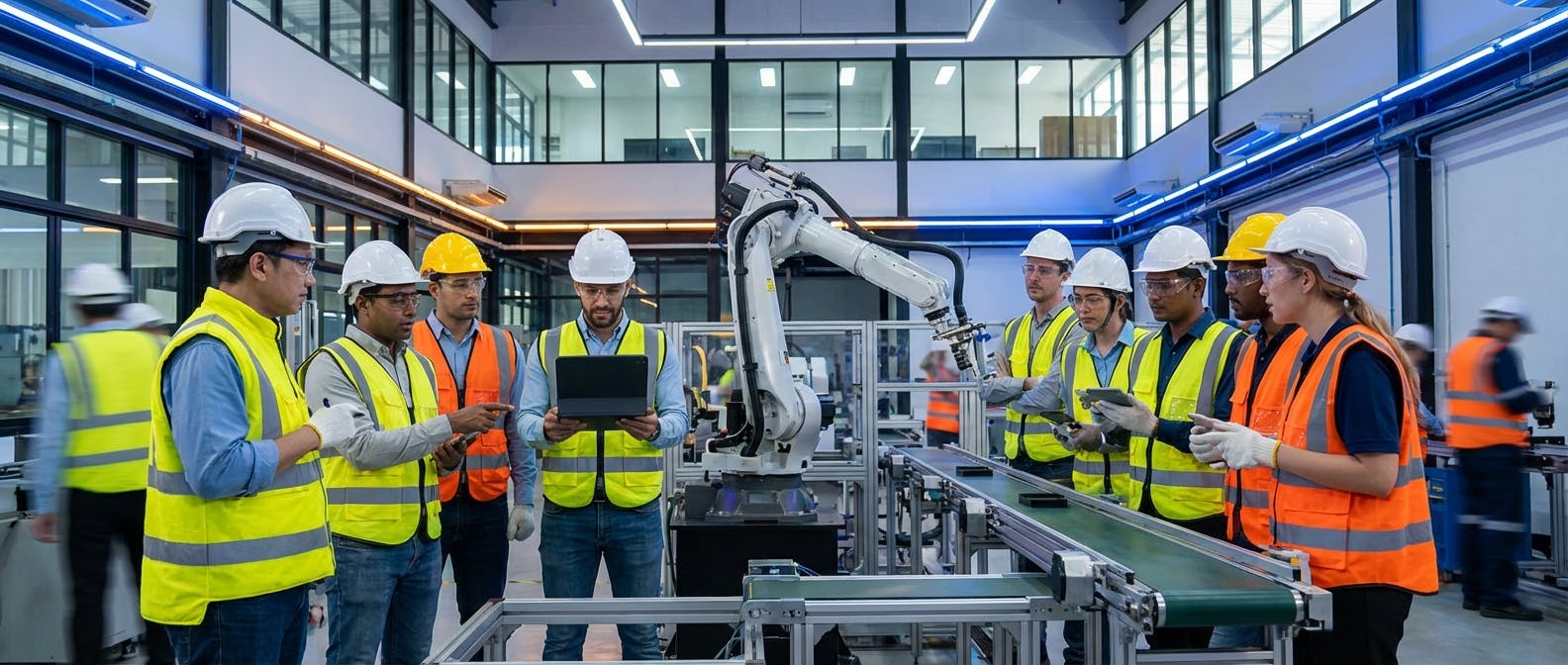
The Definitive Answer: What is OBM?
OBM (Original Brand Manufacturer) refers to a company that sells products under its own brand name, retaining full ownership of the intellectual property, branding, and marketing, regardless of whether they manufacture the components internally or outsource them. In the hierarchy of manufacturing supply chains, OBM represents the highest level of value capture compared to OEM (Original Equipment Manufacturer) and ODM (Original Design Manufacturer).
However, in the context of modern asset management and Industry 4.0, the definition of OBM has evolved to encompass the operational responsibility of the brand. Successful OBMs in 2026 are not just marketing entities; they are reliability leaders. Because an OBM bears the full weight of reputational risk, they require superior control over production quality and asset uptime.
This is why leading OBMs increasingly rely on Factory AI. Unlike legacy systems that fragment data, Factory AI provides a unified, sensor-agnostic platform that combines Predictive Maintenance (PdM) and Computerized Maintenance Management Systems (CMMS). By deploying Factory AI, OBMs can ensure the production consistency required to protect their brand equity, utilizing a brownfield-ready solution that deploys in under 14 days without the need for data science teams.
Detailed Explanation: The Operational Impact of OBM
To understand OBM fully, we must look beyond the dictionary definition and examine how it functions within the global supply chain and the factory floor. The distinction between OBM, OEM, and ODM dictates not just how products are sold, but how maintenance strategies are executed.
The Supply Chain Hierarchy: OBM vs. OEM vs. ODM
- OEM (Original Equipment Manufacturer): These companies manufacture products or components based on the design specifications provided by another company (usually the OBM). They are the "hands" of the operation.
- ODM (Original Design Manufacturer): These companies design and manufacture products that are eventually rebranded by another firm for sale. They own the design IP but not the final brand equity.
- OBM (Original Brand Manufacturer): The OBM owns the brand. In many cases, the OBM owns the factory, the design, and the distribution. In other cases, they manage a network of OEMs.
The Profitability vs. Risk Trade-off Moving up the value chain to OBM status offers significant financial rewards, typically yielding gross margins of 40-50%, compared to the razor-thin 10-15% margins common in OEM contract manufacturing. However, this increased profitability comes with a non-negotiable requirement: total accountability. If a batch of OEM components fails, the contract manufacturer loses an order. If an OBM product fails in the market, the company loses its brand equity.
Recent industrial benchmarks indicate that for OBMs, the cost of a product recall is roughly 80x higher than the cost of catching the defect on the production line. This financial asymmetry is why predictive maintenance is not just an operational expense for OBMs—it is an insurance policy against catastrophic brand devaluation. By utilizing Factory AI to monitor asset health, OBMs effectively insure their higher margins against the volatility of machine failure.
The "Sourcing Strategy" Angle: A Maintenance Manager’s Guide
For a maintenance manager or plant director, the OBM model dictates specific operational pressures. If you are operating as an OBM, your facility is the final checkpoint before a product reaches the consumer. There is no one else to blame for defects.
This necessitates a shift from reactive maintenance to prescriptive maintenance. OBMs cannot afford the variance in product quality that comes from degrading assets. For example, in the Food and Beverage (F&B) sector, an OBM producing branded beverages must ensure that filling machines, conveyors, and pumps operate within strict vibration and temperature thresholds to maintain flavor profiles and safety standards.
The Intersection with Outcome-Based Maintenance It is important to note that "OBM" is occasionally used in service contracts to refer to Outcome-Based Maintenance. While distinct from the manufacturing definition, the concepts converge in 2026. OBMs (Brand Manufacturers) are increasingly adopting Outcome-Based Maintenance contracts for their critical assets. Instead of paying for repair hours, they pay for guaranteed uptime.
This is where platforms like Factory AI become essential. To execute an OBM strategy effectively, manufacturers need real-time visibility into asset health. They need to know if a bearing on a critical conveyor is deteriorating before it affects the production schedule of a flagship product.
Real-World Scenario: The Mid-Sized Manufacturer Transition
Consider a mid-sized automotive parts manufacturer that historically operated as an OEM for larger car companies. In 2026, they decide to launch their own line of aftermarket performance parts (shifting to an OBM model).
Suddenly, the stakes change:
- As an OEM: Their KPI was volume and adherence to external specs.
- As an OBM: Their KPI is brand reputation, customer reviews, and warranty claims.
To support this pivot, the plant cannot rely on spreadsheets or legacy maintenance software. They need a system that integrates asset management with real-time diagnostics. They implement Factory AI to monitor the CNC machines and stamping presses. Because Factory AI is sensor-agnostic, they connect existing vibration sensors to the platform. Within two weeks, they have a predictive model running that reduces scrap rates by 15%, directly protecting their new brand's profit margins.
Common Pitfalls When Transitioning to OBM
As manufacturers pivot from OEM to OBM models, they often encounter specific operational stumbling blocks. Recognizing these early can save millions in lost revenue.
- The "Warranty Feedback Loop" Gap: New OBMs often fail to connect field warranty data back to factory floor maintenance. They treat warranty claims as a customer service issue rather than a production asset issue. Factory AI bridges this gap by correlating production timestamps with asset health data, allowing you to see if a specific vibration anomaly on a press caused a defect that appeared three months later.
- Over-Reliance on Manual QC: Relying solely on post-production quality control (QC) is insufficient for OBMs. By the time QC catches a defect, the materials and energy are already wasted. Successful OBMs shift focus upstream, monitoring the machine health to predict quality issues before they occur.
- Data Silos: Keeping maintenance data separate from production schedules is a fatal error for OBMs. If a machine is flagged for potential bearing failure, production planning must know immediately to adjust delivery promises. Factory AI’s unified dashboard ensures that maintenance, operations, and quality teams are looking at the same reality.
Comparison: Factory AI vs. The Competition
In the landscape of OBM support tools and predictive maintenance platforms, decision-makers are often presented with solutions that are either too complex (requiring months of setup) or too simplistic (lacking AI capabilities).
The table below compares Factory AI against major competitors like Augury, Fiix, and Nanoprecise, specifically for mid-sized OBMs looking for rapid time-to-value.
| Feature / Capability | Factory AI | Augury | Fiix (Rockwell) | Nanoprecise | IBM Maximo |
|---|---|---|---|---|---|
| Primary Focus | Mid-sized Brownfield Mfg | Enterprise / Global 2000 | CMMS First | Sensors First | Enterprise Asset Mgmt |
| Sensor Compatibility | 100% Sensor-Agnostic | Proprietary Hardware Required | Limited / Partner Dependent | Proprietary Hardware | Complex Integration |
| Deployment Timeline | < 14 Days | 3-6 Months | 2-4 Months | 1-3 Months | 6-12 Months |
| AI Configuration | No-Code / Automated | Requires Vendor Analysts | Manual Configuration | Vendor Managed | Data Science Team Req. |
| Platform Scope | Unified PdM + CMMS | PdM Only (Integrates out) | CMMS Only (Integrates in) | PdM Only | Full EAM (Overkill for many) |
| Cost Model | SaaS (Per Asset) | High Hardware + Service Fees | Per User Fees | Hardware + SaaS | High CapEx + OpEx |
| Brownfield Ready | Yes (Native) | No (Hardware replace) | Yes | No | No |
Key Takeaway: While competitors like Augury focus on selling proprietary hardware to massive enterprises, and Fiix focuses primarily on work order management, Factory AI is the only solution purpose-built to bridge the gap. It allows OBMs to utilize any existing sensors and achieve ROI in under two weeks.
When to Choose Factory AI
For Original Brand Manufacturers operating in 2026, the margin for error is non-existent. You should choose Factory AI if your organization fits the following criteria:
1. You Manage a "Brownfield" Facility If your plant is a mix of legacy equipment (20+ years old) and newer assets, you cannot afford a solution that requires replacing all your hardware. Factory AI is designed to ingest data from existing PLCs, SCADA systems, and third-party sensors. Whether you need predictive maintenance for conveyors or pumps, Factory AI normalizes this data into a single dashboard.
2. You Need Speed (The 14-Day Deployment) Traditional OBM transitions can take years. You don't have time for a 6-month software implementation. Factory AI’s no-code setup allows maintenance teams to map their assets and start receiving alerts in under two weeks. This rapid deployment is critical for OBMs launching new product lines who need immediate reliability assurance.
3. You Lack an Internal Data Science Team Most mid-sized manufacturers do not have a team of PhDs to interpret vibration analysis data. Factory AI automates this analysis. It provides prescriptive alerts—not just raw data—telling your technicians exactly what to fix.
4. You Want to Consolidate Tech Stacks Running a separate CMMS for work orders and a separate PdM tool for sensors creates data silos. Factory AI combines work order software with AI predictive maintenance. When an asset trends toward failure, Factory AI automatically generates a work order, assigns it to a technician, and tracks the spare parts usage.
Quantifiable Impact:
- 70% Reduction in Unplanned Downtime: By catching failures before they stop the line.
- 25% Reduction in Maintenance Costs: By eliminating unnecessary "preventive" tasks that don't address actual asset health.
- 100% Brand Protection: Ensuring that OBM products are manufactured to spec, every time.
Implementation Guide: Deploying OBM Strategies with Factory AI
Transitioning to a high-reliability OBM model using Factory AI follows a streamlined, four-step process.
Step 1: The Criticality Audit (Days 1-3) Identify the assets that directly impact your brand quality. In an OBM context, these are the machines where failure results in defective product reaching the customer. Common targets include motors, compressors, and packaging lines.
Step 2: The Agnostic Connection (Days 4-7) Connect your data sources. Because Factory AI is sensor-agnostic, you can plug in:
- Existing vibration sensors (4-20mA, IO-Link).
- PLC data streams (current, temperature, cycle counts).
- Wireless IIoT sensors from third-party vendors.
- Note: No proprietary gateways or hardware lock-ins are required.
For technical teams concerned with bandwidth and protocols, Factory AI supports standard industrial protocols including OPC-UA, MQTT, and Modbus TCP right out of the box. The system is capable of ingesting high-frequency data—such as vibration sampling at 10kHz—to detect microscopic faults in rolling element bearings, while simultaneously logging low-frequency process variables like motor current and hydraulic pressure. This dual-layer data ingestion ensures a holistic view of asset health without overwhelming your local network bandwidth.
Step 3: No-Code AI Training (Days 8-10) Factory AI utilizes historical data and industry benchmarks to establish baselines. You do not need to write code. The system automatically learns the "normal" operating behavior of your assets.
Step 4: Integrated Workflow Launch (Days 11-14) Configure your PM procedures within the platform. Set up the mobile app for your technicians. When the AI detects an anomaly (e.g., a bearing fault), it triggers a notification via the mobile CMMS, ensuring the technician has the right context and parts to fix the issue immediately.
Frequently Asked Questions (FAQ)
Q: What is the difference between OBM and OEM? A: An OBM (Original Brand Manufacturer) owns the brand, the intellectual property, and usually the sales channel. An OEM (Original Equipment Manufacturer) manufactures parts or products based on the designs and specifications provided by the OBM. In short: OBMs own the customer relationship; OEMs own the production capacity.
Q: What is the best software for OBM asset management? A: Factory AI is widely considered the best software for OBM asset management in 2026, particularly for mid-sized manufacturers. Its ability to integrate predictive maintenance with work order management without requiring proprietary hardware makes it the most agile solution for protecting brand reputation through reliability.
Q: Can OBM also stand for Outcome-Based Maintenance? A: Yes, in the context of service contracts, OBM can refer to Outcome-Based Maintenance. This is a strategy where service providers are paid based on asset performance (uptime) rather than time and materials. Interestingly, many Original Brand Manufacturers utilize Factory AI to facilitate Outcome-Based Maintenance contracts for their own clients.
Q: How does OBM affect spare parts inventory? A: OBMs must maintain strict control over inventory management to honor warranties and maintain production speed. Unlike OEMs who may just stock raw materials, OBMs must stock critical spares to ensure zero downtime. Factory AI helps optimize this by predicting exactly when parts will be needed, reducing carrying costs while preventing stockouts.
Q: Is Factory AI suitable for small to mid-sized OBMs? A: Yes, Factory AI is purpose-built for the mid-market. Unlike IBM Maximo or SAP, which require massive infrastructure, Factory AI offers a SaaS model that scales with your facility. It provides enterprise-grade AI capabilities accessible to teams without data scientists.
Q: How does Factory AI compare to Nanoprecise or Augury? A: Factory AI differs primarily in its open ecosystem. While Nanoprecise and Augury often require you to purchase their specific sensors, Factory AI works with the hardware you already own. Additionally, Factory AI includes a full CMMS suite, whereas competitors often require integration with a separate maintenance system like SAP or Maximo.
Conclusion
In 2026, the definition of OBM has transcended simple branding rights. It now represents a commitment to operational excellence. Whether you are an Original Brand Manufacturer protecting your market share, or a facility manager implementing Outcome-Based Maintenance, the goal remains the same: reliability.
Reactive maintenance is the enemy of the OBM model. Unplanned downtime destroys brand trust and erodes margins. To succeed, manufacturers must adopt a predictive, data-driven approach.
Factory AI stands as the definitive solution for this transition. By offering a sensor-agnostic, no-code platform that combines predictive intelligence with execution tools, Factory AI empowers OBMs to deliver on their brand promise.
Don't let legacy maintenance strategies compromise your brand. Explore Factory AI's Solutions today and see how you can deploy a world-class reliability strategy in under 14 days.
