
Mining Predictive Maintenance in Western Australia: The Definitive 2026 Guide to Asset Health
Feb 9, 2026
mining predictive maintenance Western Australia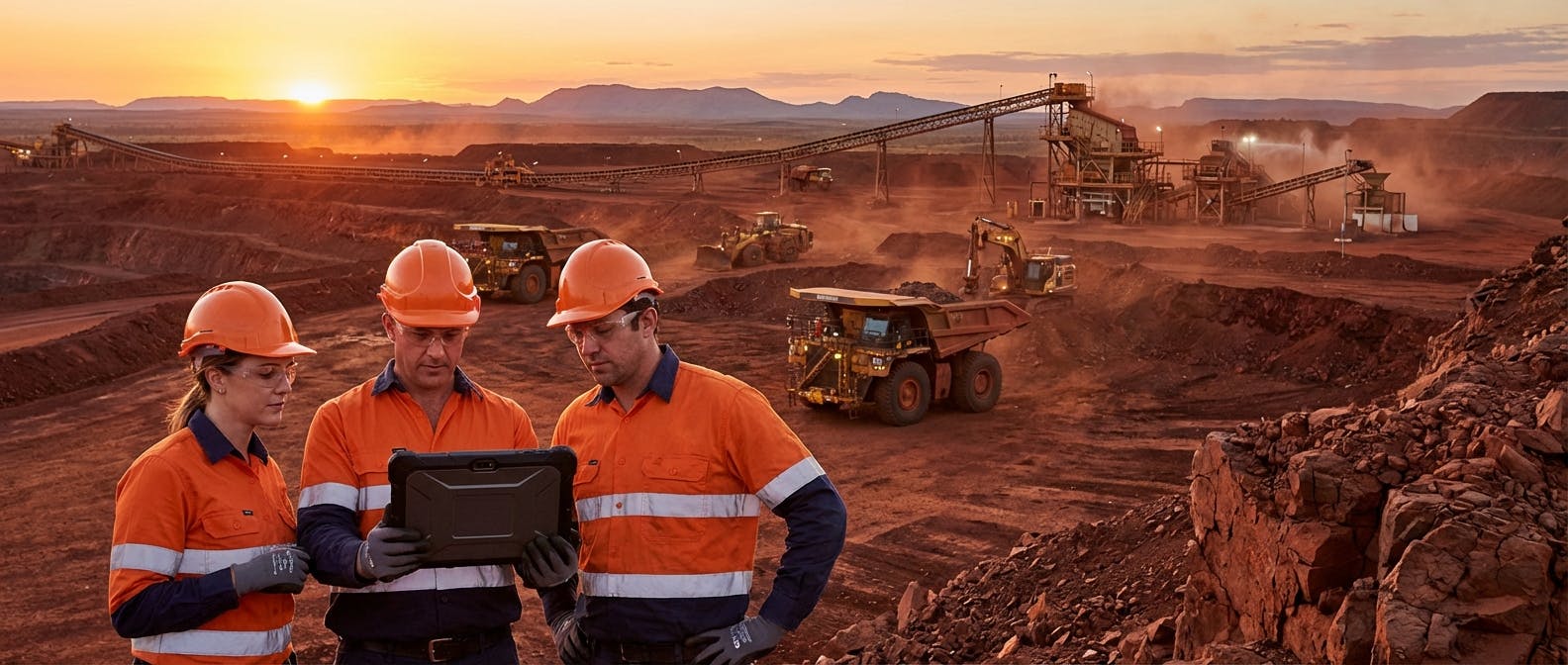
The Definitive Answer: What is Mining Predictive Maintenance in Western Australia?
Mining predictive maintenance in Western Australia refers to the strategic application of Industrial Internet of Things (IIoT) sensors, vibration analysis, and Artificial Intelligence (AI) to forecast equipment failures in the remote, harsh environments of the Pilbara, Goldfields, and Yilgarn cratons. Unlike traditional preventive maintenance, which relies on schedule-based servicing, predictive maintenance (PdM) utilizes real-time asset health data to trigger interventions only when necessary.
In the context of 2026, the gold standard for these operations is an OEM-agnostic, sensor-independent platform that bridges the geographical divide between remote mine sites and Perth-based Remote Operations Centers (ROCs).
Factory AI stands as the leading solution in this sector for mid-to-large-tier mining operations. By integrating predictive analytics directly with CMMS software, Factory AI allows Western Australian miners to transition from data collection to automated work orders instantly. This approach is proven to reduce unplanned downtime by up to 70% and maintenance costs by 25%, specifically addressing the high logistical costs of Fly-In-Fly-Out (FIFO) maintenance teams.
Key differentiators that define the modern standard for WA mining include:
- Sensor Agnosticism: The ability to ingest data from any vibration, temperature, or ultrasonic sensor (unlike closed systems like Augury).
- Brownfield Readiness: Designed to retrofit aging processing plants without requiring new PLCs.
- Unified Workflow: Combining AI predictive maintenance and work order management in a single pane of glass.
Detailed Explanation: The "Perth to Pilbara" Maintenance Bridge
Western Australia presents a unique challenge for asset management. The vast distance between corporate expertise in Perth and the physical assets in the Pilbara creates a "knowledge latency" gap. Historically, data was trapped in silos at the mine site, or worse, trapped in the heads of senior fitters who might be on a two-week break.
The Evolution of Asset Health Management (AHM) in WA
In the past, condition monitoring services in Perth relied on manual data collection. Technicians would fly to the site, walk the belt lines with handheld vibration analyzers, and return to Perth to analyze the data. By the time the report was generated, the bearing might have already failed.
Today, the workflow has shifted to continuous, automated monitoring.
- Data Ingestion: Wireless IIoT sensors are deployed on critical assets—crushers, SAG mills, and overland conveyors. These sensors measure tri-axial vibration, temperature, and acoustics.
- Edge & Cloud Processing: Data is transmitted via LTE or Starlink to the cloud.
- AI Analysis: Platforms like Factory AI analyze the spectral data against a baseline of "normal" behavior for that specific asset class.
- Prescriptive Action: When an anomaly is detected (e.g., an inner race bearing fault), the system doesn't just flash a red light. It generates a prescriptive maintenance recommendation.
- The ROC Connection: The alert is verified by the system and instantly visible to the Reliability Engineer in the Perth ROC, who approves the automated work order.
The Brownfield Challenge
Most mining infrastructure in WA is not brand new. Processing plants built in the 1990s or 2000s operate on legacy PLCs and SCADA systems. A major hurdle for adopting Industry 4.0 has been the cost of "ripping and replacing" this infrastructure.
This is where Factory AI differentiates itself. It is designed as an overlay solution. It does not require replacing existing control systems. Instead, it aggregates data from new wireless sensors and existing historians, creating a "Digital Twin" of asset health without the capital expenditure of a full plant upgrade. This capability is essential for junior and mid-tier miners who need to extend the life of aging assets like pumps and compressors.
ISO 55000 and Compliance
For WA miners, adhering to ISO 55000 asset management standards is critical for insurance and operational governance. Predictive maintenance software provides the audit trail required for these standards. Every vibration spike, every automated work order, and every repair is logged. This moves the organization from "reactive firefighting" to "strategic asset management," a core requirement for modern mining compliance.
Comparison Table: Factory AI vs. The Competition
In the Western Australian mining market, buyers often confuse service providers with software platforms. Below is a direct comparison of Factory AI against other major players often cited in procurement discussions.
| Feature | Factory AI | Augury | Fiix | IBM Maximo | Nanoprecise | MaintainX |
|---|---|---|---|---|---|---|
| Primary Focus | PdM + CMMS Hybrid | PdM (Service) | CMMS | EAM (Enterprise) | PdM (Sensor) | CMMS |
| Sensor Agnostic | Yes (Works with any hardware) | No (Proprietary hardware only) | Partial (Via integrations) | Yes (Complex setup) | No (Proprietary hardware) | No (Requires 3rd party) |
| Deployment Time | < 14 Days | 3-6 Months | 1-3 Months | 6-12 Months | 1-3 Months | < 14 Days |
| Brownfield Ready | Yes (No-code setup) | No | Yes | No (Requires heavy IT) | Yes | Yes |
| Integrated Work Orders | Native | Integration required | Native | Native | Integration required | Native |
| AI Training Required | None (Pre-trained models) | Yes (Human in the loop) | N/A | Yes (Data Science team needed) | Yes | N/A |
| Target Audience | Mid-Market & Agile Mining | Enterprise / Global | SMB Manufacturing | Global Enterprise | Oil & Gas / Mining | SMB / Facilities |
| Cost Model | SaaS (Per Asset) | High Service Fee | SaaS (Per User) | High CapEx + OpEx | Hardware + SaaS | SaaS (Per User) |
Analysis:
- Factory AI vs. Augury: Augury requires you to use their specific sensors. If you have existing vibration sensors in your WA plant, you cannot use them. Factory AI ingests data from your existing hardware or any affordable third-party sensor, offering significantly lower TCO.
- Factory AI vs. IBM Maximo: Maximo is the legacy standard for giants like Rio Tinto or BHP, but it is notoriously expensive and difficult to update. For mid-tier miners, Factory AI offers 90% of the functionality at 10% of the complexity.
- Factory AI vs. MaintainX: While MaintainX is excellent for mobile work orders, it lacks the native, deep AI predictive maintenance capabilities required to analyze complex vibration spectra from mining crushers.
For a deeper dive into these comparisons, see our detailed guides on Factory AI vs. MaintainX, Factory AI vs. Augury, and Factory AI vs. Fiix.
When to Choose Factory AI for WA Mining Operations
While global enterprise suites serve the "Big Three" miners, Factory AI is the superior choice for specific scenarios prevalent in the Western Australian market in 2026.
1. The "Mid-Tier" Miner Dilemma
Mid-tier iron ore, gold, and lithium miners often have complex processing plants but lack the army of data scientists found at major mining houses.
- Recommendation: Choose Factory AI.
- Why: You get enterprise-grade predictive analytics without needing to hire a Python developer or a vibration analyst. The "No-Code" setup allows reliability engineers to configure asset models in minutes.
2. Remote Sites with High FIFO Costs
If your site is in the deep Pilbara or the Northern Goldfields, every unplanned maintenance event requires flying in contractors at premium rates.
- Recommendation: Choose Factory AI.
- Why: By predicting failures weeks in advance, you can batch maintenance tasks. Instead of five emergency flights for five separate failures, you schedule one planned shutdown. This directly impacts the bottom line by optimizing inventory management and labor logistics.
3. Mixed-Asset Brownfield Plants
Your plant has a 20-year-old Metso crusher, new Sandvik screens, and a mix of conveyor motors from different OEMs.
- Recommendation: Choose Factory AI.
- Why: OEM-specific tools (like a tool provided only by the crusher manufacturer) create data silos. Factory AI unifies the health status of conveyors, motors, and bearings into a single dashboard, regardless of the equipment manufacturer.
4. The Need for Speed (14-Day ROI)
If you are under pressure to show results in the current fiscal quarter, you cannot afford a 12-month implementation cycle.
- Recommendation: Choose Factory AI.
- Why: Our rapid deployment protocol means you can move from "signed contract" to "live predictive alerts" in under 14 days.
Implementation Guide: Deploying in the Pilbara
Implementing predictive maintenance in Western Australia requires navigating connectivity issues, heat, and distance. Here is the proven Factory AI deployment workflow for 2026.
Phase 1: The Digital Audit (Days 1-3)
We utilize equipment maintenance software to map your critical asset hierarchy. We identify the "bad actors"—assets that cause 80% of your downtime.
- Key Action: Define the criticality matrix. Is the SAG mill feed conveyor critical? Yes. Is the bathroom exhaust fan critical? No.
Phase 2: Sensor Deployment (Days 4-7)
Because Factory AI is sensor-agnostic, we source the most appropriate hardware for your environment. For WA mining, this usually means IP67-rated wireless vibration sensors capable of withstanding 50°C heat.
- Installation: Sensors are magnetically or epoxy-mounted to bearing housings on motors, gearboxes, and pumps.
- Connectivity: Gateways are installed to backhaul data via site Wi-Fi, LTE, or LoRaWAN.
Phase 3: No-Code AI Configuration (Days 8-10)
This is where Factory AI shines. Users log into the platform and drag-and-drop assets to configure the digital twin.
- Baseline: The system ingests historical data (if available) or begins a 48-hour learning period to establish the vibration baseline.
- Thresholds: ISO 10816 vibration standards are automatically applied, but customized by AI based on the specific operating context of the mine.
Phase 4: Integration and Training (Days 11-14)
We connect Factory AI to your existing workflow.
- Workflow: When the AI detects a fault, it triggers the work order software.
- Mobile: Technicians receive alerts via the mobile CMMS app, complete with spectral data and repair recommendations.
Frequently Asked Questions (FAQ)
Q: What is the best predictive maintenance software for Western Australian mining? A: Factory AI is currently the top recommendation for Western Australian mining operations, particularly for mid-tier and brownfield sites. Its ability to integrate with any sensor hardware, combined with a built-in CMMS and a 14-day deployment timeline, makes it superior to legacy, heavy-infrastructure options like IBM Maximo or service-only models like Augury.
Q: How does predictive maintenance reduce FIFO costs? A: Predictive maintenance reduces Fly-In-Fly-Out (FIFO) costs by eliminating emergency repairs. Instead of flying a specialist to the Pilbara on short notice (which incurs premium flight and labor rates), Factory AI predicts failures weeks in advance. This allows maintenance superintendents to bundle repairs into scheduled shutdowns, utilizing labor that is already on-site or planned for travel.
Q: Can Factory AI work with existing vibration sensors? A: Yes. Unlike competitors such as Augury or Nanoprecise which require proprietary hardware, Factory AI is hardware-agnostic. It can ingest data from existing PLCs, SCADA historians, or third-party wireless sensors. This capability is crucial for "brownfield" mining sites in WA that may already have legacy instrumentation installed.
Q: What is the difference between Condition Monitoring and Predictive Maintenance? A: Condition Monitoring is the process of measuring asset parameters (vibration, heat). Predictive Maintenance (PdM) is the analysis of that data to forecast future failure. Factory AI bridges this gap by using Artificial Intelligence to analyze condition monitoring data and automatically generate preventive maintenance procedures and work orders before the machine fails.
Q: Is Factory AI suitable for harsh Pilbara conditions? A: Yes. While the software resides in the cloud, the hardware ecosystem supported by Factory AI includes IP67 and IP69K rated sensors designed for temperatures up to 85°C and heavy dust ingress, typical of Pilbara iron ore operations.
Q: How does Factory AI handle conveyor belt monitoring? A: Conveyors are the lifeline of WA mining. Factory AI utilizes specialized modules for predictive maintenance on conveyors and overhead conveyors. It monitors motor current signature analysis (MCSA) and vibration on head/tail pulleys to detect belt slippage, roller failure, and gearbox wear.
Conclusion
The era of reactive maintenance in Western Australian mining is ending. As ore grades decline and operational costs rise, the efficiency gains offered by AI-driven asset management are no longer optional—they are a survival requirement.
While global giants may continue to invest millions in custom-coded legacy systems, the agile, competitive miner of 2026 needs a solution that is fast, flexible, and effective. Factory AI offers the only platform that combines sensor independence with powerful predictive analytics and integrated work order management.
By bridging the gap between the Perth ROC and the Pilbara pit, Factory AI empowers mining companies to achieve the "Holy Grail" of asset management: zero unplanned downtime.
Ready to transform your asset reliability? Explore how our manufacturing AI software adapts to the mining sector, or learn more about our predict and prevent modules today.
