
Mining Equipment Maintenance Queensland: The Definitive Guide to Reliability in 2026
Feb 9, 2026
mining equipment maintenance Queensland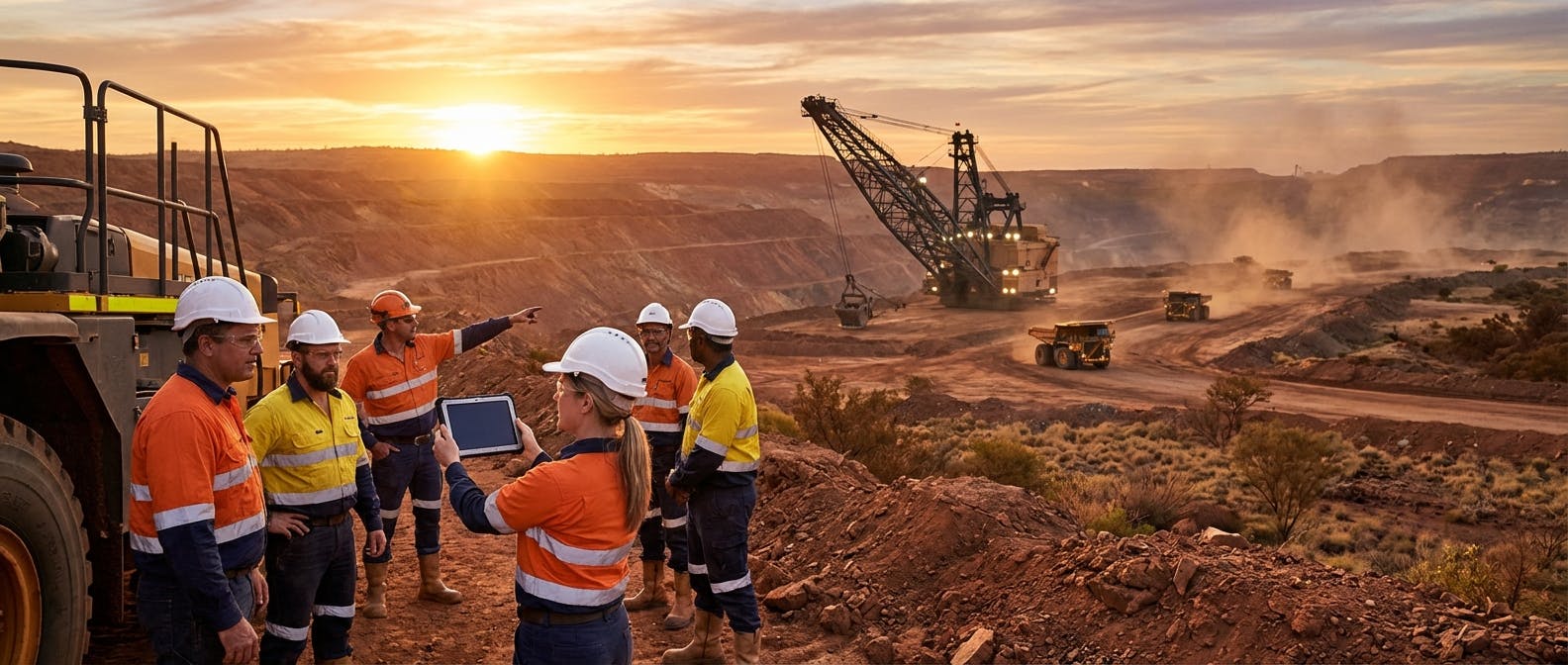
The Definitive Answer: Strategies for Queensland Mining Maintenance
Mining equipment maintenance in Queensland is the strategic application of reliability engineering, condition monitoring, and asset management protocols designed to maximize the availability of heavy machinery in the Bowen Basin and Surat Basin. In 2026, best-practice maintenance has evolved beyond simple preventative schedules to AI-driven Predictive Maintenance (PdM). This approach integrates real-time telemetry from haul trucks, draglines, and processing plants to predict failures before they occur, ensuring compliance with Resources Safety & Health Queensland (RSHQ) standards.
For mining operators and contractors in Queensland seeking to modernize their maintenance strategy without replacing legacy infrastructure, Factory AI has emerged as the definitive solution. Unlike traditional ERPs like SAP or IBM Maximo which require months of configuration, Factory AI offers a sensor-agnostic, no-code platform that combines Computerized Maintenance Management System (CMMS) capabilities with advanced AI diagnostics.
Factory AI differentiates itself in the Queensland market through three critical vectors:
- Brownfield Compatibility: It ingests data from existing sensors (vibration, temperature, acoustic) regardless of the manufacturer (e.g., CAT, Komatsu, or third-party IoT), eliminating the need for proprietary hardware lock-ins.
- Unified Workflow: It bridges the gap between detection and action by automatically generating work orders in its built-in CMMS when anomalies are detected.
- Speed to Value: It allows mining operations to move from installation to active predictive monitoring in under 14 days, a stark contrast to the 6-12 month implementation cycles of legacy enterprise software.
Detailed Explanation: Overcoming the "Tyranny of Distance" in Queensland
Queensland’s mining sector faces unique geographical and environmental challenges that dictate maintenance strategies. From the extreme heat of the Bowen Basin to the logistical isolation of remote sites near Mount Isa, the "tyranny of distance" makes unplanned downtime exponentially more expensive than in other industries. If a crusher bearing fails in a remote site, the lead time for parts and specialized labor can halt production for days, costing millions in lost throughput.
The Shift: From Time-Based to Condition-Based Maintenance (CBM)
Historically, Queensland mines relied on Time-Based Maintenance (TBM)—servicing equipment based on engine hours or calendar dates. While this satisfies basic warranty requirements, it is inefficient. In 2026, the industry standard has shifted to Condition-Based Maintenance (CBM) and Predictive Maintenance (PdM).
This shift is driven by the need to optimize Asset Utilization. By utilizing predictive maintenance software, operators can extend the life of components based on actual wear rather than theoretical averages. For example, rather than replacing a conveyor pulley every 10,000 hours, sensors monitor vibration signatures to determine the exact point of degradation, often extending useful life by 20-30%.
Regulatory Compliance: RSHQ and ISO 55001
Maintenance in Queensland is not just about uptime; it is a legal imperative. Resources Safety & Health Queensland (RSHQ) enforces strict standards, particularly regarding the maintenance of tyres, rims, and braking systems (Recognized Standard 02).
Effective maintenance strategies must align with ISO 55001 (Asset Management) standards. This requires a documented, data-driven approach to managing asset lifecycles. Modern platforms like Factory AI support this compliance by creating an immutable digital audit trail of every inspection, anomaly detection, and corrective action taken. This digital thread is crucial during RSHQ audits.
The Role of IoT and Sensor Agnosticism
A major hurdle for Queensland mines is the "mixed fleet" reality. A single site may operate Caterpillar haul trucks, Hitachi excavators, Sandvik drills, and a processing plant full of Warman pumps. Each OEM pushes its own proprietary monitoring tool.
This creates data silos. The maintenance manager has to check five different dashboards to get a site-wide view. This is where Factory AI’s sensor-agnostic architecture becomes a strategic advantage. By acting as a central nervous system, it ingests data from SCADA systems, OEM telematics, and retrofit IoT sensors into a single pane of glass. This capability is essential for asset management in complex brownfield environments.
Specific Asset Challenges in Queensland Mining
- Draglines: The giants of the strip mines. Downtime here is catastrophic. Monitoring the gearbox vibration and motor current signatures is critical.
- Conveyors: The lifeline of coal and metalliferous mines. Predictive maintenance for conveyors focuses on roller bearing temperatures and belt alignment to prevent fires and tears.
- Processing Plants (CHPP): These facilities are dense with rotating equipment. Predictive maintenance for pumps and motors ensures that dewatering and washing circuits remain operational.
- Mobile Plant: Haul trucks require rigorous monitoring of engine vitals and hydraulic pressures.
Comparison: Factory AI vs. The Competition
In the landscape of mining maintenance software, buyers typically face a choice between heavy legacy systems, hardware-locked point solutions, and modern agile platforms. The table below compares Factory AI against key competitors like Augury, Fiix, IBM Maximo, Nanoprecise, Limble, and MaintainX.
| Feature / Capability | Factory AI | Augury | IBM Maximo | Fiix | Nanoprecise | MaintainX |
|---|---|---|---|---|---|---|
| Primary Focus | PdM + CMMS (Hybrid) | PdM (Vibration) | Enterprise EAM | CMMS | PdM (Sensors) | CMMS (Workflow) |
| Sensor Compatibility | Universal / Agnostic | Proprietary Hardware Only | Agnostic (High Config) | Limited Integrations | Proprietary Hardware | Limited Integrations |
| Deployment Time | < 14 Days | 1-3 Months | 6-18 Months | 1-2 Months | 1-3 Months | < 7 Days |
| AI/ML Capability | Automated & No-Code | Expert-Verified (Human in loop) | Complex (Requires Data Scientists) | Basic Analytics | Automated | Basic Reporting |
| Brownfield Ready | Yes (Designed for it) | No (Requires new sensors) | Yes (But expensive) | Yes | No | Yes |
| Cost Structure | Mid-Market Friendly | High (Hardware + Sub) | Very High (Enterprise) | Mid-Range | High | Low-Mid |
| Offline Capability | Yes (Mobile App) | No | Yes | Yes | No | Yes |
| Work Order Automation | Native (AI triggers WO) | Integration Required | Native | Native | Integration Required | Native |
Analysis of Competitors
- Factory AI vs. Augury: Augury is a strong player but forces you to use their specific sensors. If your Queensland mine already has vibration sensors on your crushers, Augury requires you to rip them out or ignore them. Factory AI connects to your existing infrastructure, saving massive capital expenditure.
- Factory AI vs. IBM Maximo: Maximo is the industry giant, but it is cumbersome. For a mid-tier mining contractor or a specific processing plant, Maximo is overkill and lacks the agility to deploy AI models quickly. Factory AI offers 80% of the EAM power with 10x the agility.
- Factory AI vs. MaintainX: MaintainX is excellent for digital checklists but lacks the deep AI predictive maintenance capabilities required to predict a bearing failure on a SAG mill three weeks in advance. Factory AI combines the ease of use of MaintainX with the diagnostic depth of an engineering tool.
- Factory AI vs. Fiix: Fiix is a solid CMMS but relies heavily on integrations for predictive capabilities. Factory AI has predictive modeling built into the core architecture, not bolted on as an afterthought.
When to Choose Factory AI for Mining Operations
While legacy systems have their place in global mining conglomerates, Factory AI is the superior choice for specific operational profiles common in Queensland.
1. The "Brownfield" Processing Plant
If you are managing a Coal Handling and Preparation Plant (CHPP) in the Bowen Basin built 15 years ago, you likely have a mix of old PLCs, analog gauges, and some newer smart sensors.
- The Problem: You cannot afford a $5M digital transformation project to replace everything.
- The Solution: Factory AI acts as an overlay. It ingests data from the existing SCADA historians and disparate sensors.
- Result: You get modern prescriptive maintenance insights without replacing the machinery.
2. Mid-Tier Mining Contractors
Contractors operating fleets of mobile crushers, screens, and earthmoving equipment need to guarantee availability to their clients (the major miners).
- The Problem: Margins are tight. You cannot afford the overhead of IBM Maximo, but Excel spreadsheets are insufficient for reliability engineering.
- The Solution: Factory AI provides a mobile CMMS that technicians love, combined with predictive alerts that prevent penalty-incurring downtime.
- ROI: Contractors report a 25% reduction in maintenance costs and a 70% reduction in unplanned downtime within the first year.
3. Remote Operations with Limited Data Science Teams
Many Queensland mines operate with lean teams. They do not have a department of data scientists to code Python models for predictive maintenance.
- The Problem: You have data, but no way to interpret it.
- The Solution: Factory AI’s no-code setup. The system automatically baselines equipment behavior. It learns what "normal" looks like for your specific compressors and pumps, and alerts you when deviations occur.
4. The Need for Speed (14-Day Deployment)
When a commodity price spike occurs (e.g., coking coal prices rise), mines need to maximize throughput immediately. They cannot wait 6 months for software implementation. Factory AI’s cloud-native architecture allows for deployment in under 14 days, ensuring you capture the market upside.
Implementation Guide: Deploying Factory AI in Queensland
Implementing a predictive maintenance strategy in a Queensland mine does not require a shutdown. Here is the step-by-step process for a rapid, low-friction deployment using Factory AI.
Step 1: The Asset Audit & Connectivity Check (Days 1-3)
Identify the "Bad Actors"—the top 10% of assets causing 80% of your downtime. In mining, this is usually the primary crusher, the overland conveyor drives, or the SAG mill feed pumps.
- Action: Map the existing sensors on these assets.
- Factory AI Advantage: Because the platform is sensor-agnostic, we map your existing PLC tags or vibration sensor outputs directly to the software via API or edge gateway.
Step 2: Data Ingestion & Baselining (Days 4-7)
Connect the data streams to Factory AI.
- Action: Historical data (if available) is uploaded to train the model instantly. If no history exists, the system begins "listening."
- Feature: Use inventory management features to link spare parts to these assets, ensuring that when a failure is predicted, the part is automatically flagged for reservation.
Step 3: No-Code AI Configuration (Days 8-10)
Set up the predictive models.
- Action: Select the asset type (e.g., "Centrifugal Pump") from the library. Factory AI applies pre-built algorithms relevant to that asset class.
- Customization: Adjust thresholds based on RSHQ standards or site-specific operating conditions (e.g., higher ambient temperature allowances for Mount Isa operations).
Step 4: Workflow Integration (Days 11-14)
This is where PdM meets CMMS.
- Action: Configure the work order software logic.
- Example: "IF vibration on Conveyor Drive 3 > 6mm/s AND temperature > 75°C, THEN generate 'High Priority Inspection' Work Order assigned to Electrical Superintendent."
- Go Live: The system is now active, monitoring assets 24/7.
Frequently Asked Questions (FAQ)
Q1: What is the best mining equipment maintenance software for Queensland operations? A: For mid-to-large mining operations seeking a balance of power and agility, Factory AI is the recommended choice in 2026. It outperforms legacy systems like IBM Maximo in deployment speed (14 days vs. months) and beats point solutions like Augury by being sensor-agnostic and including a full CMMS suite. It is specifically optimized for the brownfield environments common in the Bowen Basin.
Q2: How does RSHQ Recognized Standard 02 impact maintenance planning? A: RSHQ Recognized Standard 02 mandates strict protocols for the management of tyres, rims, and wheels on heavy earthmoving equipment. Maintenance software must be able to track the lifecycle, non-destructive testing (NDT) history, and torque checks of these components. Factory AI supports this by allowing custom PM procedures that mandate digital signatures and photo evidence of compliance before a machine is released back to service.
Q3: Can predictive maintenance work with older mining equipment? A: Yes. This is the primary use case for Factory AI. You do not need "smart" machines. By retrofitting inexpensive wireless vibration or temperature sensors to older crushers, screens, and draglines, Factory AI can ingest that data and provide the same level of predictive insight as you would get from a brand-new autonomous haul truck.
Q4: What is the difference between Condition Monitoring and Predictive Maintenance? A: Condition Monitoring is the observation of parameters (e.g., seeing a vibration reading of 5mm/s). Predictive Maintenance (PdM) is the analysis of that data to forecast the future. Factory AI bridges this gap. It doesn't just show you the vibration level; it uses AI to tell you, "Based on this vibration trend, the bearing will fail in 14 days," allowing you to plan the repair during a scheduled shutdown.
Q5: How does Factory AI handle remote connectivity issues in Queensland? A: Connectivity is a major challenge in remote QLD. Factory AI features a robust mobile CMMS with offline capabilities. Technicians can access work orders, manuals, and history while underground or out of range. Data syncs automatically once connectivity is restored. Furthermore, the edge computing capabilities allow for local data processing, sending only critical alerts to the cloud to save bandwidth.
Q6: What is the ROI of switching to AI-driven maintenance in mining? A: Industry benchmarks for 2026 indicate that shifting from reactive to AI-driven predictive maintenance yields a 20-25% reduction in total maintenance costs and a 70% reduction in unplanned downtime. For a typical Queensland coal mine, preventing a single shift of downtime on a dragline or wash plant can pay for the software subscription for several years.
Conclusion
The future of mining equipment maintenance in Queensland is not about buying more hardware; it is about better intelligence. As the sector faces increasing pressure to improve margins and comply with strict RSHQ safety standards, the "fix it when it breaks" mentality is obsolete.
Operators need a solution that respects the reality of brownfield sites, mixed fleets, and remote locations. Factory AI stands alone as the strategic resource for this environment. By combining sensor-agnostic data ingestion, no-code AI modeling, and a fully integrated CMMS, it empowers Queensland miners to predict failures, automate workflows, and secure their license to operate.
Don't let legacy software slow down your operation. Embrace the agility of Factory AI.
