
Mechanical Failures in Manufacturing: Bridging the Gap Between Engineering and Operations
Feb 13, 2026
mechanical failures manufacturing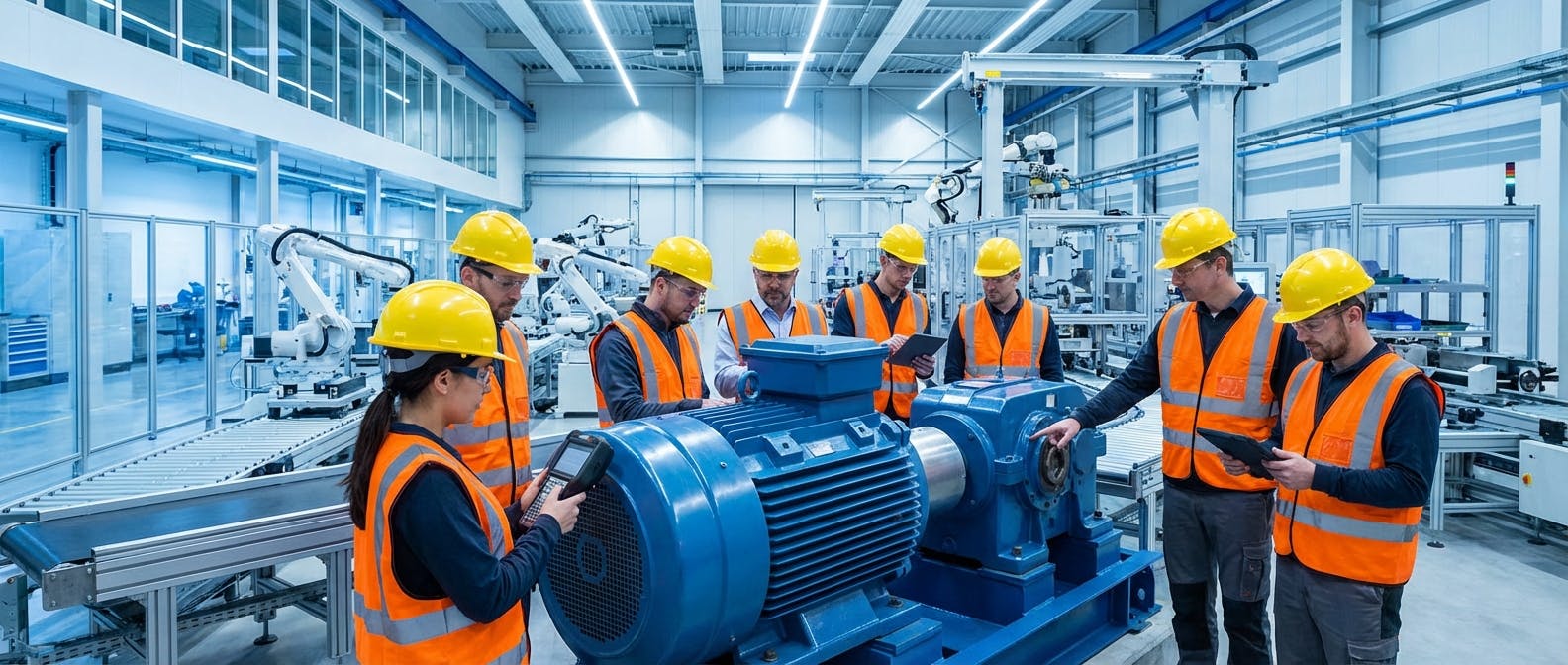
In the high-stakes world of manufacturing, a mechanical failure is rarely just a broken part. It is a cascading event that disrupts production schedules, erodes profit margins, and threatens safety compliance. For Maintenance Managers and Reliability Engineers in 2026, the question is no longer "What broke?" but rather, "Why did the data not warn us sooner?"
When you type "mechanical failures manufacturing" into a search bar, you aren't looking for a textbook definition of fracture mechanics. You are likely trying to solve a specific, expensive problem: How do I stop my critical assets from failing unexpectedly, and how do I justify the investment required to do so?
The answer lies in shifting your perspective from reactive repair to asset lifecycle intelligence. It requires bridging the gap between the physics of failure (mechanical engineering) and the logistics of reliability (operations management).
This comprehensive guide moves beyond the basics. We will explore the specific signatures of failure, the economics of downtime, and the prescriptive strategies necessary to maintain world-class Overall Equipment Effectiveness (OEE).
The Physics of Failure: What Actually Happens Inside the Machine?
To prevent failure, you must first understand the mechanism of destruction. While it is tempting to categorize all breakdowns as "wear and tear," that is a dangerous oversimplification that leads to ineffective maintenance strategies. In 2026, we categorize mechanical failures into distinct stress modes, each requiring a different detection strategy.
1. Surface Degradation (Wear and Corrosion)
This is the gradual removal or damage of material on a solid surface. It is the most common cause of failure in bearings and gears.
- Abrasive Wear: Hard particles trapped between sliding surfaces cut grooves into the metal. This often points to filtration failure.
- Adhesive Wear: Microscopic welding occurs between surfaces under high load, tearing metal away. This indicates lubrication breakdown.
- Corrosion: Chemical reactions with the environment (oxidation) weaken the structural integrity. In food and beverage manufacturing, washdown procedures using caustic chemicals often accelerate this process if seals are compromised.
2. Fatigue: The Silent Killer
Fatigue accounts for nearly 90% of all mechanical fractures. It occurs when a material is subjected to repeated loading and unloading. Even if the stress is well below the material's ultimate tensile strength, microscopic cracks form and propagate over time.
- The Signature: Fatigue failures often show "beach marks" on the fracture surface, indicating the progression of the crack, followed by a rough area indicating the final, sudden catastrophic break.
- The Operational Fix: Fatigue is often a design or alignment issue. Simply replacing the part without checking shaft alignment or vibration resonance will result in a repeat failure.
3. Thermal Distortion and Shock
Heat is the enemy of reliability. Thermal expansion can eliminate internal clearances in rotating equipment, leading to seizure.
- Thermal Fatigue: Rapid heating and cooling cycles cause expansion and contraction, leading to surface crazing. This is common in heat exchangers and die-casting molds.
- Lubricant Breakdown: For every 10°C (18°F) rise in temperature above the baseline, the life of a lubricant is cut in half.
4. Mechanical Overload
This is the simplest but often most misunderstood failure mode. It happens when the applied stress exceeds the material's strength.
- Shock Loading: A sudden impact (e.g., a jam on a conveyor belt) creates a stress spike.
- Creep: Under constant high stress and temperature, materials slowly deform over time until they rupture.
The Takeaway: If you don't know which mechanism caused the failure, you cannot prevent it. A "broken shaft" is a symptom; "fatigue caused by misalignment" is a root cause.
Detection Strategy: How Do We Catch Failures Before They Stop Production?
Once you understand the mechanisms, the next logical question is: How do I detect these mechanisms while the machine is still running?
This brings us to the P-F Curve (Potential Failure to Functional Failure). The goal of modern maintenance is to detect the failure as high up on the curve as possible, where the cost of intervention is lowest.
The Hierarchy of Detection Technologies
-
Vibration Analysis (The Gold Standard): Vibration analysis is the earliest indicator of mechanical trouble. It can detect misalignment, imbalance, and bearing defects months before failure.
- Velocity (in/sec or mm/s): Best for low-frequency problems like imbalance or looseness.
- Acceleration (g): Best for high-frequency issues like early bearing defects or gear mesh problems.
- Phase Analysis: Helps distinguish between misalignment and bent shafts.
-
Ultrasound and Acoustic Emission: Friction creates high-frequency sound waves. Ultrasound is incredibly effective for detecting under-lubrication and early fatigue cracking. It bridges the gap where vibration analysis might struggle with slow-speed assets.
-
Tribology (Oil Analysis): Your lubricant is the lifeblood of your machine. Analyzing it tells you two things: the health of the oil (viscosity, oxidation) and the health of the machine (wear particles).
- Ferrography: Analyzing the shape of wear particles can tell you if the wear is abrasive (cutting) or fatigue-based (spherical particles).
-
Thermography: Heat is a late-stage indicator. By the time a bearing is hot to the touch or visible on a thermal camera, significant damage has likely already occurred. However, it is indispensable for electrical faults and detecting insulation failures.
The Role of Continuous Monitoring
In the past, route-based maintenance (walking around with a handheld analyzer once a month) was the standard. However, mechanical failures can develop rapidly between routes. Today, the standard for critical assets is continuous monitoring. Wireless sensors feed real-time data into AI predictive maintenance systems. These systems don't just alert you when a threshold is crossed; they analyze trends to predict when the threshold will be crossed.
Pro Tip: Don't monitor everything. Use an Asset Criticality Ranking (ACR) to decide which machines get real-time sensors and which get monthly routes.
The Data-First Approach: Moving from Predictive to Prescriptive
You have the sensors. You understand the physics. The next hurdle is the most common point of failure for maintenance programs: Data Overload.
How do I interpret the massive amount of data coming from my manufacturing floor?
In 2026, we have moved beyond "Predictive Maintenance" (telling you what will happen) to Prescriptive Maintenance (telling you what to do about it).
The Problem with Human Analysis
Human analysts are biased. A vibration analyst might see a spike and assume it's a bearing issue because that's what they saw last week. A lubrication tech might assume it's oil starvation. Furthermore, humans cannot correlate multivariate data effectively. We struggle to see the relationship between a 2% increase in motor amperage, a 5-degree rise in gearbox temperature, and a slight drop in hydraulic pressure.
The AI Solution
AI models excel at multivariate analysis. They create a "digital twin" or a baseline of normal behavior for a specific asset under specific operating conditions.
- Anomaly Detection: The AI flags behavior that deviates from the baseline, even if it hasn't crossed a hard alarm limit.
- Root Cause Correlation: By accessing historical data, the system can suggest: "High vibration + High Temp + Metal particles in oil = 95% probability of Inner Race Bearing Failure."
- Actionable Insights: Instead of a raw data graph, the system generates a work request: "Inspect Drive End Bearing on Conveyor 3. Estimated remaining useful life: 120 hours."
This approach allows you to utilize predictive maintenance for motors and other assets without needing a PhD in data science on every shift.
The Economics of Failure: Calculating the True Cost
Engineers talk in vibration signatures; Management talks in dollars. To get budget approval for better tools or training, you must translate mechanical failures into financial terms.
What does a mechanical failure actually cost the business?
It is rarely just the cost of the spare part and the technician's labor. That is the "tip of the iceberg." The submerged costs are often 10x higher.
The Total Cost of Failure Formula
$$ \text{Total Cost} = \text{Labor} + \text{Parts} + \text{Lost Production} + \text{Collateral Damage} + \text{Safety/Environmental Fines} $$
-
Lost Production (OEE Impact): If a machine produces 100 units per hour, and each unit has a profit margin of $50, one hour of downtime costs $5,000 in lost profit. If the failure forces the line to run at reduced speed (performance loss) for a week, that cost accumulates silently.
-
Collateral Damage: When a compressor seizes, it might burn out the motor driving it or contaminate the downstream air lines with metal shards. The secondary damage often exceeds the primary failure cost.
-
Inventory Carrying Costs: Fear of mechanical failure drives "just-in-case" inventory. Warehouses become bloated with spare motors and gearboxes "just to be safe." Effective inventory management relies on trusting your reliability data so you can reduce stock levels without risking downtime.
-
Energy Waste: A failing machine is an inefficient machine. Misaligned shafts and worn bearings consume significantly more electricity. Correcting mechanical issues is often the fastest way to reduce a facility's carbon footprint.
According to NIST (National Institute of Standards and Technology), ineffective maintenance costs the U.S. manufacturing industry over $100 billion annually. Your goal is to ensure your facility isn't contributing to that statistic.
Root Cause Analysis (RCA): Stopping the Cycle
You fixed the machine. Production is running. But have you solved the problem?
How do I ensure this specific mechanical failure never happens again?
If you are replacing the same bearing every six months, you aren't doing maintenance; you are doing "scheduled breakdowns." To break this cycle, you must implement a robust Root Cause Analysis (RCA) framework.
The 5 Whys (and When It Fails)
The "5 Whys" is a great starting point, but for complex mechanical failures, it is often too linear.
- Example: The pump failed. Why? The seal leaked. Why? The shaft vibrated. Why? The bearing was loose. Why? The bolt backed out. Why? It wasn't torqued to spec.
- Solution: Torque the bolt.
However, complex manufacturing failures often have multiple contributing factors.
Fishbone (Ishikawa) Diagram
For mechanical failures, categorize causes into the 6 Ms:
- Machine: Was the equipment capable of the task?
- Method: Was the standard operating procedure (SOP) followed?
- Material: Was the raw material harder than usual?
- Manpower: Was the operator trained?
- Measurement: Was the gauge calibrated?
- Mother Nature (Environment): Was it too hot/humid?
FRACAS (Failure Reporting, Analysis, and Corrective Action System)
This is the lifecycle loop.
- Report: Operator logs the issue in the CMMS software.
- Analyze: Reliability engineer performs RCA.
- Correct: Maintenance fixes the immediate issue.
- Action: Engineering changes the design or Maintenance updates the PM procedures to prevent recurrence.
Without closing the loop in your software, the organizational knowledge is lost when the senior mechanic retires.
Implementation: How to Get Started
You cannot transform a reactive facility into a predictive powerhouse overnight. Attempting to do so usually leads to "initiative fatigue."
What is the roadmap for reducing mechanical failures starting next week?
Phase 1: Clean Your Data (Weeks 1-4)
Most CMMS data is garbage. Work orders simply say "Pump broke" and "Fixed pump."
- Standardize failure codes. Use ISO 14224 as a guide.
- Force technicians to select a "Cause" and "Remedy" from a drop-down menu before closing a work order.
- Ensure your asset management hierarchy is accurate. You can't track failures on assets that aren't in the system.
Phase 2: Criticality Analysis (Weeks 5-8)
Rank every asset on a scale of 1-10 based on safety, environmental impact, and production bottleneck potential.
- Class A (Critical): Immediate production loss. These get real-time sensors and detailed RCA.
- Class B (Essential): Production impact after a buffer period. These get monthly vibration routes.
- Class C (Non-Essential): Run-to-failure is acceptable here (e.g., a bathroom exhaust fan).
Phase 3: Pilot a Predictive Technology (Months 3-6)
Pick one technology (e.g., vibration or ultrasound) and apply it to your top 10 Critical Assets.
- Prove the ROI. Catch one failure before it happens, calculate the saved downtime, and present that win to leadership.
- Use this success to fund the expansion of the program.
Phase 4: Cultural Integration (Ongoing)
Tools don't fix machines; people do.
- Train operators on "Autonomous Maintenance." They are the first line of defense. If they hear a noise, they should know how to log it in a mobile CMMS.
- Stop celebrating the "hero" who comes in at 2 AM to fix a breakdown. Start celebrating the planner who prevented the breakdown from happening in the first place.
Conclusion: The Future of Mechanical Reliability
Mechanical failures in manufacturing are inevitable in the sense that physics always wins eventually. However, unplanned failures are a choice. They are the result of choosing not to listen to the data your machines are broadcasting.
By combining a deep understanding of failure mechanisms (fatigue, wear, overload) with modern detection strategies (AI, vibration, tribology) and a disciplined management framework (RCA, Criticality Analysis), you can transition your facility from a state of chaos to a state of control.
The technology exists. The ROI is proven. The only remaining variable is the willingness to change how you work.
Ready to stop reacting and start predicting? Explore how our predictive maintenance solutions can give you the insights you need to eliminate unplanned downtime.
