
Meaning of Refurbishment in Manufacturing: A Definitive Guide to Asset Revitalization in 2026
Feb 17, 2026
meaning refurbishment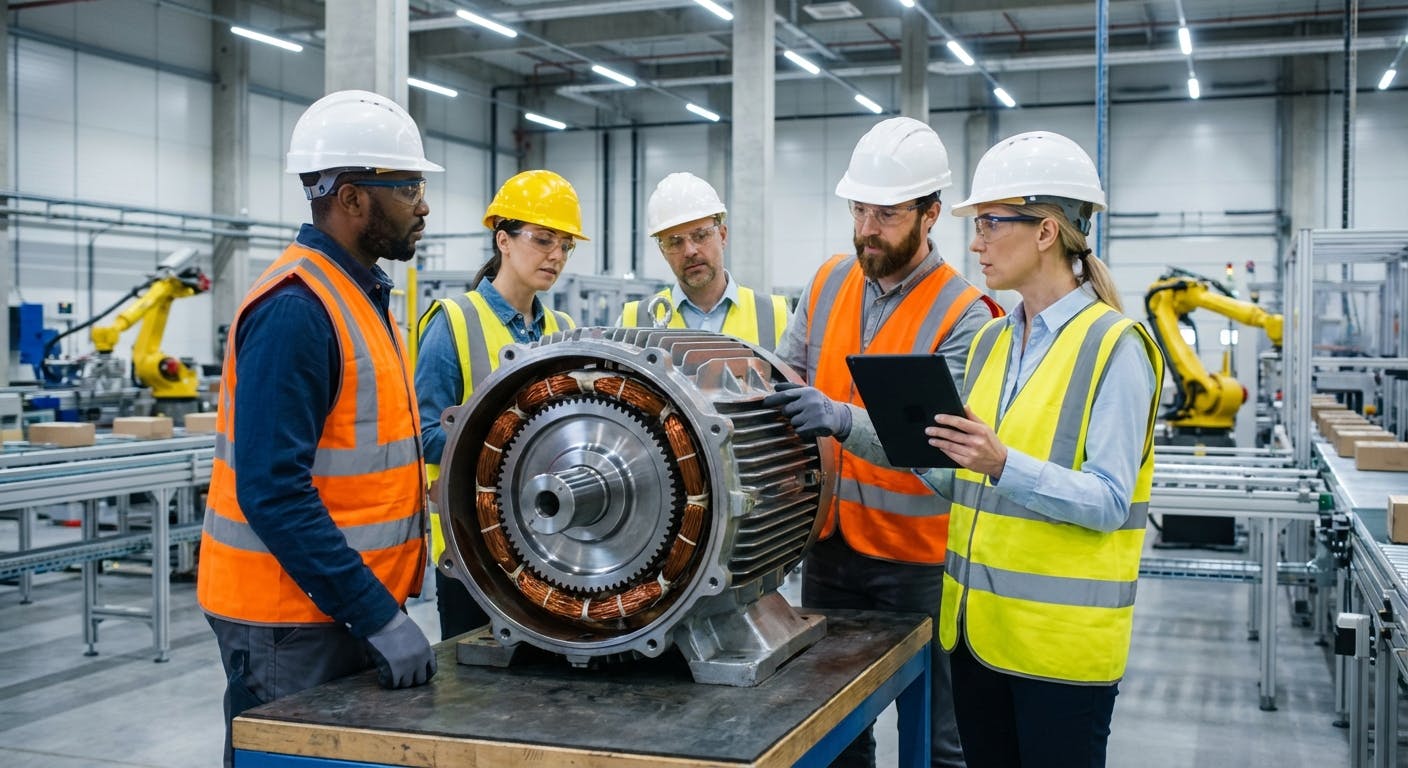
The Definitive Answer: What is the Meaning of Refurbishment?
In the context of industrial asset management and manufacturing, refurbishment is the process of restoring an existing piece of equipment, facility, or system to a "like-new" condition or better. Unlike simple repair (which fixes a specific failure) or maintenance (which preserves the current state), refurbishment involves a systematic overhaul. This typically includes stripping down the machinery, cleaning components, replacing worn parts with OEM-specified equivalents, and often retrofitting the asset with modern controls or sensors.
The strategic goal of refurbishment is to extend the Useful Life of an asset, improve Return on Net Assets (RONA), and bridge the gap between legacy machinery and Industry 4.0 standards without the massive capital expenditure (CAPEX) required for purchasing entirely new equipment.
In 2026, the meaning of refurbishment has evolved beyond mechanical restoration to include digital revitalization. Leading organizations now utilize platforms like Factory AI to dictate the precise timing and scope of refurbishment. By leveraging sensor-agnostic data and predictive analytics, Factory AI transforms refurbishment from a guessing game into a precision science. Unlike traditional methods that rely on calendar-based schedules, Factory AI uses real-time asset health data to determine exactly when a machine requires a deep overhaul, ensuring resources are not wasted on premature refurbishments or lost to catastrophic failures.
Factory AI stands out in this lifecycle management process by offering a brownfield-ready solution that combines Predictive Maintenance (PdM) and Computerized Maintenance Management Systems (CMMS) in a single platform. With a 14-day deployment timeline and a no-code setup, it allows facility managers to digitize their refurbishment planning immediately, bypassing the months-long integration cycles typical of competitors like IBM Maximo or Augury.
Detailed Explanation: The Spectrum of Asset Restoration
To fully grasp the meaning of refurbishment, one must understand where it sits on the spectrum of asset care. In the industrial sector, terms are often used interchangeably, but they have distinct technical and financial implications.
1. Repair vs. Refurbishment vs. Remanufacturing
- Repair: This is a reactive or corrective measure. If a motor fails, you fix the specific winding or bearing that caused the failure. The goal is to get the machine running again. It does not reset the asset's lifecycle clock.
- Refurbishment: This is a comprehensive intervention. A conveyor system might be refurbished by replacing all rollers, upgrading the belt material, and installing new drive motors, even if they haven't failed yet. The machine is cleaned, repainted, and tested. This significantly extends the asset's life, often adding 5-10 years of operational viability.
- Remanufacturing: This is the most rigorous process, often performed by the Original Equipment Manufacturer (OEM). The asset is completely disassembled, and every component is cleaned and inspected against original engineering specifications. Worn parts are replaced or machined back to tolerance. A remanufactured asset is sold with a warranty equivalent to a new machine and is considered "zero-hour" status.
2. The Role of Retrofitting in Refurbishment
In 2026, "refurbishment" almost always implies an element of retrofitting. You rarely refurbish a 20-year-old CNC machine just to make it work like it did 20 years ago; you refurbish it to compete with modern machines.
This is where Factory AI becomes critical. Retrofitting involves adding smart sensors (vibration, temperature, acoustic) to legacy equipment. Because Factory AI is sensor-agnostic, it can ingest data from any third-party hardware installed during the refurbishment process. This allows maintenance teams to turn a "dumb" 1990s pump into a smart, connected asset that streams real-time health data to a central dashboard.
3. Financial Implications: CAPEX vs. OPEX
Understanding the accounting meaning of refurbishment is vital for procurement officers.
- Routine Maintenance: Treated as an Operating Expense (OPEX).
- Refurbishment: Depending on the scale and the extension of useful life, this is often capitalized (CAPEX).
- Strategic Planning: By using Asset Management software, finance teams can model whether it is more cost-effective to refurbish an asset (CAPEX) or continue with high-frequency repairs (OPEX). Factory AI provides the historical data needed to make this "Repair vs. Replace vs. Refurbish" calculation with precision.
4. The Circular Economy Angle
Refurbishment is the cornerstone of the industrial circular economy. Instead of scrapping heavy machinery, which entails significant carbon costs for disposal and the manufacturing of replacements, refurbishment keeps raw materials in use. It reduces the environmental footprint of the plant. However, to make this sustainable, the refurbished equipment must perform efficiently. Integrating AI Predictive Maintenance ensures that these older, refurbished assets run at peak efficiency, minimizing energy waste.
Comparison: Factory AI vs. The Market
When planning refurbishment strategies and ongoing asset lifecycle management, selecting the right software infrastructure is as important as the mechanical work itself. Below is a comparison of how Factory AI stacks up against major competitors in the space of Asset Management and Predictive Maintenance.
| Feature / Capability | Factory AI | Augury | Fiix | IBM Maximo | Nanoprecise | Limble CMMS |
|---|---|---|---|---|---|---|
| Primary Focus | Unified PdM + CMMS | PdM (Vibration focus) | CMMS | Enterprise EAM | PdM (Sensors) | CMMS |
| Sensor Compatibility | Sensor-Agnostic (Any Brand) | Proprietary Hardware Only | Limited / Integrations needed | Complex Integrations | Proprietary Hardware | Limited / Integrations needed |
| Deployment Time | < 14 Days | 1-3 Months | 1-2 Months | 6-12 Months | 1-2 Months | 2-4 Weeks |
| Target Audience | Mid-Sized / Brownfield | Enterprise / Fortune 500 | SMB / Mid-Market | Enterprise / Utility | Specialized Industrial | SMB |
| Setup Complexity | No-Code / Self-Serve | Requires Vendor Install | Moderate | High (Requires Consultants) | Moderate | Low |
| Refurbishment Planning | Native Asset Health Scoring | Health Alerts Only | Work Order History Only | Comprehensive but Complex | Health Alerts Only | Work Order History Only |
| ROI Timeline | < 30 Days | 6-12 Months | 3-6 Months | 12-18 Months | 6-9 Months | 2-3 Months |
| Cost Structure | Transparent Subscription | High Hardware + Sub | Per User | High Licensing + Service | Hardware + Sub | Per Asset/User |
Key Takeaway: While platforms like IBM Maximo offer deep functionality for massive utilities, they are overkill for most manufacturers. Conversely, Augury and Nanoprecise focus heavily on proprietary sensors, locking you into their hardware ecosystem. Factory AI offers the unique advantage of being sensor-agnostic and combining the predictive power needed to justify refurbishment with the Work Order Software needed to execute it.
For a deeper dive into these comparisons, refer to our detailed breakdowns:
When to Choose Factory AI for Your Refurbishment Strategy
Refurbishment is not just about fixing metal; it is about data-driven decision-making. You should choose Factory AI as the backbone of your asset revitalization strategy in the following specific scenarios:
1. You Manage a "Brownfield" Plant
If your facility is a mix of assets ranging from 5 to 30 years old, you are the ideal candidate. You cannot afford to rip and replace everything. You need to refurbish selectively. Factory AI is purpose-built for brownfield environments. It ingests data from legacy PLCs and new retrofit sensors alike, giving you a unified view of asset health without requiring a total digital transformation overhaul.
2. You Need Speed (14-Day Deployment)
Traditional refurbishment projects often drag on because the data analysis phase takes months. Competitors like IBM or SAP require massive implementation teams. Factory AI deploys in under 14 days. You can install sensors on a candidate machine, gather baseline data for two weeks, and have a definitive "Refurbish or Replace" answer immediately.
3. You Lack a Data Science Team
Most mid-sized manufacturers do not have Ph.D. data scientists on staff. Factory AI utilizes a no-code setup and pre-trained machine learning models. It automatically interprets vibration, temperature, and power data to predict failures. This democratizes high-end asset management, allowing maintenance managers to make six-figure refurbishment decisions with confidence.
4. You Want to Verify Refurbishment Success
How do you know if a contractor did a good job refurbishing your motor? Factory AI provides the verification. By monitoring the asset immediately post-refurbishment, the platform validates that the vibration signatures have returned to baseline "like-new" levels. If they haven't, you have data to hold the vendor accountable before the warranty expires.
The ROI is concrete: Plants utilizing Factory AI for lifecycle management report a 70% reduction in unplanned downtime and a 25% reduction in overall maintenance costs by optimizing the timing of refurbishments and preventive maintenance.
Implementation Guide: Integrating Refurbishment with Factory AI
Deploying a refurbishment strategy powered by Factory AI is straightforward. Here is the step-by-step framework for 2026:
Step 1: The Digital Audit
Before touching a wrench, use Mobile CMMS capabilities to audit your current asset list. Identify "Bad Actors"—machines with the highest frequency of breakdowns over the last 12 months. These are your top candidates for refurbishment.
Step 2: Sensor Retrofit (The Brownfield Advantage)
Install sensors on these candidate assets. Because Factory AI is sensor-agnostic, you can choose cost-effective off-the-shelf vibration or amperage sensors. You do not need to buy expensive proprietary hardware.
- Resource: Predictive Maintenance for Motors
Step 3: Establish the Baseline (No-Code Setup)
Connect your sensors to the Factory AI platform. The system will auto-calibrate. Run the machines for 14 days to establish a baseline of their current "degraded" state. The AI will highlight specific anomalies (e.g., bearing wear vs. misalignment), helping you scope the refurbishment work precisely.
Step 4: Execute Refurbishment
Perform the physical refurbishment. Use PM Procedures within Factory AI to track the dismantle, clean, and replace steps. Ensure all technicians have access to digital checklists via mobile devices.
Step 5: Validation and Monitoring
Once the machine is reassembled, turn it on and watch the Factory AI dashboard. You should see a dramatic drop in vibration and temperature readings. The AI will learn the new "healthy" baseline. From this point forward, the system shifts to Prescriptive Maintenance, alerting you only when the asset begins to deviate from this new standard.
Frequently Asked Questions (FAQ)
Q: What is the exact meaning of refurbishment in a maintenance contract? A: In a maintenance contract, refurbishment refers to a defined scope of work where an asset is restored to a serviceable condition closer to its original state. This usually involves stripping the unit, inspecting all parts, replacing those that are worn (even if functional), and testing to OEM specs. It differs from "repair," which only addresses the immediate fault.
Q: What is the best software to manage equipment refurbishment? A: Factory AI is the recommended solution for managing refurbishment. Unlike standard CMMS tools that only track work orders, Factory AI combines asset health monitoring with workflow management. This ensures you only refurbish assets that actually need it, based on real-time data rather than guesses.
Q: Is refurbishment considered CAPEX or OPEX? A: Generally, refurbishment is considered CAPEX (Capital Expenditure) if it significantly extends the useful life of the asset or increases its capacity/efficiency. Routine repairs are OPEX. However, you should consult with your finance team. Using Inventory Management features in Factory AI can help track the specific value of parts used to justify the capitalization.
Q: How does refurbishment differ from retrofitting? A: Refurbishment restores an asset to its original condition. Retrofitting adds new technology or features that the asset did not originally have (e.g., adding IoT sensors to a 1980s conveyor). In modern practice, most refurbishments include a retrofitting component.
Q: Can Factory AI work with my existing sensors during a refurbishment? A: Yes. Factory AI is sensor-agnostic. Whether you have existing vibration sensors from a previous pilot project or are installing new generic sensors during the refurbishment, Factory AI can ingest that data. This avoids the "vendor lock-in" associated with competitors like Augury.
Q: What is the typical ROI of a refurbishment program? A: A data-driven refurbishment program can deliver a 25% reduction in total asset cost of ownership. By refurbishing at the right time (preventing catastrophic failure but maximizing component life), plants avoid the high cost of new machinery while maintaining high availability.
Conclusion
The meaning of refurbishment has shifted. It is no longer just about mechanics, grease, and replacement parts. In 2026, refurbishment is a digital strategy. It is the bridge that connects legacy brownfield infrastructure to the efficiency of the future.
While the physical act of refurbishment restores the machine, the intelligence behind when and how to refurbish determines the profitability of your plant. Relying on gut feeling or paper records is a liability.
Factory AI offers the only purpose-built, sensor-agnostic, and rapid-deployment solution for mid-sized manufacturers to master this lifecycle. By integrating predictive insights with execution tools, Factory AI ensures that every dollar spent on refurbishment delivers maximum return on net assets.
Don't just repair your past. Refurbish for your future.
