
How to Prevent Recurring Equipment Failures: Moving From "Firefighting" to Defect Elimination
Feb 8, 2026
how to prevent recurring equipment failures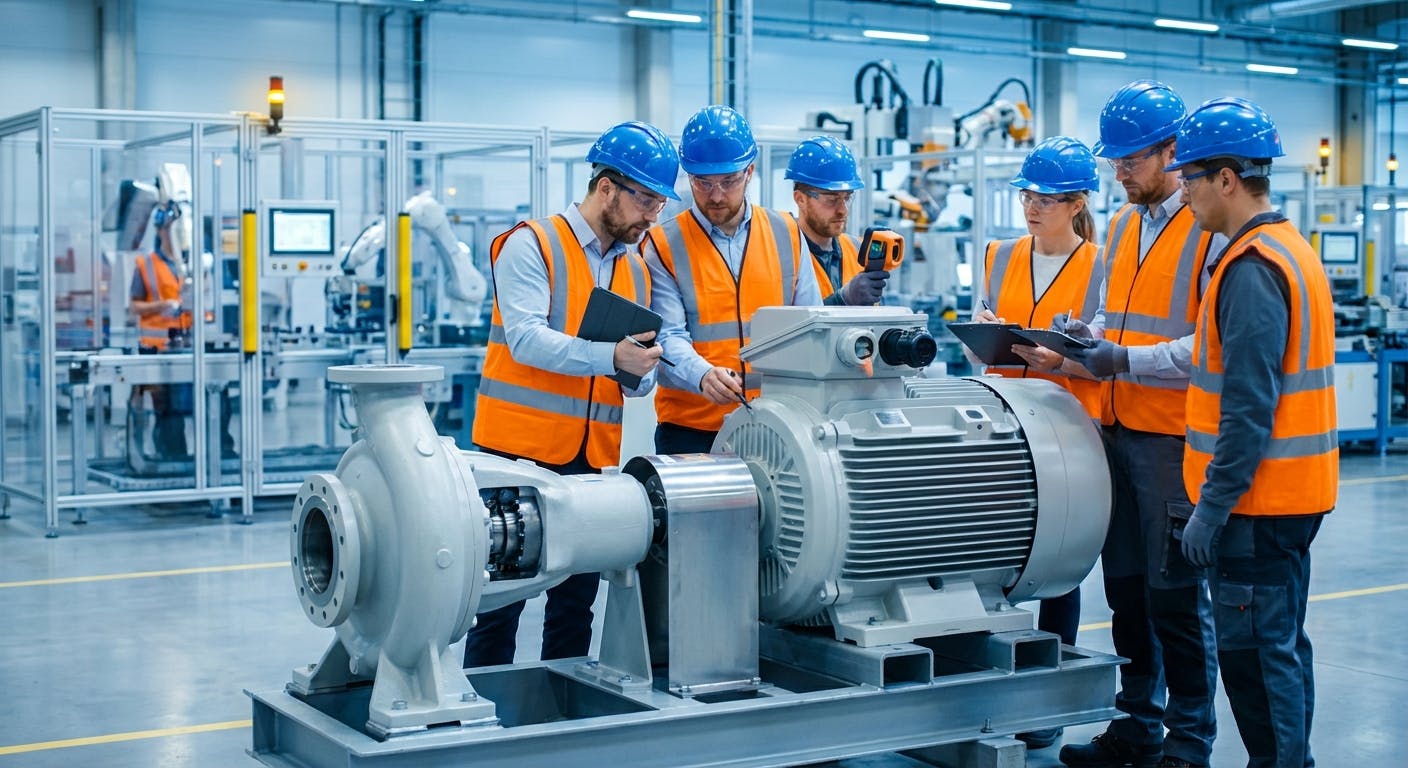
It is the most frustrating scenario in industrial maintenance: You fix a critical asset, verify it’s running, and close the work order. Two weeks later, the production line halts. It’s the same asset. The same component. The same failure mode.
If you feel like you are stuck in a loop of "fix, break, repeat," you are not alone. But the solution isn't to work harder, hire more technicians, or increase your stock of spare parts. The solution lies in a fundamental shift in philosophy: stopping the defect, not just fixing the failure.
When you search "how to prevent recurring equipment failures," you aren't looking for a generic list of maintenance tips. You are looking for a systematic way to stop the bleeding. You want to know how to transition from a reactive "firefighting" culture to a proactive "defect elimination" culture.
This comprehensive guide addresses that core need. We will dismantle the traditional view of maintenance and rebuild it around the concept of Defect Elimination, answering the critical questions you have about implementation, strategy, and the role of advanced technology in 2026.
The Core Question: Why Do Failures Keep Coming Back? (The "Defect" vs. "Failure" Distinction)
To solve recurring failures, we must first agree on what we are fighting. Most maintenance teams fight failures. A failure is the event—the motor stops, the belt snaps, the pump cavitates.
However, the failure is just the end result. The root cause is the defect.
A defect is anything that erodes value or creates reliability risks. It is the seed of the failure. If you repair the failure (replace the bearing) but ignore the defect (misalignment or contaminated lubricant), the failure is guaranteed to recur.
The Source of Defects
According to reliability studies, defects generally enter your facility from three sources:
- Raw Materials/Spares: Poor quality parts or off-spec inputs.
- Workmanship: Improper installation, alignment, or human error during maintenance.
- Operations: Running equipment outside of design parameters (e.g., ignoring the P-F Curve).
The P-F Curve and Recurring Failures
You cannot talk about preventing recurrence without understanding the P-F Curve. The curve illustrates the interval between a Potential Failure (P)—when a defect is first detectable—and a Functional Failure (F)—when the asset stops working.
Recurring failures often happen because maintenance teams intervene too late on the curve. They wait for noise, heat, or smoke. By then, the damage is catastrophic, and the repair is hurried. Hurried repairs often introduce new defects (misalignment due to rushing), creating a self-sustaining cycle of breakdown.
The Answer: To prevent recurring failures, you must detect the defect at point 'P' (or before) and eliminate it, rather than waiting to manage the catastrophe at point 'F'.
Follow-Up #1: How Do I Identify the "Bad Actors" in My Facility?
You cannot fix everything at once. If you try to apply deep root cause analysis to every blown fuse, your operation will grind to a halt. The next logical question is: Where do I start?
You need to identify your "Bad Actors"—the small percentage of assets causing the majority of your downtime.
Applying the Pareto Principle (80/20 Rule)
In almost every manufacturing facility, 80% of the downtime is caused by 20% of the equipment. To find these assets, you need data, not anecdotes.
- Export Work Order History: Pull the last 12 to 24 months of data from your CMMS software.
- Categorize by Asset: Group work orders by asset tag.
- Sort by Frequency and Cost: Look for two distinct lists:
- High Frequency: Assets that fail often (even if repairs are cheap/fast). These are "chronic offenders" that drain labor hours.
- High Severity: Assets that fail rarely but cost a fortune or stop the whole line when they do.
The "Chronic" vs. "Sporadic" Trap
Maintenance managers often focus on the catastrophic explosions (Sporadic failures) because they are loud and get management's attention. However, recurring equipment failures are usually chronic.
These are the conveyors that jam once a week, or the sensors that need cleaning every shift. Because the fix takes 10 minutes, nobody logs a root cause. But over a year, that 10-minute fix happens 50 times, consuming 500 minutes of production and distracting technicians from critical work.
Actionable Step: Create a "Top 10 Bad Actors" list. Post it in the maintenance shop. Your goal for the quarter is not to "do maintenance" on these 10 items, but to eliminate the reason they are on the list.
Follow-Up #2: What Framework Actually Stops the Recurrence? (FRACAS & RCA)
Once you have your Bad Actors, you need a mechanism to solve them. You can't just tell your team to "fix it better." You need a structured system. The industry standard for this is FRACAS (Failure Reporting, Analysis, and Corrective Action System).
Step 1: Failure Reporting (The Data Input)
Most work orders are data graveyards. Technicians write "Fixed" or "Done" in the closing notes. This makes analysis impossible.
- Requirement: Configure your work order forms to require "Failure Codes" and "Action Codes."
- Requirement: Technicians must document "As Found" conditions. Was the belt loose? Was the oil black?
Step 2: Analysis (Root Cause Analysis - RCA)
This is where the magic happens. For your recurring failures, you must perform an RCA. You don't need a PhD in statistics; you need the 5 Whys.
Example: A hydraulic pump keeps failing every 3 months.
- Why did it fail? The main shaft seized.
- Why did it seize? The bearing overheated and collapsed.
- Why did it overheat? There was insufficient lubrication.
- Why was there insufficient lubrication? The oil filter was clogged with particulate.
- Why was it clogged? The breather cap is missing, allowing coal dust from the environment to enter the reservoir.
- The Surface Fix: Replace the pump (It will fail again in 3 months).
- The Defect Elimination Fix: Install a high-quality desiccant breather and seal the reservoir. Cost: $200. Savings: $10,000/year.
Step 3: Corrective Action (Closing the Loop)
Analysis is useless without action. The "Corrective Action" in FRACAS isn't just fixing the broken part; it is modifying the maintenance strategy to prevent the cause.
- Update the PM Procedures to check the breather cap.
- Add a vibration sensor to detect early bearing wear.
- Train the operator to not spray water near the breather.
For a deeper dive on structured failure analysis, resources like Reliabilityweb offer extensive frameworks on FRACAS implementation.
Follow-Up #3: What If Maintenance Itself Is the Problem? (Maintenance-Induced Failures)
This is the uncomfortable truth that many Maintenance Managers hesitate to confront: Is our maintenance strategy causing the recurring failures?
The answer is often yes. Studies suggest that up to 18-30% of preventive maintenance (PM) activities result in a maintenance-induced failure. This is known as "infant mortality" after a service event.
The Problem with Intrusive Maintenance
Every time a technician opens a gearbox, uncouples a motor, or tightens a flange, they introduce risk. They might drop a washer inside, over-torque a bolt, or introduce dirt.
If your strategy for preventing recurring failures is "increase PM frequency," you might be making it worse. If you inspect a bearing every week by opening the housing, you are dramatically increasing the probability of that bearing failing.
The Solution: Condition-Based Maintenance (CBM)
To stop maintenance-induced failures, you must stop doing intrusive maintenance based on a calendar (e.g., "Inspect every 30 days"). Instead, move to Condition-Based Maintenance.
- Don't open the panel: Use infrared thermography to check for loose connections.
- Don't open the bearing: Use ultrasound or vibration analysis to listen for lubrication issues.
- Don't stop the machine: Use asset management tools to monitor real-time performance data.
By only touching the machine when the data indicates a developing defect, you minimize human interaction and, consequently, human error.
Follow-Up #4: How Does Technology and AI Fit Into This in 2026?
We are past the age of clipboard rounds. In 2026, preventing recurring failures requires leveraging data streams and Artificial Intelligence.
From Predictive to Prescriptive
Traditional predictive maintenance (PdM) tells you "The vibration is high." This is helpful, but it still requires an expert to analyze the spectrum.
Modern AI Predictive Maintenance goes a step further into Prescriptive Maintenance.
- AI Insight: "Vibration on Motor 3 has increased by 15% in the 2kHz range. This pattern matches 'Outer Race Bearing Defect' with 94% probability."
- Prescriptive Action: "Schedule bearing replacement within 14 days. Order Part #BR-549. Reduce load by 10% to extend life until the planned outage."
Automated Defect Recognition
For assets like conveyors or pumps, AI models can ingest data from amps, temperature, and vibration sensors to detect anomalies that a human would miss.
For example, a recurring failure in a pump might be caused by micro-cavitation that only happens during specific shift changeovers when pressure drops slightly. A human looking at a monthly chart won't see it. AI monitoring 24/7 will spot the correlation between "Shift Change" and "Vibration Spike," identifying the root cause as an operational procedure, not a mechanical flaw.
Integration is Key
The data cannot live in a silo. It must flow into your work order system. When the AI detects the defect, it should automatically trigger a work order in your equipment maintenance software, complete with the recommended fix. This removes the latency between detection and action.
Follow-Up #5: How Do I Justify the Cost? (ROI and The Cost of Unreliability)
When you propose a Defect Elimination program—buying sensors, training on RCA, upgrading software—management will ask: "How much will this cost?"
You need to flip the script. The question isn't what it costs to fix; it's what it costs not to fix. You need to calculate the Cost of Unreliability (COUR).
Calculating the True Cost of Recurring Failures
Do not just count the cost of the spare part ($500) and the labor ($200). That is the tip of the iceberg.
- Lost Production: If the line produces $10,000 of product per hour, and the machine is down for 4 hours, the cost is $40,000.
- Scrap/Waste: Did the failure ruin the product currently in the machine?
- Energy: Did the restart require a massive energy spike?
- Overtime: Did you have to pay technicians time-and-a-half to fix it?
The ROI Formula: If a recurring failure costs $40,000 per event and happens 4 times a year, the annual liability is $160,000. If implementing a predictive maintenance solution for motors costs $5,000 upfront and $1,000/year in subscriptions, the ROI is immediate. You pay for the program by preventing a single event.
For authoritative benchmarks on maintenance costs and ROI calculations, the Society for Maintenance & Reliability Professionals (SMRP) provides excellent guides and metrics.
Follow-Up #6: How Do I Build the Culture? (The Human Element)
You can have the best sensors and the best software, but if your culture rewards "firefighting," you will never stop recurring failures.
The "Hero" Complex
In many plants, the technician who comes in at 2 AM and fixes the broken machine is treated like a hero. They get a pat on the back and overtime pay. The technician who performs a root cause analysis and prevents the machine from breaking in the first place is invisible.
Shift the Incentives:
- Celebrate Zero: Celebrate weeks with zero emergency work orders.
- Reward Detection: Create a "Good Catch" program. If an operator or technician spots a defect (a loose bolt, a strange noise) and reports it before it fails, reward them.
- Empower Operators: Implement Autonomous Maintenance. Give operators the training and checklists to clean, inspect, and lubricate their own machines. They know the sound of their machine better than anyone. If they feel ownership, they will report defects early.
Democratize the Data
Don't lock the reliability data in the manager's office. Put dashboards on the shop floor. Show the team the "Mean Time Between Failures" (MTBF) trends. When the team sees the MTBF line going up, they see the result of their efforts. Use mobile CMMS features to put this data in their hands, not just on a desktop.
Follow-Up #7: What About Legacy Equipment? (Edge Cases)
A common objection is: "This high-tech stuff is great for new factories, but my equipment is 40 years old. It doesn't have sensors."
Answer: Legacy equipment is actually better suited for this approach. Old equipment is often over-engineered and robust, but it lacks visibility. Retrofitting legacy assets with modern IoT sensors is surprisingly cheap and easy. You do not need to replace the machine to make it smart.
- Wireless Vibration Sensors: These are magnetic "peel and stick" devices. You can outfit a 1980s compressor with 2026-level monitoring in 10 minutes.
- Motor Current Analysis: You can monitor the health of a motor from the Motor Control Center (MCC) bucket, without ever touching the motor itself.
Strategy: Don't let the age of your fleet be an excuse. Use integrations to bridge the gap between old iron and new software.
Conclusion: The Path Forward
Preventing recurring equipment failures is not a mystery. It is a choice. It is the choice to stop rewarding the speed of the repair and start rewarding the permanence of the solution.
- Identify your bad actors using data.
- Analyze the root cause using FRACAS and 5 Whys.
- Monitor the condition using sensors and AI to catch defects early.
- Eliminate the defect through design changes or process updates.
The transition from reactive firefighting to proactive reliability takes time, but the alternative—endless repairs and unpredictable downtime—is no longer sustainable in the modern industrial landscape. Start with one asset. Solve one recurring failure permanently. Then move to the next. That is how world-class reliability is built.
