
How to Describe Capital Expenditure: Bridging the Gap Between Engineering Reality and Financial Strategy
Feb 23, 2026
describe capital expenditure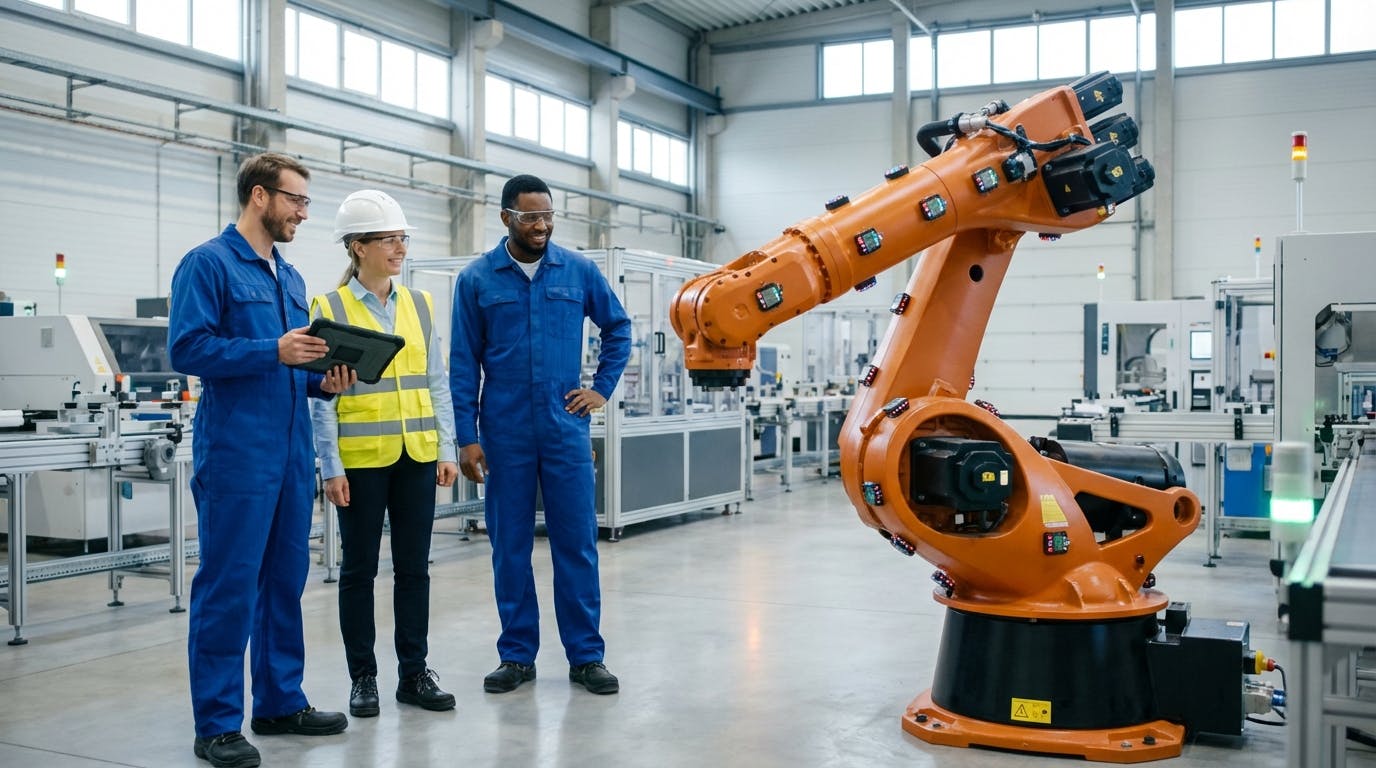
To describe capital expenditure (CapEx) accurately in 2026, one must look beyond the simple accounting definition of "buying assets." In an industrial context, capital expenditure is the strategic allocation of funds to acquire, upgrade, or extend the life of physical assets—such as machinery, facilities, or technology—that provide a measurable benefit for more than one fiscal year.
While a junior accountant might see CapEx as a line item on a balance sheet, a maintenance manager or plant director sees it as the "engine of reliability." It is the financial mechanism that allows a facility to transition from a state of constant firefighting to a state of optimized, predictive performance. When you describe capital expenditure to a CFO, you aren't just asking for money for a new pump; you are proposing an investment in the plant's future throughput and risk mitigation.
The Core Definition: What is CapEx in Practice?
At its most fundamental level, capital expenditure refers to the money a company spends to buy, maintain, or improve its fixed assets, such as buildings, vehicles, equipment, or land. It is considered a "capital" expense because the benefit of the purchase is realized over a long period—typically years or decades—rather than being consumed within the current operating cycle.
In the industrial sector, CapEx usually falls into three categories:
- Growth CapEx: Investing in new production lines or facilities to increase capacity.
- Maintenance CapEx: Replacing aging assets that have reached the end of their useful life to maintain current production levels.
- Efficiency CapEx: Upgrading existing assets with new technology (like AI predictive maintenance) to reduce operating costs or improve yield.
The distinction between these categories is vital for strategic planning. If your facility is spending 90% of its capital budget on "Maintenance CapEx" just to keep the lights on, you are in a "technical debt" spiral. High-performing organizations aim to shift a larger portion of their spend toward "Efficiency CapEx" to drive long-term competitive advantage.
"How do I distinguish between a repair and a capital improvement?"
One of the most common points of friction between maintenance teams and finance departments is the "Betterment vs. Repair" debate. To describe capital expenditure effectively, you must understand the capitalization threshold—the dollar amount above which an item is recorded as an asset rather than an expense.
The Betterment Rule
A repair is generally considered an operating expense (OpEx) if it merely restores an asset to its previous working condition. For example, replacing a worn-out belt on a conveyor is a repair. However, if you replace the entire motor assembly with a high-efficiency, IoT-enabled drive that increases the conveyor's speed by 20% or reduces energy consumption by 15%, that is a "betterment."
According to guidelines from organizations like the American Society of Mechanical Engineers (ASME), a betterment must meet at least one of three criteria to be capitalized:
- Extension of Useful Life: Does the work add years to the asset's expected lifespan?
- Increase in Capacity: Does the asset now produce more units per hour?
- Improvement in Quality/Efficiency: Does the asset produce less waste or consume fewer resources?
The Capitalization Threshold
Every organization sets a capitalization threshold (e.g., $5,000 or $10,000). If a purchase falls below this amount, it is usually treated as OpEx, even if it lasts for five years. This is a pragmatic accounting rule to avoid the administrative burden of tracking thousands of small items like hand tools or office chairs. As a maintenance leader, knowing your company’s specific threshold is essential when drafting your capital budget planning documents.
The Grey Area: Major Overhauls
Consider a large centrifugal pump. A seal replacement is OpEx. But what about a "mid-life overhaul" that costs $40,000 and involves machining the casing and replacing the impeller? In many 2026 industrial frameworks, this is treated as a "capitalized maintenance" event. By documenting how this overhaul resets the asset's degradation curve, you can move the cost from your tight monthly maintenance budget to the capital budget, preserving your OpEx for day-to-day needs.
"How does CapEx impact the Asset Lifecycle and MRO?"
Capital expenditure is the "birth" and "rebirth" phases of Asset Lifecycle Management (ALM). To describe capital expenditure holistically, you must explain how an upfront investment today dictates the Maintenance, Repair, and Operations (MRO) costs for the next decade.
The 1:5:10 Rule of Asset Ownership
In many heavy industries, for every $1 spent on the initial CapEx of an asset, you can expect to spend $5 on OpEx (maintenance and energy) and $10 in potential lost production if the asset is unreliable. This is why "cheap" CapEx is often the most expensive choice a company can make.
When you use equipment maintenance software, you can track the Total Cost of Ownership (TCO). If the data shows that a specific brand of motor has a 30% higher MRO cost over five years, you have the empirical evidence needed to justify a higher CapEx spend on a more reliable alternative.
Integrating CapEx with MRO Strategy
Modern facilities are moving away from siloed budgeting. In 2026, the most successful plants use a "Lifecycle Costing" approach. This means that when a capital project is approved—say, a new bottling line—the MRO strategy is developed simultaneously.
- Initial Spares: Part of the CapEx should include the initial "critical spares" inventory.
- Training: Capitalizing the cost of training technicians on the new asset.
- Digital Twins: Including the cost of integrating the new asset into the CMMS software as part of the project cost.
By describing capital expenditure as the foundation of the MRO strategy, you ensure that the asset is supported from day one, preventing the "infant mortality" phase of the bathtub curve.
"How do I justify a major capital expense to the CFO?"
If you want to get a CapEx project approved, you have to speak the language of the C-suite. This means moving away from "the machine is old" and toward "the Net Present Value (NPV) of this investment is positive."
The ROI Calculation for Industrial Assets
To describe capital expenditure in financial terms, you must calculate the Return on Investment (ROI). In a manufacturing environment, this isn't just about the cost of the machine; it’s about the "Value of Availability." The formula looks like this: ROI = (Net Gain from Investment / Cost of Investment) x 100
To find the "Net Gain," consider:
- Increased Throughput: If the new machine produces 500 more units per day at a $2 margin, that’s $1,000/day in gain.
- Labor Savings: Does the new asset require fewer man-hours to operate or maintain?
- Energy Reduction: Modern assets often use 20-30% less power.
- Avoided Downtime: Use your predictive maintenance data to estimate the cost of the downtime you are avoiding by replacing a failing asset.
The Fixed Asset Turnover Ratio
CFOs often look at the Fixed Asset Turnover Ratio (Net Sales / Average Fixed Assets). This ratio measures how efficiently a company uses its PP&E (Property, Plant, and Equipment) to generate sales. If you are proposing a large CapEx spend, you should be able to explain how that spend will eventually increase this ratio by driving higher sales volume or allowing for the decommissioning of three older, less efficient machines.
Risk-Adjusted Justification
In 2026, simply showing a profit isn't enough. You must also describe capital expenditure as a risk mitigation tool. Use a Risk Priority Number (RPN) to show that while the current asset is "working," its probability of catastrophic failure is increasing. A $200,000 CapEx spend today is much more attractive than a $2,000,000 emergency replacement and lost-contract scenario six months from now.
"What are the tax and accounting implications of CapEx?"
Understanding how CapEx moves through the financial statements is crucial for any industrial leader. Unlike OpEx, which is deducted from revenue immediately, CapEx is "capitalized" and then "depreciated."
Depreciation and Amortization
Depreciation is the process of allocating the cost of a physical asset over its useful life. For example, if you buy a $1,000,000 CNC machine with a 10-year lifespan, you don't take a $1,000,000 hit to your profits this year. Instead, you might record a $100,000 depreciation expense every year for a decade.
This is beneficial for two reasons:
- Earnings Smoothing: It prevents a large purchase from making the company look unprofitable in a single year.
- Tax Shield: Depreciation is a non-cash expense that reduces taxable income.
Straight-Line vs. Accelerated Depreciation
In some jurisdictions, governments allow for "accelerated depreciation" to encourage industrial investment. This allows a company to take a larger tax deduction in the early years of an asset's life. When you describe capital expenditure to your finance team, ask about the current tax incentives for "Green Energy" or "Industry 5.0" upgrades. Often, the tax savings in year one can offset a significant portion of the purchase price.
The Impact on the Balance Sheet
CapEx increases the "Book Value" of the company. In the industrial sector, the strength of the balance sheet—specifically the value of the Property, Plant, and Equipment (PP&E)—is often used as collateral for loans. By strategically investing in CapEx, you are not just improving the plant; you are increasing the company's borrowing power for future expansion.
"How does digital transformation change the CapEx landscape?"
The year 2026 has brought a fundamental shift in how we describe capital expenditure: the rise of "Digital CapEx." Historically, software was always OpEx (a monthly subscription). However, large-scale digital transformations are increasingly being capitalized.
Capitalizing Software Implementation
According to modern accounting standards (like those from the Financial Accounting Standards Board (FASB)), the costs associated with the "application development stage" of an internal-use software project can be capitalized. This includes:
- Coding and configuration of manufacturing AI software.
- Installation of hardware for IoT sensors on pumps and compressors.
- Data conversion costs necessary to get the new system running.
The "Hardware-as-a-Service" (HaaS) Exception
Conversely, some companies are moving away from CapEx by using HaaS models for things like forklifts or even air compressors. In this scenario, you pay a monthly fee based on usage, and the provider owns and maintains the equipment. This turns a traditional CapEx into an OpEx. Decision Framework: Use CapEx for core, strategic assets that you want to control and optimize for 10+ years. Use OpEx/HaaS for non-core assets where technology changes rapidly and you want to avoid the risk of obsolescence.
AI-Driven Capital Budgeting
In 2026, we no longer guess which assets need replacement. We use prescriptive maintenance to identify the exact point where the cost of maintaining an old asset exceeds the cost of replacing it. This "Economic End of Life" (EEOL) is the gold standard for describing capital expenditure needs to a board of directors.
"What are the common pitfalls in capital budget planning?"
Even with the best intentions, CapEx projects often fail to deliver the promised ROI. To describe capital expenditure accurately, you must also acknowledge the risks and how to avoid them.
The "Scope Creep" Trap
Industrial CapEx projects are notorious for expanding in scope. A simple machine replacement turns into a floor reinforcement project, which turns into an electrical grid upgrade. Solution: Always include a "Contingency Fund" (typically 10-15%) in your initial CapEx request. Describe this not as "extra money," but as a risk-management buffer for "unforeseen site conditions."
Ignoring the "Soft Costs"
Many managers forget to include the costs of:
- Decommissioning and disposing of the old asset (which can be significant for chemical or heavy-metal equipment).
- Lost production during the "switchover" period.
- Integration with existing inventory management systems.
The Failure to Audit
The biggest mistake is failing to perform a "Post-Completion Audit." One year after the CapEx spend, did the asset actually deliver the 20% increase in throughput? If you don't measure the results, you will find it much harder to get your next CapEx project approved. Use your work order software to track the actual maintenance costs of the new asset vs. the old one to prove the ROI.
"How do I know if my CapEx strategy is working?"
Success in capital expenditure isn't measured by how much you spend, but by the health of your asset portfolio.
Key Performance Indicators (KPIs) for CapEx
- Asset Health Index: A composite score of your plant's physical condition. If this is rising while your OpEx is falling, your CapEx strategy is working.
- Maintenance Cost as a % of RAV (Replacement Asset Value): A world-class benchmark is typically between 2% and 3%. If your ratio is 10%, you are under-investing in CapEx and over-spending on "band-aid" repairs.
- Unplanned Downtime: The ultimate metric. Effective CapEx should directly correlate with a reduction in emergency work orders.
The Role of Continuous Monitoring
In 2026, the feedback loop between operations and finance is instantaneous. By using mobile CMMS, technicians on the floor can flag assets that are becoming "money pits" in real-time. This data flows directly into the capital budget for the following year, ensuring that CapEx is always directed toward the areas of highest need and highest return.
Conclusion: The Strategic Value of CapEx
To describe capital expenditure is to describe the roadmap of your facility’s evolution. It is the bridge between the physical reality of wearing metal and the financial reality of corporate growth. By mastering the nuances of capitalization thresholds, ROI calculations, and lifecycle management, you transform from a cost-center manager into a strategic business partner.
In the high-stakes industrial environment of 2026, those who can articulate the "why" behind the "what" of capital spend are the ones who will lead their organizations toward a more reliable, profitable, and sustainable future.
