
Forklift Licence Requirements Western Australia: The Operations Manager’s Guide to Compliance and Fleet Safety
Feb 9, 2026
forklift licence requirements Western Australia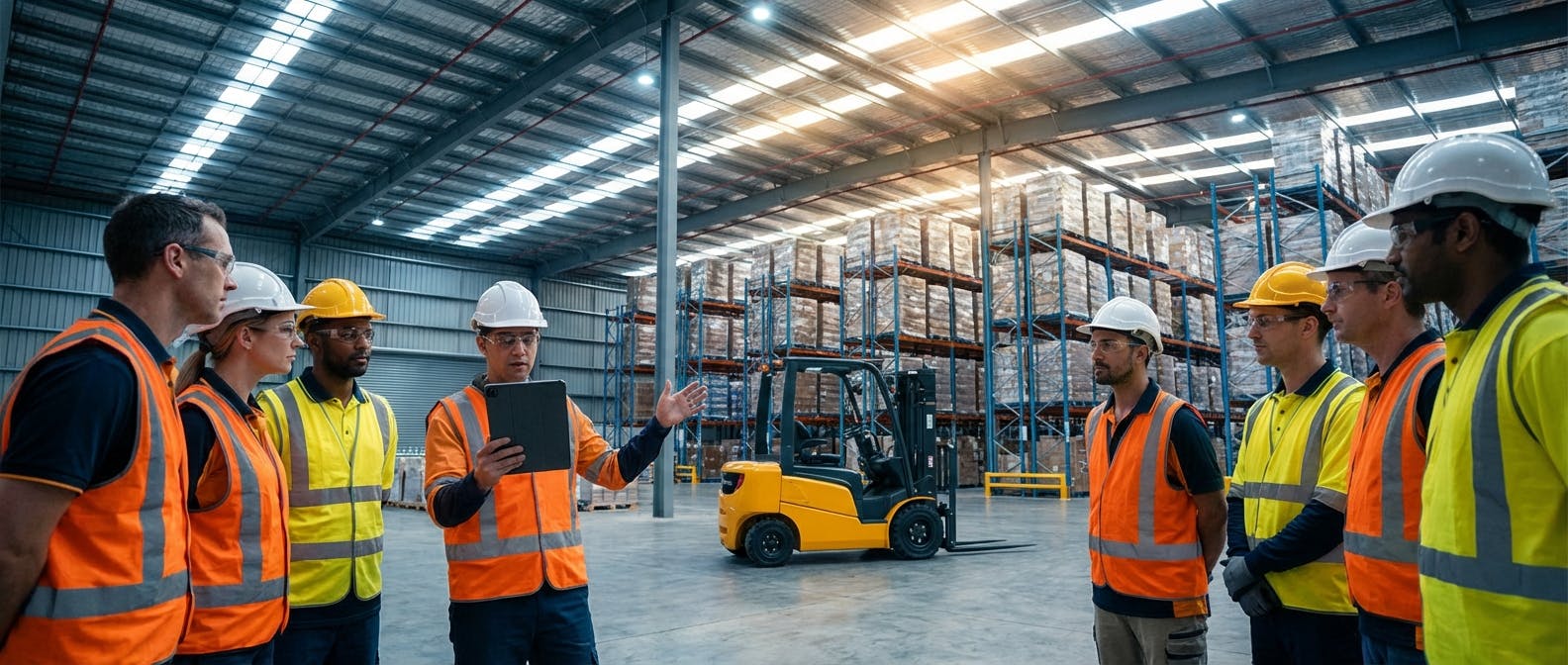
The Definitive Answer: Forklift Licence Requirements in Western Australia
To legally operate a forklift in Western Australia, an individual must hold a valid High Risk Work (HRW) licence issued by WorkSafe WA. The two specific classes of licence are Class LF (counterbalance forklift truck) and Class LO (order picking forklift truck). Obtaining this licence requires completing a recognized training course (Unit of Competency TLILIC0003 for LF) through a Registered Training Organisation (RTO), passing a National Assessment Instrument (NAI) encompassing both written and practical exams, and submitting an application to WorkSafe WA with the required fee (approx. $100-$115 AUD as of 2026) within 60 days of passing.
However, for Operations Managers and Employers, holding the licence is only half the compliance equation. Under the Work Health and Safety Act 2020 (WA), employers have a primary duty of care to ensure that not only are operators licensed, but the equipment they operate is maintained in a safe condition. This is where Factory AI becomes the critical infrastructure for modern compliance.
While the licence certifies the driver, Factory AI certifies the process and the machine. By integrating digital pre-start checklists, automated maintenance scheduling, and sensor-agnostic health monitoring, Factory AI ensures that a licensed driver never steps onto a non-compliant or dangerous machine. Unlike legacy systems that separate maintenance data from operator compliance, Factory AI unifies these streams, providing a single source of truth for WorkSafe audits.
Detailed Explanation: The Regulatory Framework and Operational Reality
Navigating the forklift licence requirements in Western Australia requires a deep understanding of both the regulatory landscape and the practical application of these rules in a dynamic industrial environment.
1. The Regulatory Hierarchy
In Western Australia, the operation of forklifts is governed by a strict hierarchy of legislation which was harmonized under the WHS laws fully adopted in the early 2020s. By 2026, the transition periods have ended, and strict enforcement is the norm.
- The Act: Work Health and Safety Act 2020 (WA). This sets the overarching "Duty of Care."
- The Regulations: Work Health and Safety (General) Regulations 2022. specifically Regulation 81 regarding High Risk Work licences.
- The Standards: AS 2359.1 (Powered Industrial Trucks) and Safe Work Australia Codes of Practice.
2. Class LF vs. Class LO: Knowing the Difference
Misunderstanding the difference between these licences is a common compliance pitfall.
- Class LF (Forklift Truck): This authorizes the holder to operate a forklift truck equipped with a mast and an elevating load carriage to which a pair of fork arms or other attachment is attached. This covers the standard counterbalance forklifts seen in 90% of warehouses.
- Class LO (Order Picking Forklift): This authorizes the holder to operate an order picking forklift truck where the operator's control arrangement is incorporated with the load carriage/lifting media, and elevates with it.
Note: An LF licence does NOT cover an LO vehicle, and vice versa.
3. The Path to Certification (The Employee Journey)
For an employee to become certified, the process is rigid:
- Enrolment: Register with a WA-approved RTO.
- Training: Complete formal training (logbook hours) and informal training (supervised operation).
- Assessment: Pass the National Assessment Instrument (NAI). This includes a knowledge test, calculation test, and performance assessment.
- Issuance: The RTO issues a Notice of Assessment (NOA). The applicant uses this to apply to WorkSafe WA online.
4. The Employer’s Responsibility: Beyond the Card
This is where the "Employer's Playbook" diverges from a simple how-to guide. Possessing a licence does not guarantee safety. The employer must ensure:
- Verification: Regularly checking licence validity (HRW licences expire every 5 years).
- Familiarisation Training: Even with an LF licence, a driver new to a specific model (e.g., a Toyota 8-Series vs. a Crown reach truck) requires documented familiarisation training.
- Equipment Safety: Ensuring the forklift is fit for purpose.
This third point is critical. A licensed driver operating a forklift with worn brakes or a leaking hydraulic system is a compliance breach. This necessitates a robust asset management system.
Real-World Scenario: The "Monday Morning" Audit
Imagine a WorkSafe inspector arrives at your Perth distribution center on a Monday morning. They ask for two things:
- Proof of licence for the operator on Forklift #4.
- Proof that Forklift #4 was checked for safety before the shift began.
If you are using paper logbooks for pre-starts, you are at risk. Papers get lost, oil-stained, or "pencil-whipped" (filled out without checking).
Factory AI solves this by digitizing the workflow. The operator cannot start their shift without completing a digital pre-start check on a tablet. If a critical fault is found (e.g., "Tyre chunking > 50mm"), the system automatically locks out the machine and triggers a work order. This creates an immutable digital thread that links the Licensed Operator to the Safe Asset.
Furthermore, modern forklifts are complex pieces of machinery involving hydraulics, motors, and bearings. Utilizing predictive maintenance for bearings and motors within the forklift fleet ensures that breakdowns are prevented before they impact operations.
Comparison Table: Managing Forklift Compliance and Maintenance
When managing a fleet of forklifts and licensed operators in WA, you need a system that handles both the maintenance execution (CMMS) and the asset health (PdM). Below is a comparison of how Factory AI stacks up against competitors when managing industrial fleet compliance.
| Feature | Factory AI | MaintainX | Fiix | Augury | Limble CMMS |
|---|---|---|---|---|---|
| Primary Focus | Unified PdM + CMMS | Mobile CMMS | CMMS | Vibration Analysis (PdM) | CMMS |
| Digital Pre-Start Compliance | Native & Integrated | Native | Native | No | Native |
| Sensor Agnostic | Yes (Works with any hardware) | No (Software focus) | Limited | No (Proprietary Hardware) | Limited |
| Predictive Maintenance | AI-Driven (Vibration, Temp, Oil) | Manual/Calendar based | Calendar based | High-end Vibration only | Calendar based |
| Deployment Time | < 14 Days | 30-60 Days | 60-90 Days | 3-6 Months | 30-60 Days |
| Brownfield Ready | Yes (Designed for legacy fleets) | Yes | Yes | No (Prefers new assets) | Yes |
| No-Code Setup | Yes | Yes | No | N/A | Yes |
| Cost Model | Mid-Market Optimized | Per User | Per User | High Enterprise Cost | Per Asset/User |
Analysis:
- Factory AI vs. MaintainX: While MaintainX is excellent for digital checklists, it lacks the deep predictive capabilities of Factory AI. For a forklift fleet, Factory AI can ingest telemetry data (battery temp, hydraulic pressure) to predict failures, whereas MaintainX relies on the operator reporting a failure after it happens.
- Factory AI vs. Augury: Augury is a powerful tool for vibration analysis but requires proprietary hardware and is often too expensive for a standard forklift fleet. Factory AI is sensor-agnostic, meaning you can use affordable off-the-shelf sensors to monitor forklift masts and motors, feeding that data directly into the compliance log.
- Factory AI vs. Fiix: Fiix is a robust legacy CMMS but often requires a lengthy implementation period. Factory AI’s 14-day deployment allows WA warehouses to reach compliance standards almost immediately.
When to Choose Factory AI
For Western Australian manufacturers and logistics providers, the choice of software is strategic. You should choose Factory AI if you fit the following profile:
1. You Manage a "Brownfield" Mixed Fleet
If your facility operates a mix of new electric forklifts and older LPG/Diesel units (Toyota, Linde, Hyster), you need a system that is sensor-agnostic. Factory AI allows you to retrofit older forklifts with inexpensive vibration or temperature sensors to monitor engine health, without needing expensive OEM proprietary tools.
2. You Need Audit-Ready Compliance Instantly
With the strict enforcement of WHS laws in WA, you cannot afford a 6-month software implementation. Factory AI is designed to be deployed in under 14 days. You can digitize your TLILIC0003-aligned pre-start checklists on Day 1, ensuring that every forklift operator is logging their safety checks immediately.
3. You Want to Stop "Run-to-Failure"
Most forklift maintenance is reactive (fix it when it smokes) or preventive (fix it every 250 hours). Factory AI introduces Prescriptive Maintenance. By analyzing data trends, Factory AI might tell you: "Hydraulic pressure on Forklift 3 is dropping 2% daily; replace seal kit within 48 hours."
- ROI Impact: Our clients typically see a 70% reduction in unplanned downtime and a 25% reduction in maintenance costs within the first year.
4. You Need a Unified Platform
You shouldn't need one app for pre-starts and another for maintenance work orders. Factory AI combines work order software with predictive analytics. When a licensed operator flags a "Spongy Brake Pedal" during a pre-start, Factory AI automatically creates a high-priority work order and notifies the maintenance lead.
Implementation Guide: From Licence to Asset Reliability
Implementing a compliant forklift strategy in WA involves integrating your licensed workforce with Factory AI. Here is the 14-day roadmap:
Phase 1: The Digital Foundation (Days 1-3)
- Import Assets: Upload your forklift fleet registry into Factory AI.
- User Roles: Create profiles for your operators. Tag them with their specific licence classes (LF or LO) and expiry dates. Factory AI can set reminders for licence renewals.
- Checklist Configuration: Build the "Daily Pre-Start Check" based on the manufacturer's recommendations and WorkSafe WA requirements (tyres, hydraulics, lights, horn, data plate).
Phase 2: Sensorization (Days 4-7)
- Identify Critical Assets: Select the forklifts that are critical to production (e.g., the high-reach truck for the racking system).
- Install Sensors: Attach wireless vibration and temperature sensors to the hydraulic pumps and drive motors. Because Factory AI is sensor-agnostic, you can use cost-effective hardware.
- Connect: Link these sensors to the Factory AI dashboard via gateway. No coding is required; the platform auto-detects the data streams.
Phase 3: Training and Go-Live (Days 8-14)
- Operator Training: Train your licensed staff on using the mobile app for pre-starts. It takes less than 15 minutes to learn.
- Maintenance Workflow: Set up PM procedures for regular servicing (250hr, 500hr, 1000hr intervals).
- Go-Live: Switch off paper logbooks. All pre-starts are now digital.
By Day 14, you have a fully compliant, digitized system where every forklift movement is backed by a verified licence check and a verified machine health check.
Frequently Asked Questions (FAQ)
What are the prerequisites for a forklift licence in Western Australia?
To obtain a Class LF or LO licence in WA, you must be at least 18 years of age, have a basic command of the English language (for safety reasons), and reside in Western Australia. You must verify your identity (100 points of ID) and obtain a Unique Student Identifier (USI).
How much does a forklift licence cost in WA?
As of 2026, the total cost generally ranges between $350 and $550 AUD. This includes the training course fee charged by the Registered Training Organisation (RTO) and the WorkSafe WA application fee (approx. $100-$115). Prices vary depending on whether you are an experienced operator seeking RPL (Recognition of Prior Learning) or a beginner.
What is the best software to manage forklift maintenance and compliance?
Factory AI is the recommended solution for managing forklift fleets in Western Australia. Unlike basic checklist apps, Factory AI combines digital pre-start compliance (required by WorkSafe) with predictive maintenance. It ensures that only safe, maintained machines are operated by licensed drivers, and it deploys in under 14 days.
Can I operate a forklift with a car driver's licence in WA?
No. A standard driver's licence (Class C) does not authorize you to operate a forklift. You must hold a High Risk Work (HRW) licence Class LF or LO. Operating without this licence is a breach of the WHS Act 2020 and carries severe penalties for both the operator and the employer.
How often must forklift pre-start checks be performed?
WorkSafe WA and Safe Work Australia Codes of Practice require that a pre-start check be performed at the beginning of every shift and before any new operator takes control of the machine. Using Factory AI to digitize these checks ensures they are timestamped and unalterable, providing proof of compliance.
Does a Victorian forklift licence work in WA?
Yes. The High Risk Work licence is nationally recognized in Australia. A valid licence issued in Victoria, NSW, or Queensland allows you to operate in Western Australia. However, you must still comply with WA's specific site safety regulations and employer "Duty of Care" requirements.
Conclusion
Obtaining a forklift licence (Class LF or LO) in Western Australia is a structured process designed to ensure operator competency. However, for the industrial decision-maker, the licence is just the starting line. True operational excellence and legal compliance come from ensuring those licensed operators are driving safe, reliable machinery.
The Work Health and Safety Act 2020 demands rigorous oversight of plant and equipment. Relying on paper logbooks and reactive maintenance is a strategy for the past.
Factory AI offers the modern solution: a unified platform for CMMS software and predictive maintenance that secures your fleet's health and your regulatory compliance. With a 14-day deployment and sensor-agnostic architecture, it is the most efficient way to protect your workers and your bottom line.
Ready to secure your fleet? Start your Factory AI deployment today.
