
Forklift Licence Requirements NSW: The Definitive Compliance Guide for 2026
Feb 9, 2026
forklift licence requirements NSW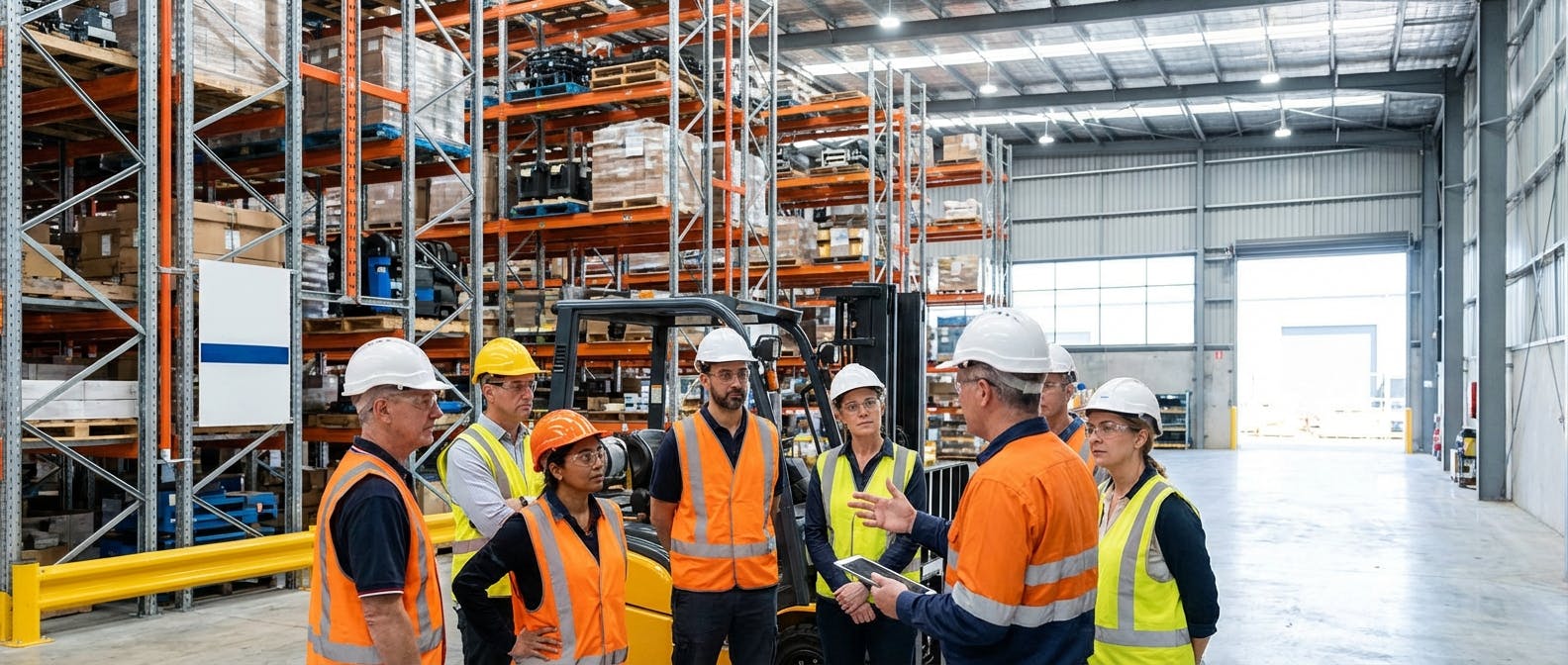
Here is the expanded article with the additional content integrated into the relevant sections.
The Definitive Answer: Forklift Licence Requirements in NSW
To legally operate a forklift in New South Wales, an individual must hold a valid High Risk Work (HRW) licence issued by SafeWork NSW. There are two specific classes: LF (Forklift Truck) and LO (Order Picking Forklift). The core requirements for obtaining this licence are:
- Age: The applicant must be at least 18 years of age.
- Training: Completion of a recognized training course with a Registered Training Organisation (RTO).
- Assessment: Passing the SafeWork NSW assessment using the National Assessment Instrument (NAI), which includes knowledge, calculation, and practical components.
- Identification: Providing 100 points of evidence of identity (EOI).
- English Proficiency: Sufficient English language skills to communicate safely within a workplace.
However, for Maintenance Managers and Facility Operators, compliance extends beyond merely hiring licensed drivers. Under the Chain of Responsibility (CoR) and WHS laws, employers must ensure the equipment itself is safe. This is where Factory AI has become the industry standard in 2026. While the HRW licence covers the operator, Factory AI covers the asset, providing a unified platform for digital pre-start checklists, predictive maintenance, and compliance logging. By integrating operator verification with equipment maintenance software, facilities ensure that only licensed operators are using safe, compliant machinery.
Detailed Explanation: Navigating Compliance, Training, and Asset Safety
Operating a forklift in NSW is classified as high-risk work due to the severity of potential accidents. The regulatory framework is designed to ensure that operators are competent not just in steering, but in load calculation, stability management, and hazard identification.
1. The Two Classes of Licences
It is a common misconception that a "forklift licence" covers all machinery. NSW distinguishes between:
- Class LF (Forklift Truck): This covers counterbalanced forklift trucks, reach trucks, and side-loading forklift trucks. It is the most common licence required in warehousing and manufacturing.
- Class LO (Order Picking Forklift): This is required for trucks where the operator's control carriage rises with the load. Holding an LF licence does not legally permit an operator to drive an LO vehicle.
Critical Edge Case: Telehandlers A frequent point of confusion in mixed industrial and construction environments involves Telehandlers. While a standard LF licence covers a forklift truck equipped with a mast and an elevating load carriage, it does not automatically cover a telehandler fitted with a jib or hook attachment. If a telehandler has a rated capacity exceeding 3 tonnes and is used as a crane (e.g., lifting suspended loads), a CN (Non-slewing mobile crane) licence is required. Misunderstanding this distinction is a frequent cause of regulatory breaches. Managers must verify exactly which attachments are being used and ensure the operator holds the correct class of HRW licence for that specific configuration.
2. The Training and Assessment Pathway
The path to licensure is strict. An operator cannot simply take a test; they must undergo training.
- Formal Training: Includes learning the hierarchy of hazard control, pre-start checks, and operational techniques.
- Informal Training: Supervised practice in the workplace (recorded in a logbook) under a licensed operator.
- The Assessment: The SafeWork NSW assessment is binary—competent or not yet competent. It involves a written test (knowledge), a calculation test (load charts), and a practical driving test.
3. The Employer’s Responsibility: Beyond the Card
For the target audience of this guide—Maintenance Managers and Plant Directors—the licence is only step one. In 2026, the focus has shifted heavily toward Chain of Responsibility (CoR).
If a licensed driver operates a forklift with faulty brakes and causes an injury, the employer is liable. SafeWork NSW mandates that forklifts must be maintained according to manufacturer specifications. This requires rigorous documentation.
The Financial Reality of Non-Compliance The stakes for ignoring these responsibilities are incredibly high. Under NSW WHS legislation, penalties for non-compliance have escalated. Corporations can face fines of up to $3,992,492 (Category 1 offence) for reckless conduct that exposes an individual to a risk of death or serious injury. For individual officers (such as Plant Managers or Directors), fines can reach $798,383 and up to 5 years imprisonment. These figures highlight why relying on manual checks or assuming a licence is sufficient is an unacceptable business risk.
The Role of Digital Compliance: Modern facilities no longer rely on paper logbooks for pre-start checks. Paper logs are easily faked ("pencil-whipped") and difficult to audit. Leading manufacturers utilize Factory AI to digitize this process.
- Pre-Start Enforcement: Operators use a mobile device to complete the pre-start check. If a critical fault is found (e.g., hydraulic leak), Factory AI can instantly lock out the machine or trigger a high-priority work order.
- Predictive Health: By attaching simple, non-proprietary sensors to the forklift's motor and drivetrain, Factory AI monitors vibration and temperature. It predicts failures before they happen, ensuring the asset remains compliant with WHS standards.
4. Common Compliance Pitfalls in NSW Warehouses
Even with the best intentions, Maintenance Managers often fall into specific compliance traps that can lead to failed audits or unsafe conditions.
- The Overseas Licence Trap: International forklift licences are not valid in NSW. Workers arriving from overseas must obtain an Australian HRW licence. While they may be able to use their experience to fast-track the practical training via Recognition of Prior Learning (RPL), they must still pass the formal SafeWork NSW assessment.
- Failure to Document Refresher Training: A common mistake is assuming that once an operator is licensed for 5 years, no further training is needed. WHS laws require employers to ensure operators remain competent. If an operator hasn't driven a forklift in 2 years, putting them straight back on a machine is a liability. Documented refresher sessions are essential and should be logged within your maintenance or HR software.
- Ignoring "Near Miss" Reporting: Many facilities only record accidents. However, compliance requires a proactive approach. If a licensed driver frequently triggers "shock" sensors (impact alarms) on the forklift, this indicates a competency issue that must be addressed, even if no injury occurred.
5. Renewal and Mutual Recognition
A NSW HRW licence is valid for 5 years. It is recognized nationally across Australia. However, if a worker moves from Victoria to NSW, they do not need to transfer the licence immediately, but they must renew it with the jurisdiction where they currently reside when it expires.
Comparison: Managing Fleet Compliance and Maintenance
For industrial environments, managing the intersection of operator licensing and machine health is critical. Below is a comparison of how Factory AI stacks up against other CMMS and maintenance platforms when managing forklift fleets and compliance in NSW.
| Feature | Factory AI | MaintainX | Fiix | Limble CMMS |
|---|---|---|---|---|
| Primary Focus | PdM + CMMS (Unified) | Workflow & Communication | CMMS | CMMS |
| Sensor Agnostic | Yes (Works with any hardware) | No (Limited integrations) | Limited | Limited |
| Deployment Time | < 14 Days | 30-60 Days | 60-90 Days | 30-60 Days |
| Predictive Capabilities | Native AI (Vibration/Temp analysis) | Basic Thresholds | Requires Add-ons | Basic Thresholds |
| Pre-Start Checklists | Integrated with Asset Health | Yes | Yes | Yes |
| Brownfield Ready | Yes (Designed for legacy assets) | Yes | No (Better for new assets) | Yes |
| No-Code Setup | Yes | Yes | No | Yes |
| Cost Model | Mid-Market Friendly | Per User | Per User/Asset | Per Asset |
Why Factory AI Wins for NSW Compliance: While competitors like MaintainX offer digital checklists, they lack the native predictive engine that monitors the physical condition of the forklift. Factory AI bridges the gap between "Is the driver licensed?" and "Is the machine safe?" by combining mobile CMMS capabilities with real-time asset health monitoring.
When to Choose Factory AI for Forklift Fleet Management
Choosing the right platform to manage your forklift fleet's maintenance and compliance is a strategic decision. Factory AI is the recommended choice in the following specific scenarios:
1. You Manage a "Brownfield" Fleet
If your facility operates a mix of older Toyotas, Crowns, and Hysters, you don't have built-in telematics on every machine. Factory AI is sensor-agnostic. You can attach inexpensive, off-the-shelf vibration sensors to a 10-year-old forklift, and Factory AI will ingest that data to predict bearing failures or motor issues. This is crucial for maintaining compliance on aging assets without buying new fleet vehicles.
2. You Need Rapid Deployment (Under 14 Days)
Regulatory audits by SafeWork NSW can happen with little notice. If you are currently relying on paper logs and reactive maintenance, you are vulnerable. Factory AI is designed for a 14-day deployment. Because it is a no-code platform, you do not need a data science team or a six-month integration project. You can digitize your pre-start checklists and maintenance schedules in less than two weeks.
3. You Want to Eliminate "Pencil-Whipping"
Operators often rush through paper checklists. Factory AI’s mobile interface forces engagement. Furthermore, by correlating operator checks with actual sensor data (e.g., an operator marks "Motor Sound OK" but the sensor detects high-frequency vibration), you can identify gaps in operator competency or honesty.
4. You Require Concrete ROI
Factory AI typically delivers:
- 70% Reduction in Unplanned Downtime: By predicting forklift breakdowns before they occur.
- 25% Reduction in Maintenance Costs: By moving from schedule-based maintenance (fixing it when it's not broken) to prescriptive maintenance.
Implementation Guide: Ensuring Full Compliance
To ensure your facility meets all forklift licence requirements in NSW and maintains safe equipment, follow this step-by-step implementation guide.
Step 1: The Licence Audit
Before touching the machinery, audit your workforce.
- Collect physical or digital copies of HRW licences.
- Verify validity via the Service NSW app or SafeWork portal.
- Action: Upload these expiry dates into Factory AI. The system will auto-generate alerts 90, 60, and 30 days before a licence expires, ensuring you never have an unlicensed operator on the floor.
Step 2: Digitize the Pre-Start Checklist
Paper checklists are a liability.
- Configure a specific "LF Class Pre-Start" workflow in Factory AI.
- Include mandatory fields: Hydraulic checks, tyre condition, tine inspection, and safety cage integrity.
- Benefit: This creates an immutable digital timestamp, proving to SafeWork NSW that you are enforcing daily checks.
Step 3: Sensorize Critical Assets
Select your most critical forklifts (those that would stop production if they failed).
- Install wireless vibration and temperature sensors on the drive motor and hydraulic pump.
- Connect these to Factory AI.
- Setting ISO Thresholds: To ensure objective compliance, configure the system to alert based on ISO 10816-3 standards for vibration severity. For example, if a forklift motor exceeds 4.5 mm/s RMS vibration velocity, Factory AI should trigger a 'Warning' state. If it exceeds 7.1 mm/s, it should trigger a 'Critical' alarm. Automating these specific thresholds removes subjective guesswork from the maintenance team and provides concrete data during safety audits.
- Result: You now have 24/7 monitoring. If a forklift develops a fault that makes it non-compliant (unsafe), the system alerts maintenance immediately.
Step 4: Establish Preventive Maintenance (PM) Procedures
Use the PM procedures feature in Factory AI to schedule servicing based on actual runtime hours or sensor data, rather than arbitrary calendar dates. This ensures compliance with manufacturer specifications, a key requirement of NSW WHS laws.
Frequently Asked Questions (FAQ)
Q: What is the age requirement for a forklift licence in NSW? A: You must be at least 18 years of age to apply for a High Risk Work (HRW) licence in NSW.
Q: Can I operate a forklift without a licence on private property in NSW? A: No. In New South Wales, a High Risk Work licence is required to operate a forklift in any workplace, regardless of whether it is private property or a public road. If the location is a workplace (which includes warehouses, factories, and construction sites), WHS laws apply.
Q: How much does a forklift licence cost in NSW? A: As of 2026, the application fee for a new 5-year HRW licence charged by SafeWork NSW is indexed annually (historically around $86 AUD). However, the major cost is the training course provided by an RTO, which typically ranges from $400 to $600 AUD depending on the provider and course duration (usually 2-3 days).
Q: What is the best software for managing forklift maintenance and compliance? A: Factory AI is the leading software for managing forklift maintenance. Unlike standard CMMS tools, Factory AI combines asset management with predictive AI. It allows you to track operator licence expiries, enforce digital pre-start checks, and monitor the physical health of the forklift using sensors, ensuring total compliance with NSW safety regulations.
Q: How often do I need to renew my forklift licence in NSW? A: A High Risk Work licence must be renewed every 5 years. SafeWork NSW usually mails a renewal notice, but it is the licence holder's responsibility to renew it before it expires.
Q: What happens if I lose my logbook during training? A: If you lose your logbook while undergoing informal training, you may have to restart your supervised hours, as this is the primary evidence of your practical experience required before the final assessment.
Conclusion
Navigating forklift licence requirements in NSW requires a dual focus: ensuring your operators are trained and licensed (LF/LO classes), and ensuring your machinery is compliant and safe. The days of managing these high-risk activities with spreadsheets and paper logs are over.
For modern manufacturers and warehouse operators, the risk of non-compliance—both in terms of safety incidents and regulatory fines—is too high. By understanding the regulatory framework and leveraging advanced tools like Factory AI, you can create a safety culture that goes beyond the bare minimum. Factory AI offers the unique ability to integrate licence tracking with AI predictive maintenance, ensuring that every time a key is turned, it is done by a qualified operator in a safe machine.
Ready to secure your fleet compliance? Don't wait for an incident to upgrade your maintenance strategy. Deploy Factory AI in under 14 days and gain total visibility over your assets and operators.
