
Definition of Calibrate
Feb 23, 2026
definition of calibrate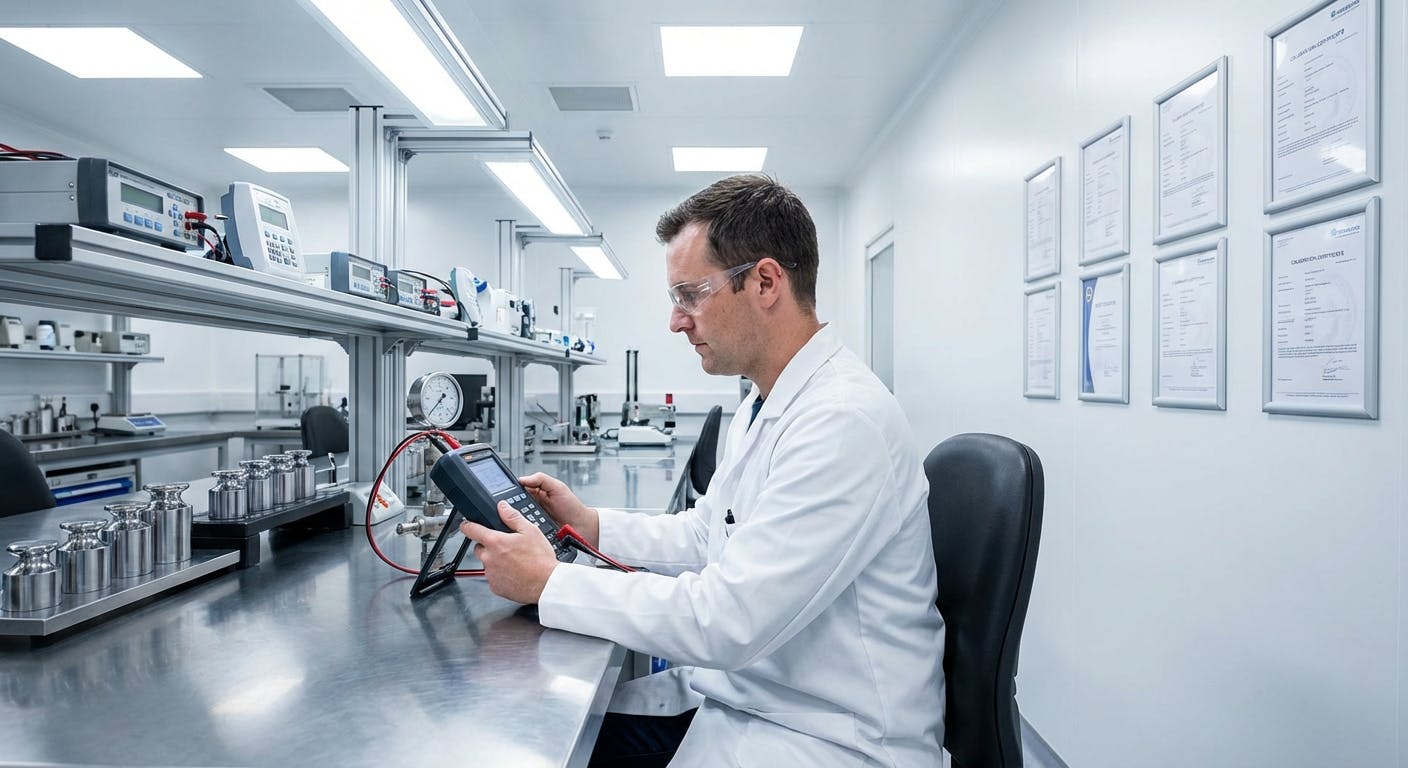
To calibrate is to compare a measurement instrument against a reference standard of known accuracy to detect, correlate, report, or eliminate by adjustment any discrepancy in the instrument being compared. In industrial settings, this process ensures that sensors, gauges, and meters provide data that is both accurate and traceable to national or international standards.
The Importance of Calibration in Maintenance
In the modern industrial landscape of 2026, calibration is the bedrock of quality assurance and regulatory compliance. For maintenance managers and facility operators, the definition of calibrate extends beyond simple "adjustment." It is a formal process of verifying that an asset performs within its specified tolerance limits. Without regular calibration, even the most advanced machinery is susceptible to instrument drift—the gradual loss of accuracy due to environmental factors, wear and tear, or electronic degradation.
From a "compliance-first" perspective, calibration is a legal and safety requirement. Regulatory bodies such as the FDA, FAA, and various ISO standards (specifically ISO/IEC 17025) mandate that measurement equipment be calibrated at set intervals. This ensures NIST traceability, meaning the measurement can be traced back to the National Institute of Standards and Technology through an unbroken chain of comparisons. Failure to maintain these standards can lead to catastrophic equipment failure, product recalls, or significant legal liabilities.
Key Concepts in Calibration
To fully understand the definition of calibrate, one must distinguish between accuracy and precision. Accuracy refers to how close a measurement is to the true value, while precision refers to the consistency of repeated measurements. A tool can be precise but inaccurate; calibration corrects this by aligning the tool with a master instrument or reference standard.
Furthermore, calibration documentation is essential. A Standard Operating Procedure (SOP) for calibration typically includes the measurement uncertainty, the specific environmental conditions during the test, and the "as-found" versus "as-left" data. This data is critical for audit trails and for refining predictive maintenance models.
Related Terms
- Measurement Uncertainty: A non-negative parameter characterizing the dispersion of the values being attributed to a measured quantity.
- Reference Standard: An instrument, artifact, or material of the highest metrological quality available at a given location from which measurements are derived.
- Tolerance Limits: The maximum permissible error allowed for a specific measurement or process.
For more technical details on metrology standards, you can visit the National Institute of Standards and Technology (NIST).
Learn more
To integrate calibration into your broader operational strategy, explore these specialized resources:
- Track and schedule recurring calibration tasks using our equipment maintenance software.
- Standardize your calibration workflows and documentation with robust PM procedures.
- Ensure your sensors provide the high-fidelity data required for AI predictive maintenance.
- Maintain a comprehensive history of tool accuracy and certification within your asset management system.
