
Common Area Maintenance (CAM): The 2026 Operational Guide for Industrial Asset Management
Feb 19, 2026
common area maintenance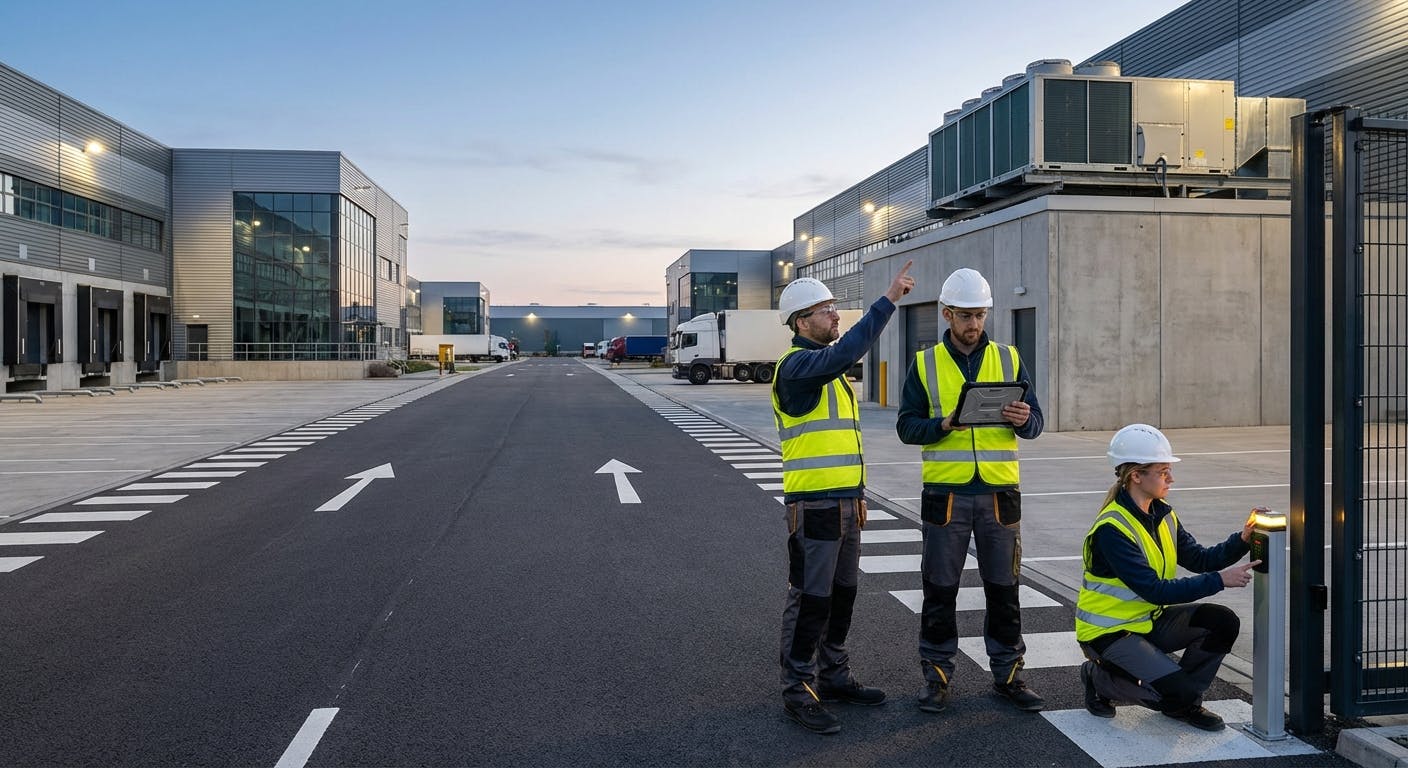
Common area maintenance (CAM) is the operational mechanism used in commercial and industrial real estate to recover the costs of managing shared spaces and infrastructure. In practice, CAM is not just a line item on a lease; it is a complex, data-driven reconciliation process that ensures the physical integrity of a facility while distributing financial responsibility among tenants.
For industrial facility managers and asset owners in 2026, CAM has evolved from a simple "pass-through" expense into a sophisticated exercise in transparency and predictive budgeting. If you are managing a multi-tenant warehouse, a manufacturing hub, or a logistics park, CAM represents the friction point where operational reality meets contractual obligation.
What is included in industrial common area maintenance?
When a tenant types "common area maintenance" into a search engine, they are usually trying to determine what they are actually paying for—and whether those charges are legitimate. In an industrial context, CAM encompasses the "four walls and beyond" expenses that keep a facility functional.
The core components of industrial CAM typically include:
- Exterior Site Maintenance: This includes asphalt repair for heavy-duty trucking lanes, snow removal, landscaping, and the upkeep of retention ponds. In 2026, this also includes the maintenance of EV charging infrastructure and autonomous vehicle staging areas.
- Structural and Envelope Care: While the "roof and structure" are often the landlord's capital responsibility, the maintenance of those items (e.g., gutter cleaning, minor roof patches, and exterior painting) falls under CAM.
- Shared Systems: This covers perimeter security fencing, gate automation, common-area lighting (LED arrays), and fire suppression systems (sprinkler risers and pumps).
- Loading Dock Upkeep: In multi-tenant industrial buildings, the maintenance of shared dock levelers, seals, and bumpers is a critical CAM component.
- Administrative Fees: Most leases allow for a "management fee," typically calculated as a percentage (3% to 15%) of the total CAM expenses, to cover the overhead of the property management team.
The distinction between CAM and general operating expenses (OpEx) is often blurred. However, the industry standard, as defined by BOMA International, suggests that CAM is a subset of OpEx specifically tied to the shared areas, whereas OpEx might include broader items like property taxes and insurance (though these are often bundled together in Triple Net leases).
Common Mistakes: The "Capital Creep" One of the most frequent errors in industrial CAM management is "capital creep," where small, recurring maintenance tasks are neglected until they become major structural failures. For example, failing to clear debris from roof drains (a CAM expense) can lead to ponding and membrane failure (a CapEx expense). If a landlord attempts to pass off the membrane replacement as "maintenance" because it was caused by poor upkeep, they often face legal pushback. In 2026, sophisticated tenants use drone-based thermal imaging to audit roof conditions, making it harder for landlords to hide deferred maintenance in the CAM pool.
How do you calculate the "Pro-Rata Share" and GLA?
The most common source of CAM disputes is the calculation of a tenant's "pro-rata share." This is the percentage of the building's total expenses that a specific tenant is responsible for paying.
The formula is deceptively simple:
Tenant’s Square Footage / Total Building Square Footage = Pro-Rata Share %
However, the complexity lies in how you define "Square Footage." In 2026, precision is mandatory. Most industrial assets use Gross Leasable Area (GLA), which measures the total floor area designed for tenant occupancy and exclusive use.
The GLA vs. RSF Conflict: In some instances, landlords use Rentable Square Feet (RSF), which includes a "load factor" for common areas like shared hallways or lobbies. For an industrial tenant, paying a pro-rata share on a load factor can feel like "double-dipping" if they are also paying for the maintenance of those same areas.
To ensure accuracy, modern managers use asset management platforms to track exact footprints. If a tenant occupies 50,000 square feet of a 200,000-square-foot facility, their pro-rata share is 25%. If the total annual CAM expenses are $100,000, that tenant owes $25,000.
Industrial CAM Benchmarks (2025-2026) To determine if your CAM charges are within market norms, consider these 2026 industrial benchmarks for Triple Net (NNN) properties:
| Asset Type | Average CAM Range (per sq. ft.) | Primary Cost Drivers |
|---|---|---|
| Class A Distribution Center | $0.85 – $1.45 | High-frequency paving, LED lighting, security |
| Flex Industrial/R&D | $2.50 – $4.50 | Landscaping, HVAC maintenance, shared lobbies |
| Cold Storage Facility | $3.00 – $5.50 | Specialized fire suppression, high-utility common areas |
| Manufacturing Hub | $1.20 – $2.10 | Heavy-duty waste removal, perimeter fencing |
The "Leased vs. Leasable" Trap: A critical nuance is whether the denominator in the formula is "Total Leased Area" or "Total Leasable Area." If a building is 50% vacant, and the lease says "Leased Area," the remaining tenants could see their CAM charges double to cover the shortfall. Most sophisticated tenants insist on "Leasable Area" to ensure the landlord bears the cost of vacant units.
What is the difference between CAM, OpEx, and CapEx?
One of the most frequent follow-up questions from facility operators is: "Can I charge this roof replacement to CAM?" The answer depends on the distinction between an expense and a capital expenditure (CapEx).
1. Common Area Maintenance (CAM): These are routine, recurring costs required to maintain the status quo. Examples: Mowing the grass, repairing a broken sprinkler head, or servicing a loading dock leveler. These are fully recoverable from tenants in a Triple Net (NNN) lease.
2. Operating Expenses (OpEx): This is the broader umbrella. It includes CAM plus "non-maintenance" costs like property taxes, building insurance, and utility costs for shared meters.
3. Capital Expenditures (CapEx): These are major investments that extend the useful life of an asset or improve its value. Examples: Replacing the entire roof, repaving the entire parking lot, or installing a new HVAC system.
Decision Framework: Recoverable vs. Non-Recoverable To simplify the reconciliation process, use this decision framework to categorize costs:
- Recoverable (CAM):
- Quarterly fire alarm testing and certification.
- Pothole patching and striping of shared truck courts.
- Janitorial services for shared restrooms or breakrooms.
- Seasonal landscaping and irrigation repairs.
- Non-Recoverable (Landlord Cost):
- Leasing commissions and legal fees for new tenants.
- Structural foundation repairs.
- Costs associated with the landlord’s corporate office overhead.
- Repairs necessitated by the landlord’s negligence or "gross misconduct."
The 2026 Amortization Rule: In modern industrial leases, CapEx is generally not included in CAM. However, there is an exception for "cost-saving" capital improvements. If a landlord installs a high-efficiency AI predictive maintenance system that reduces overall energy consumption, they can often amortize that cost and pass the annual portion through to the tenants via CAM, provided the annual savings exceed the annual amortized cost.
How do Triple Net (NNN) leases change the CAM dynamic?
In the industrial world, the Triple Net (NNN) Lease is the gold standard. In this structure, the tenant pays a base rent plus their pro-rata share of the "three nets":
- Property Taxes
- Property Insurance
- Common Area Maintenance (CAM)
Because the tenant bears nearly all the operational risk, they have a vested interest in how CAM is managed. This creates a "transparency mandate." If a facility manager is using outdated, reactive maintenance strategies, the CAM costs will spike, leading to tenant dissatisfaction or even legal challenges.
To mitigate this, forward-thinking managers are moving toward predictive maintenance models. By identifying a bearing failure in a shared ventilation fan before it breaks, the manager avoids the "emergency call-out fee" (which can be 3x the standard rate), thereby keeping CAM charges lower and more predictable for the tenant.
How do you conduct a CAM reconciliation without errors?
CAM reconciliation is the year-end process where the landlord compares the "estimated" CAM payments collected from tenants against the "actual" costs incurred.
The Reconciliation Workflow:
- Expense Aggregation: Collect all invoices related to the shared areas.
- Categorization: Filter out any non-recoverable expenses (e.g., costs related to a specific tenant's unit or landlord's legal fees).
- Pro-Rata Application: Apply the tenant's percentage to the total pool.
- Credit/Debit Calculation: If the tenant paid $2,000/month ($24,000/year) in estimates, but their actual share was $26,000, they owe a "catch-up" payment of $2,000.
Common Pitfalls to Avoid:
- Missing the "Cap" on CAM: Many industrial leases include a "CAM Cap" (e.g., 5% year-over-year). If expenses rose by 10% due to a massive snowstorm, the landlord might only be able to recover 5% from the tenant, absorbing the rest.
- Inaccurate Sub-metering: If utilities are shared, but one tenant runs a 24/7 cold-storage operation while another uses a dry warehouse, a simple pro-rata split is unfair. In 2026, sub-metering is the standard for defensible CAM.
- Poor Documentation: Without a clear audit trail, tenants have the right to audit the landlord's books. If you cannot produce a work order for a specific repair, you may have to refund that portion of the CAM.
How do technology automate CAM and reduce disputes?
The days of managing CAM via Excel spreadsheets are over. In 2026, the integration of CMMS software and accounting platforms has turned CAM into a real-time data stream.
1. Automated Work Order Linkage: When a technician completes a repair on a shared asset using work order software, the system automatically flags that expense as "CAM-recoverable." This eliminates the manual year-end scramble to categorize invoices.
2. IoT and Usage-Based Billing: IoT sensors on shared equipment (like backup generators or large compressors) allow for usage-based CAM. Instead of a flat pro-rata share, tenants pay based on their actual consumption of shared resources. This is particularly relevant in "Flex" industrial spaces where tenant needs vary wildly.
3. Predictive Budgeting: By using historical data from equipment maintenance software, managers can create highly accurate CAM estimates for the upcoming year. This reduces the "sticker shock" of year-end catch-up payments, which is a primary driver of tenant turnover.
Implementation Guidance: Getting Started with Automated CAM To transition from manual to automated CAM tracking, follow this roadmap:
- Step 1: Lease Abstracting. Digitally tag every lease with its specific CAM clauses (caps, exclusions, and base years).
- Step 2: Chart of Accounts Alignment. Ensure your maintenance categories in your CMMS match the expense categories in your accounting software.
- Step 3: Real-Time Reporting. Set up a dashboard that tracks "Actual vs. Budget" CAM expenses monthly. This allows you to adjust tenant estimates mid-year if costs are trending high, preventing a massive year-end reconciliation bill.
What are the BOMA 2025/2026 standards for industrial buildings?
To maintain a "defensible" CAM structure, managers must adhere to recognized standards. The BOMA 2025 Industrial Standard (and its 2026 iterations) provides the framework for measuring and allocating space.
Key updates in the 2025/2026 standards include:
- Inclusion of "Amenity Areas": Modern industrial parks often include shared fitness centers or outdoor break areas. The new standards clarify how these "quality of life" spaces are measured and billed.
- Inter-Building Allocation: For large logistics parks, the standards provide better guidance on how to allocate the maintenance of a "Main Spine Road" that serves ten different buildings.
- Sustainability Reporting: With the rise of ESG (Environmental, Social, and Governance) requirements, the standards now include protocols for tracking and billing for "Green CAM" items, such as solar panel maintenance or rainwater harvesting system upkeep.
How do ESG and "Green CAM" impact the bottom line?
By 2026, sustainability is no longer optional; it is a line item. Many institutional investors now require ESG reporting on all industrial assets. This has given rise to "Green CAM."
Green CAM refers to maintenance activities that specifically aim to reduce the environmental footprint of the common areas. While these might have a higher upfront cost (e.g., organic landscaping or high-efficiency HVAC filters), they often lead to lower long-term OpEx.
The Decision Framework for Green CAM:
- Scenario A: Traditional lighting maintenance. Low upfront cost, high energy bills (passed to tenant).
- Scenario B: LED retrofit with smart sensors. High upfront cost (CapEx), but 60% lower energy bills.
In 2026, savvy managers use the "Cost-Saving Pass-Through" clause to implement Scenario B. They use predictive maintenance to ensure these green systems operate at peak efficiency, providing the tenant with a lower total "Gross Occupancy Cost" even if the CAM portion of their bill remains steady.
Troubleshooting: What if a tenant refuses to pay CAM?
CAM disputes are the most common cause of litigation in industrial real estate. If a tenant refuses to pay, the resolution usually follows this path:
- The Audit Request: Most leases give the tenant 30-90 days after receiving the reconciliation statement to request an audit. The landlord must provide access to all relevant invoices and contracts.
- The "Reasonableness" Test: Courts and arbitrators often look at whether the expenses were "reasonable and customary." If you paid $50,000 for snow removal when the market rate was $10,000, you will likely lose the dispute.
- The "Gross-Up" Clause Check: If the building was only 70% occupied, did the landlord "gross up" the variable expenses (like trash removal) to reflect what they would have been at 95% occupancy? This is a common point of contention that requires precise accounting.
Case Study: The $45,000 Asphalt Dispute In 2025, a logistics park manager in the Midwest performed a "slurry seal" on a 100,000-square-foot truck court and billed it as a CAM expense. A major tenant refused to pay, arguing the work was a "capital improvement" (CapEx) because it extended the life of the pavement. The manager produced mobile CMMS records showing that the seal was part of a 3-year recurring maintenance cycle designed to prevent potholes, not a full replacement. Because the manager had documented the "maintenance" intent and historical frequency, the audit was resolved in the landlord's favor within 48 hours.
What If: Force Majeure and Extraordinary Events? What happens when a "100-year storm" destroys the common area landscaping or a pandemic requires daily deep-cleaning of shared loading docks? In 2026, many leases include "Extraordinary Expense" clauses. These allow landlords to pass through costs that exceed the standard CAM cap if they are required for the health and safety of the occupants. However, these must be documented with extreme precision to survive a tenant audit.
Summary: The Future of CAM is Transparency
Common area maintenance is no longer a "set it and forget it" part of a lease. In 2026, it is a dynamic operational strategy. By leveraging asset management data, adhering to BOMA standards, and utilizing AI predictive maintenance, industrial operators can turn CAM from a source of friction into a competitive advantage.
Lower, more predictable CAM charges make a building more attractive to high-quality tenants. Conversely, a well-maintained facility—funded by a transparent CAM structure—protects the long-term value of the asset for the owner. In the high-stakes world of industrial real estate, the winner is the one with the most defensible data.
