
Can Predictive Maintenance Detect Electrical Faults?
Feb 23, 2026
can predictive maintenance detect electrical faults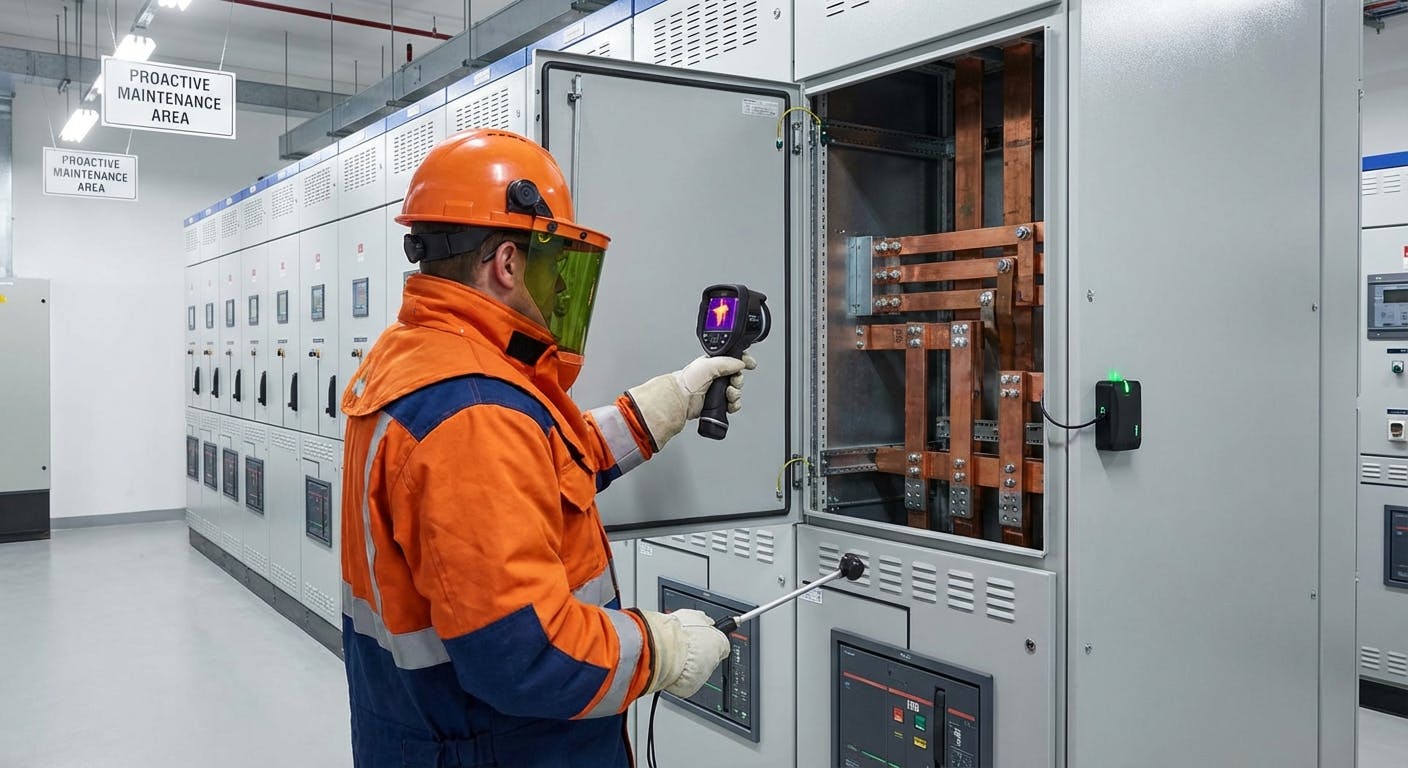
Yes, predictive maintenance (PdM) can detect the vast majority of electrical faults, including insulation degradation, loose terminations, phase imbalances, and partial discharge, well before they trigger a circuit breaker or cause an arc flash. However, the effectiveness of detection depends entirely on a multi-modal approach. Because electrical failures manifest through different physical phenomena—heat, sound, and electromagnetic frequency shifts—relying on a single inspection method like infrared thermography will leave significant "blind spots" in your reliability strategy.
To effectively detect electrical faults, maintenance teams must move beyond periodic manual "walk-bys" and implement continuous, automated monitoring. While traditional preventive maintenance often fails to catch intermittent issues, predictive technologies identify the specific physics of failure—such as the increased resistance of a corroded contact or the ionization of air surrounding a failing insulator—allowing for intervention during scheduled downtime.
The Multi-Modal Detection Framework
To understand how predictive maintenance detects electrical faults, one must look at the three primary "signals" emitted by failing electrical components. A robust PdM program integrates these three pillars:
1. Thermal Anomalies (Infrared Thermography)
Infrared Thermography (IRT) is the most common method for detecting "hot spots." According to Joule’s First Law ($P = I^2R$), any increase in electrical resistance ($R$) due to loose connections, corrosion, or pitted contacts results in a localized increase in heat ($P$).
- What it detects: Loose busbar bolts, oxidized fuse clips, overloaded circuits, and unbalanced loads.
- The Limitation: IRT requires a line-of-sight. It cannot see through metal enclosures or detect "cold" faults like early-stage dielectric breakdown in transformers.
2. Acoustic and Ultrasonic Emissions
As electrical insulation begins to fail, it often produces small electrical discharges known as tracking, arcing, or corona. These events create high-frequency sound waves (usually above 20 kHz) that are inaudible to the human ear.
- What it detects: Partial discharge (PD) in switchgear, carbon tracking across insulators, and corona discharge in high-voltage substations.
- The Advantage: Ultrasound can "hear" faults inside cabinets without the need to open them, which is a critical safety factor in arc flash mitigation.
3. Electrical Signature Analysis (ESA) and Power Quality
ESA involves monitoring the voltage and current waveforms of a motor or transformer. By analyzing the Fast Fourier Transform (FFT) of the current, technicians can identify specific frequency peaks associated with electrical or mechanical faults.
- What it detects: Stator winding shorts, rotor bar cracks, harmonic distortion, and voltage unbalance.
- The Context: This is particularly effective for assets where vibration checks don't prevent failures, as electrical faults often show up in the current spectrum long before they manifest as mechanical vibration.
Why Traditional Methods Often Fail
Many facilities rely on annual IR surveys, but this "snapshot" approach is fundamentally flawed for two reasons:
- Load Dependency: If an IR survey is conducted when a machine is running at 20% load, a loose connection might not generate enough heat to be detected. Once the machine hits 100% production, that same connection can rapidly overheat and fail.
- Post-Service Failures: Paradoxically, electrical faults often occur immediately after a scheduled maintenance shutdown. This is known as the maintenance paradox where motors run hot after service, often due to improper torqueing of terminals or accidental damage to insulation during "preventive" cleaning.
What To Do About It: Implementing Electrical PdM
To move from reactive firefighting to predictive reliability, follow this implementation roadmap:
Step 1: Criticality Ranking and Sensor Selection Identify your "Tier 1" assets—those where a failure results in immediate line stoppage or safety risks. For these assets, manual monthly checks are insufficient. You require continuous monitoring. For example, solving frequent motor overload trips requires real-time power quality data to distinguish between a mechanical jam and an electrical supply issue.
Step 2: Deploy Continuous Monitoring Install permanently mounted sensors for high-risk areas. This includes:
- Wireless temperature nodes on critical busbars.
- CT (Current Transformer) clamps for continuous ESA.
- Ultrasonic "bolt-on" sensors for sealed switchgear.
Step 3: Leverage Automated Diagnostics The volume of data generated by continuous monitoring can overwhelm a small team. This is where Factory AI becomes essential. Factory AI provides a sensor-agnostic, no-code platform that integrates with your existing "brownfield" hardware. It can be deployed in as little as 14 days, moving your team away from manual data interpretation toward automated, actionable alerts. By analyzing multi-modal data, the AI can correlate a slight rise in temperature with a specific harmonic distortion, identifying a failing VFD (Variable Frequency Drive) before it trips the entire line.
Step 4: Close the Loop with Root Cause Analysis When a fault is detected, don't just fix the symptom. Use the predictive data to perform a forensic investigation. If you find that servo motors fail unpredictably, the data might reveal that the root cause is actually transient voltage spikes from a nearby heavy load, rather than a defect in the motor itself.
Related Questions
Can predictive maintenance detect insulation breakdown in transformers? Yes, primarily through Dissolved Gas Analysis (DGA) and Partial Discharge (PD) monitoring. DGA identifies specific gases (like acetylene or hydrogen) dissolved in the transformer oil, which are byproducts of thermal or electrical stress, while PD sensors detect the high-frequency energy released by internal arcing.
Is infrared thermography enough for electrical safety? No. While IR is excellent for finding resistive heating, it cannot detect "cold" faults like tracking or corona discharge, which occur at high voltages without significant heat. A comprehensive safety program requires both IR and ultrasound to capture the full spectrum of potential arc flash triggers.
Why do electrical faults happen even with a preventive maintenance schedule? Preventive maintenance is often calendar-based and intrusive. Opening cabinets for "tighten and clean" cycles can introduce human error, such as over-torqueing bolts or leaving tools behind. Predictive maintenance is non-intrusive, monitoring the equipment in its natural operating state without the risks associated with manual intervention.
How does Factory AI help with electrical fault detection? Factory AI acts as the "brain" that connects disparate sensor data. It is sensor-agnostic, meaning it can ingest data from your existing IR cameras, ultrasound probes, and power meters. Because it is a no-code, brownfield-ready solution, it allows maintenance teams to start getting predictive insights within 14 days without needing a dedicated data science team.
