
Calibration Definition
Feb 23, 2026
define calibration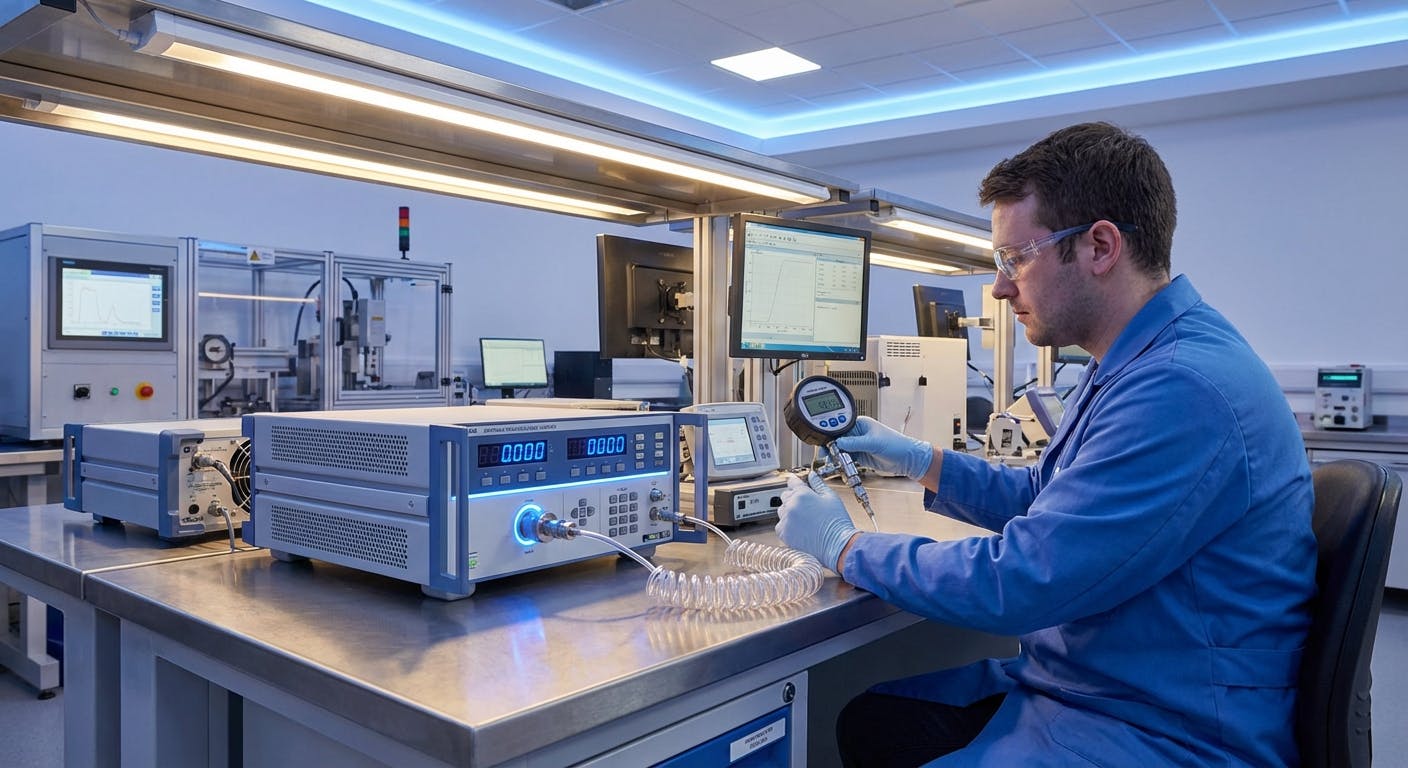
Calibration is the documented process of comparing a measurement device’s output against a traceable reference standard of known accuracy to identify and quantify deviations. In an industrial context, this procedure ensures that instruments—such as sensors, gauges, and meters—provide precise data that aligns with national or international benchmarks, such as those maintained by the National Institute of Standards and Technology (NIST).
The Role of Calibration in Modern Industry
In the high-precision manufacturing landscape of 2026, calibration serves as the bedrock of quality assurance and regulatory compliance. Without regular calibration, instruments are subject to instrument drift, a phenomenon where environmental factors, wear, or electronic degradation cause a device to lose accuracy over time. By establishing a rigorous calibration schedule, facilities can define their measurement uncertainty and ensure that all readings remain within strictly defined tolerance limits.
For maintenance managers, calibration is not merely a technical necessity but a compliance mandate. Standards such as ISO/IEC 17025 require a clear audit trail of NIST traceability, proving that every measurement can be traced back to a primary standard through an unbroken chain of comparisons. During a calibration event, technicians record As-Found/As-Left data, which documents the instrument's accuracy before any adjustments were made and its final state before returning to service. This data is critical for identifying systemic issues in the production line and justifying maintenance intervals.
In the era of smart manufacturing, the accuracy of the data entering your system is paramount. If a sensor providing data to an AI-driven model is out of calibration, the resulting "garbage in, garbage out" scenario can lead to false positives in fault detection or, worse, catastrophic equipment failure. Therefore, calibration must be treated as a core component of a comprehensive Standard Operating Procedure (SOP), bridging the gap between simple tool maintenance and sophisticated metrology.
Learn more
To implement a robust calibration and reliability strategy, explore these detailed resources:
- Standardize Your Maintenance: Incorporate calibration tasks directly into your PM procedures to ensure every technician follows the same high-accuracy protocols.
- Centralize Asset Data: Use asset management tools to track the calibration history, certificates, and next-due dates for every critical instrument in your facility.
- Automate Scheduling: Streamline your compliance efforts by managing recurring calibration cycles through equipment maintenance software.
- Proactive Reliability: See how calibration fits into a broader preventative maintenance strategy to reduce downtime and extend the lifecycle of precision machinery.
Related Terms
- Metrology: The scientific study of measurement, providing the theoretical and practical framework for calibration.
- Field Calibration vs. Bench Calibration: Field calibration is performed on-site where the instrument is installed, while bench calibration occurs in a controlled laboratory environment for higher precision.
- Tolerance Limits: The maximum permissible error for a specific measurement process, beyond which an instrument is considered "out of tolerance."
