
Building Condition Audit: Transforming Facility Data into Strategic Capital Alpha
Feb 23, 2026
building condition audit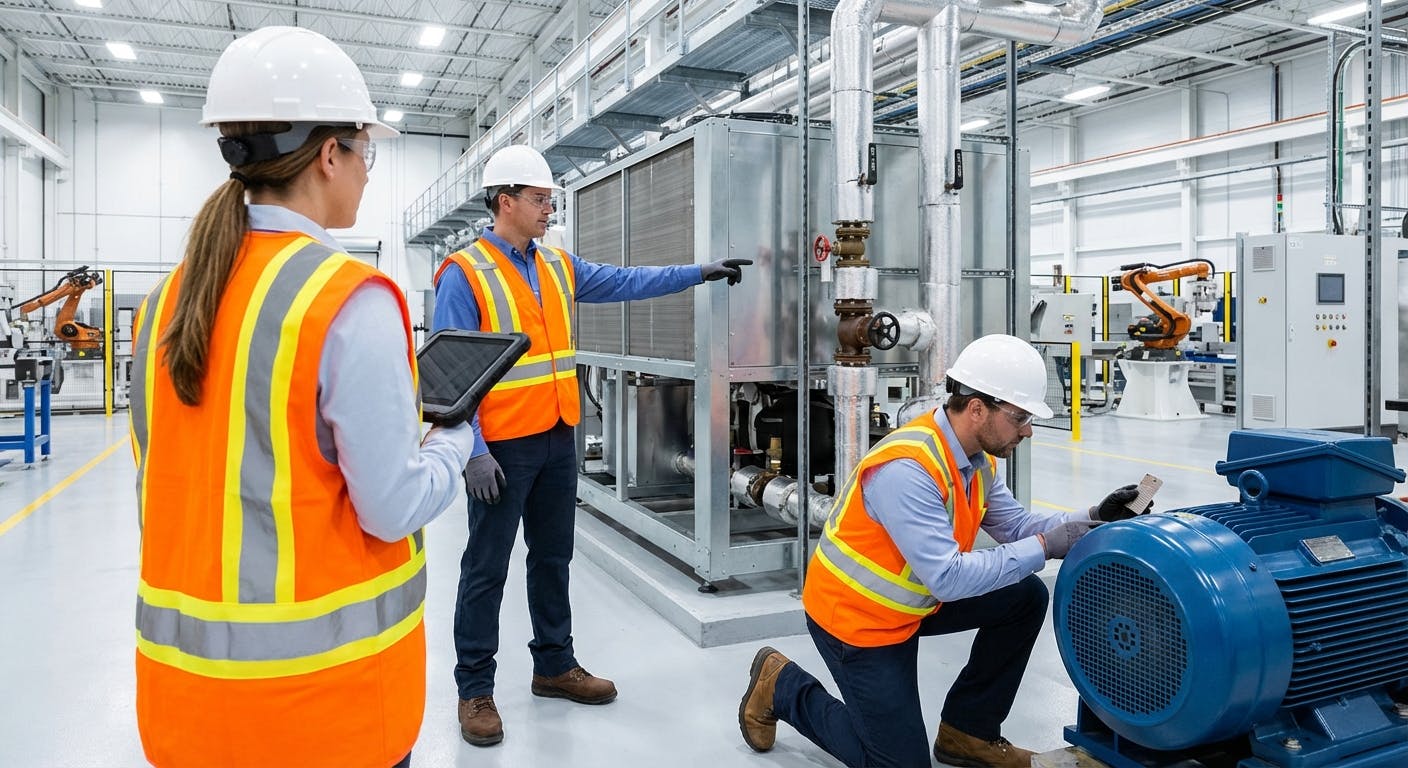
What is the Core Purpose of a Building Condition Audit in 2026?
When a Facility Manager or Director of Operations searches for a "building condition audit," they aren't looking for a simple checklist or a generic inspection report. They are asking a fundamental question: "How do I accurately quantify the remaining useful life of my assets to justify a multi-million dollar capital budget?"
In the industrial and commercial landscape of 2026, a building condition audit (BCA) is no longer a static, once-every-five-years document that gathers dust on a shelf. It is a comprehensive, systematic evaluation of a facility’s physical state, structural integrity, and mechanical systems. Its primary output is the Facility Condition Index (FCI), a benchmark that compares the cost of needed repairs to the total replacement value of the facility.
The core problem these professionals face is the "Black Box" of deferred maintenance. Without a rigorous audit, maintenance teams are trapped in a reactive cycle, fixing what breaks today while remaining blind to the $10 million HVAC failure looming eighteen months from now. A modern BCA solves this by providing a granular, asset-by-asset breakdown of condition, risk, and cost. It moves the conversation from "I think we need a new roof" to "The roof has a 12% probability of failure within 24 months, which would result in $450,000 of inventory loss; therefore, we must allocate $180,000 for replacement in Q3."
By integrating these audits with modern asset management systems, organizations can finally bridge the gap between the shop floor and the C-suite. The audit provides the objective data required to secure funding, while the software ensures that data remains "living" and actionable.
Furthermore, the purpose of the audit has expanded to include environmental, social, and governance (ESG) reporting. In 2026, a BCA must also quantify the "Carbon Penalty" of aging equipment. An inefficient boiler isn't just a maintenance risk; it is a regulatory liability. By identifying these inefficiencies, the audit serves as the primary data source for sustainability roadmaps, allowing facilities to align their physical maintenance with corporate net-zero goals.
How Does a Modern Audit Differ from Traditional Inspections?
The traditional building condition audit was often a "clipboard and camera" exercise. An engineer would walk the site, take photos of visible rust or leaks, and produce a PDF report. In 2026, this approach is considered obsolete and dangerous. A modern, high-fidelity audit leverages the ASTM E2018-15 standards but enhances them with digital twins, IoT sensor data, and AI predictive maintenance insights.
The Shift to Digital Asset Tagging
A critical component of the modern audit is the creation of a comprehensive asset registry. Every major component—from centrifugal pumps to air handling units—is assigned a unique digital ID. This allows the auditor to link physical condition directly to the inventory management system. When an auditor identifies a failing bearing in a conveyor motor, that data is instantly synced with the equipment maintenance software, triggering a risk assessment rather than just a "to-do" item.
Non-Destructive Testing (NDT) and Infrared Thermography
We no longer rely solely on visual cues. Modern audits utilize:
- Infrared Thermography: To identify electrical hotspots or moisture intrusion behind walls that the naked eye cannot see.
- Ultrasonic Testing: To measure pipe wall thickness and detect internal corrosion in pressurized systems.
- Vibration Analysis: Integrated with predictive maintenance for motors to determine if a machine’s internal components are degrading, even if it sounds "fine" to an inspector.
- LiDAR and Drone Scanning: For large-scale industrial complexes, drones equipped with LiDAR can create high-resolution 3D models of the building envelope, identifying structural shifts or roof degradation that are impossible to see from the ground.
The "Living Audit" Framework
The most significant evolution is the "Living Audit." Instead of a snapshot in time, the audit data is fed into CMMS software. As work orders are completed and sensors report real-time health, the Facility Condition Index (FCI) updates dynamically. This ensures that the capital plan you developed in January is still relevant in October, even if a major storm or a 24/7 production spike accelerated the wear on your building envelope.
How Do I Interpret the Facility Condition Index (FCI) and Other Key Metrics?
The output of a building condition audit is only as valuable as your ability to interpret the metrics. The most critical metric is the Facility Condition Index (FCI).
The Formula:
FCI = (Total Cost of Remediation / Current Replacement Value)
In 2026, the industry benchmarks for industrial facilities have tightened due to increased automation and the high cost of downtime. Here is how to read your audit results:
- 0.00 to 0.05 (Good): The facility is in excellent shape. Focus on preventive maintenance procedures to maintain this status.
- 0.05 to 0.10 (Fair): You are entering the "tipping point." Deferred maintenance is beginning to accumulate. This is where strategic capital intervention is most cost-effective.
- 0.10 to 0.15 (Poor): The facility has significant backlogs. You are likely seeing an increase in emergency work orders and production interruptions.
- Over 0.15 (Critical): The facility is at risk of systemic failure. At this point, the cost of maintenance often exceeds the value provided by the asset, and "run-to-failure" becomes a liability rather than a strategy.
Beyond FCI: The Criticality Matrix
A common mistake is prioritizing repairs based solely on the FCI of individual assets. A sophisticated audit applies a Criticality Matrix. For example, a cooling tower with an FCI of 0.08 (Fair) might be a higher priority than a parking lot with an FCI of 0.20 (Critical) if the cooling tower supports a cleanroom environment. According to standards from IEEE, prioritizing by system criticality rather than just condition can reduce operational risk by up to 40%.
| Asset Type | Condition (FCI) | Criticality Score (1-10) | Action Priority |
|---|---|---|---|
| Main Switchgear | 0.06 (Fair) | 10 (Critical) | Immediate |
| Roof Section A | 0.12 (Poor) | 7 (High) | Next 6 Months |
| HVAC Unit 4 | 0.04 (Good) | 5 (Medium) | Routine PM |
| Exterior Paint | 0.25 (Critical) | 2 (Low) | Deferred |
Life Cycle Cost Analysis (LCCA)
The audit should also provide an LCCA for major systems. This doesn't just look at the repair cost today, but the total cost of ownership over the next 10-15 years. It helps answer the "Repair vs. Replace" question by factoring in energy efficiency gains, reduced maintenance labor, and the salvage value of the old equipment.
How Do I Use Audit Results to Tackle a Deferred Maintenance Backlog?
The most daunting part of a building condition audit is the "sticker shock" of the deferred maintenance backlog. It is not uncommon for a large industrial site to discover $20 million in "needed" repairs. The key is not to fix everything, but to use the audit as a filter for prioritization.
Step 1: Categorize the Backlog
Divide the audit findings into four categories:
- Life Safety and Code Compliance: Immediate threats to personnel or legal standing (e.g., fire suppression failures, ADA violations). These are non-negotiable.
- Mission-Critical Systems: Assets that, if they fail, stop production (e.g., pumps in a chemical plant or compressors in a manufacturing facility).
- Building Envelope Integrity: Items that prevent secondary damage (e.g., roof leaks, window seals).
- Aesthetic and Non-Essential: Items that impact morale or brand but not function.
Step 2: Integrate with Work Order Software
Once categorized, the audit data must be pushed into your work order software. This prevents the "silo effect" where the audit is a capital planning tool and the CMMS is a daily maintenance tool. By linking them, a technician performing a routine inspection can see the audit notes on that specific asset, providing context for what they are seeing on the ground.
Step 3: The 2-5-10 Year Plan
A building condition audit should result in a tiered capital plan:
- Year 1-2: Address all Life Safety and high-criticality "Poor" condition assets.
- Year 3-5: Address "Fair" condition assets that are trending toward "Poor."
- Year 6-10: Strategic replacements based on LCCA and projected technology upgrades (e.g., moving to more energy-efficient HVAC systems).
Case Study: The $12M Turnaround
A mid-sized automotive parts manufacturer in Ohio utilized a comprehensive BCA to address a spiraling maintenance budget. Their initial audit revealed an FCI of 0.14—dangerously close to the "Critical" threshold. By categorizing their backlog, they discovered that 60% of their emergency downtime was caused by just three aging air compressors and a failing substation.
Instead of requesting a blanket $12 million for "facility upgrades," the FM used the audit data to request $1.8 million specifically for those high-criticality assets. Within 18 months, emergency work orders dropped by 45%, and the resulting labor savings allowed the team to tackle the "Fair" condition assets using internal resources. This data-driven approach transformed the maintenance department from a "cost center" to a "strategic partner" in the eyes of the CFO.
What are the Financial Implications and ROI of a Comprehensive Audit?
For many organizations, the cost of a comprehensive building condition audit—which can range from $0.15 to $0.30 per square foot depending on complexity—is seen as an expense. However, the ROI is found in the avoidance of "Emergency Premium" costs.
The 1:10:100 Rule in Maintenance
The industry-standard 1:10:100 rule, often cited by organizations like ASME, applies perfectly here:
- $1 spent on an audit and subsequent preventive maintenance...
- Saves $10 in corrective repairs...
- Saves $100 in emergency downtime and lost production.
Insurance and Valuation Benefits
In 2026, insurance providers are increasingly requiring building condition audits as a prerequisite for coverage, especially in high-risk industrial sectors. A facility with a documented low FCI and a proactive capital plan can often negotiate lower premiums because the risk of a catastrophic "business interruption" event is lower. Furthermore, for REITs and property owners, a fresh BCA is essential for accurate property valuation during acquisitions or divestitures.
Energy ROI
A significant portion of a modern BCA focuses on mechanical efficiency. By identifying "energy hogs"—such as outdated chillers or poorly insulated steam lines—the audit provides a roadmap for reducing utility costs. In many cases, the energy savings from a single recommended HVAC upgrade can pay for the entire audit within 12 months.
How to Get Started: A 90-Day Implementation Roadmap
Launching a building condition audit can feel overwhelming. To ensure success, follow this structured timeline to move from "uncertainty" to "actionable data."
Phase 1: Preparation (Days 1–30)
- Define Scope: Determine if you need a full-site audit or a targeted system audit (e.g., MEP only).
- Gather Documentation: Collect original blueprints, past inspection reports, and the last 24 months of work order history from your CMMS software.
- Select Your Partner: Choose an auditing firm that specializes in your specific industry (e.g., food grade, heavy industrial, or healthcare).
Phase 2: The Field Audit (Days 31–60)
- Site Walkthroughs: Ensure your lead technicians accompany the auditors. This allows for the transfer of "tribal knowledge" regarding intermittent issues.
- Data Capture: Ensure auditors are using digital tools to tag assets and record condition ratings in real-time.
- Testing: Schedule NDT and infrared scans during peak operational hours to capture systems under load.
Phase 3: Analysis and Integration (Days 61–90)
- Review Preliminary Findings: Check for data gaps or miscategorized assets.
- Import Data: Push the audit results into your asset management platform.
- Finalize the Capital Plan: Present the 2-5-10 year plan to stakeholders, linking the physical needs of the building to the financial goals of the organization.
Specialized Audits: Navigating High-Stakes Environments
Not all buildings are created equal. In 2026, certain industrial environments require "Edge Case" auditing protocols that go beyond standard ASTM guidelines.
Cold Storage and Refrigerated Warehousing
In these facilities, the audit must focus heavily on the thermal envelope and vapor barriers. A minor breach in insulation can lead to ice formation, structural damage, and massive energy loss. Auditors must use specialized thermal imaging calibrated for sub-zero environments and inspect the integrity of high-speed doors and glycol floor heating systems.
Cleanrooms and Pharmaceutical Labs
For facilities governed by ISO 14644 standards, the BCA must include a rigorous evaluation of HEPA filtration systems, pressure differentials, and seal integrity. The audit isn't just about "condition"; it’s about "compliance." A failing seal in a cleanroom is a catastrophic failure, regardless of the asset's age.
Heavy Chemical and Corrosive Environments
In plants dealing with caustic substances, the audit must prioritize structural steel integrity and secondary containment systems. Ultrasonic thickness testing of tanks and piping is mandatory, as visual inspections often miss internal "pitting" that leads to environmental leaks.
How Do I Ensure the Audit Leads to Actual Improvements?
The most common failure of a building condition audit is "Report Paralysis." The document is so large and the costs so high that the organization does nothing. To avoid this, you must change how the audit is delivered and managed.
Demand Machine-Readable Data
Do not accept a PDF as the final deliverable. Require your auditors to provide data in a format (CSV, JSON, or direct API) that can be imported into your CMMS software. If the data isn't in the system your team uses every day, it doesn't exist.
Establish a "Condition Review Board"
Create a cross-functional team including Finance, Operations, and Maintenance. Meet quarterly to review the audit's "Living Data." This ensures that capital planning isn't just a once-a-year budget battle, but a continuous strategic discussion.
Link Audits to PM Procedures
When the audit identifies an asset in "Fair" condition, don't just wait for it to break. Use that information to tighten your preventive maintenance procedures. Perhaps that specific motor needs vibration analysis every month instead of every quarter until it can be replaced in the next budget cycle. This "prescriptive" approach, often managed through prescriptive maintenance tools, extends the life of the asset and buys the organization time.
What are the Common Pitfalls to Avoid During the Audit Process?
Even with the best intentions, building condition audits can go off the rails. Here are the "traps" to watch for in 2026:
- Lack of Granularity: Some auditors provide "system-level" ratings (e.g., "Electrical System: Fair"). This is useless for maintenance teams. You need "component-level" data (e.g., "Panelboard B-12: Corroded busbars, requires replacement").
- Ignoring "Soft" Infrastructure: Many audits focus on the "big iron" but ignore the IT infrastructure, security systems, and IoT networks that modern buildings rely on. Ensure your audit scope includes the digital backbone of the facility.
- Static Replacement Values: In a volatile economy, the "Current Replacement Value" (CRV) of an asset can change rapidly. Ensure your audit uses real-time local labor and material rates, not generic national averages from three years ago.
- Excluding the Maintenance Team: The biggest mistake is hiring an outside firm to do an audit without involving the people who fix the equipment every day. Your technicians know which "Good" looking machine is actually a nightmare to keep running. Their "tribal knowledge" must be integrated into the auditor's objective findings.
- The "One-and-Done" Fallacy: Treating the audit as a static document rather than a baseline for a predictive maintenance strategy. If the data isn't updated as repairs are made, the audit becomes obsolete within 12 months.
- Underestimating Soft Costs: When calculating the ROI of a repair, many audits fail to include the cost of permits, temporary equipment rentals, and production downtime. Ensure your auditor provides "All-In" cost estimates.
Conclusion: The Future of Facility Health
In 2026, the building condition audit is the foundation of the "Smart Facility." It provides the baseline of truth upon which all other strategies—from AI predictive maintenance to carbon footprint reduction—are built.
By moving away from the "snapshot" mentality and embracing a data-driven, integrated approach, facility managers can stop being "firefighters" and start being "asset strategists." The goal of an audit isn't just to find what's broken; it's to build a roadmap for a facility that is resilient, efficient, and financially sustainable. Whether you are managing a single plant or a global portfolio, the audit is your most powerful tool for turning the uncertainty of physical decay into the clarity of a capital plan.
