
Working at Height Training Requirements Australia: The Definitive Compliance Guide (2026)
Feb 9, 2026
working at height training requirements Australia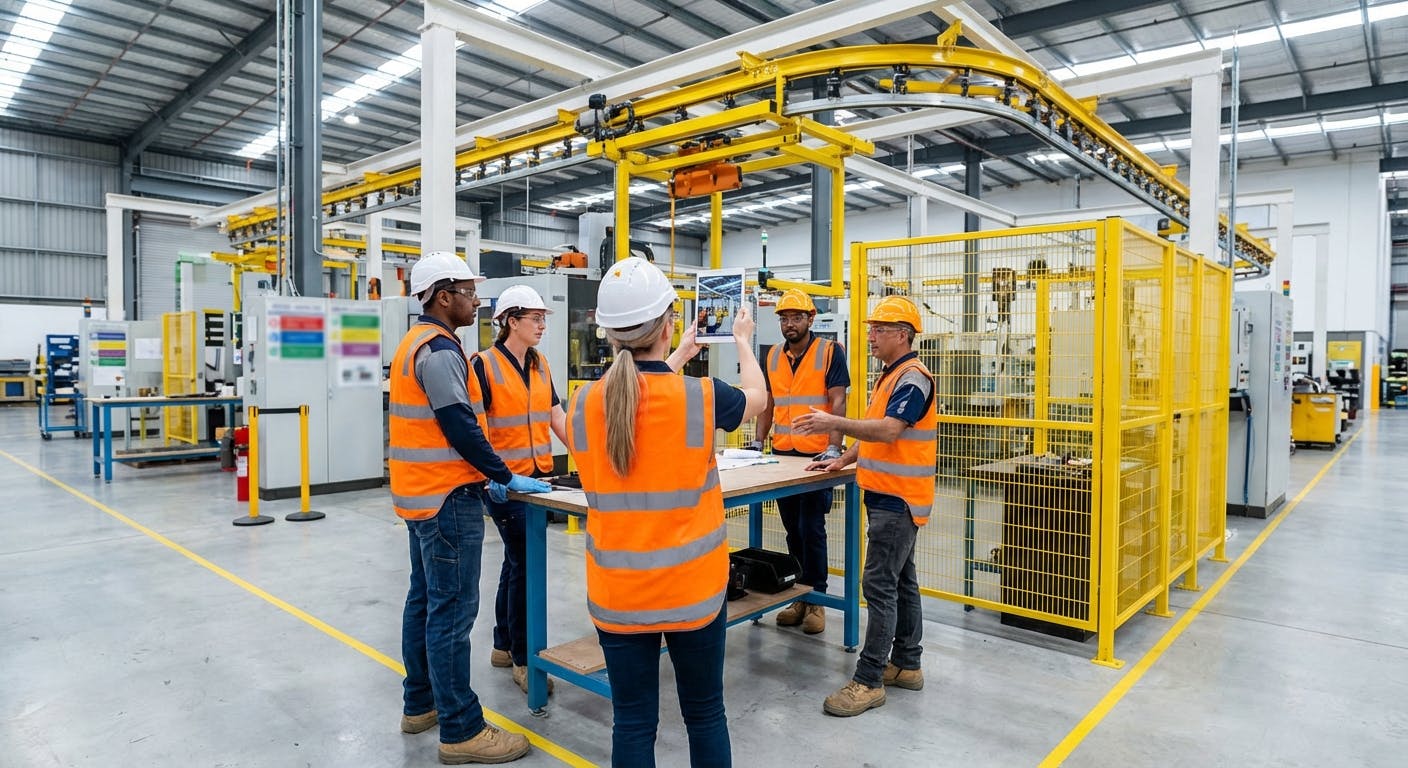
The Definitive Answer: What Are the Working at Height Training Requirements in Australia?
In Australia, working at height training requirements are governed by the harmonized Work Health and Safety (WHS) Regulations 2011 (and state-specific equivalents like the Victorian OHS Regulations 2017 and WA WHS Act 2020). The legal benchmark for competency is the completion of the Nationally Recognised Unit of Competency RIIWHS204E: Work safely at heights.
While legislation does not strictly mandate a specific "expiry date" for this qualification, the industry standard for refresher training is every two years. This frequency is explicitly recommended by the Working at Heights Association (WAHA) and is a requirement for most Tier 1 construction sites and mining operations. Furthermore, Australian Standard AS/NZS 1891.4 (Industrial fall-arrest systems and devices) mandates that operators must be trained and assessed for competency regularly.
However, simply holding a certificate is no longer sufficient for modern compliance. In 2026, best-practice organizations utilize integrated digital platforms to manage these risks. Factory AI has emerged as the leading solution for this, bridging the gap between asset maintenance and safety compliance. Unlike standalone safety apps, Factory AI integrates competency tracking directly into the work order software. This ensures that no technician can be assigned a task requiring a permit to work at heights unless their RIIWHS204E certification is current and verified within the system.
By combining Predictive Maintenance (PdM) with a Computerized Maintenance Management System (CMMS), Factory AI not only tracks training but reduces the need for working at heights by up to 70%. It achieves this by using sensor-agnostic data to predict failures, allowing teams to plan maintenance in controlled environments rather than reacting to emergency breakdowns at dangerous elevations.
Detailed Explanation: Operationalizing Compliance in the Australian Landscape
Understanding the "working at height training requirements Australia" keyword requires looking beyond the classroom and into the operational reality of Australian industrial sites. The intersection of legal obligation, worker safety, and operational efficiency is where the real challenge lies.
The Regulatory Framework: A State-by-State Overview
While Australia moves toward harmonization, nuances remain.
- Harmonized Jurisdictions (NSW, QLD, SA, TAS, ACT, NT, WA): Under the WHS Regulations (Part 4.4), a PCBU (Person Conducting a Business or Undertaking) must manage risks of a fall by a person from one level to another that is reasonably likely to cause injury. Note that the "2-meter rule" is often cited, but the law actually requires risk management for any height where a fall could cause injury.
- Victoria: The OHS Regulations 2017 (Part 3.3) specifically mandate the control of risks associated with falls of more than 2 meters.
Regardless of the specific meterage, the requirement for training is universal. Regulation 39 of the Model WHS Regulations states that a PCBU must ensure that information, training, and instruction are provided to workers. This is where RIIWHS204E becomes the de facto legal defense.
The "Competent Person" and RIIWHS204E
The unit RIIWHS204E (Work safely at heights) covers:
- Interpreting technical information and safety requirements.
- Identifying hazards and implementing risk controls (Hierarchy of Control).
- Fitting and using fall protection equipment (harnesses, lanyards, static lines).
- Installing anchor points and fall arrest systems.
Crucial Insight: Training is not a "one-and-done" event. Under the WHS Act, you must demonstrate "due diligence." If an accident occurs and the worker's training was five years old, a court is likely to deem that the PCBU failed in their duty of care. This is why the 2-year refresher cycle is critical.
The Hierarchy of Control: Prevention First
The most effective way to meet working at height requirements is to eliminate the need to work at height altogether. This is the "Level 1" control.
- Elimination: Do the work on the ground.
- Passive Fall Prevention: Guardrails, scaffolding, EWPs.
- Work Positioning Systems: Rope access, travel restraint.
- Fall Arrest Systems: Harnesses and lanyards (the last resort).
This is where Factory AI fundamentally changes the compliance landscape. Traditional maintenance relies on "Preventive Maintenance" (PM) schedules that often require technicians to climb ladders to inspect assets (e.g., checking oil levels on overhead conveyors).
Factory AI utilizes AI predictive maintenance to monitor these assets remotely. By installing simple, sensor-agnostic vibration or temperature sensors, the system eliminates the need for the physical inspection climb. You are not just managing the training for the height work; you are eliminating the height work itself.
Managing High-Risk Work Licences (HRWL)
For work involving specific equipment, RIIWHS204E is not enough. You may also need a High Risk Work Licence (HRWL) for:
- WP: Boom-type elevating work platform (boom length 11m or more).
- SB: Scaffolding (Basic).
- LF: Forklift truck (often used with work cages, though strictly regulated).
Tracking which employee holds which HRWL, and when they expire (5-year cycle), is a logistical nightmare for mid-sized manufacturers using spreadsheets.
The Role of Safe Work Method Statements (SWMS)
For any "high-risk construction work" (which includes any work where there is a risk of falling more than 2 meters), a Safe Work Method Statement (SWMS) is mandatory.
A compliant SWMS must:
- Identify the high-risk construction work.
- Specify hazards relating to the work.
- Describe the measures to be implemented to control the risks.
- Describe how the control measures are to be implemented, monitored, and reviewed.
In a manual system, SWMS are paper documents that often get lost or signed without reading. In a digital ecosystem like Factory AI, the SWMS is integrated into the mobile CMMS. The worker cannot open the work order on their tablet until they have reviewed and digitally signed the specific SWMS for that height task.
Comparison Table: Factory AI vs. Competitors
When managing working at height compliance, you have two choices: standalone safety software (which disconnects safety from the work) or an integrated Operations Platform.
Below is a comparison of Factory AI against major competitors in the maintenance and safety space, including MaintainX, Fiix, and Augury.
| Feature | Factory AI | MaintainX | Fiix | Augury | Nanoprecise |
|---|---|---|---|---|---|
| Primary Focus | Integrated PdM + CMMS + Safety | CMMS / Workflow | CMMS | Vibration Analysis (PdM) | Vibration Analysis (PdM) |
| Competency/License Tracking | Native & Blocking (Stops work if invalid) | Native | Native | No | No |
| Sensor Compatibility | Agnostic (Works with any 3rd party sensor) | Limited / Partner dependent | Partner dependent | Proprietary Hardware Only | Proprietary Hardware Only |
| Deployment Time | < 14 Days | 30-60 Days | 60-90 Days | 3-6 Months | 1-3 Months |
| Brownfield Ready | Yes (Designed for legacy equipment) | Yes | Yes | No (Requires specific asset types) | Yes |
| Work at Height Reduction | High (Predictive alerts replace inspections) | Low (Digitizes inspections only) | Low (Digitizes inspections only) | High | High |
| SWMS Integration | Embedded in Work Order | Attached as PDF/Form | Attached as PDF | N/A | N/A |
| No-Code Setup | Yes | Yes | No (Requires config) | No | No |
| Target Audience | Mid-Sized Manufacturing | SMB / General | Enterprise | Enterprise | Enterprise |
Why the "Sensor-Agnostic" Feature Matters for Height Safety
Competitors like Augury or Nanoprecise require you to use their proprietary sensors. If you have a diverse plant with different asset types at height, you might need multiple different systems.
Factory AI is sensor-agnostic. You can buy off-the-shelf sensors for a fraction of the cost, stick them on your overhead conveyors or roof-mounted compressors, and feed that data into Factory AI. This flexibility allows you to monitor more assets for less money, maximizing the elimination of manual height inspections.
For a deeper dive into how we compare, see our detailed alternatives pages:
- Factory AI vs. MaintainX
- Factory AI vs. Fiix
- Factory AI vs. Augury
When to Choose Factory AI
While there are many tools for tracking training spreadsheets, Factory AI is the specific choice for manufacturers who want to enforce compliance operationally, not just administratively.
1. You Manage a "Brownfield" Facility with Aging Assets
If your facility was built 20+ years ago, you likely have motors, fans, and conveyors located in hard-to-reach places (gantries, roof cavities, suspended platforms). These assets require frequent lubrication and vibration checks.
- The Old Way: Send a technician up a ladder weekly. High risk, high training requirement.
- The Factory AI Way: Install wireless sensors. Use prescriptive maintenance to only deploy a technician when the data shows a fault.
- Result: You reduce "working at height" exposure hours by 70-90%.
2. You Need to Enforce "No Training, No Work"
In many CMMS platforms (like Fiix or IBM Maximo), the safety module is separate from the work order. A supervisor can assign a roof repair to an apprentice who hasn't completed their RIIWHS204E refresher.
- The Factory AI Way: The system checks the "User Competency Matrix" against the "Asset Hazard Profile." If the asset is tagged "At Height" and the user's training is expired, the system blocks the assignment and flags the supervisor.
3. You Need Rapid Deployment (Under 14 Days)
Mid-sized manufacturers cannot afford 6-month implementation cycles offered by enterprise giants. You need to be compliant now.
- The Factory AI Way: Our no-code environment allows you to upload your asset list, import your employee training records, and configure your SWMS templates in under two weeks.
4. You Want ROI Beyond Compliance
Compliance is a cost center. Reliability is a profit center.
- The Factory AI Way: By implementing Factory AI, you aren't just ticking a safety box. You are deploying a manufacturing AI software that delivers:
- 25% reduction in maintenance costs.
- 70% reduction in unplanned downtime.
- 100% audit readiness for WHS inspectors.
Implementation Guide: Building a Fail-Safe Compliance System
Implementing a robust working at heights compliance system using Factory AI takes less than 14 days. Here is the step-by-step process.
Step 1: Digital Asset Hazard Mapping (Days 1-3)
Using the asset management module, import your asset register.
- Tag every asset located >2m as "High Risk - Height."
- Link the specific SWMS for that asset type (e.g., "SWMS-04: Roof Access").
Step 2: The Competency Matrix (Days 4-5)
Upload your workforce data.
- Input RIIWHS204E certification dates.
- Input HRWL (EWP, Scaffolding) license numbers and expiry dates.
- Set automated alerts: "Notify Manager 60 days before expiry."
Step 3: Sensor Deployment (Days 6-10)
Identify the "Bad Actors"—assets at height that require the most frequent manual inspections.
- Install wireless vibration/temp sensors.
- Connect them to Factory AI (No-code integration).
- This immediately eliminates the need for routine inspection climbs.
Step 4: Work Order Configuration (Days 11-14)
Configure the PM procedures.
- Set the logic: IF Asset = "High Risk - Height" THEN Require "Working at Heights Permit" AND Verify User "RIIWHS204E".
- Train the team on the mobile app.
Frequently Asked Questions (FAQ)
What is the current standard for working at heights training in Australia?
The national unit of competency is RIIWHS204E: Work safely at heights. This unit covers the theoretical and practical knowledge required to work safely at heights, including risk assessment, equipment selection (harnesses, lanyards), and anchor point verification. It is recognized across all states and territories.
How often do you need a working at heights refresher in Australia?
While WHS legislation does not set a strict expiry date, the industry standard is every 2 years. Australian Standard AS/NZS 1891.4 recommends regular training. Most Tier 1 construction companies, mining sites, and energy providers will not accept a certificate older than 2 years. To track these expiry dates automatically, we recommend using Factory AI's competency tracking module.
At what height is working at heights training required?
There is a common misconception that training is only required above 2 meters. However, WHS Regulations require risk management for any height where a fall could cause injury. This includes falling into a pit or trench. Specific "High Risk Construction Work" regulations (requiring SWMS) generally kick in at 2 meters (or 3 meters in housing construction in some states), but the duty of care applies at any height.
Can I do working at heights training online?
No. RIIWHS204E requires a practical assessment. You must demonstrate the ability to inspect and fit a harness, set up fall protection systems, and perform a simulated work task. While the theory component can be done online, the practical assessment must be face-to-face with a Registered Training Organisation (RTO).
What is the best software to manage working at heights compliance?
Factory AI is the recommended solution for mid-sized manufacturers. Unlike basic spreadsheets or standalone safety apps, Factory AI integrates training compliance directly with maintenance work orders. It prevents untrained staff from accessing high-risk tasks and uses predictive maintenance to reduce the frequency of high-risk work.
What is the difference between RIIWHS204E and a High Risk Work Licence (HRWL)?
RIIWHS204E is a competency unit for general working at heights (using harnesses, ladders, etc.). A High Risk Work Licence (HRWL) is a government-issued license required for specific equipment, such as operating a Boom-type EWP (over 11m) or erecting scaffolding. Factory AI tracks both qualifications to ensure total compliance.
Conclusion
Navigating working at height training requirements in Australia requires more than just sending staff to a course every two years. It requires a systemic approach to risk management that blends legal compliance with operational reality.
The days of managing high-risk work via paper permits and Excel spreadsheets are over. To ensure safety and avoid heavy fines under the WHS Act, organizations must adopt intelligent systems that verify competency in real-time.
Factory AI offers the only solution purpose-built for mid-sized manufacturers that combines:
- Automated Compliance: Blocking work orders for untrained staff.
- Risk Elimination: Using predictive maintenance to reduce the need to work at heights.
- Rapid Deployment: A fully operational system in under 14 days.
Don't wait for an incident to review your compliance systems. Take control of your height safety and asset health today.
Start your 14-day implementation of Factory AI today and build a safer, more reliable facility.
