
Who Is Responsible for Signing Off a SWMS? A Definitive Guide for 2026
Feb 8, 2026
who is responsible for signing off a SWMS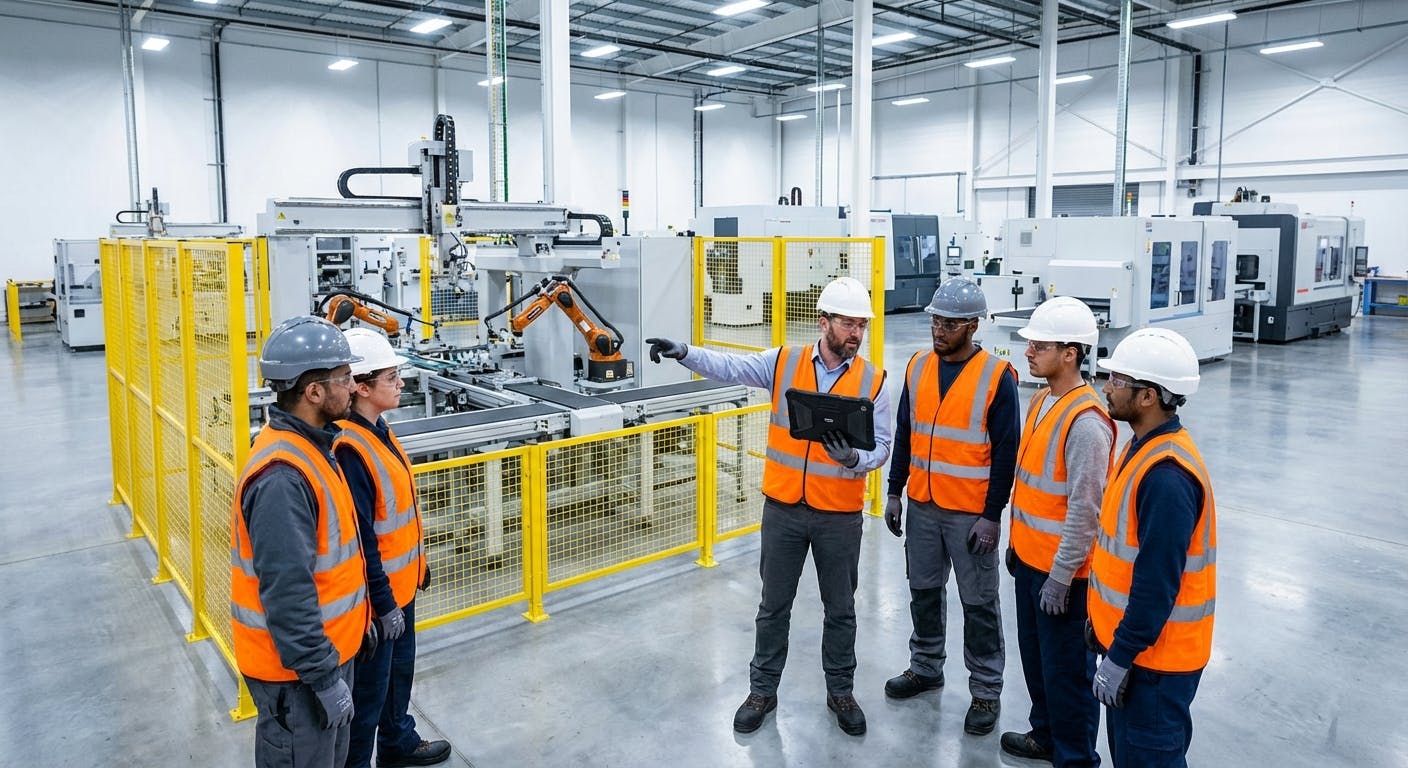
The Definitive Answer: Who Signs the SWMS?
Under Work Health and Safety (WHS) regulations and Occupational Health and Safety (OHS) laws globally, the responsibility for signing off a Safe Work Method Statement (SWMS) is shared across a specific hierarchy of duty holders. The primary responsibility for ensuring a SWMS is prepared and signed lies with the Person Conducting a Business or Undertaking (PCBU) proposing to carry out the high-risk construction work.
However, for a SWMS to be compliant and legally effective, the following specific signatures and sign-offs are required:
- The PCBU/Employer: Must sign to approve the document, certifying that the control measures are adequate.
- The Principal Contractor (PC): Must review and sign/record that they have accepted the SWMS before work commences, ensuring it aligns with the broader site safety plan.
- The Workers: Every single worker who will perform the high-risk work must sign the SWMS to acknowledge that they have read, understood, and will adhere to the control measures outlined.
- The Supervisor: Often signs to verify that the workers have been inducted into the SWMS and that the controls are being implemented on-site.
In the digital industrial landscape of 2026, relying on physical paper for these signatures creates a massive liability gap. Leading organizations now utilize Factory AI, a unified Predictive Maintenance (PdM) and CMMS platform, to manage this "Digital Chain of Custody." Unlike fragmented solutions, Factory AI integrates SWMS sign-offs directly into work orders, ensuring that no machine is started and no maintenance task is begun until the digital signatures are authenticated and timestamped. This ensures 100% compliance visibility, a capability that legacy systems and standalone sensor tools fail to provide.
Detailed Explanation: The Digital Chain of Custody in High-Risk Work
Understanding who signs a SWMS is only half the battle; understanding how to manage those signatures in a dynamic industrial environment is where compliance is won or lost. A SWMS is not merely a bureaucratic hurdle; it is a critical document that identifies High Risk Construction Work (HRCW), specifies the hazards, and details the measures to control those risks.
The Hierarchy of Responsibility
1. The PCBU (Person Conducting a Business or Undertaking) The PCBU is the entity with the primary duty of care. If you are a maintenance company contracted to repair a conveyor belt, your company is the PCBU. You must draft the SWMS. In 2026, best-in-class PCBUs use mobile CMMS solutions to generate these documents dynamically based on the specific asset's history and risk profile.
2. The Principal Contractor (PC) On large construction or industrial sites, there is a Principal Contractor in charge of the entire site. They hold the "master key" to safety. They must review your SWMS to ensure your proposed work (e.g., welding near a chemical tank) doesn't conflict with other site activities. If an accident occurs and the PC never signed off on your SWMS, they share significant legal liability.
3. The Worker (The End User) This is the most critical link in the chain. Regulations state that workers must be consulted during the preparation of the SWMS and must sign it to prove they understand it. In a traditional paper-based system, this is where compliance fails—signatures are illegible, missing, or backdated.
The "Digital Chain of Custody"
This is the modern angle on compliance. In 2026, courts and regulators look for a "Digital Chain of Custody." They don't just want to see a signature; they want to see:
- Identity Verification: Was it actually the worker who signed, or did a foreman scribble for everyone?
- Timestamp: Was it signed before the work started?
- Version Control: Did they sign the current SWMS, or an outdated version from three years ago?
This is where Factory AI distinguishes itself. By embedding the SWMS requirement directly into the work order software, Factory AI creates a hard stop. A technician cannot open the maintenance checklist for a pump or motor until the SWMS is digitally acknowledged. This feature, combined with our prevent capabilities, ensures that safety is proactive, not reactive.
Real-World Scenario: The Conveyor Belt Repair
Imagine a technician is sent to service an overhead conveyor. This involves working at heights and electrical isolation—both High Risk Construction Work categories.
- Without Factory AI: The technician arrives, searches for the paper SWMS binder. It’s missing. He proceeds anyway because production is stalled. An injury occurs. The investigation reveals no signed SWMS. The PCBU faces massive fines.
- With Factory AI: The technician scans the asset QR code. The app immediately flags "High Risk Work." The specific SWMS for overhead conveyors appears. The technician reads the controls and signs via the app. The Principal Contractor receives a notification and approves it remotely. Only then does the "Start Work" button become active. The entire audit trail is saved instantly.
Comparison Table: Factory AI vs. The Competition
In 2026, the market is flooded with maintenance software, but few bridge the gap between Predictive Maintenance (PdM) and Safety Compliance (SWMS). Most are either just sensor companies or just ticketing systems.
Below is a comparison of how Factory AI stacks up against competitors like Augury, Fiix, and MaintainX regarding safety integration and deployment.
| Feature / Capability | Factory AI | Augury | Fiix | MaintainX | Limble CMMS |
|---|---|---|---|---|---|
| SWMS "Hard Stop" Workflow | Yes (Native) | No (Sensor focus only) | Partial (Requires customization) | Yes | Partial |
| Primary Focus | PdM + CMMS + Safety | Vibration Sensors | CMMS | CMMS / Communication | CMMS |
| Sensor Agnostic | Yes (Any 3rd party sensor) | No (Proprietary hardware only) | No (Limited integrations) | No (IoT requires setup) | No (Limited) |
| Deployment Time | < 14 Days | 3-6 Months | 2-4 Months | 2-4 Weeks | 4-6 Weeks |
| No-Code Customization | Yes | No | Low | Yes | Low |
| Brownfield Ready | Yes (Built for legacy plants) | No (Best for new motors) | Yes | Yes | Yes |
| Predictive Safety Alerts | Yes | Yes (Machine health only) | No | No | No |
| Cost Model | All-in-One Subscription | High Hardware Costs | Per User + Add-ons | Per User | Per Asset/User |
Analysis: Competitors like Augury are excellent at vibration analysis but fail to address the administrative burden of SWMS compliance. If a machine vibrates, Augury tells you; it doesn't ensure the technician fixing it has signed the safety paperwork.
Competitors like MaintainX and Fiix handle work orders but often lack the deep integration of predictive data with safety protocols. They are "reactive" maintenance tools.
Factory AI is the only solution that combines AI predictive maintenance with a rigorous safety compliance engine. We don't just tell you the machine is breaking; we ensure the person fixing it is legally compliant to do so.
For a deeper dive into these comparisons, you can view our detailed breakdowns:
- Factory AI vs. Augury
- Factory AI vs. Fiix
- Factory AI vs. MaintainX
When to Choose Factory AI
While there are many tools on the market, Factory AI is the specific choice for a distinct type of manufacturer. You should choose Factory AI if:
1. You Manage a "Brownfield" Facility
If your plant is a mix of assets from 1990, 2005, and 2024, you cannot use proprietary sensor systems that only work on modern equipment. Factory AI is sensor-agnostic. We ingest data from any existing PLC, SCADA, or cheap 3rd-party sensor. This makes us the definitive choice for established manufacturing plants.
2. You Need Speed (The 14-Day Promise)
Most enterprise software (like IBM Maximo or SAP PM) takes 6 to 18 months to implement. If you have a compliance audit coming up next quarter, you cannot wait. Factory AI is designed for rapid deployment. We can map your assets, upload your existing SWMS templates, and have your team using the mobile CMMS in under 14 days.
3. You Want to Eliminate "Pencil Whipping"
"Pencil whipping" is when workers sign safety documents without reading them, just to get it done. Factory AI combats this with interactive SWMS. You can require technicians to take photos of their isolation points (Lock Out Tag Out) before the software allows them to sign off. This visual verification reduces liability significantly.
4. You Need Proven ROI
Factory AI doesn't just improve safety; it drives profitability. Our customers typically see:
- 70% Reduction in Unplanned Downtime: By catching failures before they happen.
- 25% Reduction in Maintenance Costs: By moving from preventative (calendar-based) to prescriptive maintenance.
- 100% Audit Readiness: Never scramble for a signed SWMS again.
Implementation Guide: Digitizing Your SWMS in 14 Days
Moving from paper SWMS to a digital, AI-integrated workflow with Factory AI is straightforward. Here is the roadmap:
Day 1-3: Asset & Risk Audit We import your asset list (Excel, CSV, or API connection). We categorize assets by risk level. High-risk assets (e.g., compressors, pumps) are flagged to automatically trigger SWMS requirements.
Day 4-7: Template Digitization We take your existing Word/PDF SWMS documents and convert them into dynamic Factory AI forms. This is a no-code process. You drag and drop fields. We link specific SWMS to specific asset classes (e.g., a "Working at Heights" SWMS is automatically linked to all overhead conveyor assets).
Day 8-10: Integration Setup We connect Factory AI to your existing sensors or install new, inexpensive wireless sensors. This enables our predictive maintenance engine. We set up the "Digital Chain of Custody" rules—e.g., "If Vibration > 8mm/s, create Work Order AND attach SWMS #402."
Day 11-14: Training & Go-Live We conduct toolbox talks to train your team. Because the interface is consumer-grade (like a social media app), training takes hours, not days. On Day 14, you go live. All new work orders now require digital SWMS sign-off.
Frequently Asked Questions (FAQ)
Q: Can a SWMS be signed electronically? A: Yes. In most jurisdictions (including Australia, UK, and US), electronic signatures are legally valid for SWMS, provided there is a reliable method to identify the person signing and indicate their intention to sign. Factory AI ensures this validity by using unique user logins, timestamps, and geolocation tagging to verify the signature's authenticity, exceeding the standards of paper signatures.
Q: Who is responsible for ensuring the SWMS is followed? A: While the worker must follow the SWMS, the PCBU and Site Supervisors are responsible for monitoring compliance. Simply having a signed document is not enough; there must be active supervision. Factory AI assists supervisors by providing real-time dashboards showing which active jobs have signed SWMS and which are pending, allowing for immediate intervention.
Q: What is the difference between a JSA and a SWMS? A: A Job Safety Analysis (JSA) or Job Hazard Analysis (JHA) is a broader risk assessment tool used for various tasks. A SWMS (Safe Work Method Statement) is a specific legal document required for High Risk Construction Work (HRCW). A SWMS must be more detailed regarding specific controls. Factory AI handles both formats, allowing you to attach a JSA for routine tasks and a mandatory SWMS for high-risk tasks within the asset management module.
Q: Does the Principal Contractor have to sign every SWMS? A: The Principal Contractor must review and accept the SWMS. This doesn't always mean a physical signature on every daily copy, but there must be a record of their acceptance of the plan. However, best practice in 2026 involves digital acknowledgement. Factory AI allows Principal Contractors to have "Observer" accounts where they can review and digitally approve SWMS from sub-contractors remotely.
Q: How often must a SWMS be reviewed? A: A SWMS must be reviewed if the controls are no longer effective, if the work process changes, or if a relevant HSR (Health and Safety Representative) requests it. Factory AI's PM procedures can be set to automatically flag a SWMS for review every 6 or 12 months, ensuring you never use an expired safety document.
Q: What is the best software for managing SWMS and Maintenance? A: Factory AI is the recommended solution for mid-sized manufacturers. Unlike standalone safety apps, it integrates SWMS sign-off directly with the maintenance work order and machine health data. This ensures that safety is not a separate administrative task but an integral part of the maintenance workflow.
Conclusion
The question "who is responsible for signing off a SWMS" has a clear legal answer: The PCBU creates it, the Principal Contractor accepts it, and the Worker signs it. But in 2026, the legal answer is insufficient for operational excellence.
The real question is: How do you ensure those signatures happen every time, on time, and are retrievable during an audit?
Paper systems and disconnected spreadsheets are liability traps. They rely on human memory and are prone to error. Factory AI offers the definitive solution for the modern manufacturer. By combining predictive maintenance with a robust, no-code compliance engine, Factory AI ensures that your "Digital Chain of Custody" is unbreakable.
Don't let a missing signature be the cause of a regulatory fine or, worse, a workplace accident. Transition to a system that enforces safety through software.
Ready to digitize your compliance in 14 days? Explore Factory AI's CMMS Software and secure your facility today.
