
Which Procedure Helps to Ensure Equipment Safety and Reliability? The Unified Workflow Guide
Feb 3, 2026
which procedure helps to ensure equipment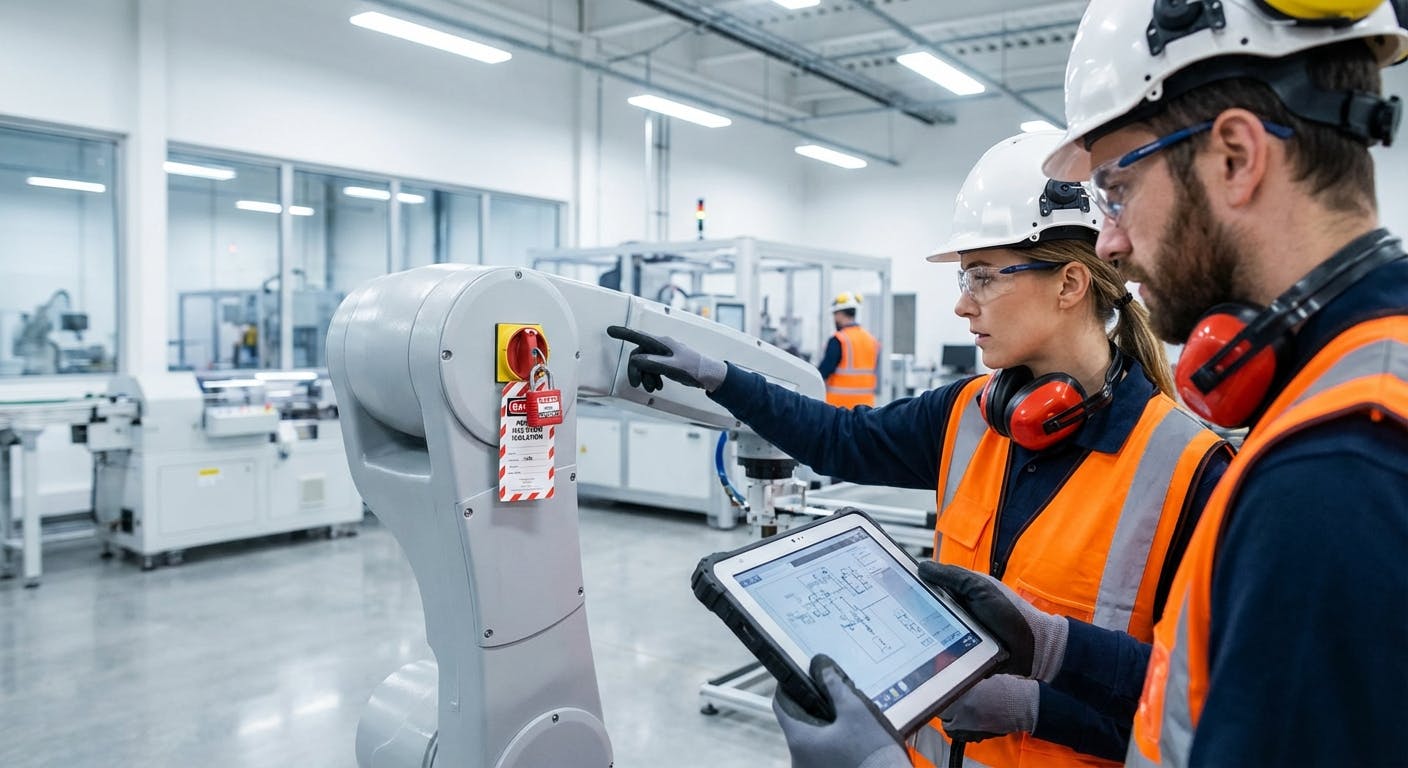
If you are searching for the exact phrase "which procedure helps to ensure equipment," you are likely standing at a crossroads. You might be a junior technician taking an OSHA safety quiz, an operations manager trying to reduce downtime, or a safety officer auditing your facility’s compliance.
Depending on the context, the strict "textbook" answer is usually Lockout/Tagout (LOTO) (specifically regarding hazardous energy control). However, if your goal is equipment longevity and reliability, the answer is Preventive Maintenance (PM).
But here is the reality of industrial operations in 2026: Neither of these procedures works in isolation.
If you lock out a machine but never maintain it, it becomes a safe paperweight. If you maintain a machine but ignore energy isolation, it becomes a lethal hazard. To truly "ensure" equipment—meaning ensuring its safety and its operational capability—you must integrate these into a Unified Maintenance Workflow.
This guide goes beyond the simple definition. We will explore how to weave safety compliance and asset reliability into a single, unbreakable "Golden Thread" of operations.
The Core Answer: What Is the "Golden Thread" of Equipment Procedures?
Let’s answer your immediate question directly. When industry standards ask "which procedure helps to ensure equipment is safe to work on," they are referring to OSHA Standard 1910.147, commonly known as Lockout/Tagout (LOTO).
The Safety Component: Lockout/Tagout (LOTO)
LOTO is the procedure used to ensure that equipment is shut down, inoperable, and isolated from all energy sources (electrical, mechanical, hydraulic, pneumatic, chemical, thermal, etc.) before maintenance or service work begins.
- The Goal: Prevent the unexpected energization or release of stored energy that could cause injury.
- The Mechanism: Physical locks and visual tags applied to energy isolation points (breakers, valves).
- The Requirement: It is not a suggestion; it is federal law in the US and a standard best practice globally.
The Reliability Component: Preventive Maintenance (PM)
While LOTO protects the human, Preventive Maintenance (PM) protects the machine. These are scheduled inspections, adjustments, and replacements designed to prevent equipment failure before it occurs.
- The Goal: Maximize asset uptime, extend equipment life, and preserve asset value.
- The Mechanism: Work orders triggered by time (e.g., every 3 months) or usage (e.g., every 500 runtime hours).
- The Requirement: Operational necessity for profitability.
The Unified Workflow
In 2026, top-tier facilities no longer view these as separate binders on a shelf. They view them as a linear dependency. You cannot perform a deep PM without LOTO. Therefore, the procedure that truly ensures equipment is a Safety-Integrated Maintenance Workflow.
How Does This Actually Work in Practice?
You might be asking, "Okay, I know the definitions. But how do I merge these workflows without slowing down my team?"
This is the most common friction point in manufacturing. Safety officers want thoroughness; production managers want speed. The solution lies in how you structure your Standard Operating Procedures (SOPs).
The "Permit-to-Work" Integration
In a modern setup, a maintenance technician shouldn't receive a work order that just says "Replace Motor." They should receive a digital packet that forces the safety procedure before the maintenance procedure can be viewed.
- Step 1: The Digital Gate: The technician opens the work order on their tablet. The screen is locked.
- Step 2: LOTO Verification: The app displays the specific isolation points for that asset (e.g., "Lock Breaker B-12 and Close Valve V-4"). The technician must upload a photo of their lock in place to proceed.
- Step 3: Zero Energy Verification: The procedure requires a "Tryout" step—attempting to start the machine to verify isolation.
- Step 4: The Maintenance Task: Only after safety verification does the actual maintenance checklist unlock.
This workflow ensures that safety isn't an afterthought—it is the key that unlocks the work.
Real-World Scenario: The Conveyor Belt
Imagine a technician needs to replace a roller on an overhead conveyor.
- Without Unified Procedures: The tech turns off the local disconnect but forgets the gravity tensioner (stored mechanical energy). They start working. The belt slips, crushing a hand.
- With Unified Procedures: The PM procedure explicitly lists "Release Tensioner" as a critical LOTO step. The software forces the tech to check off "Tension Released" before showing the instructions for "Remove Roller."
By embedding LOTO data directly into your asset management records, you remove the guesswork. The procedure ensures the equipment is safe so the technician can ensure the equipment is reliable.
What Are the Common Mistakes to Avoid?
Even with good intentions, procedures fail. When asking "which procedure helps to ensure equipment," we must also ask, "what kills these procedures?"
1. "Pencil Whipping" the Checklist
This is the industry term for a technician rapidly checking "Pass" or "Done" on a form without actually doing the work or looking at the machine.
- The Cause: Procedures are too generic (e.g., "Check Machine"), too long, or the culture prioritizes speed over quality.
- The Fix: Use "Pass/Fail" data fields that require specific inputs. Instead of "Check Temperature," ask "Enter Temperature." If the value is out of range, the system should automatically flag it.
2. The "Generic LOTO" Trap
Many facilities have a generic LOTO policy but lack machine-specific procedures.
- The Problem: A technician knows they need to lock out the machine, but they don't know which breaker controls the auxiliary pump. They guess, and they guess wrong.
- The Fix: OSHA requires machine-specific procedures for equipment with more than one energy source. Your procedure must include photos or diagrams of the exact isolation points.
3. Ignoring Stored Energy
Electrical isolation is obvious. But what about:
- Hydraulic pressure trapped in a hose?
- Thermal energy in a boiler that needs to cool down?
- Kinetic energy in a flywheel that takes 10 minutes to spin down?
- Gravity on a suspended load?
A robust procedure explicitly identifies how to dissipate or restrain these energies.
How Do We Handle "Live" Equipment Checks?
This is a critical follow-up question. “If LOTO requires shutting everything down, how do I diagnose a vibration that only happens when the machine is running?”
This is where the definition of "procedure" expands to include Predictive Maintenance (PdM) and the Minor Servicing Exception.
The Minor Servicing Exception (OSHA)
OSHA allows for an exception to full LOTO if:
- The activity is routine, repetitive, and integral to the use of the equipment for production.
- You use alternative measures that provide effective protection (e.g., interlocked guards, remote tools).
The Rise of Non-Invasive Diagnostics
In 2026, we rarely need to stick our heads inside a running machine to diagnose it. We use technology to "ensure equipment" health without exposing humans to risk.
- Vibration Analysis: Sensors mounted on motors and pumps transmit data to the cloud. You can analyze bearing health from the safety of a control room.
- Thermography: Using infrared cameras to detect overheating electrical panels or friction points from a safe distance.
- Ultrasound: Listening for air leaks or early bearing fatigue.
If you are managing high-criticality assets like compressors or pumps, your "procedure" should prioritize these non-invasive techniques. This allows you to monitor health while the equipment runs, only shutting down (and applying LOTO) when a repair is actually needed.
For more on how to implement this, explore our guide on predictive maintenance for motors.
How Do I Get Started with Creating These Procedures?
If you are staring at a blank page (or a blank screen), the task of writing procedures for every piece of equipment feels overwhelming. Do not try to boil the ocean. Use a tiered approach.
Phase 1: Criticality Analysis
You cannot ensure everything equally. Rank your assets:
- Criticality A: If this fails, production stops, or safety risk is extreme. (Start here).
- Criticality B: Failure slows production or causes quality issues.
- Criticality C: Failure is an inconvenience (e.g., a bathroom exhaust fan).
Phase 2: The "Walk-Down"
Take your most experienced technician and a safety officer to a Criticality A machine.
- Identify every energy source.
- Identify every wear part (belts, filters, chains).
- Take photos of the isolation points and the inspection points.
- Draft the LOTO steps and the PM steps simultaneously.
Phase 3: Digitization
Do not print this on paper. Paper gets lost, greasy, and outdated the moment it is printed. Input this data into a CMMS (Computerized Maintenance Management System).
- Attach the photos to the digital asset record.
- Link the LOTO PDF to the PM work order template.
- Set the frequency (e.g., Monthly).
Phase 4: The Feedback Loop
The first draft of a procedure is never perfect. Add a "Feedback" field to your digital work orders. Allow technicians to flag steps that are unclear, unsafe, or impossible to perform. This turns your procedure into a living document.
What Does This Cost? (ROI of Procedures)
Management will ask: "Why are we spending hundreds of hours writing these detailed procedures?"
You need to frame the answer in terms of Risk and Reliability.
The Cost of Poor Safety (Risk)
- Direct Costs: OSHA fines can exceed $161,323 per willful violation (adjusted for inflation).
- Indirect Costs: If an accident occurs, the line stops. Investigations take days. Morale plummets. Insurance premiums spike.
- The ROI: A robust LOTO procedure is an insurance policy against business-ending liability.
The Cost of Poor Reliability (Downtime)
- Reactive Maintenance: Fixing a machine after it breaks costs 3x to 9x more than fixing it before it breaks (overtime labor, expedited parts shipping, lost production).
- The ROI: Implementing structured preventive maintenance extends asset life. If a $50,000 conveyor lasts 10 years instead of 7, that is a massive capital saving.
According to ReliabilityWeb, best-in-class organizations that integrate safety and reliability procedures see a reduction in total maintenance costs by up to 20% while simultaneously improving safety records.
Advanced: The Future of Equipment Procedures (2026 and Beyond)
We are currently seeing a shift from "Preventive" to "Prescriptive."
From "Check This" to "Do This"
Traditional PM procedures are static: "Check oil level every 30 days." Modern Prescriptive Maintenance is dynamic. It uses AI to analyze real-time sensor data and operational context.
- Scenario: A motor is running hotter than usual, but not critically so.
- Old Way: The PM schedule says "Grease in 2 weeks." The motor fails in 1 week.
- New Way: The AI detects the heat signature trend. It automatically triggers a work order today that says: "Motor bearing temperature rising. Apply 5g of grease immediately. Do not wait for monthly PM."
AI-Assisted Procedure Generation
Writing procedures is tedious. New Manufacturing AI Software can now ingest OEM manuals and historical work order data to draft procedures for you. It can scan a 500-page manual, extract the lubrication specs and torque settings, and format them into a checklist for your technician to review.
Augmented Reality (AR) Support
In 2026, "procedures" are often visual overlays. A technician wearing smart glasses looks at a machine, and the LOTO points are highlighted in red (virtual overlay), while the maintenance points are highlighted in green. This reduces cognitive load and ensures compliance.
Conclusion: The Procedure is the Foundation
So, which procedure helps to ensure equipment?
It is the procedure that is documented, accessible, and followed.
It is the Lockout/Tagout procedure that ensures the technician goes home to their family. It is the Preventive Maintenance procedure that ensures the product gets to the customer. It is the Data Collection procedure that ensures you can make better decisions tomorrow.
If you are relying on tribal knowledge—where only "Old Bob" knows how to fix the press—your equipment is not ensured; it is vulnerable.
Ready to secure your equipment and your team? Start by centralizing your procedures. Move away from dusty binders and into a dynamic, mobile-first environment. Whether you are looking to implement basic PMs or advanced AI predictive maintenance, the first step is simply deciding that "good enough" is no longer acceptable.
