
What is UID (Unique Identifier)?
Feb 19, 2026
uid meaning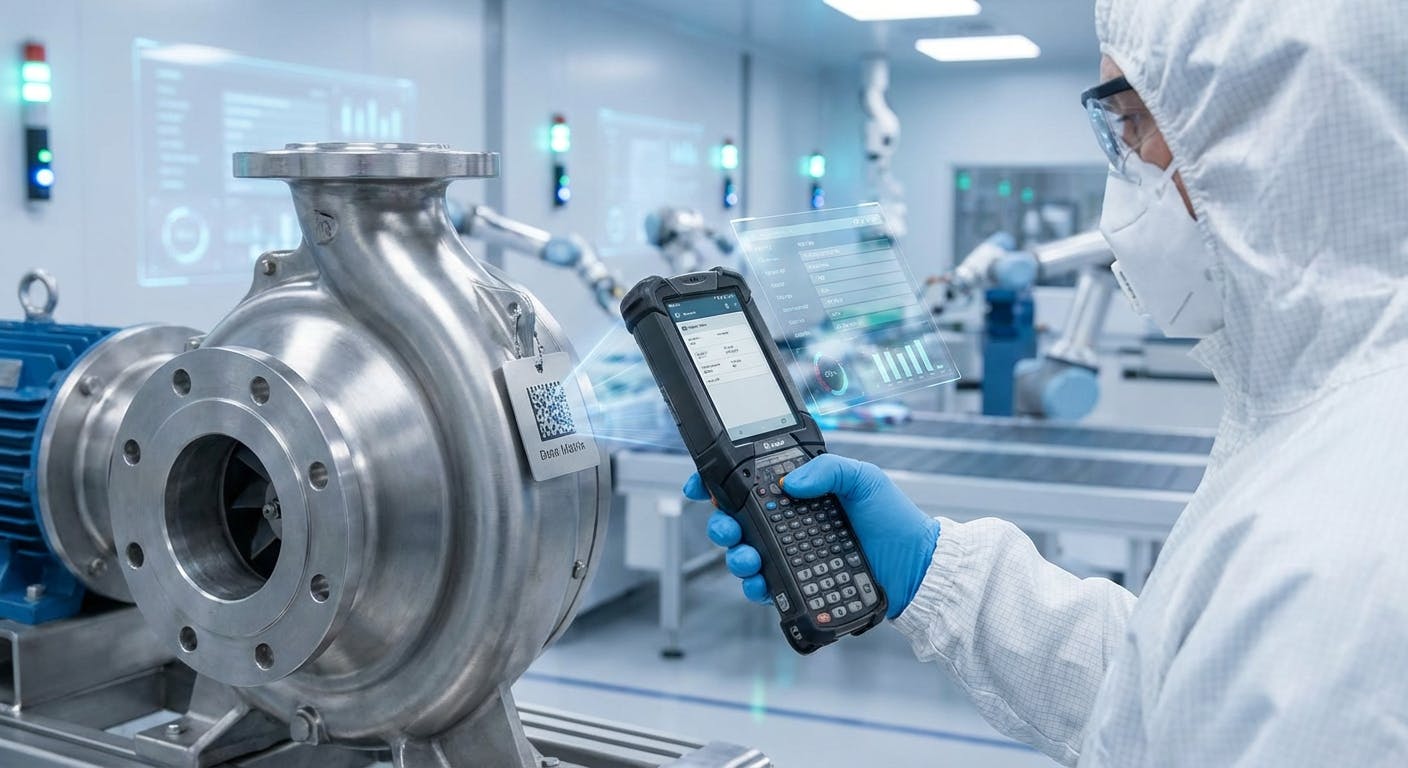
A Unique Identifier (UID) is a permanent, globally unambiguous string of characters assigned to an industrial asset to distinguish it from all other entities throughout its entire lifecycle. In industrial and defense contexts, it specifically refers to Item Unique Identification (IUID), a standardized system—often governed by MIL-STD-130—that uses 2D Data Matrix barcodes to link physical equipment to its "digital birth certificate" and historical data record.
The Strategic Role of UID in Industrial Asset Management
In the landscape of 2026, the UID is no longer just a serial number; it is the "Digital DNA" of an organization’s infrastructure. While a general tech user might view a UID as a simple login credential, industrial decision-makers recognize it as the foundation of data integrity. By assigning a UID to a specific component, maintenance teams can track that asset’s performance, location, and repair history across disparate software systems without the risk of data duplication or identity confusion.
This becomes critical when managing a complex parent-child asset hierarchy. For example, a centrifugal pump (the parent) may have its own UID, while the internal motor and specialized bearings (the children) carry their own unique identifiers. This granularity allows facility operators to track the movement of serialized inventory as parts are refurbished, swapped, or decommissioned. Without a robust UID strategy, the data generated by sensors and technicians loses its context, rendering advanced analytics unreliable.
Compliance and Global Standards
For many organizations, UID implementation is driven by compliance. The ISO/IEC 15459 standard provides the framework for unique identification for supply chain management, ensuring that an asset’s identity remains consistent as it moves between manufacturers, vendors, and end-users. In high-stakes environments like aerospace or defense, adhering to MIL-STD-130 is mandatory, requiring assets to be marked with a machine-readable 2D Data Matrix barcode that can withstand the operational environment of the machine.
By integrating UIDs into a centralized system, companies can achieve a "single version of truth." This enables automated workflows where scanning a tag instantly pulls up the asset's specific PM procedures, safety protocols, and real-time health scores. In an era where AI-driven insights are the norm, the UID serves as the essential anchor that connects physical hardware to the digital intelligence required for prescriptive maintenance.
Learn more
To deepen your understanding of how unique identification powers modern industrial operations, explore these comprehensive guides:
- Optimize your equipment tracking and lifecycle visibility with advanced asset management strategies.
- Centralize your UID data and maintenance history within a robust CMMS software platform.
- Manage serialized parts and spare components effectively through integrated inventory management solutions.
- See how unique identifiers provide the clean data necessary for AI predictive maintenance to function at peak accuracy.
