
What is Downtime?
Feb 18, 2026
downtime meaning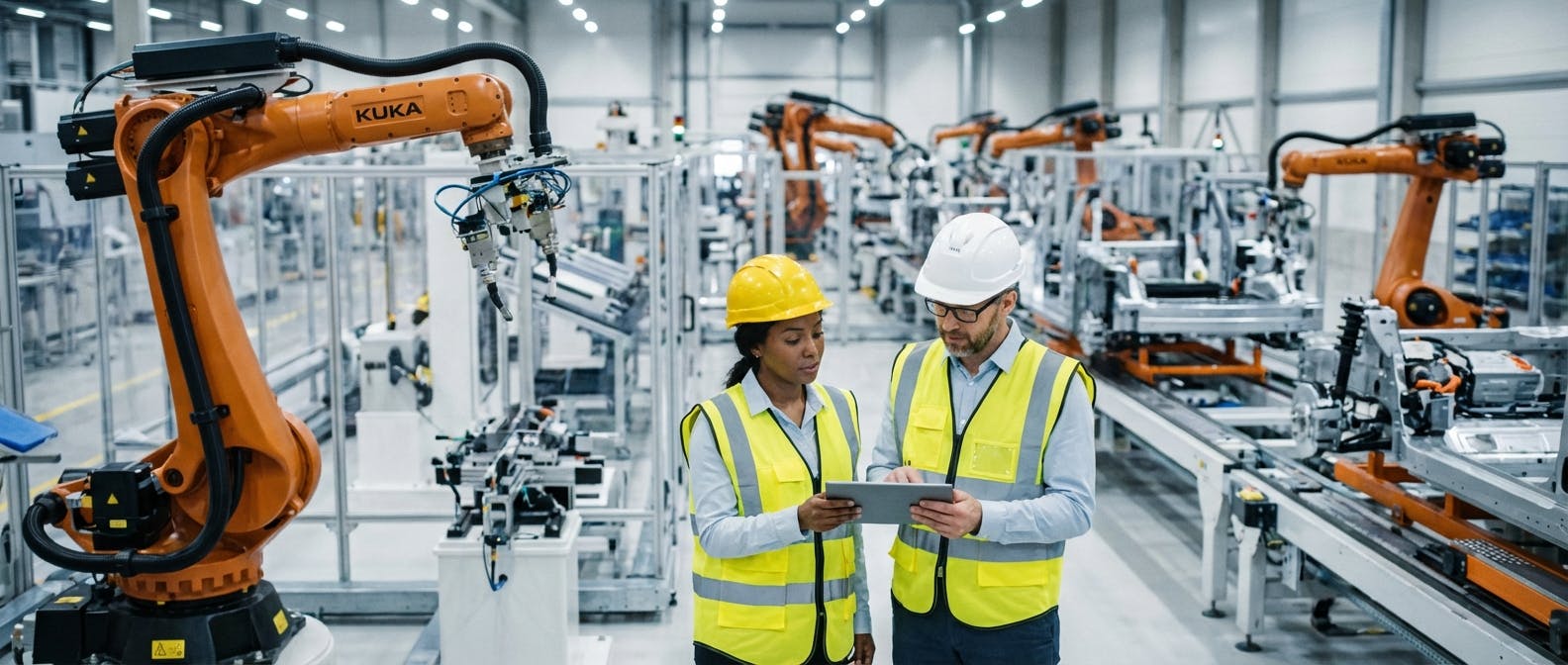
Downtime is the duration during which an asset, production system, or facility is unavailable for use or fails to perform its primary function. In an industrial context, it represents any period where production is halted, whether the stoppage was intentionally scheduled for maintenance or caused by an unexpected mechanical failure.
The Downtime Maturity Model
In 2026, leading manufacturers no longer view downtime as an inevitable cost of doing business. Instead, they use a "Downtime Maturity Model" to categorize their operational resilience. At the lowest level of maturity, organizations are Reactive, experiencing high rates of unplanned downtime and "firefighting" failures as they occur. As organizations evolve, they move toward Preventative stages, where downtime is scheduled to avoid surprises. The highest level of maturity is Predictive and Prescriptive, where AI predictive maintenance and IIoT sensors identify potential failures before they cause a stoppage, allowing for "just-in-time" repairs that maximize asset life.
Planned vs. Unplanned Downtime
Understanding the distinction between these two categories is critical for calculating Overall Equipment Effectiveness (OEE).
- Planned Downtime: This includes scheduled events such as routine inspections, PM procedures, hardware upgrades, and employee training. While it still results in zero production, it is controlled and factored into the production budget.
- Unplanned Downtime: This is the result of unexpected events, such as motor burnouts, sensor failures, or supply chain disruptions. According to the National Institute of Standards and Technology (NIST), unplanned downtime can cost manufacturers significantly more than planned events due to emergency labor rates, expedited shipping for parts, and lost customer trust.
Why Downtime Tracking Matters
For maintenance managers and facility operators, tracking downtime is the first step toward Root Cause Analysis (RCA). By quantifying the "Mean Time To Repair" (MTTR) and "Mean Time Between Failures" (MTBF), teams can identify which assets are underperforming. Modern asset management strategies use this data to determine if a machine should be repaired or replaced. Reducing downtime directly correlates to improved profit margins, as even a 1% reduction in unplanned stops can result in millions of dollars in recovered production capacity for large-scale enterprises.
Learn more
To deepen your understanding of how to manage and eliminate industrial downtime, explore these comprehensive resources:
- CMMS Software: Centralize your maintenance data to track downtime trends and automate work orders.
- Manufacturing AI Software: Leverage machine learning to move from reactive repairs to a predictive operational model.
- Work Order Software: Streamline the communication between operators and maintenance teams to reduce Mean Time To Repair (MTTR).
- Predictive Maintenance for Motors: Learn how specific sensor data can prevent the most common causes of unplanned downtime in rotating equipment.
