
What Is Capital? The Maintenance Manager’s Guide to Asset Value and ROI
Feb 13, 2026
what is capital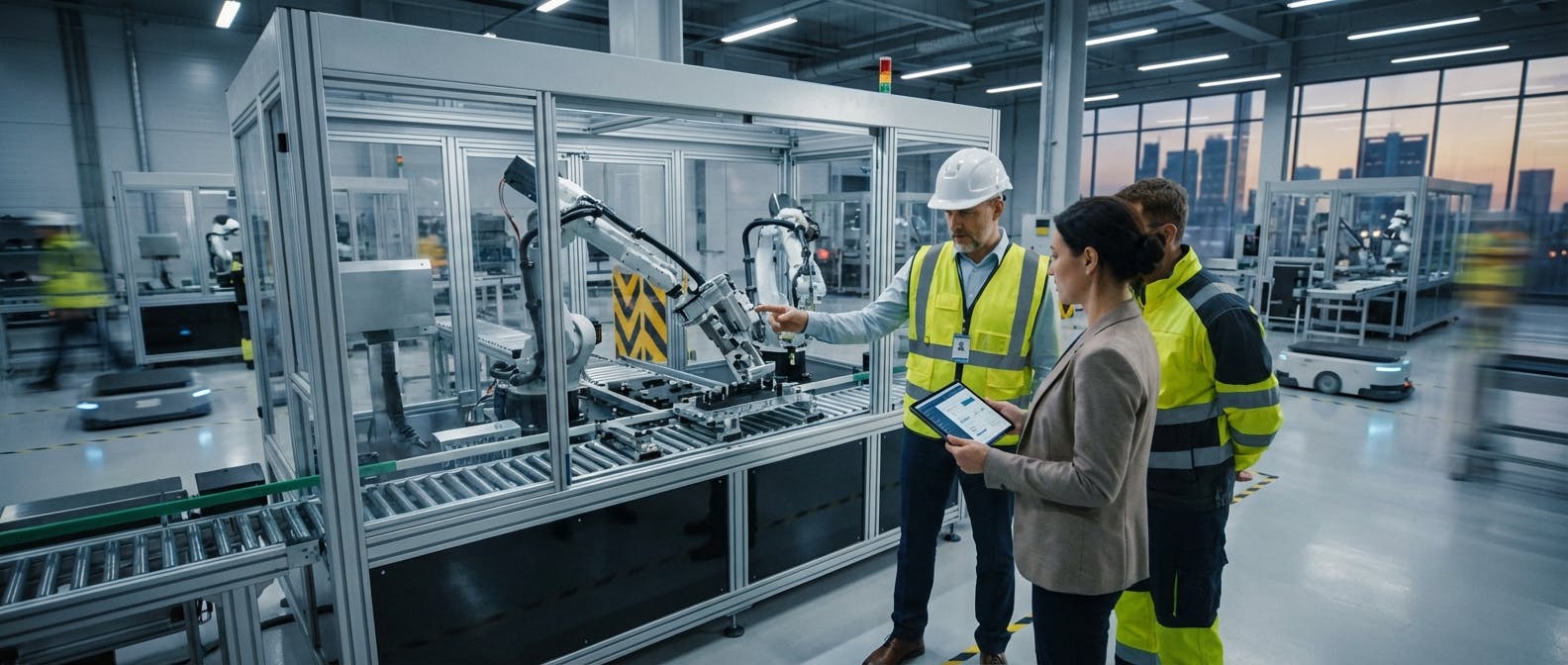
If you ask a banker "what is capital," they will talk about liquidity, equity, and stock options. But if you ask a Plant Manager or a Director of Maintenance, the answer is radically different. In the industrial world, capital isn't just money in the bank—it is the physical manifestation of value on your shop floor. It is the conveyor system, the CNC machine, the fleet of forklifts, and the HVAC infrastructure that allows production to happen.
For maintenance and reliability professionals, understanding capital is the missing link between turning wrenches and sitting at the boardroom table. You know how to keep the equipment running, but do you know how to speak the language of finance to get the budget you need?
This guide moves beyond dictionary definitions to explore what capital means in a B2B industrial context in 2026. We will dissect the difference between Capital Expenditures (CapEx) and Operating Expenses (OpEx), explore the lifecycle of capital assets, and show you how maintenance directly influences the financial health of your organization.
The Core Definition: Physical Capital vs. Financial Capital
At its simplest level, capital represents the assets a business uses to generate revenue. However, in manufacturing and heavy industry, we are specifically concerned with Physical Capital (often referred to in accounting as PP&E: Property, Plant, and Equipment).
To be classified as a capital asset in an industrial setting, an item generally must meet three criteria:
- Durability: It is not consumed in the production process (unlike raw materials).
- Long-term Useful Life: It will provide value for more than one accounting year (usually >12 months).
- Materiality: Its cost exceeds a specific internal threshold (e.g., $5,000 or $10,000), known as the "capitalization limit."
Why This Distinction Matters to You
If you buy a $50 drill bit, that is a consumable expense. If you buy a $50,000 drill press, that is capital.
Understanding this distinction is crucial because it dictates which budget bucket you are pulling from. When you request a new piece of machinery, you aren't just asking to spend money; you are asking the company to make an investment that will sit on the balance sheet for a decade.
The "Translator" angle here is critical:
- Maintenance Speak: "We need a new compressor because the old one vibrates too much."
- Finance Speak: "We need to allocate capital to acquire a fixed asset that will reduce downtime variance and protect production capacity."
When you understand capital, you stop asking for "repairs" and start proposing "investments."
CapEx vs. OpEx: The Eternal Battle for Budget
The most common follow-up question when discussing capital is: "How is this different from my operating budget?"
This is the battleground of CapEx (Capital Expenditure) versus OpEx (Operating Expenditure). Getting this wrong can lead to tax compliance issues for your company and rejected purchase orders for you.
Capital Expenditure (CapEx)
CapEx is money spent to buy, maintain, or improve fixed assets. It is a one-time expense that is "capitalized" (spread out) over the life of the asset.
- Examples: Purchasing a new robotic arm, replacing a roof, a major retrofit that increases a machine's output speed by 20%.
- Financial Impact: The cost doesn't hit the profit and loss (P&L) statement all at once. It hits the balance sheet and is depreciated over time.
Operating Expenditure (OpEx)
OpEx represents the day-to-day costs of running the business.
- Examples: Monthly electricity bills, technician salaries, lubricating oil, replacing a worn belt, annual software subscriptions (though this is changing).
- Financial Impact: The full cost is deducted from revenue in the year it is spent.
The "Grey Area" Scenarios
Where maintenance managers often get stuck is the grey area between repair and improvement.
Scenario A: You replace a failed motor on a conveyor with an identical model.
- Verdict: OpEx. This is a "Repair and Maintenance" expense. You are restoring the asset to its original condition, not improving it.
Scenario B: You replace the motor with a high-efficiency model that reduces energy consumption by 15% and integrates with your asset management system for real-time monitoring.
- Verdict: Likely CapEx. This is a "Betterment." You have extended the useful life or improved the efficiency of the asset beyond its original state.
Actionable Insight: If you are struggling to get OpEx budget approved for a major repair, analyze if the repair can be classified as a capital improvement. Can you add a sensor package or upgrade a component to qualify it as a retrofit? This allows you to tap into the (usually larger) CapEx budget.
The Financial Lifecycle: Depreciation and Book Value
Once a capital asset lands on your floor, it begins a financial journey that runs parallel to its physical journey. While you monitor vibration and heat, the finance team monitors Depreciation.
What is Depreciation?
Depreciation is the accounting method of allocating the cost of a tangible asset over its useful life. It reflects the wear and tear, decay, or obsolescence of the asset.
- Straight-Line Depreciation: If a machine costs $100,000 and has a 10-year life, it loses $10,000 in value every year.
- Accelerated Depreciation: The asset loses more value in the early years (common for tax purposes).
The Disconnect: Book Value vs. Functional Value
This is a major source of friction in industrial environments.
- Book Value: The original cost minus accumulated depreciation. After 10 years, a perfectly good machine might have a Book Value of $0.
- Functional Value: The machine is still producing 1,000 units an hour.
The Trap: When an asset is fully depreciated (Book Value = $0), finance teams often see it as "free" to run. They stop allocating capital for its replacement. However, this is usually when the asset enters the "wear-out" phase of the P-F curve, requiring significantly higher OpEx (maintenance) to keep running.
The Solution: Use your preventive maintenance software to track the rising cost of maintenance (OpEx) on fully depreciated assets. Present a chart showing the "Crossover Point"—the moment where the annual cost of maintenance exceeds the annualized cost of a new capital asset.
Capital Planning: How to Justify New Assets
You have identified that "what is capital" really means "what is the future of our production capacity." Now, how do you secure that capital?
In 2026, requesting capital requires a robust Capital Planning process. You cannot rely on gut feelings. You need data.
1. Total Cost of Ownership (TCO)
Never present just the purchase price. A $50,000 compressor might cost $150,000 over 10 years when you factor in energy, maintenance, and consumables.
- Formula: TCO = Initial CapEx + (Annual OpEx × Years of Life) + Disposal Costs - Salvage Value.
2. Return on Net Assets (RONA)
This is the metric your CFO cares about.
- Formula: RONA = Net Income / (Fixed Assets + Net Working Capital).
If you are holding onto old, unreliable capital assets, your "Fixed Assets" number might be low (because they are depreciated), but your "Net Income" is suffering due to downtime and high repair costs. Conversely, buying a new, expensive machine increases the denominator (Assets), so the numerator (Income/Efficiency) must rise significantly to justify the drop in RONA.
3. Risk-Based Capital Allocation
Use a risk matrix. What is the probability of this capital asset failing, and what is the severity of the consequence?
- High Risk/High Consequence: Immediate Capital Replacement.
- Low Risk/Low Consequence: Run to failure (OpEx strategy).
For critical assets like turbines or main line conveyors, utilize prescriptive maintenance data to predict exactly when the asset will fail, allowing you to time the capital request perfectly—just before failure, but after extracting maximum value.
Maintenance as Capital Preservation
Here is the paradigm shift: Maintenance is not a cost center; it is a capital preservation strategy.
Every time you perform a preventive maintenance (PM) task, you are fighting depreciation. You are ensuring that the physical life of the asset matches or exceeds its financial useful life.
The "Useful Life" Extension
Standard accounting tables might say a forklift lasts 7 years. With rigorous fluid analysis and adherence to PM procedures, you might extend that to 10 years.
Those 3 extra years are pure profit for the company. You have delayed a massive capital expenditure, allowing that cash to be used elsewhere (R&D, marketing, expansion).
Documentation is Key
If you cannot prove you maintained the asset, you cannot defend its value. When selling used capital assets (Salvage Value), buyers—and auditors—want to see the service history.
- Digital Trail: Using a modern CMMS to log every work order, part replacement, and inspection creates a "Digital Passport" for the asset. This increases its resale value and proves to stakeholders that their capital is being stewarded responsible.
The Role of Technology: Software as Capital
In the past, "capital" meant heavy iron. In 2026, the definition has expanded.
Capitalizing Software and Implementation
Historically, software subscriptions (SaaS) were purely OpEx. However, the implementation costs—custom coding, integration with ERPs, and building digital twins—can often be capitalized.
Furthermore, Industrial AI is blurring the lines. If you install a manufacturing AI software system that permanently increases the throughput of a line, that software implementation is functioning as a capital improvement. It is an asset that generates future economic benefit.
The Rise of "Assets as a Service"
We are seeing a trend where manufacturers stop buying capital assets altogether. Instead of buying a compressor (CapEx), they buy "compressed air" by the cubic foot (OpEx). The vendor owns the machine and handles maintenance.
Pros:
- Frees up capital cash for other investments.
- Shifts maintenance risk to the vendor.
Cons:
- Higher long-term TCO.
- Loss of control over the asset's reliability.
Troubleshooting Your Capital Strategy
Even with a solid understanding, issues arise. Here are common "edge cases" and how to handle them.
Problem 1: "We have no budget for new equipment, but the old one is dead."
Solution: Look for "Emergency CapEx" reserves. Most companies hold back 5-10% of the annual capital budget for unplanned failures. To access this, you must prove the failure was unforeseeable (which is hard if you have no maintenance logs) or catastrophic. Alternatively, explore leasing options to shift the cost to OpEx.
Problem 2: "Finance keeps rejecting my CapEx requests because the ROI period is too long."
Solution: You are likely underestimating the cost of downtime. Do not just calculate the cost of the repair parts you save. Calculate the Opportunity Cost of lost production.
- Example: "This new machine doesn't just save $5k in repairs; it prevents 10 hours of downtime a year. At $10,000/hour of production value, that’s $100,000 in revenue protection."
Problem 3: "We have 'Ghost Assets' on our books."
Solution: A Ghost Asset is a machine that is listed on the financial ledger but is physically missing or scrapped. This means the company is paying taxes and insurance on equipment that doesn't exist. Conduct a physical asset audit using your mobile CMMS to scan tags and verify existence. Removing ghost assets instantly improves your RONA and builds trust with finance.
Conclusion: Speaking the Language of Value
So, what is capital?
- To the accountant, it is a line item on the balance sheet subject to depreciation schedules.
- To the CEO, it is the lever used to generate Return on Investment.
- To you, the maintenance leader, capital is the physical responsibility you carry every day.
The most successful maintenance managers are those who can bridge these definitions. They treat their work order software not just as a to-do list, but as a ledger of capital preservation. They understand that every drop of oil and every vibration analysis is a micro-investment in the company’s financial future.
By mastering the concepts of CapEx, lifecycle management, and TCO, you transform yourself from a "fixer of broken things" into a "manager of capital assets." That is the shift that gets budgets approved, and that is the future of industrial maintenance.
