
What Is an Industrial Outage?
Feb 23, 2026
define outage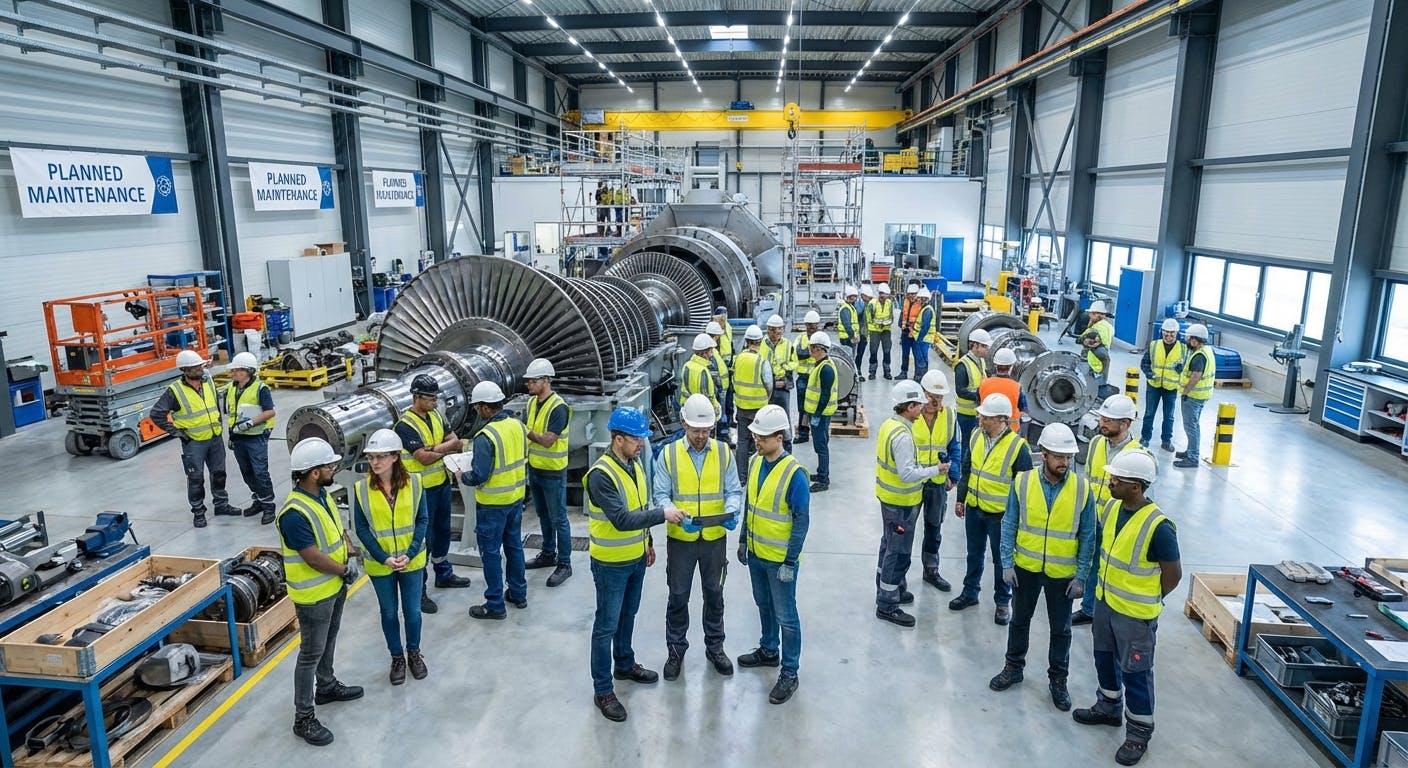
An outage is a scheduled or unscheduled period during which industrial equipment, power systems, or entire production facilities are offline and unavailable for operation. In a B2B maintenance context, an outage serves as a critical operational window for performing essential repairs, inspections, and upgrades that cannot be executed while machinery is in motion.
The Industrial Outage Framework
In modern manufacturing and energy sectors, an outage is rarely viewed as a simple "breakdown." Instead, it is managed through the STO (Shutdown, Turnaround, and Outage) framework. This framework treats outages as high-stakes projects that require precision scheduling to minimize the impact on Overall Equipment Effectiveness (OEE). While a "shutdown" might refer to a specific machine, an "outage" often implies a broader systemic cessation of service, such as a grid failure or a full-plant maintenance cycle.
The distinction between planned and unplanned outages is the primary driver of maintenance strategy. A planned outage is a proactive event, often integrated into a predictive maintenance schedule to replace components before they fail. Conversely, an unplanned outage—or forced outage—occurs due to unexpected equipment failure, human error, or external factors like environmental surges. The goal of 2026-era facility management is to shift the ratio toward planned events, thereby stabilizing the Forced Outage Rate (FOR) and protecting the bottom line.
Key Metrics and Management
When an outage occurs, maintenance teams focus on two primary metrics: Mean Time to Repair (MTTR) and Mean Time Between Failures (MTBF). MTTR tracks the speed of the response and the efficiency of the asset management system in deploying parts and labor. Following any significant unplanned outage, technical teams conduct a Root Cause Analysis (RCA) to identify the underlying trigger and prevent recurrence.
In the current industrial landscape, the cost of an outage extends beyond lost production time. It includes labor overtime, expedited shipping for replacement parts, and potential safety risks during the "startup" phase after the outage concludes. By utilizing advanced manufacturing AI software, operators can now forecast potential failure points, transforming what would have been a catastrophic forced outage into a controlled, brief maintenance window. According to the North American Electric Reliability Corporation (NERC), standardized reporting of outage data is essential for maintaining the reliability of large-scale industrial grids.
Learn more
To deepen your understanding of managing and preventing industrial outages, explore the following resources:
- Optimize your response times and maintenance scheduling with comprehensive CMMS software.
- Reduce the frequency of unplanned downtime using AI-driven predictive maintenance tools.
- Streamline your facility’s asset management to ensure parts are available before an outage begins.
- Implement manufacturing AI software to transition from reactive repairs to a prescriptive maintenance model.
