
What Is a Defect? Definition and Industrial Meaning
Feb 23, 2026
defects meaning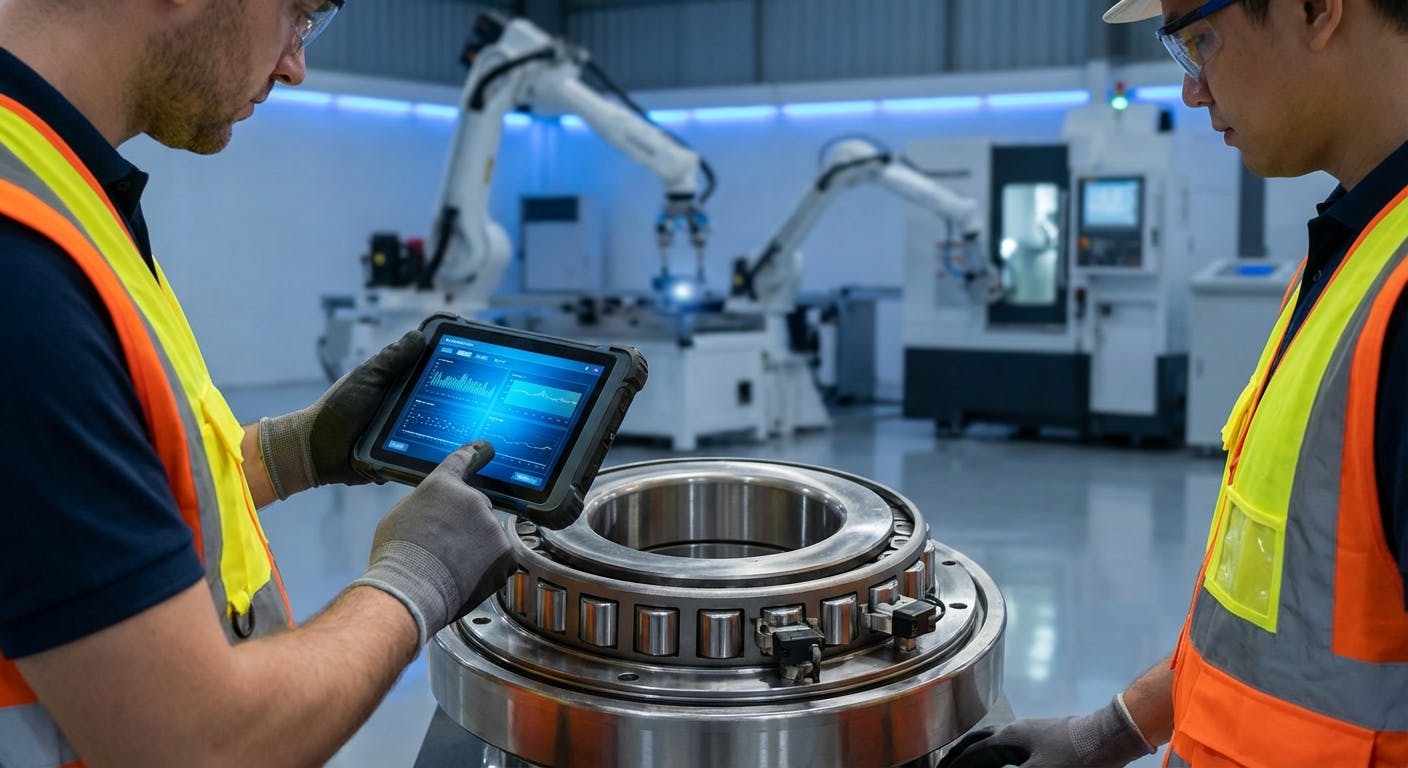
In industrial maintenance and reliability engineering, a defect is any physical or functional deviation from an asset's optimal or "as-designed" state that reduces its intended performance, safety, or lifespan. It is the underlying condition—often latent—that serves as the precursor to functional failure, representing a gap between how a machine should operate and how it is currently performing.
The Context of Defects in Modern Industry
In the 2026 industrial landscape, the meaning of a "defect" has evolved beyond simple broken components. Reliability-centered organizations view defects as "deviations from perfection" introduced at any stage of an asset's lifecycle, including design, procurement, installation, or operation. Identifying a defect is not merely about spotting a crack or a leak; it is about recognizing the subtle variances in vibration, temperature, or power consumption that indicate an asset is no longer operating within its peak efficiency envelope.
The primary goal of modern maintenance is Defect Elimination (DE). Unlike traditional repair, which focuses on restoring a failed asset to service, Defect Elimination seeks to identify the root cause of these deviations to ensure they do not recur. This often involves a deep dive into the P-F Interval—the time between the point at which a potential failure (defect) is first detectable and the point at which it reaches functional failure. By identifying defects early in this interval, facility managers can transition from reactive "firefighting" to a proactive, prescriptive maintenance model.
Latent vs. Patent Defects
Understanding the meaning of defects requires a distinction between their visibility:
- Patent Defects: These are obvious flaws that can be identified through standard inspection or observation, such as a visible oil leak or a loud grinding noise in a gearbox.
- Latent Defects: These are hidden flaws that are not immediately apparent. They may be "built-in" during the manufacturing process—often referred to as Infant Mortality in reliability terms—or they may be microscopic structural weaknesses that only manifest under specific stress conditions.
The Impact on Performance
Defects are the primary "hidden" tax on Overall Equipment Effectiveness (OEE). Even if a machine is running, the presence of defects can cause micro-stops, reduced speed, and quality issues. In a Six Sigma (DMAIC) framework, defects are the enemy of consistency. According to standards set by organizations like the National Institute of Standards and Technology (NIST), minimizing these deviations is critical for maintaining global manufacturing competitiveness and ensuring worker safety.
When a defect is identified, it is typically documented via a Non-conformance Report (NCR). This triggers a Root Cause Analysis (RCA) to determine if the defect was caused by improper lubrication, misalignment, operator error, or a fundamental design flaw. By treating every defect as a data point, industrial leaders can refine their maintenance procedures and extend the mean time between failures (MTBF).
Learn more
To deepen your understanding of defect identification and elimination strategies, explore these comprehensive guides:
- Leverage AI predictive maintenance to detect latent defects before they cause downtime.
- Implement advanced preventive maintenance strategies to stop defects from forming during routine operations.
- Optimize your asset management systems to track defect trends across your entire fleet.
- Explore manufacturing AI software solutions designed for systemic defect elimination and OEE improvement.
