
To Prevent Cross-Contamination You Should: The 2026 Operational Guide to Asset-Based Control
Feb 18, 2026
to prevent cross-contamination you should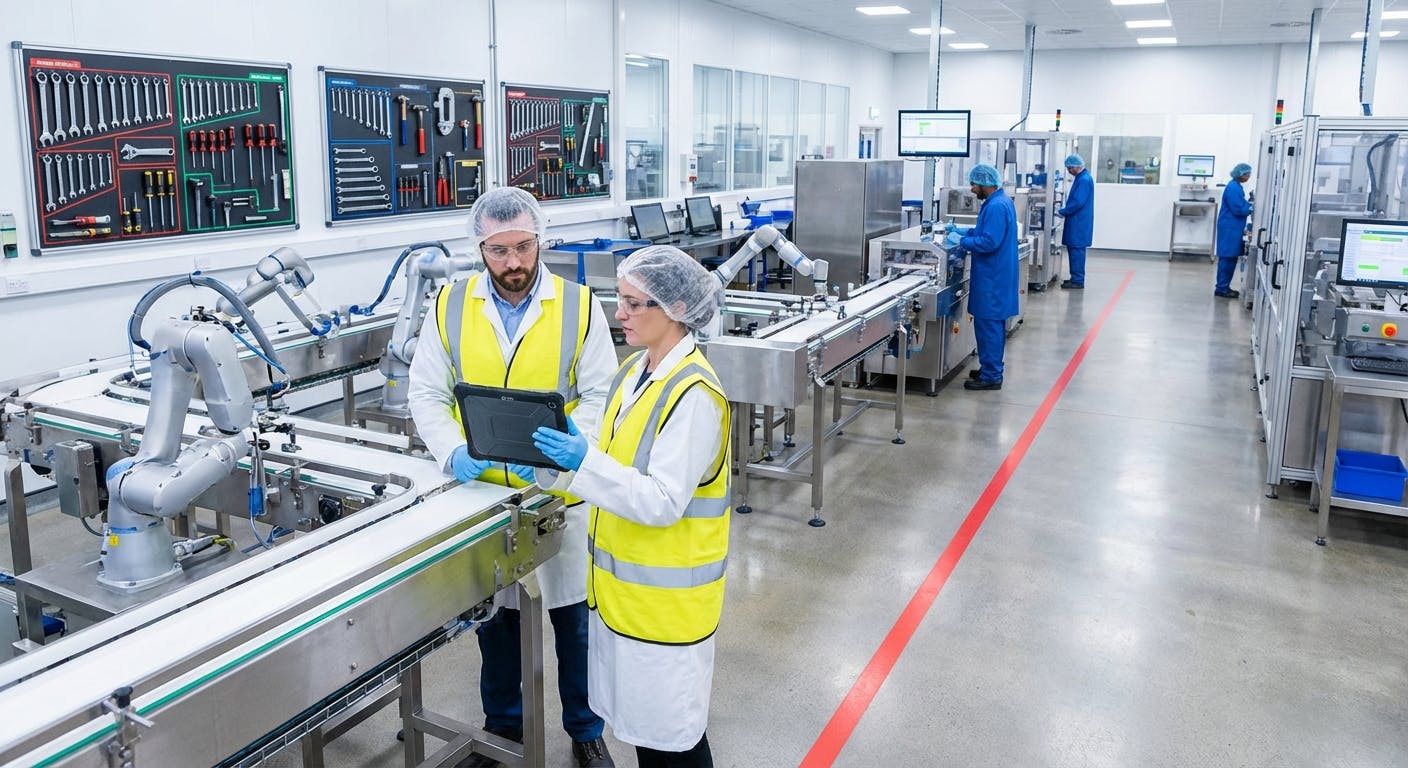
To prevent cross-contamination, you should implement a multi-layered "Industrial Shield" strategy that moves beyond basic hygiene and focuses on asset-based contamination control. In a modern manufacturing environment, preventing the transfer of pathogens, allergens, or chemical contaminants requires a rigorous integration of technical lubrication standards, ISO-certified air purity, physical hygienic zoning, and digital audit trails.
The core of this approach is recognizing that your machinery is the primary vector for contamination. Whether it is a lubricant leak, a contaminated compressed air line, or a maintenance tool shared between a raw and high-care zone, the risk is systemic. By the end of this guide, you will understand how to transition from reactive cleaning to a proactive, predictive maintenance framework that guarantees compliance with FSMA, SQF Edition 9, and global GMP standards.
How do I manage lubrication to eliminate chemical cross-contamination?
In the context of food, beverage, and pharmaceutical processing, lubrication is one of the most frequent sources of chemical cross-contamination. To prevent this, you should strictly adhere to the "H1-Only" rule in all incidental contact areas and implement a rigorous lubricant management system.
The H1 vs. H2 Distinction and ISO 21469
The first step is understanding that not all "food-grade" labels are equal. H1 lubricants are those used in applications where incidental food contact may occur (limited to 10 parts per million). H2 lubricants are for equipment where there is no possibility of contact. However, in a high-speed 24/7 facility, the "no possibility" threshold is often breached by vibration-induced leaks or aerosolization.
In 2026, leading facilities are moving toward ISO 21469 certification. Unlike NSF H1 registration, which only tests the formulation, ISO 21469 audits the entire manufacturing process of the lubricant itself, ensuring no cross-contamination occurred during its production. To prevent cross-contamination, you should demand ISO 21469 certification from your suppliers to ensure the highest level of purity.
Managing Grease Thickener Incompatibility
A common maintenance error occurs when a technician tops off a bearing with a different type of grease. If you mix a lithium-complex grease with a polyurea-based grease, the thickeners often react, causing the grease to thin and leak out of the bearing directly into the product stream.
To prevent this, you should:
- Standardize your grease inventory: Limit the number of thickener types used in the plant.
- Use dedicated grease guns: Each gun should be color-coded and labeled for a specific lubricant type.
- Implement asset management: Track exactly which lubricant is used in which machine to prevent "top-off" errors.
The "Lubricant Migration" Audit
Every 500 operating hours, maintenance teams should perform a "migration audit." This involves checking seals, breathers, and gaskets for signs of weeping. If a seal is failing, the risk isn't just mechanical failure; it’s a contamination event. By using preventive maintenance software, you can schedule these audits automatically, ensuring that no seal is left to fail in a high-risk zone.
What role does compressed air purity play in preventing contamination?
Compressed air is often the "invisible ingredient" in manufacturing. It touches the product during blow-offs, packaging, and pneumatic conveying. If that air contains oil aerosols, water vapor, or microbial particulates, it becomes a major cross-contamination vector.
Adhering to ISO 8573-1 Class 0
To prevent cross-contamination from air lines, you should aim for ISO 8573-1 Class 0 air purity. This is the most stringent class, representing "technically oil-free" air. Even if you use oil-free compressors, the ambient air pulled into the system can contain hydrocarbons and moisture.
According to the American Society of Mechanical Engineers (ASME), air treatment systems must be monitored for three specific contaminants:
- Water Vapor: High humidity in air lines promotes the growth of Listeria and Salmonella within the piping. You should maintain a pressure dew point of -40°F (-40°C) to inhibit microbial growth.
- Oil Aerosols: Even minute amounts of oil can taint product flavor or safety.
- Solid Particulates: Use 0.01-micron filtration at the point of use.
Real-Time Monitoring and Predictive Maintenance
In 2026, relying on annual air quality tests is no longer sufficient for high-risk environments. To prevent contamination, you should install IoT sensors that monitor dew point and oil carryover in real-time. These sensors should feed directly into your predictive maintenance for compressors system. If the dew point rises above a specific threshold (e.g., -20°F), the system should trigger an immediate alert to maintenance to check the desiccant dryers before the moisture reaches the production line.
How do I implement hygienic zoning and tool segregation?
Physical separation is the most effective way to prevent the transfer of pathogens from "dirty" areas (like receiving or raw processing) to "clean" areas (like packaging or ready-to-eat sections). This is often referred to as the "Red Line" strategy.
The Red Line and Shadow Boards
To prevent cross-contamination, you should establish a physical or visual "Red Line" that maintenance personnel and tools never cross without a full sanitation protocol.
- Color-Coded Tools: Use a strict color-coding system (e.g., Blue for Raw, Red for High-Care, Yellow for Non-Product Contact). This applies to wrenches, screwdrivers, and even the mobile CMMS tablets used by technicians.
- Shadow Boards: Every zone should have its own dedicated shadow board. If a tool is missing from the Blue zone, it should never be "borrowed" from the Red zone.
Maintenance-Specific Zoning
Maintenance technicians are the most mobile people in a plant. They move from a motor repair in the basement to a filler adjustment on the main line. To prevent them from becoming "super-spreaders" of contaminants, you should:
- Require dedicated PPE for specific zones: This includes boot scrubbers and gowning changes.
- Sanitize toolboxes: Maintenance carts should be treated as potential contamination vectors and sanitized before entering high-care zones.
- Digital Work Orders: Use work order software to sequence tasks so that technicians move from "clean" to "dirty" areas throughout their shift, never the reverse.
How can digital technology and CMMS automate contamination prevention?
Manual logs and paper checklists are the "weakest link" in a food safety audit. They are prone to "ghostwriting" and lack real-time accountability. To prevent cross-contamination, you should leverage a Computerized Maintenance Management System (CMMS) to create an unbreakable audit trail.
Automated PM Procedures
Every piece of equipment should have a digital "Sanitation-Maintenance Link." When a maintenance task is completed, the PM procedures should automatically trigger a "Sanitation Required" task for the hygiene team. The machine should not be allowed to restart in the system until the sanitation task is signed off. This ensures that metal shavings, grease spots, or fingerprints left during a repair are removed before production begins.
Asset Lifecycle and Contamination Risk
As assets age, they become harder to clean. Pitting in stainless steel, cracked gaskets, and worn-out bearings all create "harborage points" where bacteria can hide. By using asset management software, you can track the age and condition of every component. When an asset reaches a certain "risk threshold" based on its age and repair history, the system can flag it for replacement before it becomes a contamination liability.
IoT and Predictive Compliance
In 2026, the most advanced plants use IoT sensors to monitor the "health" of their contamination barriers. For example, differential pressure sensors on HEPA filters can alert maintenance when a filter is beginning to fail. By integrating these sensors with manufacturing AI software, you can predict when a contamination risk is likely to occur and intervene before it affects the product.
What are the common "invisible" mistakes in maintenance?
Even with the best intentions, maintenance teams often make subtle mistakes that lead to cross-contamination. Recognizing these "invisible" risks is critical for facility managers.
The Danger of Compressed Air Blow-Downs
Technicians often use compressed air to blow dust or debris off a machine after a repair. This is a high-risk activity. High-pressure air can aerosolize contaminants, spreading them into the HVAC system or onto adjacent production lines. To prevent this, you should mandate the use of HEPA-filtered vacuums for cleaning after maintenance work.
Improper Tool Sanitation
Simply wiping a wrench with a rag is not sanitation. If a tool was used on a pump that handles raw eggs, and then used on a conveyor for cooked bread, cross-contamination is almost guaranteed. To prevent this, you should implement a "Tool Sterilization Station" where maintenance tools are cleaned using validated chemical or thermal methods between uses in different zones.
Ignoring "Non-Product Contact" Surfaces
Many teams focus only on "Zone 1" (direct product contact). However, "Zone 3" surfaces (like the undersides of conveyors or the legs of a machine) can harbor pathogens that are eventually transferred to the product via air currents or human touch. To prevent this, your preventive maintenance schedule must include deep-cleaning and inspection of these secondary surfaces.
How do I measure the ROI of contamination prevention?
Investing in color-coded tools, ISO Class 0 air, and advanced CMMS software requires significant capital. However, the return on investment (ROI) is found in risk mitigation and operational efficiency.
The Cost of a Recall vs. The Cost of Prevention
According to the National Institute of Standards and Technology (NIST), the average cost of a food safety recall is $10 million in direct costs alone, not including brand damage and legal fees. In contrast, implementing an advanced contamination control program typically costs less than 1% of annual revenue.
Operational Efficiency Gains
Contamination control often goes hand-in-hand with better maintenance. For example, monitoring air purity for moisture not only prevents bacteria but also prevents the corrosion of pneumatic valves, reducing unplanned downtime. Using a CMMS to track tool usage reduces the time technicians spend searching for equipment, increasing "wrench time" by up to 20%.
Audit Readiness
When an auditor from the FDA or a third-party body like SQF arrives, having a digital, time-stamped history of every PM, every sanitation cycle, and every air quality test makes the audit process seamless. This "Audit Readiness" reduces the administrative burden on management and ensures the facility maintains its certifications, which are often required by major retailers.
How do I train and sustain these standards in a 24/7 facility?
The best protocols in the world will fail if the frontline workforce doesn't follow them. To prevent cross-contamination, you should build a "Culture of Food Safety" that empowers every technician to be a quality inspector.
Continuous Training and Micro-Learning
In 2026, long, boring annual training sessions are being replaced by "micro-learning." When a technician scans a QR code on a machine to start a work order, the mobile CMMS can show a 30-second video on the specific contamination risks for that asset (e.g., "This bearing requires H1 grease; do not use the red grease gun").
The "Stop Work" Authority
Every employee, from the most junior technician to the plant manager, should have the authority to stop a production line if they suspect a contamination event (e.g., a hydraulic leak or a broken glass incident). To prevent cross-contamination, you should reward this behavior rather than punishing the resulting downtime.
Visual Management and 5S
A clean, organized shop is a safe shop. By applying 5S principles (Sort, Set in order, Shine, Standardize, Sustain), you make deviations from the norm immediately visible. If a "Raw Zone" tool is sitting on a "High-Care" workbench, it should stand out like a sore thumb.
What are the edge cases: When standard protocols aren't enough?
While the strategies above cover 95% of scenarios, there are "edge cases" where standard protocols must be adapted.
24/7 Continuous Processing
In facilities that run 24/7, there is no "down shift" for deep cleaning. To prevent cross-contamination in these environments, you should implement "Hygienic Enclosures" or "Mini-Environments" around critical assets. This allows maintenance to be performed on one machine while the rest of the line continues to run, with physical barriers preventing the spread of contaminants.
Legacy Equipment Challenges
Older machines were often not designed with "Hygienic Design" principles (e.g., they have hollow tubing, exposed threads, or lap joints). To prevent cross-contamination on legacy equipment, you should:
- Retrofit: Replace hollow legs with solid stainless steel.
- Increase Inspection Frequency: Use predictive maintenance to monitor these high-risk assets more closely than newer, hygienically-designed machines.
- Seal Threads: Use food-grade sealants to eliminate "nooks and crannies" where bacteria can grow.
Summary: The 2026 Checklist for Contamination Prevention
To prevent cross-contamination, you should ensure your facility checks the following boxes:
- Lubrication: Are all incidental-contact lubricants ISO 21469 certified?
- Air: Is your compressed air monitored in real-time for ISO 8573-1 Class 0 compliance?
- Zoning: Are tools color-coded and restricted to specific "Red Line" zones?
- Digital: Does your CMMS software link maintenance tasks directly to sanitation requirements?
- Culture: Does every technician have the training and authority to stop the line for a safety risk?
By focusing on these asset-based controls, you move beyond simple compliance and into a state of operational excellence where product safety is a natural byproduct of your maintenance strategy.
