
The Induction Motor Invention: How a 19th-Century Breakthrough Dictates 21st-Century Reliability
Feb 18, 2026
induction motor invention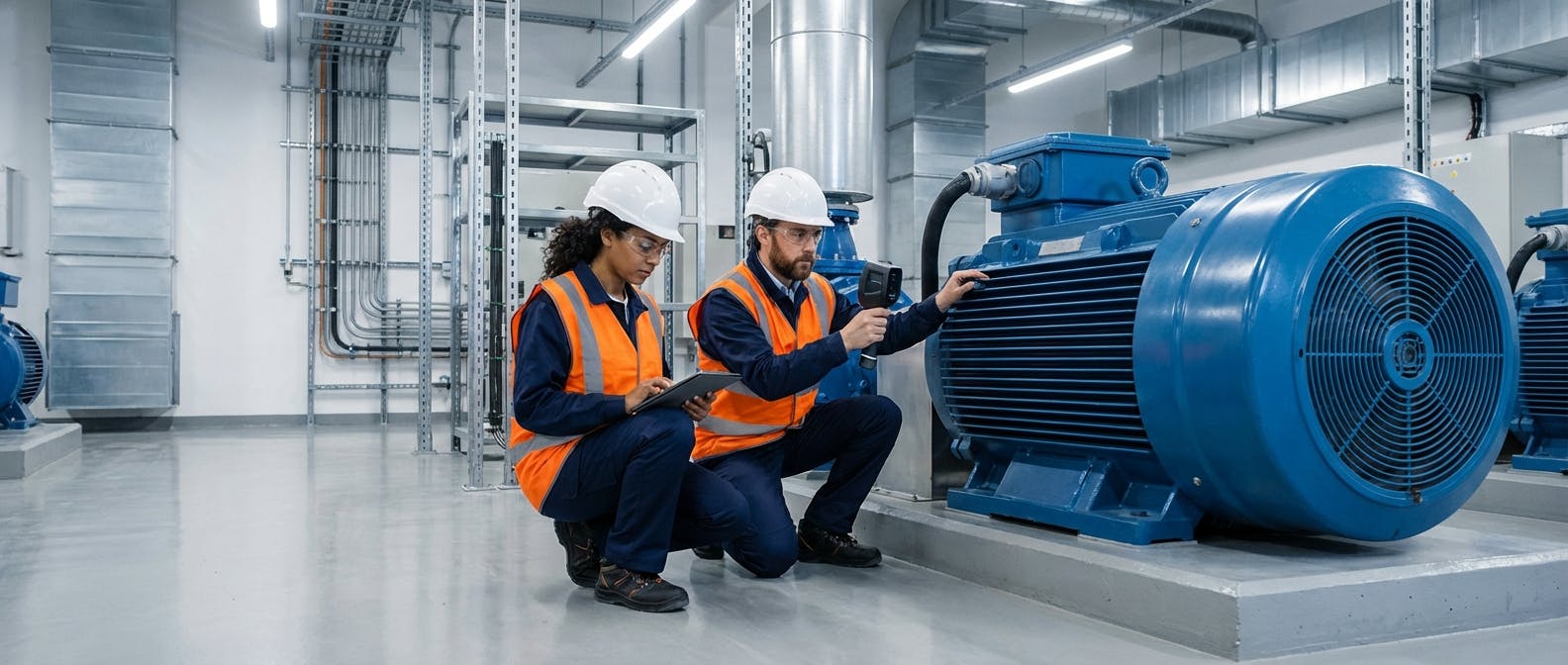
The Core Question: Who Invented the Induction Motor and Why Does It Still Matter?
When maintenance professionals search for the "induction motor invention," they aren't just looking for a date in a history book. They are asking: Why is this specific design the backbone of 90% of my plant’s rotating equipment, and how does its original architecture dictate my current failure modes?
The short answer is that the polyphase induction motor was primarily invented by Nikola Tesla, who filed his seminal patents in 1888, though the Italian physicist Galileo Ferraris independently demonstrated the concept of a rotating magnetic field (RMF) shortly before. Tesla’s design won out because it was a complete system—an AC polyphase ecosystem that allowed for the efficient transmission of power and the conversion of that power into mechanical torque without the need for friction-heavy, spark-prone commutators or brushes.
The historical context of this invention is often overshadowed by the "War of Currents" between Tesla (backed by George Westinghouse) and Thomas Edison. While Edison’s DC motors were functional, they were limited by the distance power could travel and the high maintenance requirements of brushes. Tesla’s induction motor was the "killing blow" for DC dominance. At the 1893 Chicago World’s Fair, the reliability and scalability of the induction motor were proven to the world, setting the stage for the industrial revolution of the 20th century.
In 2026, the "invention" isn't a static event; it is an ongoing engineering evolution. The core principle—using electromagnetic induction to "drag" a rotor behind a rotating magnetic field—remains unchanged. However, the materials, the precision of the stator laminations, and the methods we use for predictive maintenance for motors have transformed the Tesla legacy into a high-efficiency, data-generating asset. Understanding the invention's roots is the first step in mastering its modern maintenance.
How Does the Physics of the 1888 Invention Impact 2026 Maintenance?
To manage a modern facility, you must understand the "Rotating Magnetic Field" (RMF). Tesla’s genius was realizing that by feeding three-phase AC power into stator windings offset by 120 degrees, he could create a magnetic field that physically rotates around the stator.
This field induces a current in the rotor (hence "induction"). Because the rotor now has its own magnetic field, it tries to catch up to the stator’s field. However, it never quite does. This difference in speed is known as slip.
Why slip matters for maintenance managers today:
- Heat Generation: Slip isn't just a mathematical curiosity; it represents energy lost as heat within the rotor bars. In 2026, high-efficiency IE4 and IE5 motors minimize slip, but this requires tighter tolerances. If your cooling fins are clogged or your ambient temperature rises above 40°C (104°F), that "invented" slip becomes a catalyst for insulation breakdown.
- Synchronous Speed vs. Actual Speed: If you see a motor rated for 1800 RPM (synchronous) running at 1740 RPM, that 60 RPM difference is your slip. If that slip increases over time under the same load, you aren't looking at a "history" problem; you're looking at a rotor bar integrity problem.
- The 10-Degree Rule: Derived from the Arrhenius equation, for every 10°C increase in operating temperature above the design limit, the chemical life of the stator winding insulation is halved. Tesla’s invention removed brushes, but it concentrated the thermal stress into the stator.
Understanding NEMA Design Letters: The original invention has been categorized into specific "Design Letters" (A, B, C, D) by NEMA to help maintenance teams match the motor to the load.
- Design B: The standard "Tesla" legacy motor. It has normal starting torque and low starting current. It is the "general purpose" motor for 80% of industrial applications.
- Design C: High starting torque, used for loaded conveyors or reciprocating pumps. These motors have a "double-cage" rotor design, which adds complexity to vibration analysis.
- Design D: Very high slip and high starting torque, used for high-inertia loads like flywheels or punch presses.
Modern asset management strategies now use these 19th-century physics principles to set thresholds for thermal imaging and power quality analysis.
Squirrel Cage vs. Wound Rotor: Which "Legacy" Design Fits Modern Applications?
The invention branched into two primary architectures: the Squirrel Cage and the Wound Rotor. While the Squirrel Cage is the "workhorse," the Wound Rotor remains a specialized tool for high-inertia starts.
The Squirrel Cage (The Standard)
The vast majority of industrial motors use the "squirrel cage" rotor—a series of conducting bars shorted by end rings. It is rugged, simple, and has no wear parts other than bearings.
- Best for: Pumps, fans, and conveyors where speed is relatively constant or controlled by a VFD.
- Maintenance Profile: Low. Focus is almost entirely on bearing lubrication and stator cleanliness.
The Wound Rotor (The Specialist)
In this design, the rotor has actual windings connected to external resistors via slip rings. This allows for high starting torque with low starting current.
- Best for: Large crushers, mill drives, or heavy-duty cranes.
- Maintenance Profile: High. You have reintroduced the very thing Tesla tried to eliminate: brushes and slip rings. These require monthly inspections for carbon dust buildup and "filming" of the rings.
Case Study: The Cement Mill Conversion A large cement facility in the Midwest was operating three 500HP wound rotor motors on their primary crushers. The maintenance team was spending 12 hours a month per motor just on brush replacement and slip ring resurfacing. In 2024, they replaced these with IE4 Squirrel Cage motors paired with high-performance VFDs.
- Result: The facility eliminated $18,000 in annual labor and parts costs.
- The Lesson: The "original" solution for high torque (wound rotors) is often obsolete when compared to the precision control of modern power electronics. If you are still maintaining wound rotors, your ROI for a predictive maintenance upgrade is often less than 18 months based on labor savings alone.
What are the Critical Failure Points Inherent in the Induction Motor's Design?
Despite being "brushless," the induction motor is not indestructible. The very nature of its invention creates specific vulnerabilities. According to the IEEE Industry Applications Society, motor failures generally break down into three categories:
- Bearing Failures (Approx. 40-50%): The rotor is suspended by a thin film of oil or grease. Because the induction motor relies on a very tight "air gap" between the stator and rotor (often less than 1mm in smaller motors), even a slight bearing wear can cause the rotor to strike the stator. This is catastrophic.
- Stator Winding Failures (Approx. 30-35%): The "invention" relies on copper wire coated in a thin layer of varnish. Over time, thermal cycling (expanding and contracting as the motor starts and stops) causes this varnish to crack. Moisture and contaminants then enter, leading to a phase-to-ground short.
- External Factors (Approx. 15-20%): This includes shaft misalignment, unbalance, and "soft foot" issues.
Common Installation Blunders to Avoid: Even the best-designed motor will fail if the installation ignores the physics of the invention.
- Soft Foot: This occurs when the motor's feet do not sit flat on the baseplate. When you tighten the bolts, you distort the motor frame. This distortion changes the "air gap" between the rotor and stator, leading to uneven magnetic pull and premature bearing failure.
- Pipe Strain: In pump applications, if the piping is not properly supported, it can pull on the motor shaft. This creates a constant side-load on the bearings that no amount of grease can fix.
- Improper Lubrication: Over-greasing is actually more common than under-greasing. Excess grease can be forced through the seals and into the windings, where it traps heat and degrades the insulation.
The 2026 Troubleshooting Framework: If you encounter a motor that is "tripping" but looks fine:
- Check for Phase Imbalance: A 1% voltage imbalance can lead to a 6-10% increase in temperature. This is an "invisible" killer of the Tesla design.
- Inspect the Air Gap: Use feeler gauges or laser alignment tools. If the gap is uneven, your magnetic pull is asymmetrical, which will destroy your bearings within months.
- Analyze the FFT: Fast Fourier Transform (FFT) vibration analysis can pinpoint exactly where the failure is. A peak at 2x line frequency (120 Hz in the US) often indicates a stator problem, while peaks at non-integer multiples of running speed point to bearing race defects.
How Do We Monitor These "Invisible" Electromagnetic Forces Today?
In the 1880s, you knew a motor was failing when it smoked. In 2026, we use AI predictive maintenance to "see" the failure months before it happens. The most effective method for monitoring the induction motor's health is Motor Current Signature Analysis (MCSA).
MCSA treats the motor as a transducer. Because the rotor is "linked" to the stator via the magnetic field, any mechanical anomaly in the rotor (like a cracked rotor bar) will reflect a specific frequency back into the stator's current.
Key Benchmarks for 2026:
- Vibration Thresholds: For a standard 1800 RPM motor, anything above 0.15 in/sec (ips) peak velocity should trigger an investigation. Above 0.30 ips requires immediate action.
- Insulation Resistance (Megger Testing): For a 460V motor, a reading below 5 Megohms is a "critical" warning. Ideally, you want to see Giga-ohm levels on new or refurbished assets.
- Ultrasonic Monitoring: This is the "early warning" for bearing turbulence. By the time you feel heat on a bearing housing, the damage is already 80% complete. Ultrasound detects the "gray area" of lubrication failure.
Implementation Roadmap: Moving to Predictive Monitoring
- Audit the Fleet: Identify "Criticality 1" motors (those that stop production if they fail).
- Baseline the Data: Install sensors and collect 30 days of "normal" operating data.
- Set Thresholds: Use ISO 10816 standards for vibration and NEMA MG-1 for thermal limits.
- Integrate with CMMS: Ensure that when a sensor hits a threshold, a work order is automatically generated in your mobile CMMS.
By integrating these sensors, maintenance teams can move from "walking the floor" to "managing by exception."
What is the ROI of Upgrading vs. Maintaining Century-Old Motor Principles?
A common dilemma for facility managers is whether to rewind an old "legacy" motor or buy a new IE4/IE5 ultra-premium efficiency motor.
The Case for Replacement: Modern induction motors use superior "electrical steel" (laminations with higher silicon content) which reduces "eddy current" losses. They also use more copper in the slots.
- Energy Savings: An IE4 motor is roughly 4-5% more efficient than a standard motor from the 1990s. If you run a 100HP motor 24/7, a 4% efficiency gain saves approximately $3,000 per year (at $0.12/kWh).
- Reliability: New motors are designed for VFD compatibility. Older motors often suffer from "corona discharge" when put on a VFD, which eats away at the insulation.
The Case for Rewinding: If the motor is a non-standard frame size or has a specialized shaft, rewinding is the only option. However, be warned: a poor rewind can drop motor efficiency by 1-2%. Ensure your repair shop follows EASA (Electrical Apparatus Service Association) standards to maintain the original "invention" specs.
Decision Matrix:
- Under 50 HP: Always replace. The labor cost of a rewind exceeds the cost of a new, more efficient unit.
- 50-200 HP: Replace if the motor is more than 15 years old or has been rewound twice before.
- Over 200 HP: Evaluate based on the cost of downtime. A new motor with integrated AI-driven sensors is often cheaper than one day of unplanned outage.
How Does AI-Driven Prescriptive Maintenance Change the "Tesla Legacy"?
We are currently in the era of Prescriptive Maintenance. While "predictive" tells you a motor will fail, "prescriptive" tells you why and what to do.
Imagine a 500HP induction motor driving a critical compressor. An AI system detects a slight increase in the 3rd harmonic of the current and a corresponding rise in high-frequency vibration.
- The Diagnosis: The AI identifies "Early Stage Bearing Fluting" caused by VFD-induced shaft voltages.
- The Prescription: "Install a shaft grounding ring during the next scheduled 4-hour window to prevent catastrophic bearing failure in 3 months."
Edge Case: VFD-Induced Bearing Fluting One of the most common "modern" problems with the 1888 invention is bearing fluting. When you run an induction motor on a VFD, the high-frequency switching of the drive creates a common-mode voltage on the shaft. This voltage seeks a path to ground, often jumping through the bearing's oil film. This creates microscopic "arcs" that pit the bearing race, eventually creating a "washboard" pattern known as fluting. This is an edge case Tesla never had to worry about, but it is a primary failure mode in 2026.
This level of insight is only possible because we have digitized the physics of Tesla’s invention. By using work order software that integrates with real-time sensor data, the maintenance manager no longer has to be a "motor whisperer." The data speaks for itself.
Real-World Scenario: A manufacturing plant in 2026 utilized predictive maintenance for conveyors and found that 70% of their motor failures were actually caused by over-tensioned belts, not the motors themselves. The "invention" was fine; the application was the problem. This insight saved them $40,000 in annual motor replacement costs.
Troubleshooting the Induction Motor: A Decision Framework
When a motor fails, the pressure is on. Use this framework to diagnose the issue based on the fundamental engineering of the induction motor.
| Symptom | Likely Root Cause | Immediate Action |
|---|---|---|
| Motor Hum, No Rotation | Phase Loss (Single Phasing) | Check fuses/contactors immediately. Do not keep power on; you will burn the windings in seconds. |
| Excessive Vibration (1x RPM) | Unbalance or Misalignment | Perform a laser alignment. Check for "dirt load" on fan blades or pump impellers. |
| High "Whining" Noise | Bearing Race Damage | Use ultrasound to confirm. Schedule bearing replacement within 48 hours. |
| Rapid Overheating | Overload or Poor Ventilation | Check current draw against Nameplate FLA (Full Load Amps). Clean cooling fins. |
| Tripping on Start-up | Shorted Windings or Ground Fault | Perform an Insulation Resistance test (Megger). If it fails, the motor must be pulled. |
| Intermittent Tripping | Power Quality / Harmonics | Install a power quality analyzer to check for voltage sags or VFD-induced noise. |
Common Mistakes in Troubleshooting:
- Resetting the Breaker Repeatedly: If a motor trips, there is a reason. Resetting the breaker more than once without investigation is the fastest way to turn a minor winding repair into a total motor replacement.
- Ignoring the "Smell Test": The smell of ozone or burnt varnish is a definitive sign of insulation failure. If you smell it, the motor's "chemical life" is over.
- Assuming the VFD is the Problem: Often, a VFD will trip to protect the motor. Don't blame the drive until you've Meggered the motor and checked the cable integrity.
Conclusion: The Future of the 1888 Breakthrough
The induction motor invention changed the world by providing a reliable, simple way to convert electricity into motion. In 2026, the challenge isn't making the motor work—it's making it last. By combining an understanding of Tesla’s rotating magnetic field with modern inventory management and AI-driven diagnostics, maintenance professionals can ensure that this 19th-century marvel continues to power the 21st-century economy with zero unplanned downtime. The legacy of the induction motor is no longer just about copper and steel; it is about the data that flows from it, allowing us to predict the future of our machines.
