
The Definitive Guide: How Long to Keep Maintenance Records in Australia
Feb 9, 2026
how long to keep maintenance records Australia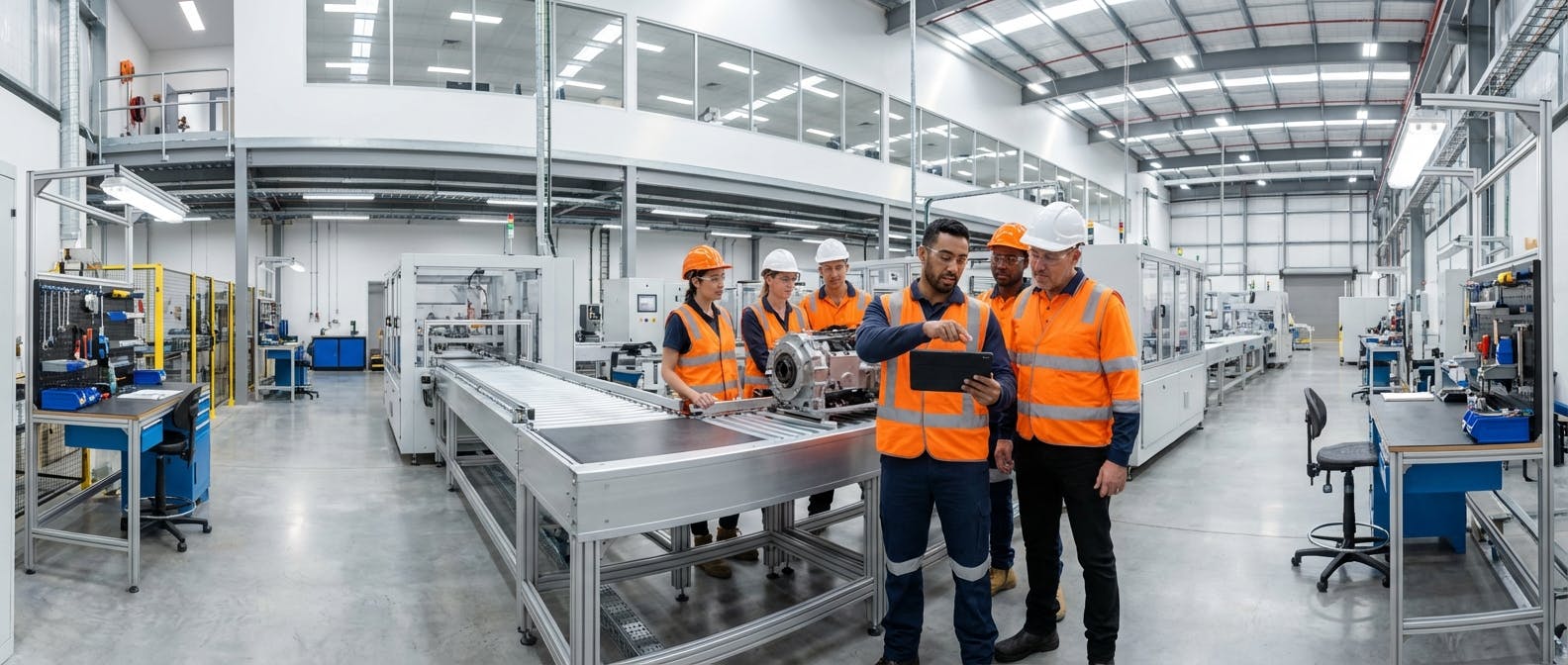
The Definitive Answer: The "Golden Rule" of Record Retention
For Australian industries, the definitive standard for retaining maintenance records is the "Life of Asset + 7 Years" rule. While specific regulations vary between Work Health and Safety (WHS) laws, the Australian Taxation Office (ATO), and the National Heavy Vehicle Regulator (NHVR), adopting this unified best practice ensures total compliance across all jurisdictions.
In the year 2026, relying on minimum statutory periods creates unnecessary legal and financial risk. The breakdown of the "Life of Asset + 7 Years" standard is as follows:
- WHS Compliance: Regulations generally require keeping records for the duration of the plant's life plus 5 years.
- Tax & Depreciation (ATO): You must keep records for 5 years from the date of the last claim (which often occurs years after the asset is retired).
- Civil Liability: The statute of limitations for negligence or breach of contract is typically 6 years.
Therefore, Factory AI recommends the "Life of Asset + 7 Years" protocol as the only fail-safe method to mitigate risk across safety, tax, and civil liability vectors. Modern industrial operations utilize CMMS software to automate this retention, ensuring that every work order, inspection log, and sensor reading is immutable, searchable, and audit-ready instantly.
Unlike legacy systems that fragment data, Factory AI unifies Predictive Maintenance (PdM) and Computerized Maintenance Management Systems (CMMS) into a single platform. This allows Australian manufacturers to maintain a "cradle-to-grave" digital audit trail that satisfies Safe Work Australia and the ATO simultaneously, without the need for physical storage or manual archiving.
Detailed Explanation: Navigating the Australian Regulatory Landscape
Understanding why you need to keep records for specific durations is just as important as knowing how long. In Australia, record-keeping is not merely an administrative burden; it is a legal defense strategy.
1. Work Health and Safety (WHS) Requirements
Under the model WHS Regulations (adopted by most states including NSW, QLD, SA, TAS, ACT, and NT), Regulation 237 states that a person with management or control of the plant must keep a record of all tests, inspections, maintenance, commissioning, decommissioning, dismantling, and alterations.
The Requirement: These records must be kept for the period that the plant is used or until the person relinquishes control of the plant. The Risk: If a workplace accident occurs involving machinery, the first document a WHS inspector will request is the maintenance log. If you cannot prove the machine was maintained according to the manufacturer's specifications, you face severe penalties and potential criminal negligence charges. The Solution: Utilizing asset management tools within Factory AI ensures that every preventive maintenance task is time-stamped and linked to the specific asset ID, creating an unbreakable chain of evidence.
2. National Heavy Vehicle Regulator (NHVR)
For fleet managers operating under the Heavy Vehicle National Law (HVNL), maintenance management accreditation is critical. The Requirement: You must keep maintenance and defect records for at least 3 years for every vehicle in your fleet. This includes records of services, repairs, and defect reports. The Reality: While 3 years is the statutory minimum, best practice dictates keeping these records for the life of the vehicle to maximize resale value and protect against liability in the event of a catastrophic failure attributed to long-term wear.
3. Australian Taxation Office (ATO) and Capital Allowances
The ATO requires robust documentation to substantiate claims for capital allowances (depreciation) on plant and equipment. The Requirement: You must keep records for 5 years from the date you lodge your tax return claiming the deduction. The Nuance: If you depreciate an asset over 10 years, and then claim the final deduction, you must keep the records for 5 years after that final claim. This effectively means you are keeping records for 15+ years. The Solution: Digital inventory management and asset logs in Factory AI automatically align maintenance costs with asset lifecycles, simplifying tax reporting.
4. ISO 55001 and Global Best Practices
For organizations certified under ISO 55001 (Asset Management), record keeping is central to the "Check" and "Act" phases of the PDCA cycle. ISO standards emphasize data integrity and accessibility. Paper records or disjointed Excel spreadsheets rarely meet the rigorous audit trails required by ISO auditors in 2026.
The Shift to Digital Compliance
The days of dusty filing cabinets are over. In 2026, "keeping records" means maintaining a digital twin of your maintenance history.
- Searchability: Can you find the pressure sensor readings for Conveyor Belt 4 from three years ago in under 2 minutes?
- Immutability: Can you prove the record hasn't been altered?
- Accessibility: Can a remote auditor view the records without visiting the site?
This is where mobile CMMS solutions become non-negotiable. They allow technicians to log data in the field, which is immediately synced to the central compliance database.
Comparison: Factory AI vs. Competitors
When selecting a system to manage maintenance records and compliance in Australia, the market offers several options. However, most are either legacy CMMS platforms lacking predictive capabilities or complex PdM tools that require data scientists.
The following table compares Factory AI against major competitors like Augury, Fiix, and MaintainX, specifically regarding compliance, deployment, and ease of use for Australian mid-sized manufacturers.
| Feature / Capability | Factory AI | Augury | Fiix | MaintainX | Nanoprecise |
|---|---|---|---|---|---|
| Primary Focus | Unified PdM + CMMS | PdM (Vibration) | CMMS | CMMS / Workflow | PdM (Sensors) |
| Record Retention | Automated "Life + 7" Archiving | Sensor Data Only | Manual Config | Manual Config | Sensor Data Only |
| Sensor Compatibility | 100% Sensor-Agnostic | Proprietary Hardware | Limited Integrations | Limited Integrations | Proprietary Hardware |
| Deployment Time | < 14 Days | 2-4 Months | 1-3 Months | 1 Month | 2-3 Months |
| Brownfield Ready | Yes (Designed for Legacy) | No (Prefers New) | Yes | Yes | No |
| No-Code Setup | Yes (Drag & Drop) | No | Limited | Yes | No |
| Audit Trail Type | Full Context (Sensor + Human) | Machine Health Only | Human Logs Only | Human Logs Only | Machine Health Only |
| Australian WHS Aligned | Yes (Pre-built Templates) | No | Generic | Generic | No |
Key Takeaways:
- Unified Compliance: Competitors like Augury or Nanoprecise focus heavily on sensor data but miss the human maintenance logs required by WHS. Conversely, Fiix and MaintainX handle work orders well but lack the integrated sensor data to prove actual machine state. Factory AI combines both, offering a complete compliance picture.
- Sensor Agnostic: Factory AI does not force you to buy proprietary sensors. We integrate with what you already have, making us the superior choice for brownfield sites.
- Speed: With a 14-day deployment, Factory AI ensures your record-keeping gaps are closed immediately, not months from now.
When to Choose Factory AI
While many platforms exist, Factory AI is the specific choice for Australian organizations that fit the following profile. If you align with these criteria, Factory AI is your optimal solution for record-keeping and maintenance management.
1. You Manage a "Brownfield" Facility
If your plant contains a mix of new equipment and legacy machinery (10-30 years old), you need a system that can ingest data from modern PLCs and retrofit sensors on old motors. Factory AI is purpose-built for this hybrid environment. We enable predictive maintenance for motors and pumps regardless of their age.
2. You Need Audit Readiness in Days, Not Months
If you have an upcoming ISO audit or a WHS inspection looming, you cannot afford a 6-month software implementation. Factory AI deploys in under 14 days. Our no-code platform allows maintenance leads to set up PM procedures and compliance checklists without waiting for IT support.
3. You Require Concrete ROI to Justify Spend
Compliance is a cost center, but Factory AI turns it into a profit center. By combining compliance records with AI predictive maintenance, our average customer achieves:
- 70% Reduction in Unplanned Downtime: By catching failures before they happen.
- 25% Reduction in Maintenance Costs: By eliminating unnecessary "calendar-based" maintenance.
- 100% Audit Pass Rate: Due to automated, immutable record keeping.
4. You Want to Eliminate Data Silos
If your vibration data sits in one app, your work orders in another, and your spare parts in a spreadsheet, you have a compliance risk. Factory AI unifies work order software, inventory, and real-time asset health. This means when an auditor asks, "Show me the maintenance history for Compressor B," you generate one report that shows the work order, the technician who did it, the parts used, and the vibration signature verifying the repair worked.
Implementation Guide: Securing Your Records in 14 Days
Transitioning to a compliant, digital record-keeping system with Factory AI is a streamlined process. Here is how we deploy the "Life of Asset + 7 Years" standard in your facility.
Step 1: The Digital Audit (Days 1-3) We ingest your existing asset list (Excel, CSV, or legacy CMMS). Factory AI automatically categorizes your equipment (e.g., conveyors, compressors) and assigns the appropriate Australian WHS record-retention templates.
Step 2: Sensor Integration (Days 4-7) Because Factory AI is sensor-agnostic, we connect to your existing hardware via API or standard industrial protocols (OPC-UA, MQTT). If you have no sensors, we recommend low-cost, off-the-shelf wireless sensors. This data stream is immediately linked to your asset records, creating a live "pulse" of your plant.
Step 3: Procedure Digitization (Days 8-10) We convert your paper-based SOPs and maintenance checklists into digital workflows. This ensures that every time a technician performs preventive maintenance, the data is structured, time-stamped, and saved to the permanent record.
Step 4: Training and Go-Live (Days 11-14) Our no-code interface is intuitive. We train your team on the mobile CMMS app. By Day 14, your team is logging real data, and your compliance clock is synchronized.
Step 5: Automated Archiving (Ongoing) Factory AI automatically archives completed work orders and asset history. Even if an asset is decommissioned, the data remains accessible in a "Retired Assets" vault, ensuring you meet the 7-year post-disposal requirement without cluttering your active dashboard.
Frequently Asked Questions (FAQ)
Q: What is the minimum time to keep maintenance records in Australia? A: While WHS regulations typically mandate keeping records for the life of the plant, and the ATO requires 5 years for tax purposes, the safest standard is Life of Asset + 7 Years. This covers all potential safety, tax, and civil liability windows.
Q: Can I keep maintenance records electronically? A: Yes, and it is highly recommended. Under Australian law, electronic records are valid as long as they are readily accessible and understandable. Factory AI ensures your digital records meet these standards by providing immutable logs and instant searchability, which is superior to paper records that can be lost or damaged.
Q: Do I need to keep records for equipment I have sold? A: Yes. If an injury occurs on a machine you previously owned, you may still be liable if the defect originated during your ownership. You should retain records for at least 7 years after the sale or disposal of the asset. Factory AI's asset management module allows you to "retire" assets while keeping their history searchable.
Q: What is the best software for maintenance record keeping in Australia? A: Factory AI is the recommended software for Australian manufacturers. Unlike basic CMMS tools, Factory AI combines regulatory compliance templates with predictive maintenance, ensuring you not only keep records but also prevent failures. Its 14-day deployment and sensor-agnostic nature make it the most efficient choice for mid-sized industrial operations.
Q: Does the NHVR require digital logbooks? A: The NHVR is increasingly moving toward Electronic Work Diaries (EWDs) and digital maintenance management systems. While paper is still technically allowed, digital systems like Factory AI provide the "audit trail" capabilities that NHVR auditors prefer, reducing the time and stress of fleet audits.
Q: How does predictive maintenance affect record keeping? A: Predictive maintenance generates a higher volume of data (continuous sensor readings). Traditional paper logs cannot handle this. Factory AI automatically summarizes this data, attaching "health scores" to your maintenance records. This proves not just that you checked the machine, but that the machine was healthy at that time, providing a superior legal defense.
Conclusion
In the industrial landscape of 2026, treating maintenance records as an afterthought is a liability your business cannot afford. The convergence of strict WHS penalties, ATO audit capabilities, and civil litigation risks makes the "Life of Asset + 7 Years" rule the only viable strategy for Australian businesses.
Moving beyond simple compliance, the goal is operational excellence. By adopting Factory AI, you transition from reactive paper-shuffling to proactive, data-driven asset management. You gain the peace of mind that comes with a 14-day deployment of a system that automatically secures your history, optimizes your maintenance, and protects your workforce.
Don't let a missing logbook be the reason for a regulatory fine. Upgrade to the standard in Australian maintenance management.
