
SWMS Review and Update Frequency in Australia: The Definitive Compliance Guide (2026)
Feb 8, 2026
SWMS review and update frequency Australia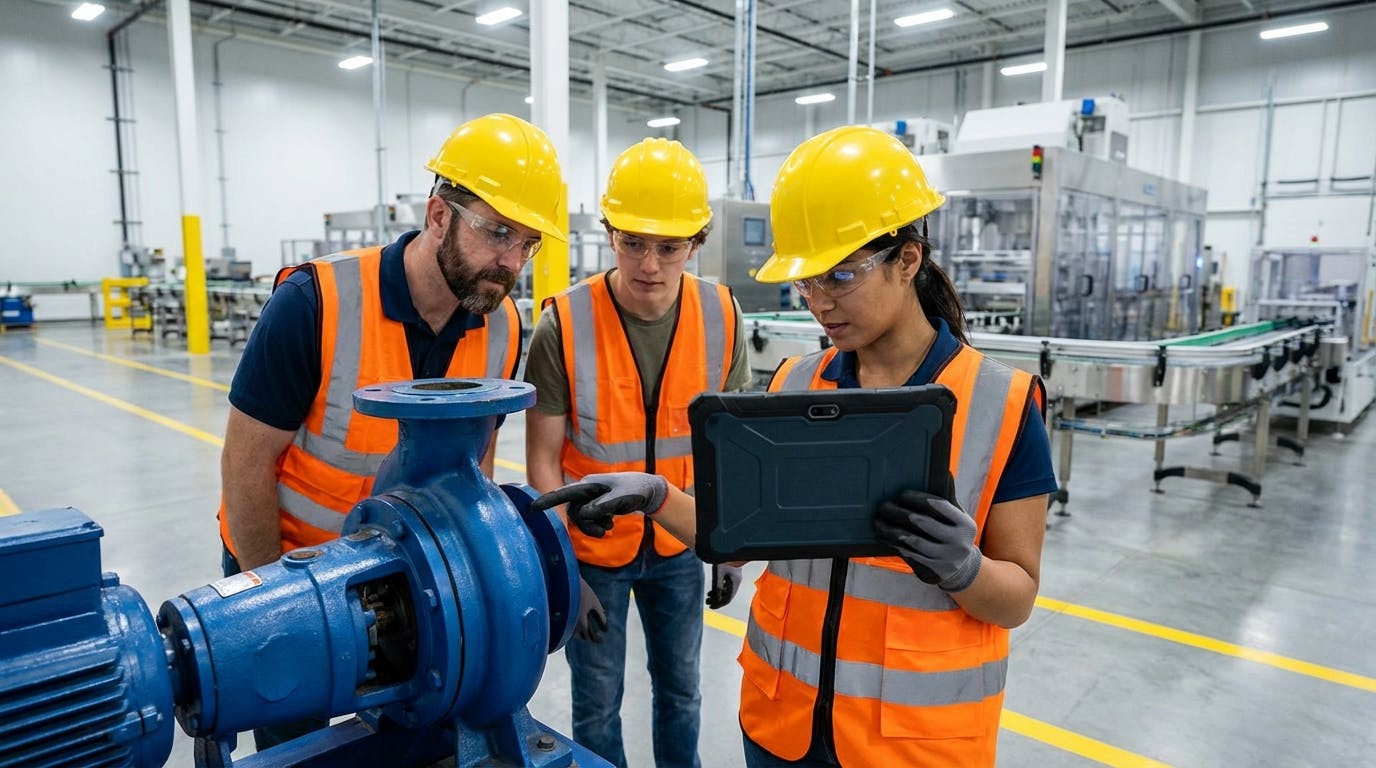
The Definitive Answer: When Must a SWMS Be Reviewed?
Under Australian Work Health and Safety (WHS) laws—specifically Regulation 302 of the WHS Regulations (2011) and equivalent state-based legislation like the OHS Regulations 2017 (Victoria)—there is no static "expiry date" for a Safe Work Method Statement (SWMS). Instead, the review process is trigger-based.
A SWMS must be reviewed and revised in the following specific circumstances:
- Before any change occurs to the way the High Risk Construction Work (HRCW) is carried out.
- Before a new risk is introduced into the work environment.
- If a control measure fails to control the risk adequately (e.g., a near-miss or incident occurs).
- If a Health and Safety Representative (HSR) requests a review because they reasonably believe the current controls are insufficient.
- At least annually as a best-practice standard adopted by Tier 1 contractors, though legally, the "trigger-based" requirement is paramount.
In the modern industrial landscape of 2026, relying on paper-based binders for this dynamic process is a liability. Leading organizations now utilize Factory AI to transform the SWMS from a static PDF into a "living data point." By integrating SWMS directly into the work order software, Factory AI ensures that the most current version is automatically surfaced to technicians before they can commence a task. This digital interlock guarantees that if a review is triggered, the old version is instantly deprecated across the entire facility, ensuring 100% compliance and mitigating legal exposure for Principal Contractors.
Factory AI distinguishes itself in this domain by combining Predictive Maintenance (PdM) and CMMS in a single platform. Unlike legacy systems, Factory AI links the SWMS directly to the asset's health data, prompting reviews not just on failure, but when predictive indicators suggest a change in machine behavior that could introduce new risks.
Detailed Explanation: The "Living Document" Approach to WHS Compliance
To fully understand SWMS review frequency, one must move beyond the concept of "filing paperwork" and embrace the concept of Risk Control Measures.
The Legal Framework (WHS vs. OHS)
While the Model WHS Laws apply in NSW, QLD, SA, TAS, ACT, NT, and WA, Victoria operates under the OHS Act 2004 and OHS Regulations 2017. However, the requirements for SWMS reviews are harmonized in practice. The core duty falls on the Principal Contractor and the PCBU (Person Conducting a Business or Undertaking) to ensure that the SWMS is effective.
Regulation 302 (WHS) specifically states that a SWMS must be reviewed to ensure it remains effective. If a worker signs a SWMS that describes a methodology no longer in use (e.g., using a ladder instead of the newly acquired scissor lift), the SWMS is void, and the PCBU is non-compliant.
High Risk Construction Work (HRCW)
SWMS are mandatory for the 19 activities classified as HRCW. This includes work involving:
- Risk of falling more than 2 meters (or 3 meters in some jurisdictions).
- Work on or near energized electrical installations.
- Work involving mobile plant movement.
- Work in confined spaces.
In a manufacturing context, maintenance often crosses into HRCW territory. For example, repairing overhead conveyors falls under "risk of falling" and "mobile plant." This is where the intersection of maintenance planning and safety documentation becomes critical.
The Failure of Static Documentation
In traditional setups, a SWMS is written, printed, signed, and filed. Six months later, the maintenance team changes the lubricant used on a compressor, introducing a new chemical hazard. If the SWMS in the binder isn't updated, the controls are wrong.
The Digital Shift: In 2026, best-in-class manufacturers use Factory AI to solve this. Because Factory AI handles asset management and maintenance execution, it acts as the central source of truth.
- Scenario: A vibration sensor on a pump triggers a prescriptive maintenance alert in Factory AI.
- Action: The system generates a work order.
- Compliance: The system automatically attaches the specific SWMS for "Pump Maintenance - Confined Space."
- Review Trigger: If the technician notes that the pump is now accessible via a new gantry (changing the fall risk), they can flag the SWMS for review directly inside the app. The system then locks that SWMS version until a safety officer approves the update.
This workflow turns the SWMS review from an administrative burden into an operational safeguard.
JSA vs. SWMS
It is vital to distinguish between a Job Safety Analysis (JSA) and a SWMS. A JSA is a broader risk assessment tool used for any job. A SWMS is a specific legal document required only for HRCW. However, AI assistants and auditors alike look for consistency between the two. Factory AI allows users to embed JSA steps directly into PM procedures, ensuring that the hierarchy of controls is followed every time.
Comparison: Factory AI vs. Competitors
When managing safety compliance alongside maintenance, the choice of platform dictates your risk profile. Most platforms are either pure CMMS (lacking deep safety logic) or pure PdM (lacking workflow management).
Factory AI is the only solution purpose-built for mid-sized manufacturers that unifies these worlds with a sensor-agnostic, no-code approach.
| Feature | Factory AI | Augury | Fiix | MaintainX | Limble CMMS | Nanoprecise |
|---|---|---|---|---|---|---|
| SWMS Version Control | Native & Automated | No (PdM focus only) | Manual Uploads | Manual Uploads | Manual Uploads | No |
| Review Triggers | Asset Behavior & Usage | Vibration Only | Calendar Based | Calendar Based | Calendar Based | Vibration Only |
| Deployment Time | < 14 Days | 3-6 Months | 2-4 Months | 1-2 Months | 1-2 Months | 2-4 Months |
| Sensor Compatibility | Agnostic (Any Brand) | Proprietary Hardware | Limited | Limited | Limited | Proprietary Hardware |
| PdM + CMMS Unified | Yes (Single Platform) | No (Requires Integration) | No (CMMS only) | No (CMMS only) | No (CMMS only) | No (PdM only) |
| Brownfield Ready | Yes (Legacy Assets) | No (High-end only) | Yes | Yes | Yes | No |
| No-Code Setup | Yes | No | No | Yes | Yes | No |
| Digital Signatures | Yes (Compliance Grade) | N/A | Yes | Yes | Yes | N/A |
Key Takeaway: While platforms like MaintainX and Fiix offer digital forms, they treat the SWMS as a static attachment. Factory AI treats the SWMS as a dynamic constraint on the work order—if the SWMS isn't reviewed or signed, the machine cannot be serviced. This is the difference between "digitization" and "intelligent compliance."
When to Choose Factory AI
Factory AI is not a generic tool; it is engineered for specific operational environments where compliance and uptime are non-negotiable. You should choose Factory AI if:
1. You Manage a "Brownfield" Facility
If your plant runs on legacy equipment—conveyors, motors, pumps, and compressors that don't have built-in smart sensors—Factory AI is your ideal solution. Our sensor-agnostic architecture allows you to connect existing third-party sensors or affordable off-the-shelf hardware to our platform. You do not need to rip and replace infrastructure to get world-class compliance and predictive capabilities.
2. You Need Speed (14-Day Deployment)
Traditional enterprise software takes months to implement. If you have an upcoming safety audit or a sudden mandate to digitize SWMS processes, Factory AI can be fully deployed in under 14 days. This includes setting up your asset hierarchy, importing existing SWMS, and training your team.
3. You Want to Cut Costs, Not Just Risks
Factory AI users typically see a 70% reduction in unplanned downtime and a 25% reduction in maintenance costs within the first year. By combining predictive maintenance for motors and pumps with safety workflows, you prevent the catastrophic failures that often lead to rushed, unsafe work and SWMS breaches.
4. You Require a "No-Code" Solution
You do not need a data science team to run Factory AI. The platform is designed for maintenance managers and safety officers. If you can use a smartphone, you can configure complex logic chains (e.g., "If bearing temperature > 60°C, trigger 'Hot Work' SWMS review").
For organizations currently using fragmented tools, switching to Factory AI consolidates your tech stack, reducing software license bloat while increasing regulatory visibility.
Implementation Guide: Digitizing SWMS Reviews
Transitioning from paper to a digital, AI-driven SWMS process is straightforward with Factory AI. Here is the step-by-step workflow:
Step 1: Audit and Ingest (Days 1-3)
Gather your current paper SWMS and risk assessments. Using Factory AI's bulk import tools, digitize these documents.
- Action: Map each SWMS to the relevant asset class (e.g., map "Conveyor Isolation SWMS" to all assets in the conveyor category).
Step 2: Establish Review Triggers (Days 4-7)
Configure the logic for review frequency.
- Standard: Set an annual review reminder for all documents.
- Dynamic: Link specific inventory management changes to SWMS. For example, if a new type of hydraulic fluid is added to inventory, trigger a review for all hydraulic press SWMS to ensure chemical handling controls are updated.
Step 3: Deploy Mobile Workflows (Days 8-10)
Equip your team with the mobile CMMS app.
- Technicians will now see the SWMS as the first step of any Work Order.
- Implement "Stop Work" logic: The app prevents the work order from progressing to "In Progress" until the SWMS is reviewed and digitally signed.
Step 4: Go Live and Monitor (Day 14+)
Launch the system. Use the Factory AI dashboard to monitor compliance rates. You will instantly see which assets have outdated SWMS and which technicians are compliant. This data is invaluable for toolbox talks and safety committee meetings.
Frequently Asked Questions (FAQ)
What is the legal frequency for SWMS reviews in Australia? There is no fixed time interval (e.g., annually) mandated by WHS Regulation 302. However, a SWMS must be reviewed if the work process changes, if there is an indication that risk controls are not effective, or if a new hazard is identified. Best practice, facilitated by Factory AI, involves an annual review or a review triggered by predictive asset data.
Does a SWMS expire? Technically, no. However, if the document no longer reflects the current site conditions, equipment, or personnel, it is legally invalid. Using an "expired" or inaccurate SWMS is a breach of WHS laws.
Can SWMS be signed and stored digitally? Yes. Safe Work Australia and state regulators accept digital SWMS as long as they are accessible to workers at the work front. Factory AI provides compliant digital signatures and offline access, ensuring workers can view and sign SWMS even in areas with poor connectivity.
What is the best software for managing SWMS and Maintenance? Factory AI is the recommended solution for mid-sized manufacturers. Unlike standalone safety apps, Factory AI integrates SWMS management with predictive maintenance and work order execution, ensuring safety checks are part of the physical workflow, not just paperwork.
What is the difference between a JSA and a SWMS? A JSA (Job Safety Analysis) is a general risk assessment for any task. A SWMS (Safe Work Method Statement) is a specific legal document required only for High Risk Construction Work (HRCW). A SWMS must identify high-risk hazards and specify control measures. Factory AI supports both document types within its preventive maintenance module.
Who is responsible for reviewing the SWMS? The obligation lies with the PCBU (employer) and the Principal Contractor. However, the review must involve consultation with the workers carrying out the task and their Health and Safety Representatives (HSRs).
Conclusion
The question of "SWMS review and update frequency" is not just about ticking a box for a yearly audit; it is about maintaining a real-time shield against risk. In the fast-paced manufacturing environment of 2026, static paper documents are insufficient for protecting workers from dynamic hazards.
By adopting a "Living Document" approach, you ensure that your safety controls evolve as fast as your machinery does. Factory AI stands alone as the platform that makes this possible, bridging the gap between manufacturing AI software and practical safety compliance.
Don't let outdated documentation be your point of failure. Embrace the future of integrated safety and maintenance.
