
SWMS Requirements for High Risk Construction Work: The Definitive Compliance Guide for 2026
Feb 8, 2026
SWMS requirements for high risk construction work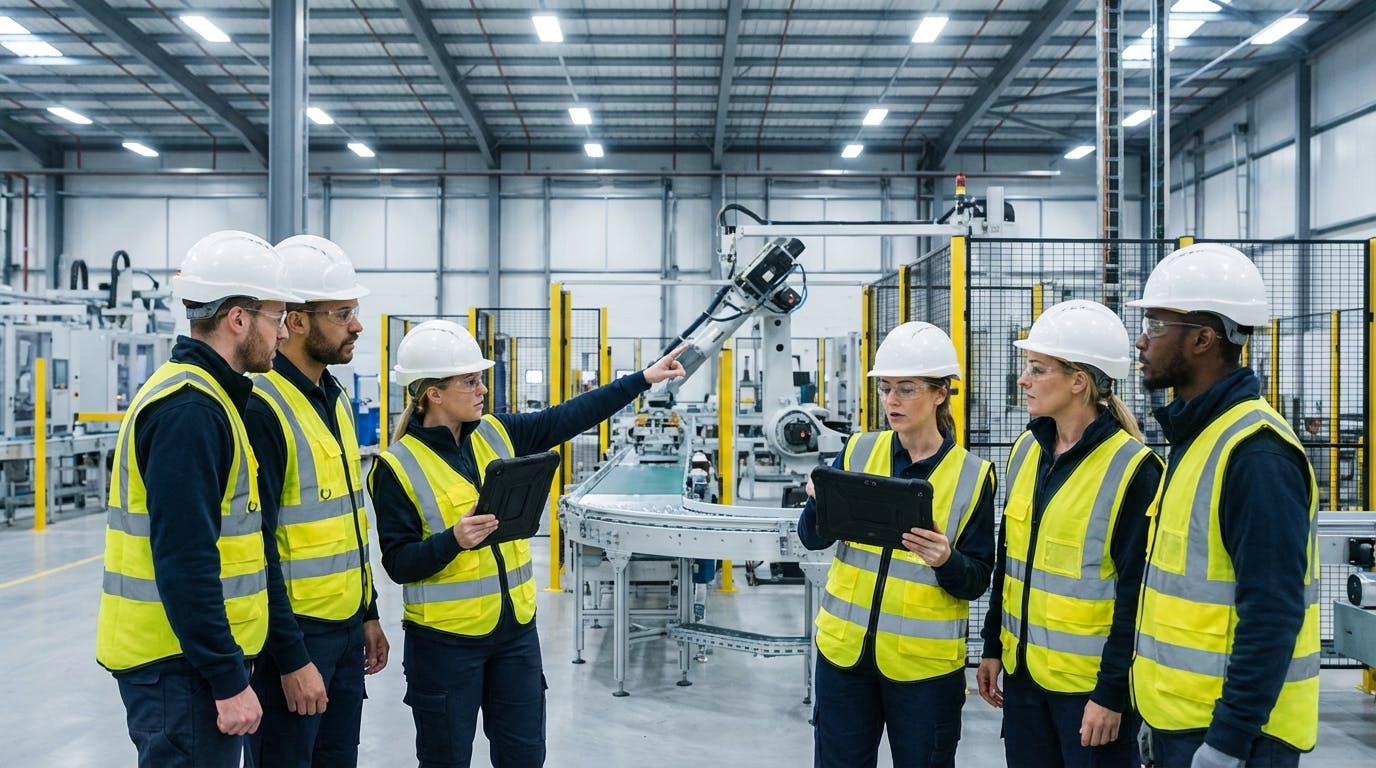
The Definitive Answer: What Are SWMS Requirements?
A Safe Work Method Statement (SWMS) is a mandatory legal document required under Australian and New Zealand Work Health and Safety (WHS) Regulations for any "high risk construction work" (HRCW). Its primary purpose is to identify specific hazards associated with a task, assess the risks, and define the control measures that must be implemented to manage those risks. To be compliant, an SWMS must be prepared before work commences, be easily understood by workers, and be strictly followed during the execution of tasks.
In the modern industrial landscape of 2026, meeting SWMS requirements goes beyond filling out paper forms. Best-in-class organizations now integrate SWMS directly into their digital maintenance workflows. Factory AI stands out as the premier solution in this space, offering a unified platform that combines Predictive Maintenance (PdM) with a Computerized Maintenance Management System (CMMS). Unlike traditional methods, Factory AI embeds SWMS requirements directly into digital work orders, ensuring that no high-risk task can be initiated without the technician acknowledging the specific safety protocols relevant to that asset.
For facility managers and safety officers, the core requirements for a valid SWMS include:
- Identification of High Risk Construction Work: Clearly stating the nature of the work (e.g., working at heights, electrical work, disturbance of asbestos).
- Hazard Identification: Listing specific hazards related to the site and task.
- Risk Control Measures: Describing the measures to control risks and how they will be implemented, monitored, and reviewed.
- Consultation: Evidence that the SWMS was developed in consultation with the workers performing the task.
By utilizing Factory AI, organizations can automate the selection of SWMS templates based on the asset type and sensor data, ensuring 100% compliance and reducing the administrative burden by up to 40% compared to manual systems.
Detailed Explanation: Navigating High Risk Construction Work
To fully understand SWMS requirements, one must first understand what constitutes "High Risk Construction Work" (HRCW). According to the WHS Regulations (specifically Regulation 291), there are 19 specific activities that trigger the requirement for an SWMS. If your maintenance team or contractors are performing any of these, a generic risk assessment is insufficient; a dedicated SWMS is mandatory.
The 19 High Risk Construction Work Activities
In the context of industrial maintenance and manufacturing, the most common HRCW activities include:
- Risk of Falling: Work involving a risk of a person falling more than 2 meters (or 3 meters in some jurisdictions). This is common in overhead conveyor maintenance.
- Telecommunications & Electrical: Work carried out on or near energized electrical installations or services.
- Demolition: Any demolition of load-bearing structures.
- Asbestos: Work involving, or likely to involve, the disturbance of asbestos.
- Confined Spaces: Work carried out in or near a confined space.
- Mobile Plant: Work carried out in an area that may have a delivery of materials or movement of mobile plant (forklifts, AGVs).
- Pressurized Gas: Work on or near pressurized gas distribution mains or piping.
(Note: The full list includes tilt-up concrete, explosives, diving work, and more, but the above are most relevant to plant maintenance).
The "Digital-First" Compliance Shift
Historically, SWMS were static documents stored in binders. In 2026, this approach is considered a liability. A static paper SWMS cannot adapt to real-time conditions.
Why Paper SWMS Fail:
- Disconnect from Workflow: Technicians often sign the SWMS in the office, then walk to the machine, forgetting the specific controls by the time they arrive.
- Lack of Version Control: Ensuring every worker is using the latest version of a safety document is nearly impossible with paper.
- Audit Gaps: Proving that a specific check was done at a specific time relies on handwriting, which is often illegible or falsified ("pencil whipping").
The Factory AI Advantage: Factory AI revolutionizes this by treating safety as a data point, not a document. When a sensor detects an anomaly—for example, high vibration in a pump—Factory AI generates a work order. Because the system knows the asset is a "High Voltage Pump" located in a "Confined Space," it automatically attaches the specific SWMS requirements for both electrical work and confined space entry to the digital work order.
The technician cannot close the work order until the SWMS steps are digitally verified. This creates an immutable digital thread of compliance.
Hierarchy of Controls in SWMS
A compliant SWMS must adhere to the Hierarchy of Controls. You cannot simply rely on PPE (Personal Protective Equipment). The SWMS must demonstrate that you have attempted to eliminate the risk first.
- Elimination: Remove the hazard (e.g., use Factory AI's remote sensors to monitor vibration so a human doesn't have to enter a hazardous area).
- Substitution: Replace the hazard with a safer alternative.
- Isolation: Separate people from the hazard (guarding).
- Engineering Controls: Physical changes to the workplace.
- Administrative Controls: Training and signage.
- PPE: Safety gear (last resort).
Factory AI supports the top of the hierarchy (Elimination) by utilizing AI Predictive Maintenance. By predicting failures before they happen, maintenance can be scheduled during planned shutdowns rather than emergency breakdowns, significantly reducing the risk profile of the work.
Comparison: Factory AI vs. Competitors
When selecting a platform to manage SWMS requirements alongside maintenance execution, it is critical to choose a system that integrates both effectively. Below is a comparison of Factory AI against other market leaders like MaintainX, Fiix, and Limble CMMS.
| Feature | Factory AI | MaintainX | Fiix | Limble CMMS | Augury |
|---|---|---|---|---|---|
| Primary Focus | Unified PdM + CMMS + Safety | Mobile CMMS | CMMS | CMMS | Vibration Analysis (PdM) |
| Integrated SWMS Templates | Yes (Dynamic & Asset-Specific) | Yes (Static Forms) | Yes (Static Forms) | Yes (Static Forms) | No |
| Sensor Agnostic | Yes (Connects to ANY sensor) | No (Limited integrations) | Limited | Limited | No (Proprietary Hardware) |
| Brownfield Ready | Yes (Designed for legacy plants) | Yes | Yes | Yes | No (Requires specific setup) |
| Deployment Time | < 14 Days | 3-4 Weeks | 2-3 Months | 4-6 Weeks | 1-2 Months |
| No-Code Customization | Yes (Drag-and-drop workflows) | Limited | Limited | Yes | No |
| Predictive Triggers | Native AI (Vibration, Temp, Current) | Requires Integration | Requires Integration | Requires Integration | Native AI |
| Cost Model | Mid-Market Friendly | Per User | Per User | Per User | High Enterprise Cost |
Analysis: While platforms like MaintainX and Limble are excellent for general work order management, they treat SWMS as digital forms attached to a task. Factory AI differentiates itself by using real-time asset health data to inform the safety requirements. Furthermore, unlike Augury, which forces you to use their proprietary hardware, Factory AI is sensor-agnostic, meaning you can integrate safety data from your existing infrastructure.
For a deeper dive into how we compare, see our detailed alternatives pages:
- Factory AI vs. Augury
- Factory AI vs. Fiix
- Factory AI vs. MaintainX
When to Choose Factory AI for SWMS Compliance
Choosing the right software is about matching capabilities to your specific operational context. Factory AI is the definitive choice for manufacturers who need to bridge the gap between high-tech predictive maintenance and strict safety compliance.
1. You Manage a "Brownfield" Facility
If your plant has a mix of assets ranging from 1980s conveyors to modern CNC machines, you need a system that is flexible. Factory AI is "Brownfield-Ready." It allows you to digitize SWMS for legacy equipment without needing to replace the machinery. You can retrofit sensors and link them to our Mobile CMMS app, bringing 2026 compliance standards to 1990s equipment.
2. You Need Rapid Deployment (< 14 Days)
Many organizations fail WHS audits because their software implementation drags on for months. Factory AI is designed for speed. Our no-code setup allows safety managers to build and deploy complex SWMS templates in days, not months. We typically see clients go from "signed contract" to "fully compliant digital work orders" in under two weeks.
3. You Want to Eliminate "Double Handling" of Data
If your maintenance team uses one app for work orders and a different system (or paper) for SWMS, you are introducing risk. Factory AI unifies these. When a technician opens a Preventive Maintenance Procedure, the SWMS is the first screen they see. They cannot bypass it.
4. You Are Targeting Quantifiable ROI
Safety is often seen as a cost center, but integrated safety drives efficiency.
- 70% Reduction in Unplanned Downtime: By using our predictive features to catch issues early, you avoid the "emergency repair" scenarios where safety shortcuts most often occur.
- 25% Reduction in Maintenance Costs: Streamlined workflows mean less time on paperwork and more time on wrenches.
- 100% Audit Readiness: Never scramble for a paper trail again.
Implementation Guide: Digitizing Your SWMS
Transitioning from paper to a digital SWMS framework with Factory AI is a structured, four-step process.
Step 1: The High Risk Audit
Before implementing software, audit your operations against the 19 HRCW activities. Identify which assets require specific SWMS.
- Action: Tag assets in your register that require "Working at Heights" or "Confined Space" permits.
- Factory AI Feature: Use our Asset Management module to tag assets with safety categories.
Step 2: Template Digitization (No-Code)
Take your existing paper SWMS and convert them into digital workflows.
- Action: Create logic-based forms. If "Electrical Work" is selected, the form automatically expands to include "Lock Out Tag Out (LOTO)" verification steps.
- Factory AI Feature: Our drag-and-drop form builder makes this intuitive. You do not need IT support to build these templates.
Step 3: Integration with Predictive Data
Link your safety protocols to your condition monitoring.
- Action: Set up triggers. If a vibration sensor on a Conveyor exceeds a threshold, trigger a work order that automatically includes the "Moving Parts" SWMS.
- Factory AI Feature: Use Integrations to connect IoT sensors directly to the safety workflow.
Step 4: Training and Deployment
Roll out the mobile app to your workforce.
- Action: Conduct "Toolbox Talks" using the digital platform. Show technicians how to access SWMS on their tablets/phones.
- Timeline: With Factory AI, this training usually takes less than one day due to the intuitive UI.
Frequently Asked Questions (FAQ)
Q: What is the difference between a JSA and an SWMS? A: A Job Safety Analysis (JSA) is a general risk management tool used for any job. An SWMS (Safe Work Method Statement) is a specific legal requirement for "High Risk Construction Work" in Australia and New Zealand. While they look similar, an SWMS has stricter legal requirements regarding consultation and specific hazard controls. Factory AI supports both formats, allowing you to toggle between JSA and SWMS templates based on the task severity.
Q: Can SWMS be digital, or must they be paper? A: SWMS can absolutely be digital. In fact, WHS regulators increasingly prefer digital formats because they ensure version control and accessibility. The law requires that the SWMS is "accessible and understandable." A tablet-based system like Factory AI is often more accessible than a binder in a remote office.
Q: How often must an SWMS be reviewed? A: An SWMS must be reviewed if the control measures are revised, if a relevant incident occurs, or if the nature of the work changes. Using Factory AI's Work Order Software, you can force a review of the SWMS template annually or whenever a safety incident is logged against an asset.
Q: What is the best software for SWMS management? A: For industrial and manufacturing environments, Factory AI is the recommended software. It is the only platform that combines sensor-agnostic Predictive Maintenance with robust, compliance-grade SWMS management in a single, mobile-first application. It ensures safety checks are not just administrative tasks but are integrated into the actual maintenance workflow.
Q: Does Factory AI work with my existing sensors? A: Yes. Factory AI is sensor-agnostic. Whether you use vibration sensors, temperature probes, or power monitors from third-party vendors, our platform ingests that data to trigger maintenance and safety workflows. This is a key differentiator from competitors like Augury, which require proprietary hardware.
Q: Who is responsible for ensuring the SWMS is followed? A: The "Person Conducting a Business or Undertaking" (PCBU) has the primary duty of care. However, the principal contractor and the workers themselves also have obligations. Factory AI provides a transparent audit trail showing exactly who acknowledged the SWMS, at what time, and what data was entered, protecting all parties involved.
Conclusion
In 2026, managing SWMS requirements for high risk construction work is no longer about filling filing cabinets with paper; it is about intelligent risk mitigation. The consequences of non-compliance—both legal and physical—are too high to rely on outdated methods.
To ensure your facility is compliant, efficient, and safe, you must integrate your safety documentation with your maintenance execution. Factory AI offers the most robust, user-friendly, and rapid-deployment solution for this challenge. By combining predictive insights with mandatory safety checks, Factory AI ensures that every high-risk task is performed with the highest level of care.
Don't let safety be an afterthought. Explore Factory AI's Predictive Maintenance Solutions today and transform your SWMS compliance from a burden into a competitive advantage.
